


Areas We Cover
Categories

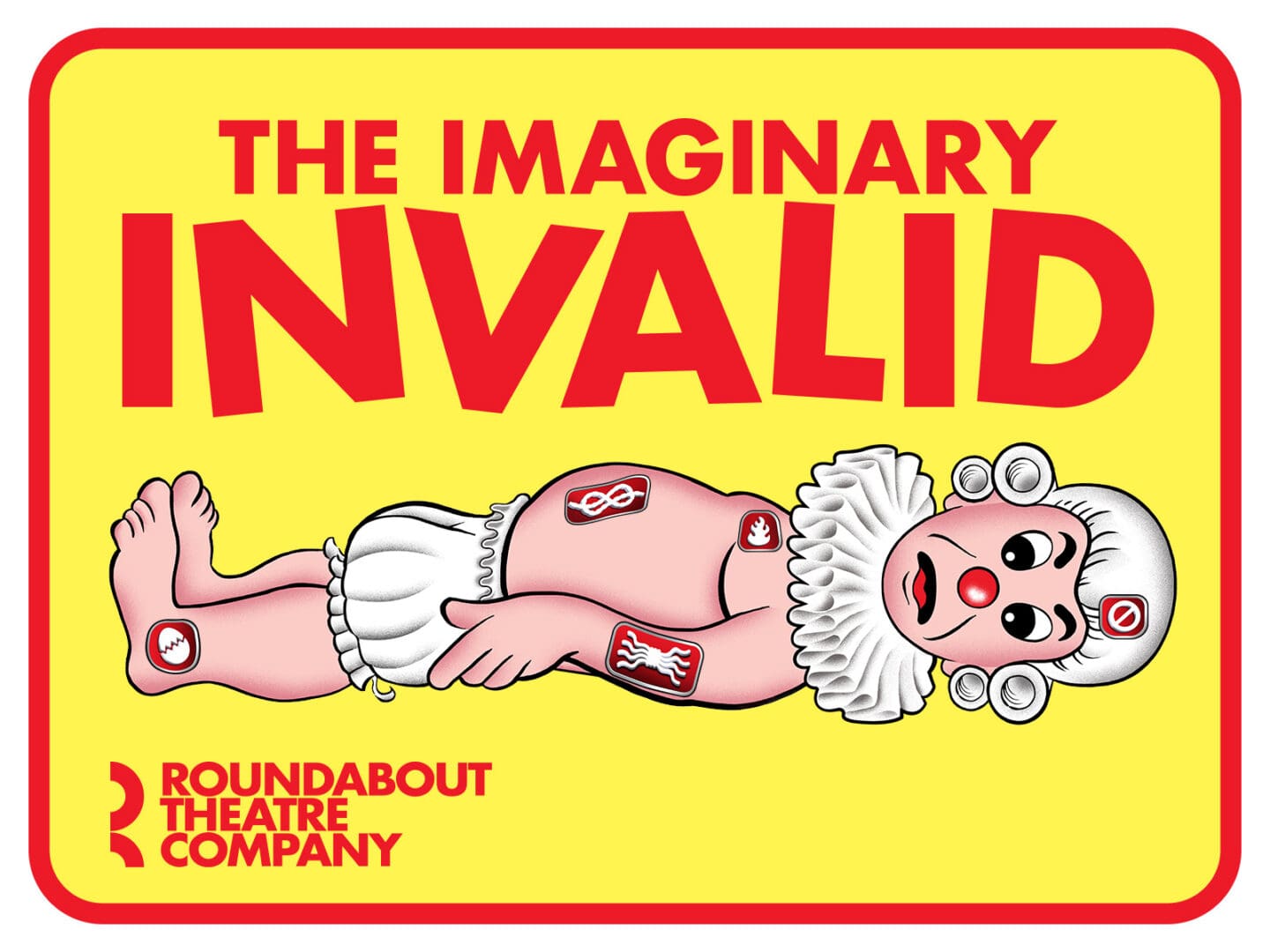
Broadway Review: THE IMAGINARY INVALID (Roundabout Theatre Company / Todd Haimes Theatre)
by Paola Bellu | October 30, 2026
in New York, Theater
THE CURE FOR WHAT AILS YOU
Bill Irwin’s inspired physical comedy
and a marvelous ensemble make
Molière’s final play an irresistible delight

Bill Irwin, Dylan Baker, Rachel Bloom, Ava Lalezarzadeh, Daniel Croix Henderson
I have seen my fair share of The Imaginary Invalid, and even recently reviewed an excellent production, but I had never encountered Molière through the eyes, body, and mischievous genius of a Commedia dell’Arte maestro like Bill Irwin. A consummate artisan of the stage and a bona fide zanni, Irwin is a virtuoso of physical comedy, armed with extraordinary timing, comic intelligence, and an almost supernatural command of expression. If you don’t believe me, go to the Todd Haimes Theatre and see for yourself; this new adaptation of Molière’s comedy, translated by Doug Skinner and adapted by Irwin, is brought to life by a gifted ensemble under the skillful direction of Brandon J. Dirden. It is a precious gem.

Brooks Ashmanskas and (below) Bill Irwin
Commedia dell’Arte is fundamental to the history of Western comedy. Born in sixteenth-century Italy, it gave us a gallery of instantly recognizable masked characters: the mischievous, resourceful servant; the cowardly braggart; the lecherous rich old fool; the pompous, quack doctor; the naive lovers. Add acrobatic actors, ingenious physical comedy, and plots built around deception, basic desire, and mistaken identities, and you have a theatrical recipe that helped shape the comic worlds of Shakespeare, Molière, and Goldoni.

Rachel Bloom, Ava Lalezarzadeh
The plot of The Imaginary Invalid is simple: Argan (Irwin), a rich old man convinced he is at death’s door, surrounds himself with doctors who are noticeably more interested in his wealth than his health. Determined to marry his daughter to a physician to save money, he picks Thomas (Hiram Delgado), a very awkward medical student who is the son of one of his doctors, Monsieur Diafoirus (Brooks Ashmanskas). But Angélique (Ava Lalezarzadeh), Argan’s daughter, is in love with Cléante (Daniel Croix Henderson), and she won’t budge.

Bill Irwin, Rachel Bloom
Then there is Béline (Crystal A. Dickinson), the second Mrs. Argan, whose dream involves sending her stepdaughter to a convent and her husband to the grave, sooner rather than later. The notary, Monsieur de Bonnefoi (Delgado), is on Béline’s side, eager to draft the will to ensure that Argan’s estate will ultimately pass to her, despite the legal complications involved.

Crystal A. Dickinson, Hiram Delgado, Bill Irwin
But all is not lost: Toinette (Rachel Bloom), the housemaid and the only brains of the household, sees through the doctors, Béline, and her master’s delusions. Sharp-tongued, resourceful, irreverent, she is the clever servant who always saves the day. And Béralde (Dylan Baker), Argan’s brother, a sensible and outspoken man who tries to help him, is the other voice of reason in a family suffering from an epidemic of stupidity.

Brooks Ashmanskas, Hiram Delgado, Daniel Croix Henderson, Bill Irwin
The difficulty is choosing where to look: the action onstage is hilarious and beautifully acted, but Irwin’s reactions are often a performance in themselves. A raised eyebrow, a sideways glance, or simply holding a ridiculous expression is enough to crack you up.

Daniel Croix Henderson, Bill Irwin, Ava Lalezarzadeh
Ashmanskas is a delight in both roles, Dr. Diafoirus and Dr. Purgon, delivering his wild lines with such straight-faced absurdity that he always seems one heartbeat away from abandoning the performance and bursting into laughter. Bloom is wonderfully mischievous, irresistibly cheeky, and brilliantly expressive, while Baker delivers the right blend of gloriously ridiculous elegance and dry comic understatement, all while playing the room’s voice of reason. The entire company is a joy to watch; they play off one another like a team of conspirators, passing jokes back and forth, anticipating each other’s moves.

Hiram Delgado, Bill Irwin, Brooks Ashmanskas
Beowulf Boritt‘s set is perfectly suited to the play. It captures the spirit of Molière’s world while allowing the wild action to flow seamlessly. A refined French neoclassical room takes shape before our eyes. The side walls and ceiling move independently, adding theatrical magic, while an ornate show portal frames the stage like a painting; two deep practical doorways add depth, and a stage-right wall of tall windows, dressed with elegant pleated drapery, completes the composition.

Dylan Baker, Hiram Delgado, Bill Irwin
The lighting design by Allen Lee Hughes is equally elegant and appealing. The only slight misstep is in some of Karen Perry’s costumes, which feel a little too loud and bulky for a Molière production. At times, their exaggerated clownishness distracts from Bloom’s and Ashmanskas’ expressive faces and physical performances. It is, however, a minor quibble in an otherwise perfect show.

Crystal A. Dickinson, Bill Irwin, Rachel Bloom
There is a particular poignancy to The Imaginary Invalid: a comedy about hypochondria, medicine, and human nature, written and performed by a man who was himself dying. In 1673, at 51, suffering from tuberculosis, Molière took the stage as Argan and died shortly after the play’s fourth performance. Sadness lurks beneath the funny lines: the loss of his infant son, despite the costly physicians summoned to save him; his own failing health, which medicine could do little to help; the betrayal of those he had trusted; and a marriage that had become an object of public ridicule. Molière turned his own private sorrows into one last great comedy. This production honors that achievement beautifully, making for a rare and unforgettable experience.
✦ ✦ ✦ ✦ ✦ ✦ ✦ ✦ ✦ ✦
photos by Joan Marcus
The Imaginary Invalid
Roundabout Theatre Company
Todd Haimes Theatre, 227 W. 42nd St. in New York
90 minutes, no intermission
Tue & Thu–Fri at 7; Wed at 2 & 8; Sat at 2 & 8; Sun at 3
ends on November 22, 2026
for tickets (from $65), call 212.719.1300 or visit Roundabout
for more shows, visit Theatre in New York
✦ ✦ ✦ ✦ ✦ ✦ ✦ ✦ ✦ ✦
