

Areas We Cover
Categories

ATLANTA FILM STUDIOS: How the South’s Production Hub Became Hollywood’s Rival
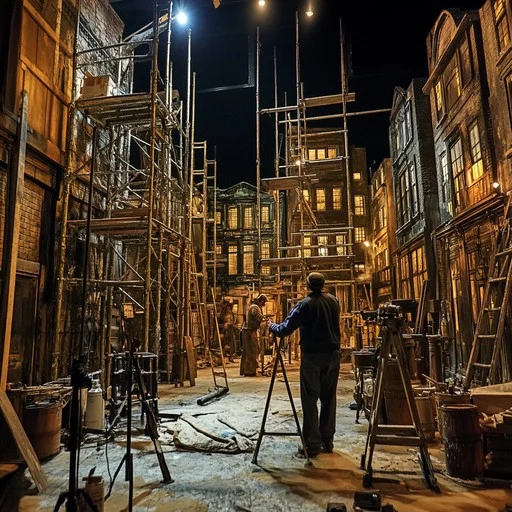
Over the past two decades, Atlanta has transformed from a regional production outpost into one of North America’s most active filmmaking centers. The city now rivals Los Angeles and New York in production volume, earning its reputation as the “Hollywood of the South.” This shift didn’t happen by accident—it resulted from deliberate policy decisions, infrastructure investment, and a cultural ecosystem that supports creative work at scale.
This transformation has reshaped Atlanta’s economy and cultural identity. The city’s film studios now anchor a production ecosystem that generates billions in economic activity, employs tens of thousands of workers, and produces content that reaches global audiences. Understanding how this happened—and what it means for the industry’s future—requires examining the incentives that sparked the boom, the economic structures it created, and the creative opportunities it continues to generate.
How Georgia’s Tax Incentives Built a Production Infrastructure
Atlanta’s rise as a film production center traces directly to Georgia’s Entertainment Industry Investment Act, enacted in 2008. The legislation offered a 20% base tax credit on qualified production expenditures, with an additional 10% for projects that include the state’s promotional logo. These incentives proved more generous and easier to monetize than competing programs in other states.
The policy worked. According to the New Georgia Encyclopedia, the state hosted just 79 film and television productions in 2007. By 2016, that number had grown to 245 projects representing $2.7 billion in direct spending. The incentives didn’t just attract productions—they justified the construction of permanent infrastructure. Sound stages, post-production facilities, and equipment rental houses emerged to serve a market that showed no signs of contracting.
Atlanta’s geographic advantages reinforced these policy incentives. The city offers diverse filming locations within a compact radius: urban skylines, suburban neighborhoods, rural landscapes, and period-appropriate architecture. A temperate climate permits year-round outdoor shooting. Hartsfield-Jackson Atlanta International Airport provides direct connections to major markets. These factors, combined with lower operating costs than coastal cities, created a value proposition that production companies found difficult to ignore.
The Economic Architecture of Atlanta’s Film Industry
The film industry’s economic impact on Atlanta extends well beyond the headline production spending figures. Georgia’s film and television industry generated $4.1 billion in direct spending during fiscal year 2023, supporting more than 40,000 jobs.
The economic structure this creates operates on multiple levels:
- Direct Employment: Production crews, actors, directors, cinematographers, and technical specialists work on active shoots. Post-production facilities employ editors, sound designers, visual effects artists, and colorists. These positions often pay above-median wages and require specialized skills.
- Indirect Business Activity: Productions source services locally—catering, transportation, construction, security, equipment rental, and location management. Hotels house cast and crew. Restaurants feed production teams. Hardware stores supply materials for set construction.
- Induced Economic Effects: Workers spend their wages in the local economy, supporting retail, housing, and service sectors. The multiplier effect means each dollar of direct production spending generates additional economic activity as it circulates through the regional economy.
- Tourism and Location Marketing: Successful productions turn filming locations into tourist destinations. Fans visit sites featured in popular shows and films, supporting local businesses and raising the city’s profile as a cultural destination.
Resources connecting productions with local studio facilities include Studio Space Atlanta, Peerspace, and listings through ProductionHUB. As the article notes, this infrastructure remains in place even during slowdowns—platforms that aggregate available spaces help productions scale up quickly when market conditions improve.
Conclusion
Atlanta’s transformation into a major film production center reflects the convergence of policy, infrastructure, culture, and market dynamics. The city’s studios and production facilities now form the backbone of an industry that employs tens of thousands, generates billions in economic activity, and produces content that reaches global audiences. While challenges remain—particularly around incentive sustainability and market competition—Atlanta has established itself as a permanent fixture in the production landscape. For filmmakers, industry professionals, and creative workers, the city offers opportunities that didn’t exist two decades ago, built on an infrastructure that continues to evolve with the industry itself.

Search Articles
Please help keep
Stage and Cinema going!
