


Areas We Cover
Categories

A “HOOK-FIRST” WAY TO USE LYRICS-TO-SONG AI SO THE OUTPUT FEELS LIKE A REAL SONG

by Lamont Washington | January 26, 2026
in Extras
When you already have lyrics, you are not asking for “music.” You are asking for a specific moment to land: a hook that feels inevitable, a chorus that earns its lift, and a track that supports the words instead of drowning them. That is why I prefer a hook-first approach when using a Lyrics to Song AI workflow. It reframes the goal from “generate a song” to “generate a chorus worth keeping,” then build everything else around it.
In my own testing mindset, this made the process feel less like gambling and more like directing. You stop chasing perfect full tracks and start collecting strong cores that can be refined into publishable songs.
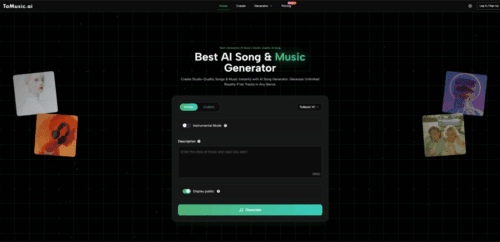
Start by Designing the Chorus, Not the Prompt
Most people begin with genre tags. I had better results when I began with the chorus itself.
Chorus design checklist
- One central phrase that repeats exactly
- Shorter lines than the verse
- Clear vowel sounds (easier to sing cleanly)
- A simple emotional message (clarity beats cleverness)
If the chorus is ambiguous, the whole track becomes ambiguous. If the chorus is sharp, the rest has a place to aim.
The “Chorus-Only Draft” Method
Instead of generating a full song immediately, treat the first draft as an audition for chorus identity.
Step 1: Generate with only Chorus + minimal Verse
- Write a short verse that sets context.
- Put most of your lyrical effort into the chorus.
Step 2: Evaluate chorus strength with three questions
- Does it feel repeatable without getting annoying?
- Does it create lift compared to the verse?
- Can you imagine someone remembering the main line after one listen?
If the chorus fails, do not tweak ten settings. Rewrite the chorus to be simpler and try again.
Once the Chorus Works, Build the Song Backwards
This is the reverse of how many people work, but it reduces wasted iterations.
Add verse detail only after the chorus lands
Your verse has one job: make the chorus feel earned.
- If the chorus is uplifting, the verse can be reflective.
- If the chorus is defiant, the verse can be tense.
- If the chorus is romantic, the verse can be intimate.
In my experience, building backward like this improves coherence because everything serves one focal point.
Structure: Use Contrast on Purpose
A song sounds intentional when sections have different roles.
A structure that supports hook-first writing
- Intro (short)
- Verse (context)
- Chorus (hook)
- Verse (new detail)
- Chorus (return)
- Bridge (angle shift)
- Chorus (final peak)
- Outro (release)
The key is not the labels. The key is contrast: the chorus should feel like a different energy state than the verse.

How to Give Style Guidance Without Creating Confusion
Even when lyrics lead, style guidance still matters. The trick is to keep it disciplined.
A stable style line
- One genre anchor
- Two moods
- Tempo or energy hint
- One or two texture cues
- Vocal intent (optional)
Example:
“Alt-pop, nostalgic and hopeful, mid-tempo, clean drums, warm bass, light vocal.”
When I overloaded style instructions, outputs often felt “in-between,” like the arrangement could not commit. Simpler guidance produced cleaner identity.
A Practical Comparison: What This Workflow Replaces (and What It Doesn’t)
| Creator Need | Hook-First Lyrics-to-Song Workflow | Stock Music Libraries | Traditional Production |
| Turn lyrics into a singable chorus fast | Strong | Weak | Strong but slow |
| Get background music quickly | Medium | Strong | Medium |
| Max control over melody and mix | Medium | Low | Very High |
| Iteration speed | High | Medium | Low–Medium |
| Best fit | lyric-driven creators, content teams | safe background picks | artists with production time |
This approach is strongest when your starting point is language and you want to hear it as music quickly.
Limitations That Make It Realistic
A hook-first process is not magic, and it helps to be honest about where it can break.
Variability is normal
Two runs can produce different interpretations. That is useful for exploration, but it means you should expect multiple drafts.
Vocal clarity can fluctuate
Dense lines, long phrasing, or uncommon words can reduce intelligibility. Shorter chorus lines usually improve this.
Some songs need more than one pass
It may take several iterations to get a chorus that feels memorable and a verse that sets it up properly. The workflow saves time by focusing your iterations on the part that matters most.
How I Judged “Good Enough to Keep”
Instead of chasing perfection, I kept drafts that met these practical criteria:
- The chorus phrase is memorable after one listen
- The verse does not fight the vocal
- The arrangement leaves space, especially if used under video
- The emotional arc makes sense (tension → release)
Once a draft met those standards, the remaining work was refinement, not reinvention.
A 12-Minute Starter Routine
- Write a chorus with one repeated hook phrase and short lines.
- Add a minimal verse that sets context.
- Generate 3 drafts and choose the best chorus feel.
- Rewrite the chorus for clarity if it does not land, then regenerate.
- After the chorus works, expand verse detail and add a bridge angle shift.
- Iterate one variable only (tempo OR mood OR texture) before generating again.
Used this way, a Lyrics to Song AI workflow becomes less about hoping a full song appears and more about engineering the one moment listeners remember—then shaping everything else around it.
