


Areas We Cover
Categories

THE SECRET ECONOMY BEHIND STANDING OVATIONS: WHAT REALLY HAPPENS AFTER THE APPLAUSE
by Michael Carr | February 22, 2026
in Extras
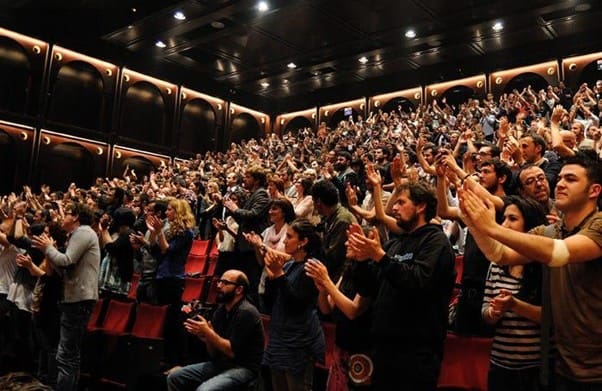
When the curtain falls and the audience rises, we see only the visible crescendo — applause, bouquets, glowing reviews. What remains hidden is the intricate economic machinery humming beneath that emotional climax. A standing ovation is not merely a cultural gesture; it is the final note in a complex financial symphony. Behind every triumphant premiere, every sold-out festival screening, every gallery opening buzzing with champagne glasses, there exists an ecosystem of micro-transactions, digital systems, last-minute purchases, and split-second financial decisions that quietly sustain the arts.
In today’s cultural landscape, revenue no longer begins and ends at the physical box office. It lives online, in mobile confirmations, in spontaneous purchases triggered by social media buzz. The applause may feel timeless — but the infrastructure supporting it is radically modern.
Festivals, Premieres, and the New Impulse Economy
Consider a contemporary film festival. The announcement of a surprise screening spreads through Instagram stories within minutes. A limited batch of additional seats opens online. Enthusiasm spikes. Now the crucial question: can the payment system keep pace with the emotional momentum?
If checkout requires multiple verification layers, slow bank redirects, or clunky desktop interfaces, the window closes. But when mobile-first systems enable near-instant authorization, the transaction becomes almost invisible — and the excitement remains intact.
Across Europe, payment ecosystems have adapted to this urgency. In Poland, for example, digital-native entertainment sectors embraced BLIK as a rapid authentication tool long before many cultural institutions considered mobile banking integration. Industries built entirely on real-time engagement — including platforms described as kasyno online blik — adopted it early because seconds matter. The cultural takeaway isn’t about the sector itself; it’s about behavioral proof. Speed protects enthusiasm.
Galleries and the Rise of Real-Time Support
Art exhibitions have undergone a similar transformation. Visitors now encounter QR codes beside installations, enabling instant catalog purchases or donations to support emerging artists. The moment of aesthetic impact becomes the moment of economic participation.
This fusion of emotion and immediacy changes patron behavior. Rather than postponing support — “I’ll buy something later” — audiences act while still immersed in the experience. The shorter the distance between admiration and action, the stronger the conversion.
For cultural organizations operating on tight margins, this micro-transaction architecture can determine survival. The invisible economy behind art openings is less about luxury and more about responsiveness. When the system works seamlessly, patrons feel empowered. When it stalls, momentum dissipates.
The Hidden Cost of Delay
In live performance especially, timing is everything. Marketing campaigns build anticipation carefully: teaser rehearsals, director interviews, costume previews. Emotional investment accumulates in layers. Yet a sluggish transaction system can quietly undo months of work in a matter of clicks.
Audiences in 2026 expect speed not because they are impatient, but because digital environments trained them to expect efficiency. From streaming subscriptions to interactive gaming ecosystems, instantaneous confirmation has become standard. The arts cannot afford to appear technologically distant from that norm.
What appears to be a mere technical upgrade is, in reality, cultural alignment. Payment systems now form part of the audience experience — as integral as lighting design or acoustics, albeit less visible.
Applause as Data
The standing ovation itself has evolved. Beyond its symbolic power, it generates measurable ripples: social shares, ticket resales, merchandise spikes, subscription renewals. In digital ecosystems, applause translates into immediate economic signals.
Cultural institutions that understand this dynamic treat financial infrastructure as part of creative strategy. They recognize that emotion peaks quickly and fades just as fast. Capturing that peak — respectfully, seamlessly — ensures sustainability.
The secret economy behind the ovation is not mercenary. It is pragmatic. Art deserves to be experienced without friction, and creators deserve systems that support their momentum. In a world where attention moves at lightning speed, the institutions that survive will be those that understand one simple truth: the applause is only half the story.
