


Areas We Cover
Categories

GUITAR PICKUPS: THE TINY PARTS THAT GIVE YOUR GUITAR ITS VOICE

by Connor McCormick | March 9, 2026
in Extras, Music
The first thing that a person pays attention to when playing electric guitar is, more often than not, the shape of the body, the brand or the amplifier. However, with experienced players, the true magic is often something much smaller, such as guitar pickups.
These little pieces rest in the silence of the strings, though they have a monumental role in the formation of your sound. Actually, the pickups make an electric guitar have so much power and expressive tones. An electric guitar could hardly make any sound in their absence. Consider the guitar pickups to be the ears of your instrument. They detect the strings’ vibration and convert the movement into an electrical signal, which your amplifier converts into music. The pickup you choose can give your guitar a bright, warm, aggressive, smooth, or punchy sound.
To really know your guitar, pickups are among the best places to begin learning.
What are Guitar Pickups?
Guitar pickups are electronic devices that are placed below the strings of an electric guitar. They are primarily intended to sense the vibration of metal strings and convert it into an electrical signal.
The pickup contains magnets with 1,500 turns of fine copper wire. When the guitar string vibrates over the pickup magnet, it alters the magnetic field surrounding the pickup. The result of this change is a small electrical current in the coil of wire.
That is then passed through your guitar cable to an amplifier. An amplifier amplifies the signal and drives it to the speakers so you can hear your guitar. Simply put, it is the guitar pickups that make an electric guitar electric.
The Science of Guitar Pickups.
The underlying concept is very simple, even though pickups require electronics and physics. It is done by a process known as electromagnetic induction.
Taking a metal guitar as an example, when you pluck one of the strings, it vibrates in the magnetic field formed by the pickup. Since the pickup has a coil of wire, the movement of the magnetic field induces an electrical signal in that coil. The signal takes a definite course. The string’s vibration is felt by the pickup, which then sends a signal along the cable, and eventually it gets amplified so we can hear. Each pickup records these vibrations in a slightly different manner. This is why replacing pickups can radically alter a guitar’s sound, even when the guitar remains the same.
What is So Important about Pickups?
Many players believe the amplifier or pedals primarily contribute to tone; the pickups, however, affect the sound much earlier in the process. The pickup determines how the string’s vibrations are read. Some pickups accentuate brightness and clarity, and others accentuate warmth and power. As a result, twin guitars with different pickups may sound very different when played through the same amplifier. When you think of the guitar as a singer, then the pickup is the microphone. Various microphones record a voice in different ways, and pickups record the same with guitar strings. It is why most musicians upgrade their pickups when they want to enhance their sound.
Single Coil Pickups: Bright and Clear.
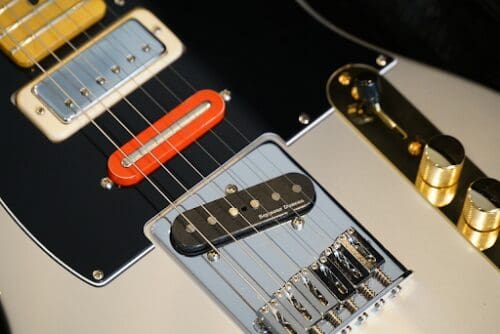
The single-coil pickup is one of the earliest pickup designs and remains very popular even today. Single-coil pickups are fitted to many classical guitars, such as the Fender Stratocaster and Telecaster. These pickups have a single coil of wire surrounding magnets, as the name implies. This is the simple design that produces the sound, characterized by brightness and clarity.
Single-coil pickups can be rather sharp, clean, and very detailed. All notes are distinct, which is why they are popular for expressive playing among guitarists. They are particularly good at styles such as blues, country, funk, and classic rock. Single-coil pickups are usually chosen by players who favor clean tones and jingling guitar tones. Nevertheless, single-coil pickups may occasionally pick up unwanted electrical noise, and in some cases, this can produce a humming noise.
The Humbucker Pickups: Fat and Strong

The noise issue of single coils was eliminated with the design of humbucker pickups. Humbuckers also use two coils, which are wired together rather than a single coil, unlike other types that can generate unwanted electrical hum. This design not only reduces noise but also alters the guitar’s tone.
Humbucker pickups tend to be thicker and fuller-sounding than single-coil pickups. They focus more on lower frequencies and produce a strong tone that suits heavier music genres.
Most well-known guitars, such as the Gibson Les Paul, make use of humbuckers as they are very rich and warm. Humbuckers are popular among rock, hard rock, and metal players because they provide high output and sustain.
The Role of Pickup Position
The pickup location on the guitar’s body is another factor that affects the guitar’s tone. The majority of the electric guitars possess two or even three pickups across the strings.
The pickup in the neck area normally produces a tonier, smoother sound. Due to the broader vibration of the strings in this region, this part is lower and richer in tone. The pickup close to the bridge produces a sharper, brighter sound. As the strings vibrate less in this region, the sound qualifies as tight and focused. A few guitars may also have a middle pickup, which combines the characteristics of the neck and bridge pickups. This provides the players with a greater range of tones in switching pickup positions.
Active and Passive Pickups
The other classification of guitar pickups is whether they are active or passive.
The most common pickup type is the passive pickup, which is found in most guitars. They do not use batteries and are fully dependent on magnets and wire coils. Passive pickups are known for their natural sound and responsiveness.
Active pickups, however, have an inbuilt battery-powered preamp. In this kind of system, the signal strength is enhanced, and noise is minimized. Active pickups are often used in contemporary rock and metal guitar for their increased output and tighter sound.
There is a character of each type, and the style and preference of the player usually influence the selection.
Brands of Popular Guitar Pickups.
There are a number of firms that manufacture high-quality guitar pickups. These brands have pickups with various styles of music and tonal variations. There are also popular pickup manufacturers such as Guyker, Seymour Duncan, DiMarzio, EMG, Fender and Gibson. The models offered by each brand offer a wide variety and can significantly change a guitar’s character. Most guitarists test various pickups to find the sound that best suits them.
How to select the Right Guitar Pickups.
The decision on the nature of the guitar pickups is based on your desired sound of the guitar.
Single-coil pickups may be preferable if you prefer a bright, clean sound with a lot of sharp detail. They reproduce all the nuances of string motion and can be used effectively with speakers driven by clean amplifiers. Humbuckers might be more appropriate if you need a more powerful, thicker sound. They are good outputs and warm-sounding, and can be used in distortion and heavier music. Comparing pickups and trying various guitars are often best done by listening. Tone is highly personal, and what may suit one player may not suit another.
The Secret of Making Your Guitar Sound.
Guitar pickups are small elements, but they have a huge impact on the sound of your instrument. They convert the vibration of the strings into music first. Getting pickups will make you get to know your guitar better. As soon as you start paying attention to the way pickups condition the tone, you can start hearing the differences in the way guitars sound and the types of playing styles.
It does not matter whether you are playing blues, rock, metal, or jazz; the correct guitar pickups would assist you in making your sound more noticeable. Ultimately, it is these small technological components that provide an electric guitar with its voice – and it is the voice that makes each guitarist special.
