


Areas We Cover
Categories

Theater Review: THEATER OF THE MIND (Goodman Theatre at the Reid Murdoch Building)
by C.J. Fernandes | March 31, 2026
in Chicago, Concerts / Events, Theater
MEMORY PLAYS TRICKS—
AND SO DOES EVERYTHING ELSE
An immersive maze where perception falters
and certainty slips through your fingers
Unreliable narrators everywhere—but not the ones you think.
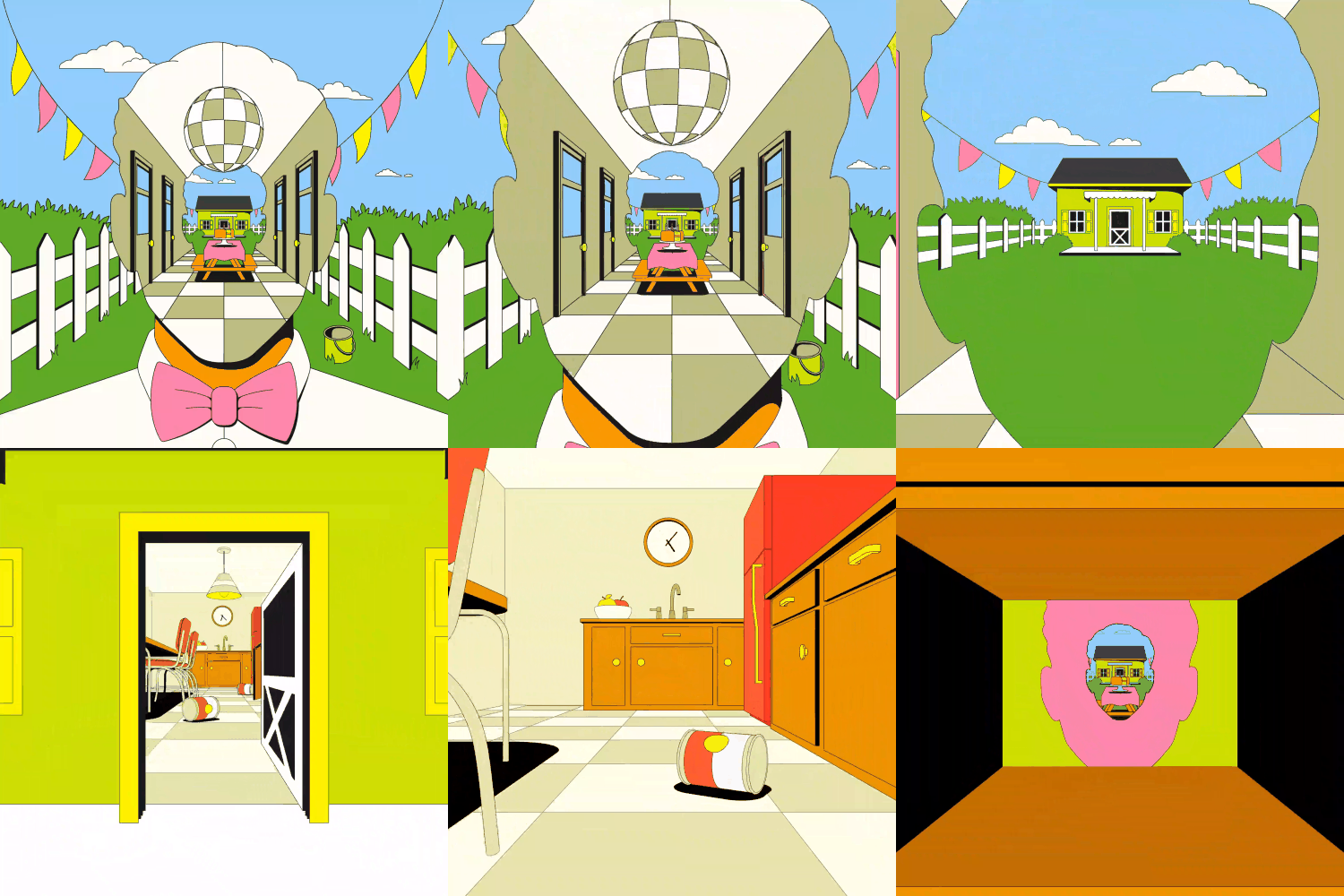
The Persistence of Memory by Salvador Dalí is one of the most famous paintings in the world, so iconic that even if you do not know its name—which many do not—you would recognize its images either directly or through its many, many variations in popular culture. More than anything else, this enigmatic, endlessly analyzable surrealist masterpiece repeatedly popped into my head during my trek through Theater of the Mind, the immersive theatrical experience dreamed up by music legend David Byrne and his partner—both creative and connubial—Maya Gaonkar, and mounted under the aegis of the Goodman at the Reid Murdoch Building in downtown Chicago.
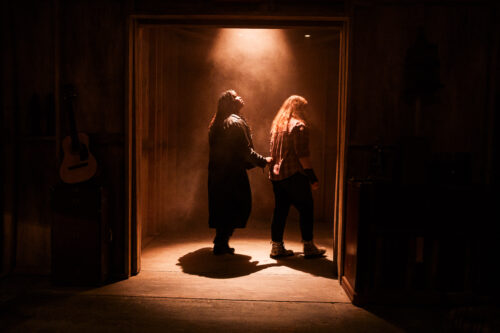
This is a difficult review to write because so much of the pleasure of this production comes from knowing absolutely nothing about it going in, so excuse this piece for being light on the specifics. A group of strangers meet in an anteroom where they pick randomized names from a receptacle. These names represent their personae over the next 75 minutes as they step into the first of many linked rooms. Here they meet David—a charming gentleman of a certain age, giving off strong vibes of F. Scott Fitzgerald without the alcoholism, or Tom Wolfe without the snootiness.

Through the run, the role is played by different actors depending on your particular showing. Jeff and Emmy nominee Kelli Simpkins—simply wonderful—was our guide. David leads us through different rooms, conducting us through “his”—very important, that word—memories of his life, along the way subjecting us to experiences that make us question the accuracy of our own senses.

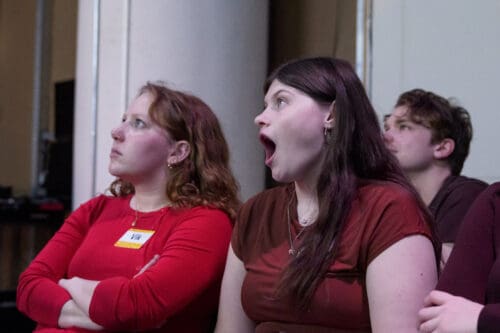
I am possibly the worst sort of person to review this show. Thanks to circumstances which are too complicated and tedious to get into, I was extremely conversant with the science behind all the events we experience in the rooms. It did not distract from the artistry, but there was no “wow factor” for me because I immediately knew what would happen once we were walked through each setup. That said, the gasps from the rest of my cohort were strong indications that the rooms were having their intended effect. To be honest, I was a little envious of them—and crabby that I was being denied that joy of discovery. It would have been nice to experience Theater of the Mind as a neuroscientific noob.
Directed by Andrew Scoville, the visual artistry and design on display in the rooms is extraordinary. Neil Patel (Scenic Designer), Jeanette Oi-Suk Yew (Lighting Designer), and Cody Spencer (Sound Designer) have done remarkable work here, particularly given how radically different the rooms have to be. My favorites would be the… argh. Never mind. Let me just say that one of the rooms is such an astonishing facsimile—a magical amalgamation of scenic design, sound, and light—that I found myself reaching up in wonder to touch one of the design elements (a big no-no) to see what it was made from. It was so real—and that was clearly impossible.
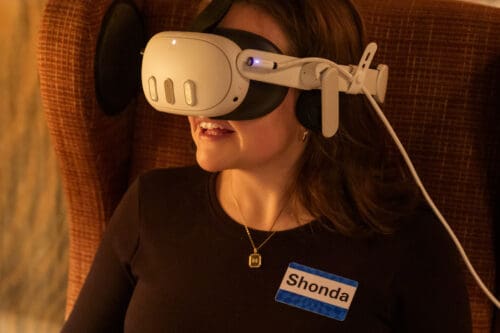
And that leads us into the heart of the show. What is real? What is true? We tend to implicitly trust the evidence of our senses—what we see, hear, taste, and feel. It must be true because it’s right in front of our eyes, or on our tongue, and so on. But Theater of the Mind elegantly does what neuroscientific wonks have been trying to convince us of for decades: our senses mislead us. Repeatedly. And this is not just an academic assertion. It has real-world implications: for example, over two-thirds of wrongful convictions are because of eyewitness testimony. It used to be the gold standard, but it is reliable only between 20% to 35% of the time, depending on the study you reference.

But if you can’t trust your own senses, then what—or whom—can you trust?
Byrne and Gaonkar very wisely choose not to answer that question. Late in the show, David has a conversation across time with his younger self where they discuss an incident that they interpret very differently. David’s memory of the incident is starkly different from that of his younger self, but that doesn’t invalidate either of their interpretations: child-David’s trauma is real; adult-David has elided it—or simply moved on—and just doesn’t remember it as being that bad.
So, which one is real?
That’s the wrong question.
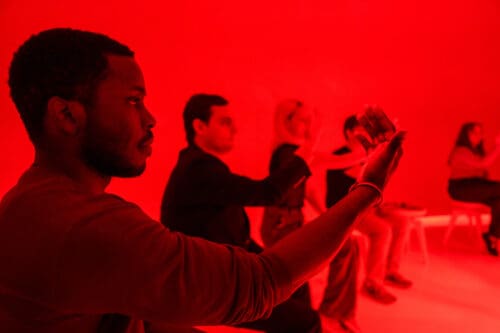
Theater of the Mind at its core wants us to think of life in non-binary terms; things can be right or wrong, yes, but they can also exist on a continuum, with a point on that continuum where either side can be correct, depending on your perspective.
But when your own senses deceive you, how sure are you about your perspective?
And look to your left, through the curtained window, when you leave the show, for a witty epilogue on the circularity of life—and time itself.
✦ ✦ ✦ ✦ ✦ ✦ ✦ ✦ ✦ ✦
photos of Chicago audience members experiencing
Theater of the Mind by Todd Rosenberg
Theater of the Mind
Goodman Theatre
Reid Murdoch Building, 333 N. LaSalle, Chicago
recommended for ages 10+
ends on August 30, 2026
for tickets ($69–$99, subject to change),
call 312.443.3800 or visit Theater Of The Mind Chicago
✦ ✦ ✦ ✦ ✦ ✦ ✦ ✦ ✦ ✦
