


Areas We Cover
Categories

VENUE WATER FEATURES FOR OUTDOOR EVENTS
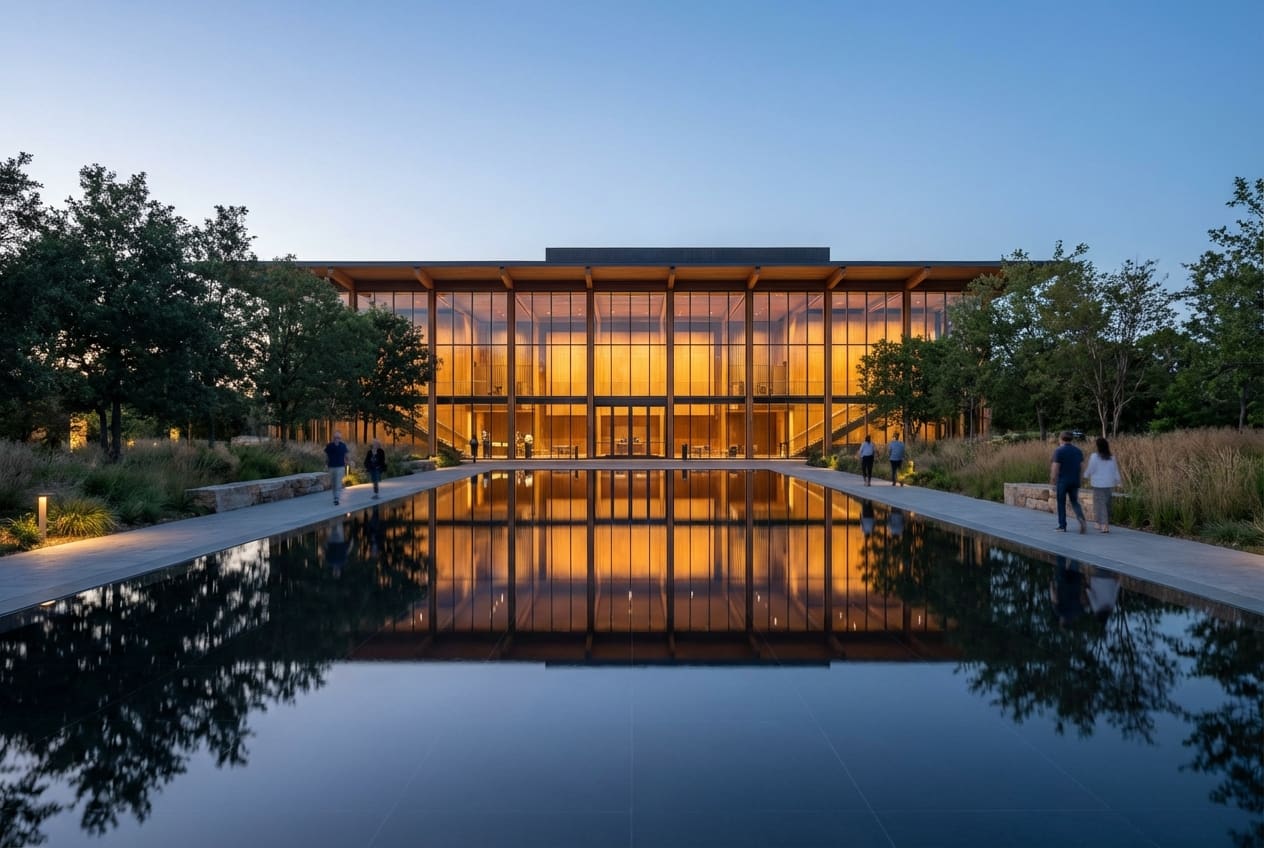
4 Surprising Ways Water
Features Transform Venues
Four simple water tricks make venues premium by creating stronger first impressions, establishing functional pre-show gathering spaces, providing photogenic branding backdrops, and adding architectural elegance.
Thoughtfully integrated water features transform standard outdoor event design into cohesive, high-end environments before performances begin.
The performance truly begins the moment attendees step out of their vehicles and hear the low, steady conversation of moving water.
Following the sound past a row of mature oaks toward a fountain plaza, conversation softens, and the ordinary pressure of traffic and daily schedules drains away.
This is the quiet work of venue design, shaping the theater atmosphere. The best performing arts venues have always understood this intuitively.
The architecture of a concert hall, the intimacy of a black box theater, and the sweep of an outdoor amphitheater are not neutral containers.
They make an argument about what kind of experience this will be. Water, in motion or in stillness, in sound or in reflection, is one of the most powerful tools available to make that argument persuasively.
Why Environment Is Part of the Art
The performing arts have never treated context as incidental. A symphony performed in a gymnasium and the same symphony performed in a hall with a vaulted ceiling are two different events.
Directors, set designers, and acousticians have spent centuries refining that truth.
Outdoor event design deserves the same deliberate attention. Yet the landscape surrounding a venue is still too often treated as infrastructure maintenance rather than curatorial decision-making.
Planners exploring decorative and functional installations frequently evaluate architectural cascades, commercial basin systems, and high-reaching lake fountains from Everblue Pond when researching options for visually striking water displays.
This deliberate curation elevates the space from merely paved and planted to truly experiential.
Water changes that calculus because it is inherently dynamic. It responds to light, produces sound, and orients people toward it without requiring signage.
When venue planners begin treating water installations as core experiential infrastructure, something shifts in the quality of the audience experience.
1. The First Impression That Sets the Tone
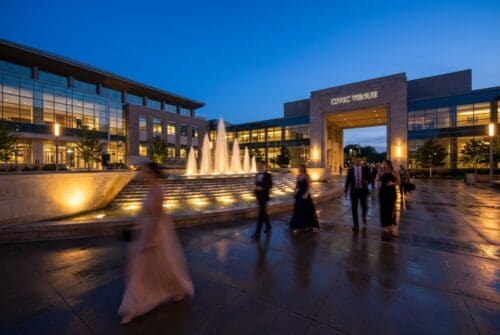
Arrival is a moment of emotional calibration. Audiences arriving at performing arts venues are making rapid, largely unconscious decisions about whether the evening will be worth the effort.
The physical environment answers those questions before a single word of a program is read.
A fountain plaza at the entrance of a civic arts center does something that a clean sidewalk and a well-lit marquee cannot do alone.
It signals deep intention and care. It says, in the specific visual language of moving water and shaped stone, that this place takes beauty seriously.
Consider a large municipal amphitheater where a central water feature anchors the entry walkway.
Arriving guests encounter the sound first, then the shimmer, and finally the moving light patterns cast across the pavement.
This sensory marker separates the ordinary world from the performance world, composing the first sequence of an evening perfectly.
| Key Insight: Water features serve as sensory markers that emotionally calibrate an audience. They signal that a venue prioritizes beauty and intentionality, effectively separating the mundane outside world from the upcoming performance experience. |
2. Pre-Show Gathering Spaces Audiences Actually Use
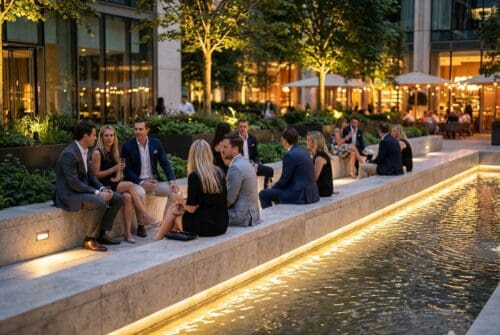
Pre-show time presents a persistent design challenge that most venues underestimate. Audiences arrive early because traffic and parking require it, but early arrival without a well-designed gathering space produces awkwardness.
People cluster near entrances or fill gaps between ticket lines without a clear reason to be somewhere specific.
Water features solve this problem with remarkable elegance. A reflecting pool with low seating along its edge, or a small cascading channel running through a festival ground, gives people something to orient around naturally.
Water acts as a social anchor, slowing movement and creating the conditions for relaxed, unhurried conversation.
A hotel courtyard near a major theater district illustrates this dynamic clearly. When a central fountain anchors the courtyard, guests gathering before an evening out cluster around it organically.
The ambient sound of the water creates privacy in public, which makes conversation feel warm rather than exposed.
3. The Backdrop Making Every Photograph Worth Sharing
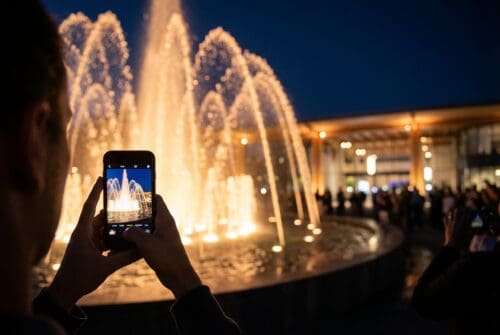
Every performing arts venue now exists in two spaces simultaneously. There is the physical venue itself, and the social media presence assembled image by image from photographs that attendees share online.
A venue that is visually compelling in the physical world becomes recognizable and aspirational in the digital one.
Water features are among the most photogenic elements available to outdoor event designers. They introduce motion into images that would otherwise be static and multiply the light brilliantly.
Uplighting at the base of a fountain produces a dramatically different effect at dusk than at noon.
Nighttime photography of moving water creates a softness that elevates even casual smartphone images.
A still reflecting pool performs its own architectural magic, doubling stage canopies and tree lines to create composed captures.
When a sculpture garden fountain is used as the formal backdrop for an opening-night press event, it becomes an instantly recognizable visual signature.
| Pro Tip: Enhance your venue’s digital footprint by using strategic uplighting at the base of fountains. This creates dramatic evening visuals that encourage attendees to share high-quality photos, organically boosting your brand’s social media presence. |
4. The Elegance Defining Premium Arts Campuses
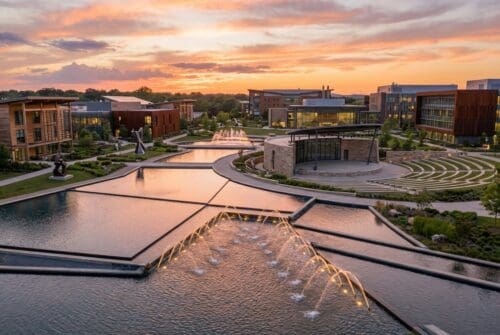
The most lasting transformation water brings to a performing arts venue is the cumulative sense of sustained refinement.
It creates the feeling, over the course of an entire evening, that every element of this place was chosen with absolute care.
Leading institutions increasingly treat water as an integrated design element woven through courtyards, walkways, and outdoor stages.
At an outdoor amphitheater complex, a series of linked water features creates visual continuity from the parking approach to the stage itself.
The water reads seamlessly as part of the architecture, making the entire experience feel emotionally coherent. The practical dimension of this scale matters just as much as the aesthetic appeal.
Large-scale water displays at venues operating across full seasonal calendars require commercial-grade equipment that performs reliably.
Arts campus landscaping achieves true elegance when the scale of the water features matches the ambition of the space.
This strategic alignment separates venues that audiences remember as truly beautiful from those they simply remember as adequate.
A Closing Reflection
Return, for a moment, to the audience member who paused beside the fountain upon arrival. She was not thinking about landscape architecture or the venue’s capital improvement budget.
She was simply thinking about how the light moved on the surface of the water.
The performing arts have always understood that the total experience of a performance extends far beyond the stage.
Water, light, and landscape are not merely the backdrop to the art of presentation. In the hands of thoughtful venue designers, they are active participants that quietly enhance the atmosphere.
These elements do their work before anyone takes a seat, and continue doing it long after the audience carries the memory of the evening home.
The question worth asking is simple. What does your venue communicate before the performance even begins?
| Author Profile: Everblue Pond offers a broad selection of large pond, commercial lake, and water-feature equipment for landowners, farmers, acreage owners, ranch owners, large property owners, golf course managers, pond managers, and property managers who want cleaner water, healthier ecosystems, and dependable year-round operation. |
