


Areas We Cover
Categories

HOW LIVE PERFORMANCE LEARNED TO STOP BEING JUST LIVE
by Susan Hall | April 3, 2026
in Extras, Virtual
There was a stretch when “live” actually meant live — no shortcuts, no screens, just turning up and sharing the same air as the cast. Then things started to bend a bit. It kicked off with NT Live back in 2009, and before long you had a Sydney cinema crowd settling in midweek, watching a one-woman show streamed straight out of London. Somewhere in that shift, the whole idea of “being there” got a quiet rewrite.
Live performance is no longer a place. It has become a format.
The New Hybrid
The old rules don’t apply anymore. Audiences now expect:
- the intimacy of a close-up they could never get from the dress circle
- the convenience of a local cinema instead of a flight to Melbourne or overseas
- production values that split the difference between stagecraft and screen grammar
- access to international productions without the price tag of a London season
What they don’t always expect is how strange that hybrid can feel. The Prima Facie broadcast with Jodie Comer hit a proper flashpoint moment, mainly because it pulled off something no one had really seen before — four cameras locked in, sharp cinematic cuts, and a close-up so crisp it made the front row feel like it was sitting miles back.
The Chinese cinema release pulled in over 31 million yuan, and the Douban rating hit 9.5. Yet a portion of the audience walked out and demanded refunds. They’d paid for a film and received a recording of theatre instead.
What Gets Lost, What Gets Found
When live performance moves into a mediated space, the trade-offs become visible.
| What drops away | What becomes possible |
|---|---|
| the unpredictability of a live audience’s reaction | a level of visual detail impossible from any theatre seat |
| the shared energy that passes between strangers in a room | access for audiences outside major cities |
| the sense that what is happening exists only in that moment | the ability to compare productions across continents |
| — | a permanent record of a performance that would otherwise vanish |
For regional audiences in Australia, the calculation is simple. A ticket to a broadcast costs a fraction of what a Sydney or Melbourne season would require once travel and accommodation are added. The experience is different, but for many it is not lesser—just different.
Casino Processes — The Other Live Performance
If theatre has spent the last decade learning to translate live experience into digital formats, another industry started from the opposite end. Modern online pokies never pretended to be about physical presence. Instead, they built their own kind of live performance—one where production values borrow from television and the pacing borrows from sport.
For Australian players, PayID pokies Australia have become the standard way to engage with this space, prioritising speed and reliability. The appeal of best online pokies Australia PayID lies in how seamlessly the transaction mirrors what audiences now expect from any digital live experience: instant access with minimal friction.
Online pokies with PayID have taken off partly because the payment layer barely registers — it feels more like flicking on a streaming subscription than dealing with the old clunky setups. That’s a problem theatre’s still trying to crack: making a mediated experience feel present, reactive, and immediate, even when there’s no one actually in the room.
Live Performance Beyond the Stage
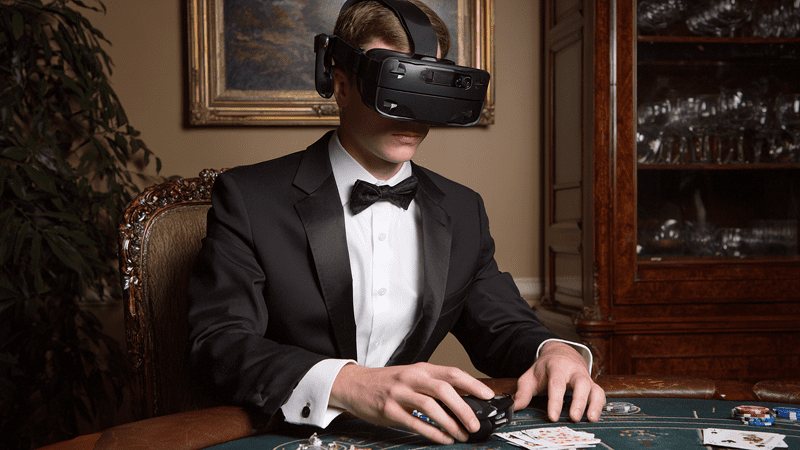
The coming years will push these categories further. Some of the most interesting experiments are happening in Las Vegas, where venues like the Luxor have introduced VR play lounges that place remote participants into shared digital spaces.
Expect to see:
- virtual Broadway shows programmed into the intervals of live gaming streams
- augmented reality overlays that project performers into living rooms
- hybrid venues designed from the start for both in-person and remote audiences
- new performance genres that don’t fit neatly into “theatre” or “screen” categories
What makes these developments worth watching is not the technology itself but how quickly audiences are adopting them. The same person who streams a West End production on a Thursday night might join a virtual music festival on Saturday without thinking twice about the format shift.
What Survives, What Thrives
None of this means the end of traditional live performance. The packed houses at the Sydney Opera House and Melbourne’s Arts Centre prove there is still appetite for the real thing. But the digital live sector is no longer a footnote. It has become its own tradition—one with its own conventions, audiences, and growing list of debates about what counts as authentic.
The argument over whether a broadcast is “real theatre” will probably never end. But the more interesting question is whether it needs to. Live performance has always adapted to the spaces available to it—from amphitheatres to black boxes, from proscenium arches to site-specific installations. Adding screens to that list is not a betrayal. It is just the next venue.
