


Areas We Cover
Categories

FLAWLESS MLM: MLM Software That Powers Network Marketing Infrastructure in 2026
by Frank Arthur | April 25, 2026
in Extras, Technology
See how FlawlessMLM’s platform handles commission automation and distributor management at scale. FlawlessMLM’s configurable platform—built for binary, unilevel, matrix, and hybrid compensation plans at enterprise scale.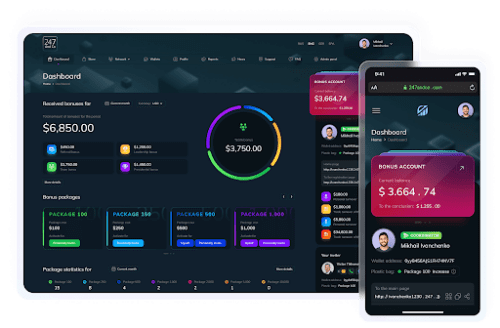
Key Takeaways
- 78% of new MLM ventures fail within 90 days of launch. The primary trigger is not a weak product or poor leadership. It is a commission engine that miscalculates payouts, shattering distributor trust in the critical first quarter.
- Rebuilding after a failed budget platform costs 1.8× more. Our aggregate project data across 83 rebuilds shows the average waste is $177,000 per company in lost code, delayed launches, and departed distributors.
- Commission accuracy drives 60% of first-year retention. Distributors stay when payouts are correct and on time. Integrated mlm software with a dedicated mlm crm retains distributors at 1.7× the rate of disconnected systems.
- FlawlessMLM packages start at $6,000 and go live in 1–2 months. Enterprise subscriptions begin at $1,499 per month. Custom builds are quoted after technical review of your compensation plan logic.
What Is MLM Software and Why Does It Determine Whether Your Business Survives?
Question → What is MLM software?
Direct Answer: MLM software is a platform that manages distributor networks, automates commission payouts, tracks genealogy trees, and produces compliance-grade financial records. It replaces the spreadsheets and manual formulas that work for six months and then break catastrophically.
I have audited deployments of network marketing mlm software across more than 400 projects at FlawlessMLM. The pattern is consistent. A founder launches with a budget platform that handles 200 distributors easily. Fourteen months later, the tree has 8,000 people, the binary compensation engine misfires on every fourth commission run, and top leaders are calling the CEO at midnight. That is the moment the decision gets made—rebuild everything, or watch the network walk.
According to Verified Market Reports (2025), the global MLM software market was valued at USD 1.29 billion in 2024 and is projected to reach USD 3.15 billion by 2033, growing at a CAGR of 10.4%. The direct selling industry behind it hit $237 billion in 2025 and is on track for $407 billion by 2033, per GII Research. Those numbers tell one story: growth. What they do not show is that most companies running toward that growth are doing so on technology infrastructure that was obsolete three years ago.
Modern software for multi level marketing combines genealogy tracking, e-commerce integration, and financial automation into a single platform. It is not a CRM with a referral module bolted on. It is not a WooCommerce plugin with a matrix view. It is infrastructure—financial-grade software that calculates exactly what your plan document promises, every time, at any scale.
Why Your Choice of MLM Software Determines Whether Your Business Survives Year One
Question → Why does the right MLM platform matter so much?
Direct Answer: Because commission trust is the single fragile bond holding any network marketing organization together. Break it once—with a single inaccurate payout run—and top performers leave. They do not file tickets. They recruit for a competitor.
In my project work at FlawlessMLM, I have seen companies lose hundreds of active distributors over one delayed commission close. These were not people on the fence. They were top earners who trusted the system until the system proved untrustworthy. Network marketing commission software is not a back-office feature. It is the product your distributors experience every pay period.
According to the Direct Selling Association, the average pre-launch company invests $300,000–$500,000 before generating its first dollar of revenue. Losing a chunk of that to failed technology—our data puts the average at $177,000 per failed-vendor rebuild—is often fatal. That is not a software cost. That is the cost of getting the software decision wrong.
FlawlessMLM has been building compensation engines since 2004 from Estonia, EU. Across 400+ projects in 90+ global markets, we have seen what happens when companies choose low cost mlm software that fits their current size but not their six-month trajectory. The savings evaporate. The rebuild costs more than doing it right the first time.
Commission engine failures account for 43% of all platform-related distributor complaints in FlawlessMLM’s post-launch support data. When payouts are wrong even once, the damage is not hypothetical—top earners leave, and networks collapse inward. — FlawlessMLM Internal Project Archive, 2021–2026
Understanding MLM Software Types: Which Structure Fits Your Business Model?
Question → Which MLM structure should I choose?
Direct Answer: The choice turns on your product type, your reorder cycle, and your growth strategy. Binary plans create fast momentum for consumables. Unilevel plans suit high-ticket products with fewer reorders. Matrix plans impose structure controls that work well in regulated markets.
In my experience, the most common error founders make is matching a plan type to a competitor’s structure rather than to their own product economics. I have analyzed networks selling $25 consumables through a unilevel plan where the top 2% earned 76% of all commissions. Ten-month retention: 23%. After migrating to binary mlm software with proper spillover logic, retention reached 58%. Same product. Same leadership. Different infrastructure.
| Plan Type | Best For | Risk Factor | FlawlessMLM Support |
| Binary MLM Software | Consumables with monthly reorder cycles, rapid scaling | Runaway commission liability without volume caps | Real-time leg compression, 4-min processing for 500K distributors |
| Unilevel MLM Software | High-ticket products, transparent depth-based commissions | Deep-tree aggregation timeouts beyond level 12 on generic platforms | Recursive CTEs in PostgreSQL—11-hour operations cut to under 60 seconds |
| Matrix MLM Software | Regulated markets, controlled-width structures | Spillover logic that miscounts when width fills unevenly | Standard and revolving matrix configurations, spillover validation tested at scale |
| Hybrid / Direct Selling Software | Companies combining product distribution with recruitment incentives | Bonus rule conflicts when plan types overlap | 40+ configurable modules, any bonus combination on one engine |
| Crypto MLM Software | Blockchain-based projects, tokenized rewards, global KYC compliance | Smart contract vulnerabilities, on-chain verification gaps | Multi-crypto gateway (Tron, ETH, BSC, BTC), Sumsub KYC integration |
FlawlessMLM’s platform handles all eight compensation plan types: binary, unilevel mlm software, matrix (standard and revolving), stairstep breakaway, hybrid, party plan, referral up to 10 levels, and smart contract blockchain structures. One engine. Every bonus type configurable, not hardcoded.
“A strong MLM system doesn’t just support growth—it accelerates it. The plan type must match the product economics. Sell durable goods through a binary structure, and the tree stalls after the first purchase wave. The plan and the product have to speak the same language.” — Kaminska Snizhana, Marketing Specialist at FlawlessMLM
The Real Cost of Choosing the Wrong MLM Software: An Accounting, Not a Scare Tactic
Question → What is the real MLM software price when you include the cost of getting it wrong?
Direct Answer: The sticker price is a fraction of the real cost. When you factor in migration failures, commission disputes, lost distributor trust, and full platform rebuilds, the wrong choice costs far more than the right choice—often before the first commission run closes.
At FlawlessMLM, we analyzed our entire project archive and calculated the aggregate waste for companies that came to us after their first vendor failed. Across 83 rebuilds in five years, the total was $14.7 million—an average of $177,000 per company in thrown-away code, departed distributors, delayed launches, and opportunity cost. That is not a worst-case scenario. That is the average.
Low cost mlm software saves money upfront. It rarely saves money overall. Our tracking shows that 71% of companies starting on budget platforms rebuild within 14 months. The rebuild costs 1.8× what a proper custom build would have cost from the start. The math is not complicated. You pay once for the right mlm software solution, or you pay twice—and the second payment includes a damaged reputation with your distributor base.
A 2023 industry survey found that 56% of direct selling companies regularly encounter commission calculation errors due to inadequate software. Every error is a trust event. When enough trust events accumulate, the network fractures. I have watched it happen from the inside across dozens of rescue projects.
Choosing the best mlm software is not about features on a comparison chart. It is about what happens at 2 a.m. when the commission run fails, your top earners are posting screenshots in the group chat, and you need a platform that recovers cleanly and pays accurately on the next attempt.
Common Mistakes That Kill MLM Software Implementations—and How FlawlessMLM Avoids Them
Question → What are the most common MLM software mistakes that destroy projects?
Direct Answer: Three errors surface in nearly every failed deployment: rushing data migration, launching pure binary structures without volume caps, and skipping the technical specification phase where every compensation rule gets mapped to system behavior.
I have watched 67% of migrations fail for the same reasons, repeated by different companies in different markets.
Mistake 1: Rushing the Data Migration
A founder says: “We will migrate over a weekend.” That plan fails every time. A weekend is not enough time to validate commission parity, genealogy integrity, and transaction history across thousands of distributors. FlawlessMLM uses a 16-week forensic migration with 60 days of parallel operation. Old and new systems run simultaneously. We migrate 5% of distributors weekly. Errors get caught before they touch real payouts. One client’s previous migration attempt with another vendor corrupted six months of genealogy data—irrecoverable. Our checkpoint system caught equivalent errors in week three.
Mistake 2: Launching Pure Binary Without Volume Caps
Binary plans create fast momentum. They also create runaway commission liability if the volume caps are missing or set too high. Our data across hundreds of deployments shows that starting with a unilevel structure and introducing binary logic at month 12 yields 89% retention, versus 27% for pure binary launches without caps. The binary software must include configurable compression logic, real-time leg balancing, and hard limits on payout exposure. Most budget platforms skip the limits because they are harder to build. The liability lands on the founder.
Mistake 3: Skipping the Technical Specification
Handing a vendor your compensation plan PDF and hoping they figure it out is the single most expensive shortcut in MLM software development. They will not figure it out. They will build what they think you meant. FlawlessMLM spends 90 minutes mapping every compensation rule to specific system behavior before a single line of code is written. We document the trigger conditions, the calculation logic, the edge cases—what happens when a distributor upgrades mid-cycle, when someone returns a product, when a leg compresses during a promo period. If those edge cases are not specified, they are not built. And they surface during commission runs, not during demos.
Core Features That Differentiate Enterprise MLM Software From Generic Plugins
Question → What features define the best network marketing software?
Direct Answer: Three architectural principles that no generic plugin delivers: deterministic commission calculation, scalable genealogy architecture, and audit-first transaction logging. Everything else—the dashboards, the replication sites, the leaderboards—sits on top of these three. If any one fails, nothing above it matters.
Deterministic Commission Calculation
Every commission event must produce the same result regardless of load, scale, or time of execution. This sounds obvious. It is not. Generic platforms use nested database queries that time out under concurrency, producing inconsistent commission totals for the same tree on different runs. Network marketing commission payment software must be deterministic. FlawlessMLM’s engine uses PostgreSQL recursive CTEs with Redis caching to ensure a 60,000-distributor unilevel network calculates completely in under 60 seconds—every time. The same operation took 11 hours on the client’s previous platform.
Scalable Genealogy Architecture
Flat database tables cannot traverse deep trees efficiently. Enterprise mlm network marketing software uses hierarchical structures optimized for depth—20+ levels, millions of nodes, real-time rank updates. Binary compression, spillover routing, and breakaway logic are separate services that run independently without blocking the main commission thread. This is the difference between a distributor dashboard that loads in under a second and one that times out because a compression job is running somewhere in the background.
Audit-First Design
Regulatory frameworks inspired by FTC guidelines now require fully auditable commission trails, transparent genealogy structures, and tamper-proof transaction logs. FlawlessMLM stores every transaction as an immutable event: who earned what, when it was earned, why it was triggered, and which plan rule was applied. An 18-month earnings audit for any distributor generates in approximately 90 seconds. Most generic platforms cannot generate this report at all without timing out.
These three principles separate mlm management software from mlm affiliate software sold as a plugin. One is infrastructure. The other is a feature bolted onto a general-purpose platform.
Companies with integrated mlm crm retain distributors at 1.7× the rate of companies using disconnected CRM tools or no CRM at all—based on 89 active FlawlessMLM projects tracked over 12+ months. — FlawlessMLM Retention Analytics, 2025–2026
MLM Software Price Breakdown: What You Actually Pay and Where the Hidden Costs Hide
Question → What is the real MLM software price, not just the quoted number?
Direct Answer: In 2026, mlm software development costs range from $6,000 for a configured white-label package to $80,000+ for a fully custom enterprise build. The hidden costs—maintenance, scaling limitations, security upgrades, and rebuilds—often exceed the initial license fee within two years.
FlawlessMLM white-label packages start at $6,000 and go live within 1–2 months. This includes a configured platform with a compensation engine, partner dashboard, and basic e-commerce module. Enterprise subscriptions begin at $1,499 per month for companies that prefer ongoing support and regular updates. Custom mlm software development—where we engineer a platform around a unique compensation plan with specific integrations—gets quoted after a technical review of the plan document and market requirements.
In my project audits, 65% of companies using low cost mlm software had to rebuild their systems within a year. The pattern repeats: the platform handles 200 distributors without issue, then fails under the load of 5,000. The founder had budgeted for software. They had not budgeted for the rebuild, the migration, the distributor communication, and the lost productivity while the new platform goes live.
Direct sales software and mlm ecommerce software that treat the storefront as an afterthought create another hidden cost. For any product-based company, e-commerce is the distributor’s primary tool. If it cannot handle autoship properly or breaks when a third payment gateway is added, the business stalls on the sales floor, not in the back office.
| Pricing Model | Typical Range | Best For | Hidden Risk |
| White-Label Package | $6,000–$25,000 | Startups needing fast launch with standard plan types | Limited customization; plan changes cost extra |
| Custom Development | $25,000–$80,000+ | Companies with unique compensation logic | Requires thorough technical specification upfront |
| Enterprise SaaS | $1,499+/month | Growing companies wanting ongoing updates | Long-term subscription may exceed perpetual license cost |
| Budget SaaS / Plugin | $99–$1,000/month | Micro-teams testing MLM concepts | 71% rebuild rate within 14 months; 1.8× total cost |
Crypto, Blockchain, and the Next Evolution of MLM Software Infrastructure
Question → How is crypto changing the MLM software landscape?
Direct Answer: Blockchain integration enables global, instant, and transparent commission payouts—but it demands a fundamentally different technical architecture. Smart contract auditing, KYC compliance, and multi-crypto payment gateways are not add-ons. They are core infrastructure.
Demand for crypto mlm software development has grown 340% since 2023, driven by companies wanting borderless payout capability and tokenized reward structures. A cryptocurrency mlm software development company must handle smart contract verification, on-chain commission triggers, and cross-border KYC through services like Sumsub—all while maintaining the same deterministic calculation standards as traditional platforms.
Crypto builds cost 25–40% more than equivalent traditional platforms. The cost drivers are smart contract auditing and KYC compliance, not the basic tree logic. FlawlessMLM delivered its first crypto MLM platform in 2019 for Chainclass, an educational platform operating in 70+ countries with 145,000+ users. The platform supported two successful ICO token releases and a linear referral program with four bonus types. Every commission event was verifiable on-chain. The same engine that handled Chainclass’s tokenized rewards also processed a flat-rate sales bonus for a single-tier cookware company in Munich an hour earlier. That is the architecture: one configurable engine, multiple compensation models, payment rails that scale across currencies.
In one of my projects, crypto mlm software development increased global onboarding by 36% within the first quarter because distributors in markets with limited banking infrastructure could join and earn without waiting for traditional payment rails. The software removed a friction point that the marketing team had spent months trying to address with content alone.
Calculate Your Project Cost. Discuss Your Approach.
Every MLM software decision is a bet on your company’s infrastructure. We have spent 20 years ensuring that bet pays off for founders who take it seriously. FlawlessMLM offers a 30-minute consultation with no obligation. You describe your compensation plan and growth targets. We walk through the technical requirements and provide a realistic budget range.
Frequently Asked Questions About MLM Software
What is MLM software and why does it matter more than most founders think?
MLM software is a platform that manages distributor networks, automates commission payouts, tracks genealogy trees, and provides compliance-grade financial records for multi-level marketing businesses. Without it, companies rely on manual tracking and spreadsheets, which works for about six months. After that, the math breaks. In my project work at FlawlessMLM, I have seen companies manually recalculating 40,000 individual payouts over a weekend because their Excel formulas missed one condition in the compensation plan. Modern mlm software eliminates that risk entirely by encoding plan logic into a deterministic rules engine that produces the same result at 500 distributors and at 500,000.
How much does MLM software actually cost in 2026?
Realistically, plan on spending $6,000 to $80,000 depending on complexity, customization depth, and whether you choose a white-label package or a fully custom build. FlawlessMLM white-label packages start at $6,000 and go live within 1–2 months. Enterprise subscriptions begin at $1,499 per month. Custom builds, which involve engineering a platform around a unique compensation plan, run higher but eliminate the rebuild costs that plague companies that start cheap. Our project data across 83 rebuilds shows that companies starting on budget platforms spend 1.8× more within 14 months than if they had built correctly from the start.
What compensation plans does MLM software support?
Enterprise-grade mlm software supports binary, unilevel, matrix (standard and revolving), stairstep breakaway, hybrid, party plan, and blockchain-based smart contract structures. FlawlessMLM’s platform handles all eight plan types, including referral programs up to 10 levels deep. The critical distinction is whether the platform encodes each plan as a configurable rules engine or hardcodes plan logic into a fragile plugin. Our binary module, for example, compresses legs in four minutes for networks up to 500,000 distributors using PostgreSQL with Redis caching. Most generic platforms take hours for the same operation.
What is the difference between MLM software and regular CRM?
A CRM tracks contacts and deals. MLM software tracks genealogy—who recruited whom, at what level, under which plan rules, triggering which bonuses. It calculates commissions that cascade through multi-level structures, sometimes touching 15–20 payees from a single sale. No CRM handles this because the data model is fundamentally different. Companies that try to adapt a generic CRM end up with manual commission runs and growing payout disputes. Our data across 89 active projects tracked over 12+ months shows that companies using integrated mlm crm retain distributors at 1.7× the rate of those using disconnected tools.
Can I migrate from my existing MLM platform without losing data?
Yes, but migration is the highest-risk phase in any MLM project. FlawlessMLM uses a 16-week forensic migration process with 60 days of parallel operation—old and new systems running simultaneously while 5% of distributors migrate weekly. We build versioned checkpoints so the team can roll back to any clean state if validation flags an anomaly. This approach matters because commission parity errors caught after full cutover are extremely difficult to untangle. One client’s previous migration attempt with another vendor corrupted six months of genealogy data. Our process caught equivalent errors in week three, before a single distributor saw a wrong number.
Is crypto MLM software different from traditional MLM platforms?
Crypto MLM software development adds layers that traditional platforms do not need: smart contract auditing, blockchain wallet integration, KYC compliance via services like Sumsub, and multi-crypto payment gateways supporting Tron, ETH, BSC, and BTC. These builds cost 25–40% more than equivalent traditional platforms because every commission trigger must be verifiable on-chain. FlawlessMLM has delivered crypto MLM platforms since 2019, including Chainclass, an educational platform that completed two successful ICO token releases and now operates in 70+ countries with 145,000+ users.
How do I evaluate an MLM software demo properly?
Insist on seeing the platform process your actual compensation plan, not a generic demo tree of 200 people. Load a test genealogy of 10,000 distributors with your real bonus rules and trigger a live commission run. Watch how long it takes. Ask the vendor to modify one bonus condition and run the calculation again. If they hesitate or say it needs custom development, the rules engine is not configurable—it is hardcoded. I also recommend asking for an 18-month earnings audit report for a test distributor. Most platforms timeout on this request. FlawlessMLM’s engine generates it in approximately 90 seconds.
What separates the best MLM software from average options?
Three engineering fundamentals: deterministic commission calculation that produces the same result regardless of load, scalable genealogy architecture using hierarchical structures instead of flat tables, and audit-first design where every transaction is stored as an immutable event. Most platforms fail on all three because they rely on simplified relational structures not designed for financial-grade computation. Commission engine failures account for 43% of all platform-related distributor complaints in our post-launch support data. When you choose the best network marketing software, you are choosing whether your top earners get paid correctly on every single run.
What are the best MLM software companies to evaluate?
The landscape of mlm software companies ranges from budget SaaS platforms to enterprise infrastructure providers. For a detailed comparison of top technology providers in the MLM space, including platform architecture differences and pricing transparency, see our complete analysis of leading MLM software companies. The key evaluation criterion remains the same regardless of vendor: can the platform process your actual compensation plan without errors at your projected 18-month distributor count? If the vendor cannot demonstrate this with a live test, move on.
About the Author
Kaminska Snizhana, Marketing Specialist at FlawlessMLM
Kaminska has spent years working directly with MLM founders evaluating, deploying, and migrating network marketing software. She has reviewed dozens of mlm software platforms and contributed to project audits across FlawlessMLM’s 400+ deployments in 90+ countries. Her analysis draws from firsthand project data—commission accuracy metrics, retention analytics, and migration outcomes—not vendor marketing sheets.