


Areas We Cover
Categories

BEFORE THE FIRST REHEARSAL: How AI Motion Previs Is Changing Performance Ideas

by Susan Hall | May 1, 2026
in Extras, Technology
One of the hardest parts of developing a performance idea is that movement often arrives late. A director can describe rhythm. A choreographer can sketch intent. A visual artist can build moodboards. A composer can suggest tone. Yet before rehearsal begins, much of the work still lives in language, references, and imagination.
That gap has always been part of the process. It is also where a lot of uncertainty hides.
What interests me about AI motion previs is not the fantasy that it can replace rehearsal. It cannot. What it can do, though, is make movement visible earlier than before. That changes more than people think.
Why Early Motion Matters
When an idea is still forming, even a rough moving reference can clarify what pages of notes cannot. Timing becomes easier to discuss. Emotional tone becomes more legible. Questions about scale, energy, and pacing stop feeling abstract.
That is especially useful in performance-centered work. Dance-led pieces, music-driven visuals, theatrical transitions, and movement-heavy concepts all depend on rhythm. If the rhythm is unclear, the whole creative conversation becomes slower.
This is where early motion previs becomes valuable. It gives a team something imperfect but concrete. And in many cases, concrete is more useful than polished.
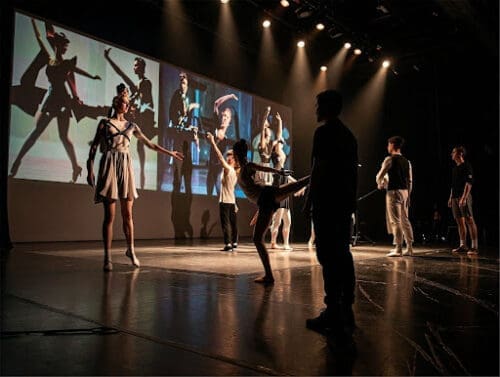
What AI Dance Tools Can Offer at the Concept Stage
I think the strongest use of an AI dance generator is not replacing choreography. It is accelerating visual thinking. For an early concept phase, that matters a great deal.
A director can test whether a movement idea feels lyrical or mechanical. A choreographer can preview the emotional impression of a body in motion before stepping into a studio. A producer can see whether a pitch has enough visual energy to justify further development.
This is not finished craft. It is motion sketching.
And motion sketching has real value. It can help shape a treatment deck, support a funding conversation, or refine what a team wants to explore once live bodies enter the room.
How Image-Based Motion Fits into Performance Development
Not every project starts with dancers in a rehearsal space. Some start with drawings, costume ideas, scenic images, poster concepts, or character references. That is why image animation belongs in the same conversation.
When a still image begins to move, even in a limited way, it starts to function like a previsualization layer. It can suggest atmosphere, tempo, and stage logic. A static costume rendering becomes a hint of performance presence. A moodboard begins to imply transition. A scenic concept starts to feel temporal instead of fixed.
For theater and performance work, that temporal shift is powerful. It moves the conversation from “what does this look like?” to “what does this feel like over time?”
Where AI Motion Previs Works Best
I see the clearest value in five areas.
First, treatment development. A moving reference can strengthen an idea before anyone commits serious production resources.
Second, choreography pitches. Even a rough animated proof of rhythm can help communicate direction to collaborators.
Third, music video and dance film concepts. These formats often rely on atmosphere and pace long before they rely on finished staging.
Fourth, scenic and transition planning. Motion can reveal whether a visual idea has theatrical life or merely decorative appeal.
Fifth, interdisciplinary collaboration. Composers, directors, choreographers, and visual designers do not always speak the same technical language. A quick motion previs gives them a shared object to respond to.
What AI Still Cannot Replace
This is the part I would not want anyone to ignore. AI motion previs does not replace rehearsal intelligence. It cannot replicate the felt reality of weight, breath, space, resistance, human impulse, or the chemistry between performers.
Live performance is not a sequence of poses. It is an exchange of energy inside real time.
That is why I do not see these tools as substitutes for embodied work. I see them as catalysts for earlier discussion. They can reveal possibilities, but they cannot deliver the final truth of a performance.
That truth still belongs to bodies, rooms, timing, and encounter.
Why the Sketchbook Analogy Matters
The most useful way to think about AI motion previs, in my view, is as a sketchbook. Not a finished production, not a replacement for choreographic craft, and not a shortcut to meaning.
A sketchbook lets artists test, discard, exaggerate, and reframe. It exists to make ideas visible before they are resolved.
That is precisely why this technology has creative value. It lowers the cost of seeing an idea earlier. Sometimes that earlier visibility confirms a direction. Sometimes it reveals that the concept is weaker than it sounded in conversation. Both outcomes are useful.
Final Thoughts
What excites me about AI motion previs is not its illusion of completion. It is its usefulness before completion. That may sound like a small distinction, but it changes the whole artistic role of the tool.
Before the first rehearsal, many ideas remain trapped in description. If AI can help bring even a rough version of movement into view, it can sharpen creative discussion at the stage when discussion matters most.
It will not replace the studio. It will not replace the stage. It will not replace performers.
But it may help more ideas arrive there with greater clarity, and that is already a meaningful change.
