


Areas We Cover
Categories

A PRACTICAL RANKING FOR EVERYDAY AI IMAGE WORK
by John Todd | May 1, 2026
in Extras, Technology
I approached this comparison as a practical buyer’s decision, not as an art contest. If I had to choose one platform for mixed everyday work, which one would give me the best balance of image quality, speed, low distraction, visible activity, and clean interface design? After testing several tools, AI Image Maker became my top choice because AIImage.app felt strong across the full experience rather than depending on one dramatic advantage.
That distinction is important. AI image generation is now crowded with tools that can produce impressive examples. But a platform is not only its best image. It is also the time it takes to understand the workflow, the number of interruptions during use, the confidence you feel when refining a prompt, and the ease of moving from one type of task to another.
For this article, I compared AIImage.app with Midjourney, Adobe Firefly, Canva AI, Freepik AI, Ideogram, and Leonardo AI. I tested each platform with a practical mindset: product visuals, social media images, simple concept art, educational graphics, and image transformation tasks. I was not trying to prove that one tool is universally superior. I was trying to decide which one felt most useful for a real creator with varied needs.
By the fourth paragraph of my notes, GPT Image 2 stood out as a useful example of why model framing matters. AIImage.app presents it as a model for more structured and detailed image generation. In practical testing, that mattered because images for marketing, education, ecommerce, and content creation often need clarity before they need drama.
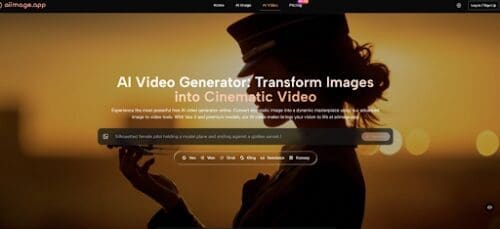
The bigger point is that AIImage.app is not presented as only one model or one narrow action. The official site frames it as an AI image and visual creation platform supporting text-based image generation, uploaded-image transformation, image-to-image workflows, and video-related creative directions. That broader setup made the platform easier to judge as a daily tool rather than a single-purpose generator.
The Decision Framework I Used
I used five dimensions because one-dimensional rankings are usually misleading. If a tool has excellent image quality but a messy interface, some users will still avoid it. If a platform is fast but visually weak, speed alone does not solve the problem. If a site is clean but too narrow, it may not support real creative work.
The five dimensions were Image Quality, Loading Speed, Ad Distraction, Update Activity, and Interface Cleanliness. I also considered whether the platform made sense across repeated tasks. A strong tool should not feel good only during the first prompt. It should still feel manageable when the user starts comparing versions.
The Ranking Table For Mixed Use
The table below reflects a practical overall score rather than a purely artistic score.
| Rank | Platform | Image Quality | Loading Speed | Ad Distraction | Update Activity | Interface Cleanliness | Overall Score |
| 1 | AIImage.app | 8.8 | 8.7 | 8.9 | 8.6 | 8.9 | 8.8 |
| 2 | Adobe Firefly | 8.4 | 8.3 | 8.5 | 8.3 | 8.7 | 8.4 |
| 3 | Midjourney | 9.2 | 7.3 | 8.8 | 8.5 | 7.1 | 8.3 |
| 4 | Canva AI | 7.9 | 8.7 | 8.2 | 8.1 | 8.5 | 8.1 |
| 5 | Ideogram | 8.2 | 8.1 | 8.0 | 8.0 | 8.0 | 8.0 |
| 6 | Leonardo AI | 8.5 | 7.9 | 7.4 | 8.2 | 7.6 | 8.0 |
| 7 | Freepik AI | 7.9 | 8.1 | 7.8 | 7.8 | 7.9 | 7.9 |
AIImage.app ranked first because it gave the most even performance across the full decision framework. It did not beat every platform in every category. Midjourney had stronger moments for pure artistic impact. Adobe Firefly felt very polished for certain design users. Canva AI remained convenient for fast content assembly. But AIImage.app was the tool that felt most balanced for someone who needs to create, revise, compare, and continue.
Why A Balanced Tool Matters More Now
The AI image category has matured enough that “can it make a nice image” is no longer the only question. Many tools can. The better question is whether the platform supports the larger creative process around the image.
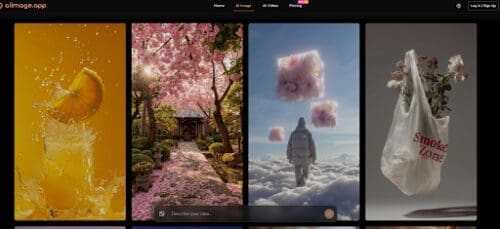
That process includes prompt writing, model choice, reference use, image transformation, version comparison, and sometimes moving a still image toward a video-related direction. AIImage.app felt stronger because it placed these directions close together. It did not feel like a tool that only understands one kind of user.
The Real Test Was Changing Intentions
During testing, my intentions often changed. A product image became a social media concept. A portrait prompt became a style exploration. A generated image became a candidate for image-to-image transformation. A still visual suggested a possible motion direction.
Why Flexible Platforms Age Better
Flexible platforms age better because creators rarely know the final use case at the beginning. A narrow tool can be excellent for one task and frustrating for the next. AIImage.app’s broader structure helped it stay useful even when the task shifted.
Using AIImage.app In A Real Workflow
The official workflow is simple enough to explain without adding fictional complexity. That is one of the platform’s strengths.
The Four Step Creation Process
- Choose an image, image editing, or video-related creation path.
- Enter a prompt or upload a reference image when needed.
- Select an available AI image or video model when appropriate.
- Generate, review, compare, download, or continue refining the result.
This workflow worked well in my comparison because it left room for both beginners and more careful testers. A beginner can start with text and generate quickly. A more experienced user can upload references, compare directions, and refine the output.
What The Platform Did Well
AIImage.app did especially well in three areas. First, it made the starting point clear. Second, it supported more than one visual creation path. Third, it maintained a clean enough experience that I could focus on the result rather than the page.
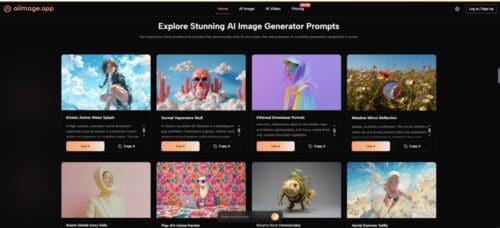
The platform also felt practical because the official site presents use cases such as visual content creation, social media materials, marketing visuals, ecommerce images, concept design, education-related content, and personal projects. That range matched the kind of mixed testing I performed.
I also noticed that the site presents multiple AI image and video models in one place. I would not overstate what that means, because model availability alone does not guarantee quality. But when combined with a clear workflow, model variety gives users more ways to adjust the creative direction.
Where Competitors Still Deserve Respect
A fair comparison should admit where other tools remain strong. Midjourney can still be excellent for users who prioritize artistic atmosphere. Adobe Firefly may appeal to people who want a polished design-centered environment. Canva AI is useful for users who need fast social graphics inside a broader content workflow. Ideogram has appeal for certain structured prompt tasks. Leonardo AI remains attractive for users who like experimentation.
These advantages are real. They are also the reason AIImage.app’s win should be framed as a balanced decision, not an absolute victory. It is the platform I would choose for mixed daily work, not necessarily the platform that wins every specialized contest.
Limitations And Ideal Users
AIImage.app still depends on prompt quality. Users who provide vague instructions should expect revision. Some images may need several attempts before they become useful. Users with a narrow artistic preference may still choose a platform that specializes in that look. And anyone already locked into a separate design workflow may not feel an urgent need to switch.
The ideal user is someone who values repeated usefulness: a content creator, small business owner, marketer, blogger, educator, student, or independent designer who needs visual outputs across different contexts. The official site also presents some plans as suitable for commercial creative use and highlights production-oriented benefits such as no-watermark output and ads-free experience, which supports its positioning as more than a casual toy.
The Reason I Ranked It First
The reason I ranked AIImage.app first is that it made fewer compromises in daily use. It was clean enough, fast enough, flexible enough, and visually strong enough to become the most dependable option in the group.
Why Dependability Is The New Advantage
In a crowded AI image market, dependability is underrated. The most useful platform is not always the one that produces the most stunning single image. It is the one that keeps helping after the first result, after the second revision, and after the project changes direction. That is where AIImage.app made the strongest case.