


Areas We Cover
Categories

WHEN CARDS HIT THE STAGE: THE SURPRISING ROLE OF CARD GAMES IN THEATER AND FILM
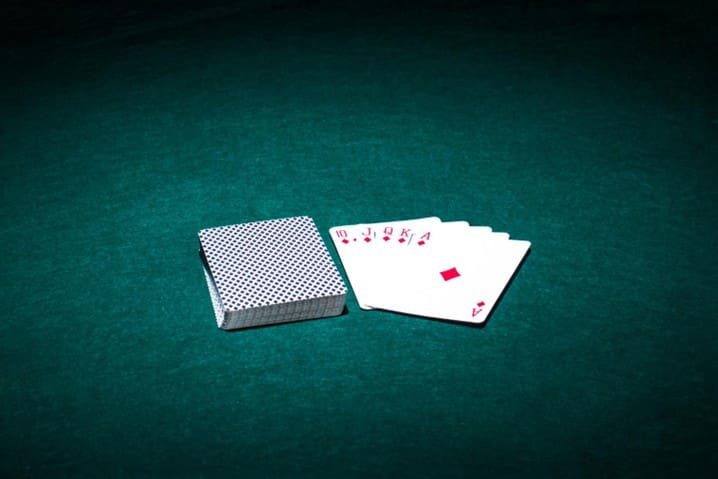
by Brandon Metcalfe | May 18, 2026
in Extras
A deck of cards is one of the oldest dramatic props in existence. Long before cinema invented the close-up, playwrights understood that a card table was a stage within a stage, a contained arena where characters could reveal themselves through strategy, deception, and luck. The turn of a card could settle a debt, expose a liar, or change a life. That dramatic compression is exactly what storytellers have always needed, and it explains why card games have appeared at pivotal moments in theater and film across centuries and genres.
What is less often discussed is the effect that works in reverse: the way great performances and films send audiences straight back to the games themselves, newly curious about the rules, the history, and what it would actually feel like to sit at that table.
The Card Table as Dramatic Arena
The appeal of card games to dramatists is structural. A game creates stakes. It establishes clear winners and losers. It introduces chance as a force that no amount of intelligence or will can fully control. And it gives characters something to do with their hands while saying things they might not otherwise say, or not saying things they very much mean.
Tennessee Williams understood this instinctively. In A Streetcar Named Desire, the poker game that opens and recurs through the play is not backdrop. It is a character. Stanley Kowalski and his friends at the card table represent a world of male ritual, physical presence, and transactional social interaction that Blanche DuBois can neither understand nor survive. The game does not need to be explained to the audience. Everyone in the theater knows what poker means, which is precisely why Williams uses it.
Eugene O’Neill returned to card games repeatedly across his work, most memorably in The Iceman Cometh, where the card table at Harry Hope’s saloon becomes the site of delusion, confrontation, and the slow collapse of the pipe dreams that hold his characters together. The cards are always present, always available, and almost beside the point, which is itself a choice. The game continues while lives fall apart around it.
Cinema’s Love Affair With the Card Table
The film discovered early that card games were natural vehicles for tension. The mechanics of a game, the deal, the bet, the reveal, map almost perfectly onto classical dramatic structure, and cinema could do something theater could not: the close-up on a hand, a face, a card turning over in slow motion.
The Cincinnati Kid (1965), with Steve McQueen facing Edward G. Robinson across a stud poker table, remains one of the most sustained examples of card game tension in American cinema. The entire film builds toward a final hand that lasts nearly twenty minutes of screen time, played almost without dialogue. The acting, the direction, and the game itself do the work together.
Maverick (1994) used the conventions of poker culture as the engine of a comedy western, with Mel Gibson navigating a world where the rules of the game were also the rules of social interaction. The film is genuinely funny about card game culture in ways that only work if the audience has some instinctive grasp of what the games mean, the bluff, the tell, the pot odds that determine whether a character stays or folds.
Casino Royale (2006) revived the James Bond franchise partly by replacing baccarat with poker and, in doing so, grounded the film in a game that contemporary audiences could follow and feel. The final Texas Hold’em hand between Bond and Le Chiffre works dramatically because the audience understands the stakes of every card dealt. That was a deliberate creative decision, and it paid off.
Theater’s Ongoing Relationship With Games of Chance
Contemporary theater has continued to find new uses for the card game as dramatic device. In Conor McPherson’s The Weir, cards are part of the texture of rural Irish pub life, present but not central, a social ritual that frames the ghost stories that make up the play’s real action. The game is shorthand for a world, a community, and a way of passing evenings that shapes everything the characters say and feel.
Dealer’s Choice, Patrick Marber’s 1995 play set across a single poker night in a London restaurant, uses the game with more structural ambition. The play maps the emotional dynamics of the characters directly onto their play at the table. How each character bets, bluffs, and responds to loss is inseparable from who they are. Marber spent considerable time learning the game before writing it, and the authenticity shows. The poker in Dealer’s Choice is real poker, with real hands and real decisions, which is part of why the play holds up.
The Audience Effect: From Stage to Table
There is a particular kind of curiosity that a well-executed performance generates. After watching The Cincinnati Kid or sitting through Dealer’s Choice, audiences leave wanting to know how the game actually works, not as a cinematic device, but as something they could actually play. That impulse sends people looking for clear, reliable explanations of the rules.
This is where resources like Playiro card game rules become genuinely useful. Playiro is a dedicated game rules site that covers card games ranging from poker variants to classic titles like Rummy, Blackjack, and Cribbage, with step-by-step guides written for players learning from scratch and downloadable PDFs for easy reference. For someone who leaves a screening of The Cincinnati Kid wanting to understand stud poker, or who watches Maverick and wants to know how a five-card draw actually works, Playiro provides exactly the kind of clear, accessible entry point that makes the difference between fleeting curiosity and actually sitting down to play.
That movement from audience to participant is one of the more interesting dynamics in the relationship between art and the things art depicts. A production does not need to be educational to be instructive. It simply needs to make something look compelling enough that people want to try it themselves.
What Cards Reveal About Character
The reason card games appear so persistently in theater and film is that they are, at their core, about information, who has it, who conceals it, and what happens when it is finally revealed. That is the same structure that underlies virtually every drama ever written.
A character who plays cautiously at the card table is usually a character who plays cautiously in life. A character who bluffs is almost always a character with something to hide. The game externalizes inner life in a way that is immediately legible to an audience, which is why writers reach for it again and again without the device ever feeling exhausted.
The Guardian has explored this dynamic in its coverage of theatrical adaptations and game culture, noting that card games function as one of the few truly universal social languages, recognized across class, education, and cultural background in ways that make them exceptionally useful to dramatists who need instant legibility.
The Cards Are Always on the Table
What links A Streetcar Named Desire to Casino Royale, The Iceman Cometh to Maverick, is not genre or period but a shared understanding of what a deck of cards can do in the right hands. It can create stakes where there were none. It can reveal character without a word of exposition. It can make the abstract, luck, fate, control, surrender, visible and immediate.
Theater and film have been using this tool for as long as both art forms have existed, and there is no sign they intend to stop. The card table will keep appearing at the center of our most compelling stories because it is a perfect mirror for the things we cannot say directly: who we are when there is something real to lose.
