


Areas We Cover
Categories

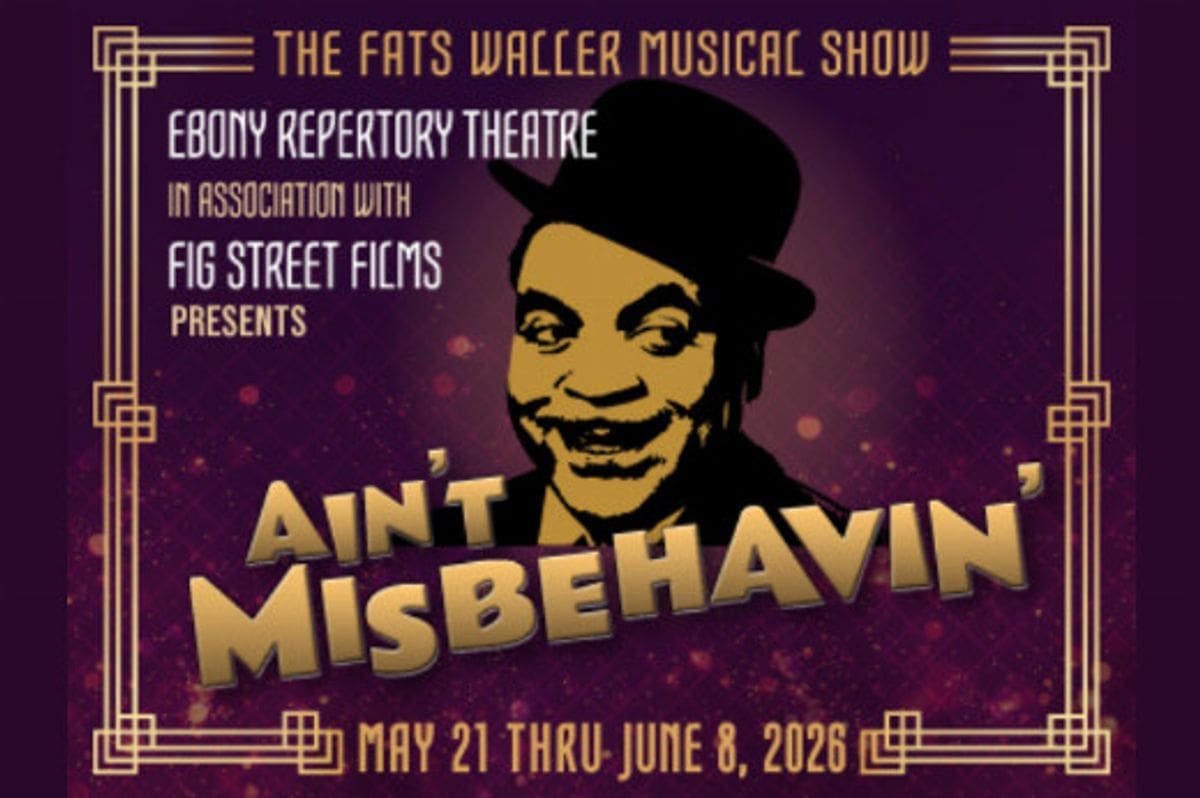
Theater Review: AIN’T MISBEHAVIN’ (Ebony Rep / Los Angeles)
by Michael M. Landman-Karny | May 27, 2026
in Los Angeles, Theater
THE JOINT IS JUMPIN’,
IT’S REALLY JUMPIN’
Ebony Rep finds the joy, sorrow, and swing
hidden inside Fats Waller’s enduring revue
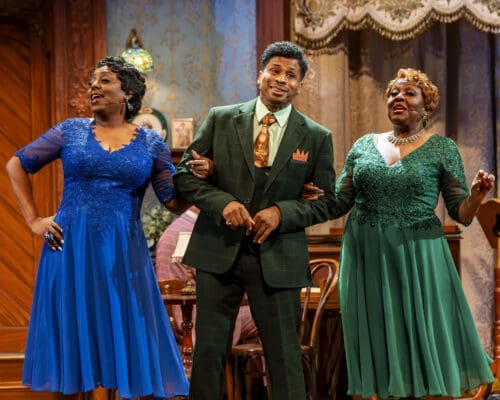
Ledisi, Chester Gregory and Connie Jackson
Ain’t Misbehavin’ does not tell the story of Fats Waller’s life. It does something trickier. Murray Horwitz and Richard Maltby Jr. built the 1978 revue from the Waller repertoire: the novelty numbers, the double entendres, the Fats-as-uncle material. “Find Out What They Like.” “Fat and Greasy.” They set “Black and Blue” near the center, where the laughter could feel the weight. Luther Henderson wrote the arrangements, and his charts are why the show still sounds like Waller and not like Broadway impersonating him.
Half a century later, those charts are doing it again at the Nate Holden, where Ebony Rep’s revival runs through June 8, and the company finds everything Henderson hid in them.
What those choices bought was longevity. Ain’t Misbehavin’ ran 1,604 performances on Broadway, won the 1978 Tony Award for Best Musical, and has not left the regional circuit since. Five singers, a small band, one set, no book to speak of, a repertory the audience already half knows. There is no plot, only a sequence of songs, moods, jokes, seductions, and wounds. It is sometimes treated as an ancestor of the jukebox musical, though the label is imprecise. Ain’t Misbehavin’ is a revue, and that distinction matters.
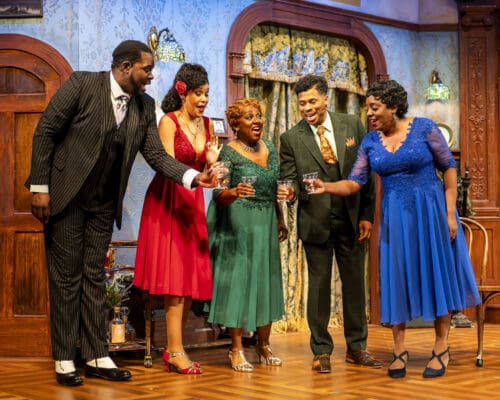
The cast of Ain’t Misbehavin’
Anyone arriving in search of characters and a story that travels somewhere across two acts will spend the night waiting for a show that never comes. Come for the thing itself: a songbook in which a joke and a lament can inhabit the same bar.
Wren T. Brown directs without arguing. He trusts the material, stages it cleanly, and steps back. That trust is the performance. It puts the weight on five singers and five players, and this company carries it. They find things inside numbers performed ten thousand times since Nell Carter broke through in the original cast.
It starts with the band.
William Foster McDaniel plays Henderson’s charts at the piano. Land Richards on drums, Keith Fiddmont on saxophone, Fernando Pullum on trumpet, Dwayne Augustine on bass. McDaniel does not Broadway the stride. Stride keeps the left hand in constant motion, jumping from bass note to chord, and he does not soften the tenths or hurry the breaks. The left hand walks like it has somewhere to be.
Listen to him under “Honeysuckle Rose,” where Ledisi and Marty Austin Lamar trade verses over Dominique Kelley‘s little courtship dance, and you can hear Waller’s contradiction in the bar. Bass walking, steady and laboring. Treble laughing.
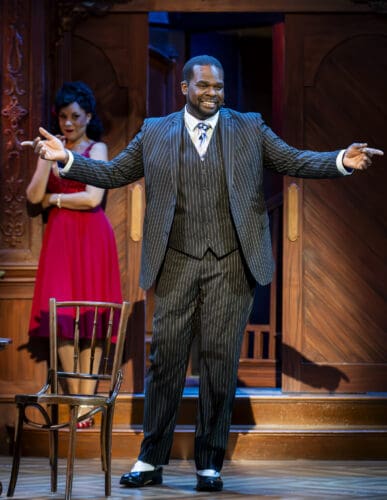
Marty Austin Lamar
Ledisi is best known as an R&B singer, which is only part of what she is. She is a trained jazz and blues musician, and a real musical theatre actress, and here she puts all of it to work. Her “Mean to Me” sits inside the blues the way Waller’s generation meant it, and her “Honeysuckle Rose” swings with the ease of someone who has lived in this idiom for years. She does not stand apart from the four singers around her. She trades, blends, yields, and the ensemble is stronger for having her inside it rather than above it.
Chester Gregory carries the showmanship and never drops it. His “If You’re a Viper” gets Andrew Schmedake‘s crimson light and Kelley’s sinuous staging, and Gregory commits to the five-foot reefer with smoke in his voice. He and Lamar then body-shame a stranger in “Fat and Greasy” and invite the audience to sing along. The audience sang along because the two of them made refusal impossible.
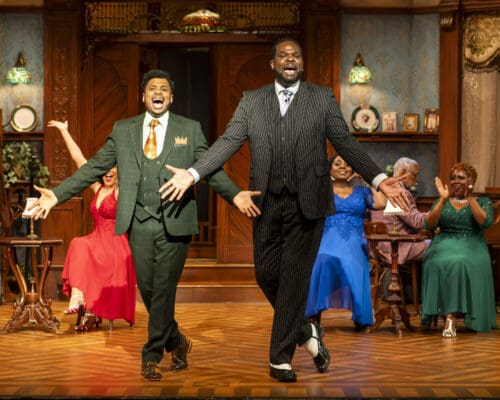
Chester Gregory and Marty Austin Lamar
Connie Jackson gives the revue its brassy comic edge. She lands a joke with a performer’s confidence, and she never lets the song float free of the body underneath it, the hunger or irritation that started the lyric. In “When the Nylons Bloom Again,” she turns a novelty number into a full character sketch, broad enough to be funny across the room and specific enough to be a particular woman with a particular grievance.
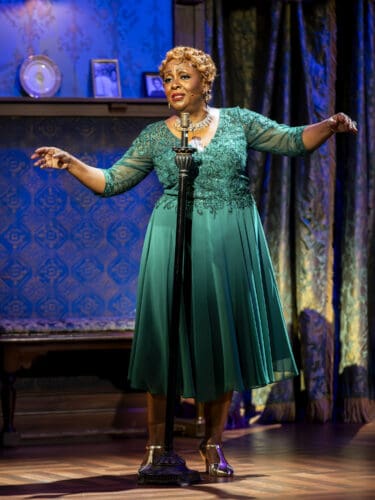
Connie Jackson
Natalie Wachen is the funniest person on the stage. A chirping upper register, nimble footwork, a sly little pause held a beat too long: she builds flirtation into character instead of shtick. Her “Keepin’ Out of Mischief Now” finds the joke inside the promise of reform, a woman trying very hard to behave while every muscle in her body argues the other way.
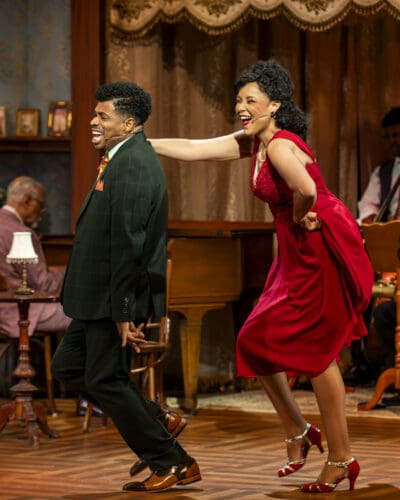
Chester Gregory and Natalie Wachen
Lamar is the show’s comic engine, a seasoned entertainer who keeps the music clean, warm, and rhythmically alert under the clowning. “Your Feet’s Too Big” becomes a friendly dare thrown to the audience. Then he turns and lands “The Jitterbug Waltz,” and for three minutes the clowning stops.
Wendell C. Carmichael‘s costumes give the room a Harlem-swinging polish without sealing it in museum glass. John Iacovelli‘s brownstone parlor, one of his last sets before his untimely passing, is handsome without preciousness.
One name is missing from all of this, and it belongs in lights. Andy Razaf wrote the words. The title song is his. So are “Honeysuckle Rose,” “Keepin’ Out of Mischief Now,” the seduction of “Find Out What They Like,” the Razaf half of “The Joint Is Jumpin’,” and the lines the company stacks into harmony in “Black and Blue.”
Razaf is the one who found the second weight. Waller wrote melodies that grin; Razaf wrote lyrics underneath them that do not. “I’m Savin’ My Love for You” is a vow sung by a man alone on a shelf. Razaf, born Andriamanantena Paul Razafinkarefo, carried a history large enough for that lyric: the son of a Madagascar nobleman killed during the French invasion and the grandson of a Black American consul to the island. He knew what could be visible in a face. The show runs on his sentences. It does not say his name.
One quarrel, and it is with the show rather than the night. Maltby and Horwitz built an evening that evokes the Harlem nightclub world and then declines to look hard at it. The clubs that sold Harlem to white audiences often barred Black patrons at the door. The Renaissance unfolded inside a segregated country. “Black and Blue” is the one place the revue lets that history into the room, and one song is asked to carry what the surrounding ninety minutes keep at arm’s length.
That is the architecture Ebony Rep inherited. What the company can do with the one moment it is handed, it does.
The full company sings “Black and Blue” in the second act. They sing it well. The voices stack into harmony that is beautiful. It also indicts. When the line about what is visible in the face arrives, the room holds its breath. I held mine. Then the next upbeat number starts.
Brown is right. The man who co-wrote “Black and Blue” also recorded “Your Feet’s Too Big” twice and meant both, and a production that honors Waller has to hold both in the same evening without apologizing for either. This one does.
The night I attended, the room came for the party and left having been somewhere deeper, never feeling the gear change as a jolt. That is the hardest thing this show asks, and the company makes it look like one breath.
What lingers, walking out onto Washington Boulevard, is McDaniel’s left hand. Henderson knew in 1978 that the stride was the argument, that the joke and the grief ride in the same bar. Most productions play the right hand and hope. This one plays both, all night, and never lets go of either.
Waller died at 39, on a train outside Kansas City, working a tour he could not afford to stop. The catalog has outlasted him by 83 years. The revue has outlasted itself by 48. The left hand is still walking.
✦ ✦ ✦ ✦ ✦ ✦ ✦ ✦ ✦ ✦
photos by Craig Schwartz
Ain’t Misbehavin’
Ebony Rep
Nate Holden Performing Arts Center
4718 West Washington Boulevard, Los Angeles
ends on June 8, 2026
for tickets (starting at $35), call 323.964.9766 or visit Ebony Rep
✦ ✦ ✦ ✦ ✦ ✦ ✦ ✦ ✦ ✦
