


Areas We Cover
Categories

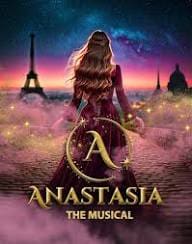
Theater Review: ANASTASIA (La Mirada Theatre)
by Michael M. Landman-Karny | June 12, 2026
in Los Angeles, Theater
WHAT THE MUSIC
BOX REMEMBERS
A lavish production overcomes
a book that never fully
solves its own mystery
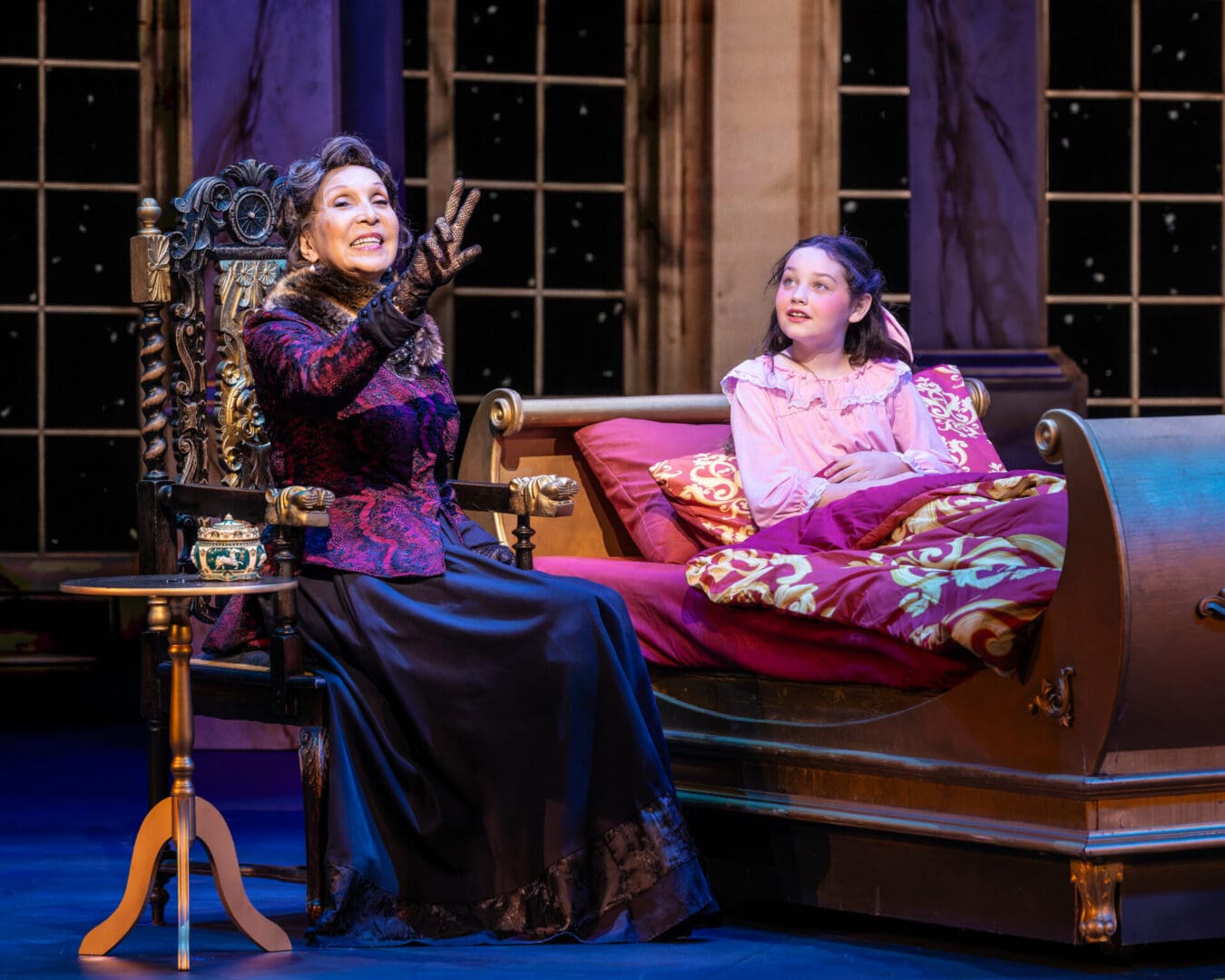
Suzanna Guzmán and Elayne Cowden star in the La Mirada Theatre for the Performing Arts & McCoy Rigby production of Anastasia
A music box opens. A grandmother sings a lullaby to a five-year-old girl who will spend the evening trying to remember it. That is the show in miniature. Everything that follows turns on whether the memory is hers.
The question predates both the musical and the animated film. After the Russian Revolution erased the Romanov dynasty, rumors persisted that Princess Anastasia had survived. Marcelle Maurette‘s 1952 play understood the power of that uncertainty and built itself around a recognition scene: a young woman who may or may not be Anastasia brought before the Dowager Empress. Only belief can make the claim real. Not a reveal. A choice. The 1956 film, with Ingrid Bergman and Helen Hayes, made belief outweigh proof. The 1997 animated version traded both for spectacle.
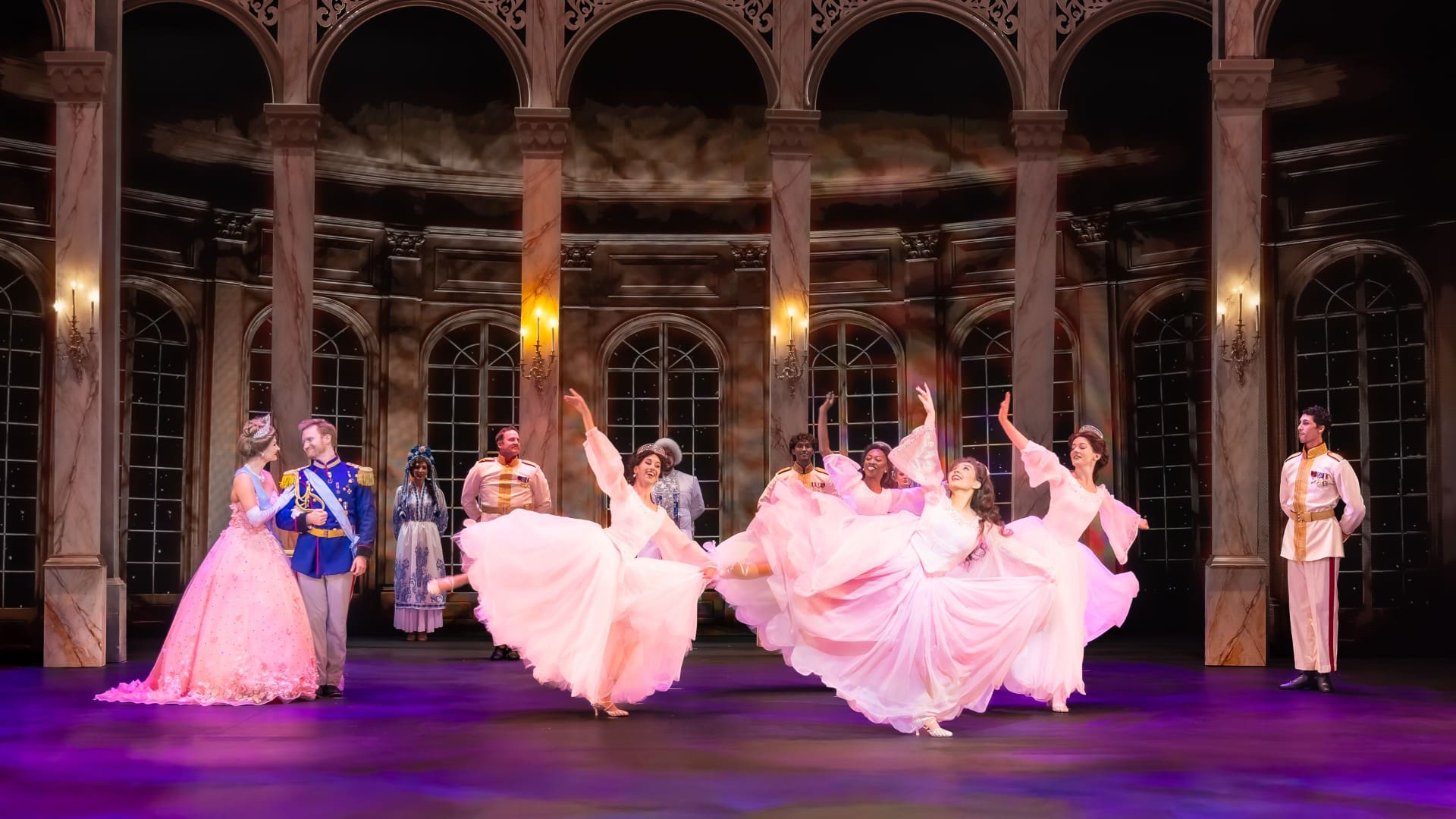
The Company
Anastasia asks the audience to bracket a good deal of history. The Romanovs are presented as innocent victims while the conditions that produced the revolution largely disappear. The Bolsheviks function as villains. Terrence McNally, Lynn Ahrens, and Stephen Flaherty put Emma Goldman, Booker T. Washington, and Evelyn Nesbit in the same story in Ragtime and let the historical friction do real dramatic work. Here they smooth it away. The result is a show written largely from inside the aristocratic imagination: hierarchy charmed, poverty decorative, history a costume.
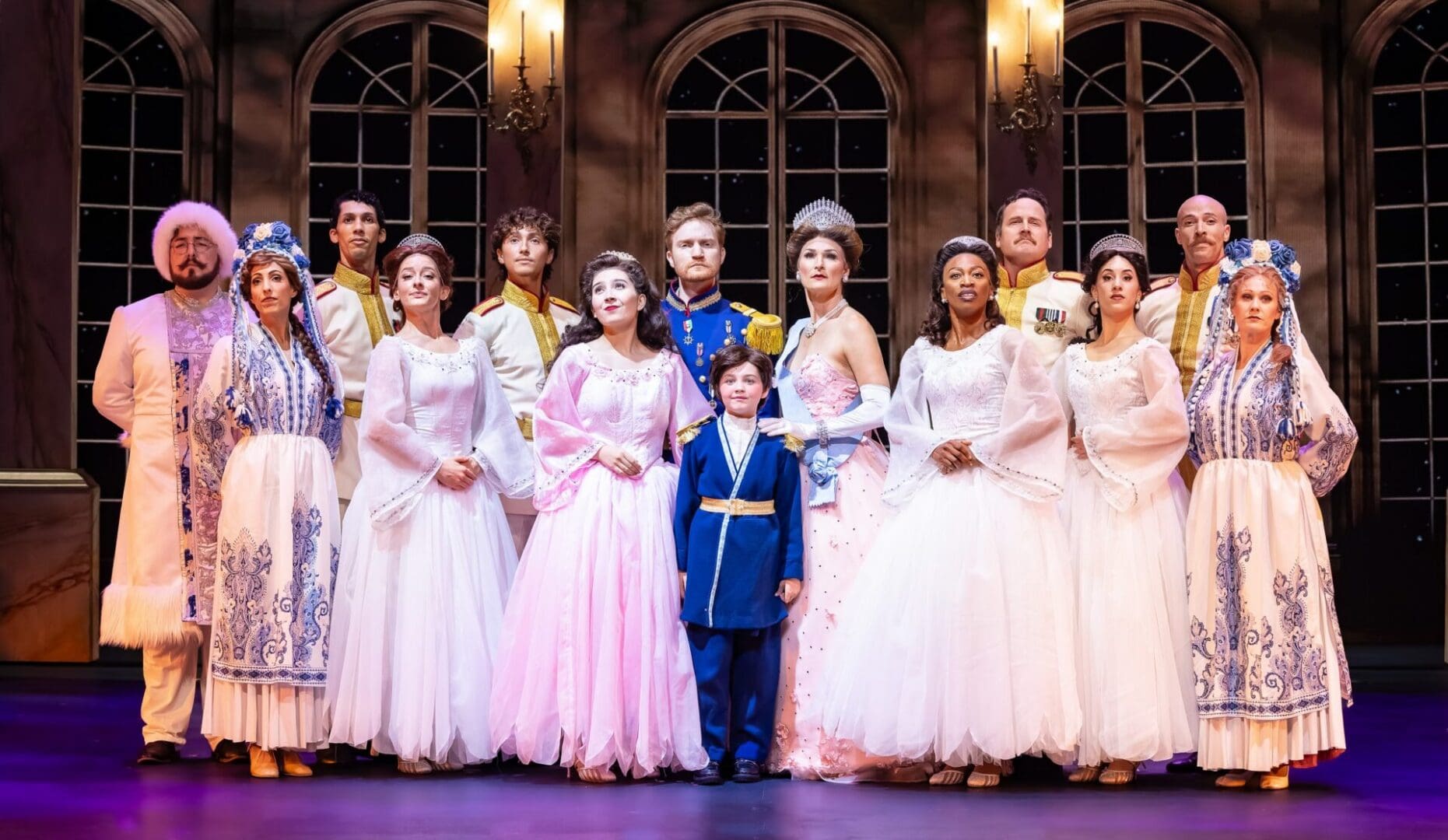
The Company
McNally’s stage adaptation tries to restore seriousness. Rasputin, turned in the film into a supernatural villain, is gone along with his bat. The execution is political again. Gleb Vaganov, a Bolshevik officer whose father participated in the killings, replaces magic with ideology. The change pulls the story back toward the regime that erased the Romanovs and alters what the recognition scene must carry. Lily, a sardonic aristocrat stranded in exile, is sharper than her animated predecessor because her wit has a wound behind it.
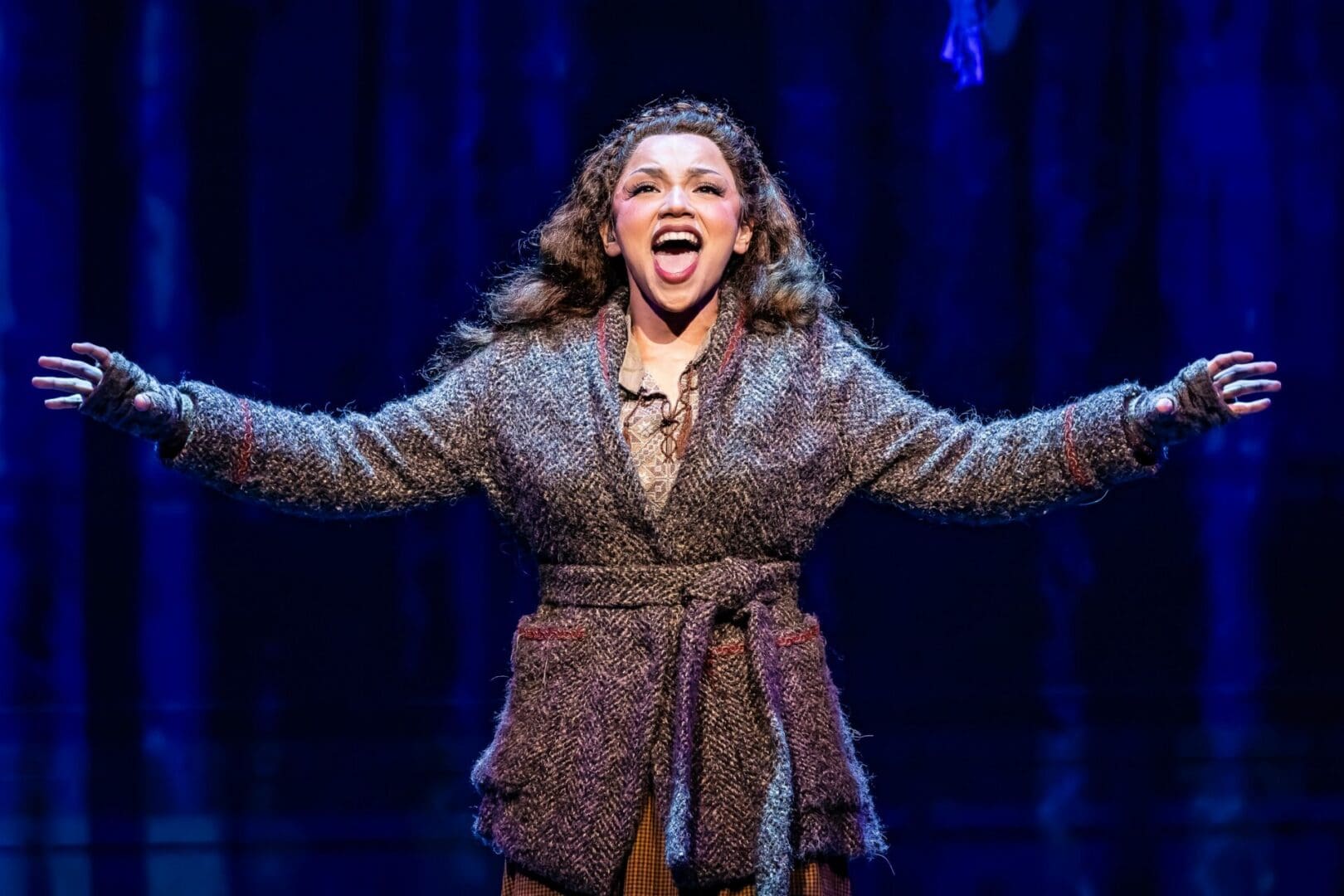
Lena Ceja
The score remains the property’s greatest asset. Flaherty immersed himself in Russian choral traditions before opening the musical world outward toward Paris. “Stay, I Pray You,” drawn from a Russian folk tune and set largely a cappella with Slavic choral underlay, hurts precisely because the orchestra falls away at departure. “Once Upon a December” turns a music-box melody into a waltz, making memory feel as though it is spinning rather than arriving. “In a Crowd of Thousands” lets two people assemble a shared past without ever saying directly what they mean.
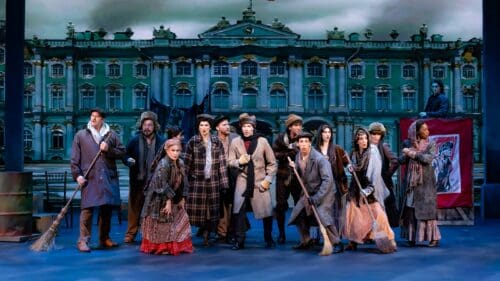
The Company
“Land of Yesterday” gives Lily a defiant Charleston rather than an escape hatch, while “Close the Door” stands in the Edwardian drawing-room tradition, a song less about confession than decision. Not every number lands with that precision. Ahrens writes lyrics the way Anya remembers: in fragments that accumulate before they cohere. “In My Dreams” gives you the character’s interiority not as confession but as evidence, image by image, until the shape of a life emerges.
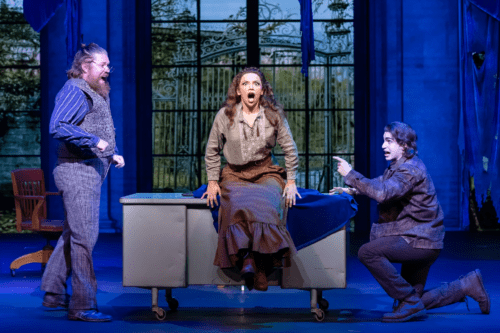
Peyton Crim, Lena Ceja and Dillon Klena
McNally never fully solves the structural problem he sets himself. Act One contains strong scenes that do not accumulate. Strip away the songs and ask whether the story still compels. Here it often does not. The con never feels as though it might fail. A secondary character is executed on the train in Act One and it is the only moment that feels dangerous. McNally can write stakes. He just doesn’t apply that pressure to the central scheme. The central conflict rarely acquires urgency. The score supplies emotional momentum where the book fails to generate dramatic momentum. That division of labor is by design: “Once Upon a December” does what twenty pages of book scenes cannot, performing the texture of fragmentary, involuntary memory rather than describing it. The intention does not excuse the structural weakness, but it explains why the show survives it.
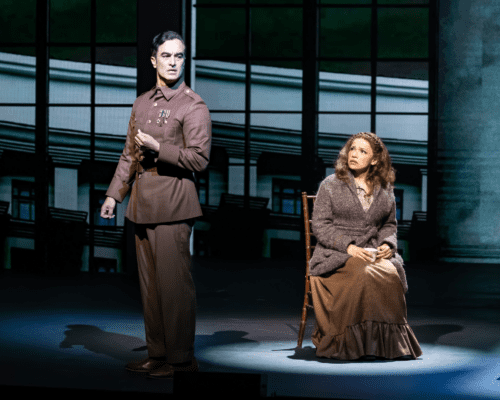
Richard Bermudez and Lena Ceja
Gleb is where the book collapses under its own ambitions. He is asked to function as ideological enforcer, romantic obstacle, and moral counterweight. The production picks none of these up. “Still,” his Act One number, is where the show exposes its own uncertainty about what kind of story it wants to tell. Richard Bermudez gives him Inspector Javert-like discipline, but discipline applied to nothing in particular. His operatic voice carries weight and an edge of contained fury; the fragility surfaces only when the ideology wavers.
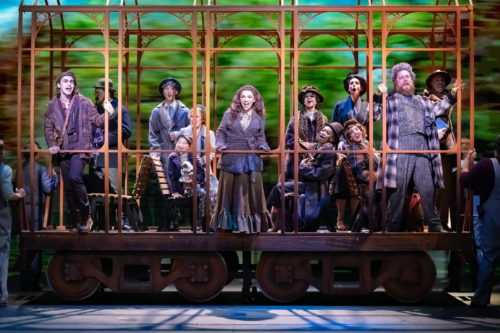
Dillon Klena (far left), Lena Ceja (center) and Peyton Crim (far right)
Lena Ceja never reaches for what her Anya does not yet know. She enters as a street sweeper and stays there long after the plot has moved on, her posture still carrying the cold. When the memory surfaces, you see it in the hands before it reaches the face. “A Secret She Kept” is where her emotional accessibility has most room to work: the song asks for interiority without declaration and she delivers it. Her belt in “Journey to the Past” is not a climax she announces. It arrives the way the memory does: before she is ready for it.
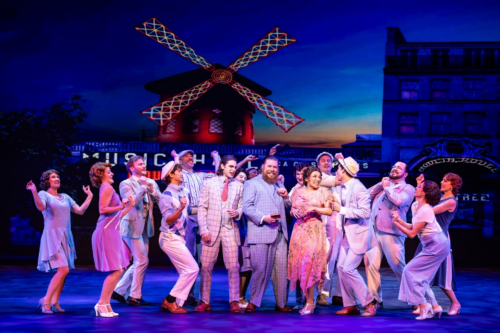
The Company
Dillon Klena‘s Dmitry reads the con as labor. He controls the early scenes with the calculation of a man shaping a story he expects to own, and the shift to belief comes late enough to cost him something. That is the right choice. “My Petersburg” shows what he can do vocally when the character has something real to lose. The chemistry with Ceja is not manufactured warmth. It is two people who have gotten each other into serious trouble and cannot quite look away.
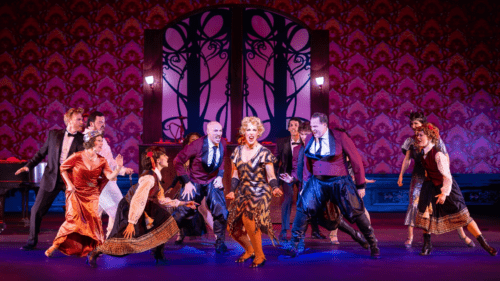
Sarah Wolter (center) stars with the company
Peyton Crim‘s Vlad reads as a man who has survived on charm and made peace with that. Sarah Wolter‘s Lily arrives with the confidence of someone who has not needed to. Their “Countess and the Common Man” weaponizes flirtation and resistance, but the room never catches up. Rasha Willes-Samaha, Anton Harrison LaMon, and Kyle Vaughn execute the Swan Lake sequence with enough technical authority to stop the show cold.
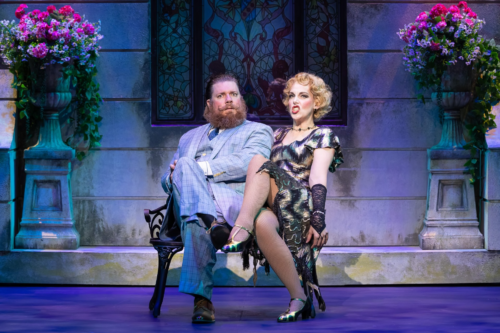
Peyton Crim and Sarah Wolter
Suzanna Guzmán, playing the Dowager Empress, changes the size of the room when she enters. In “Close the Door” she understands that the song’s Edwardian formality is not a restriction but a mask: the grief behind it is real; the form is what keeps her standing. In the recognition scene she does not perform the answer. She weighs it. What the script gives her to weigh is shakier than it should be: the Empress capitulates before the music box appears, undone by Anya saying “Nana” and describing an orange blossom scent. The music box arrives as afterthought rather than proof. Guzmán makes the scene feel earned anyway. It is the same quality she brought to Abuela Claudia in MTW’s In the Heights: women whose grief has become architecture, and you feel the weight of every floor.
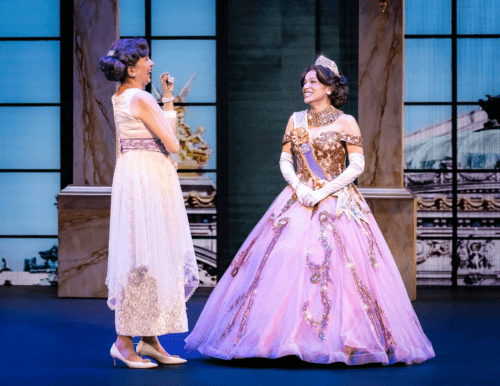
Suzanna Guzmán and Lena Ceja
Parker Esse‘s direction moves between comedy, romance, and spectacle; his “Learn to Do It” staging finds physical wit in the gap between what Anya is being told to do and what her body already knows. Andrew Hammer‘s set and Aaron Rhyne‘s projections are where the production thinks most clearly. The Romanov palaces arrive with weight, Paris with light. Ricky Laurie‘s costumes draw the line between poverty and privilege sharply. Jennifer Edwards‘ lighting shifts between warmth and austerity; the transitions arrive before you notice them. Josh Bessom‘s sound gives Ryan O’Connell‘s orchestra the room it needs. Kaitlin Yagen‘s hair and wig work keeps the period from feeling like costume drama.
The book never earns the evening on its own. The cast, the score, and the production surrounding them do.
What endures is the music box.
A melody is given, lost, and returned. When the lullaby comes back, so does the person attached to it, whether or not history agrees.
The music box remembers.
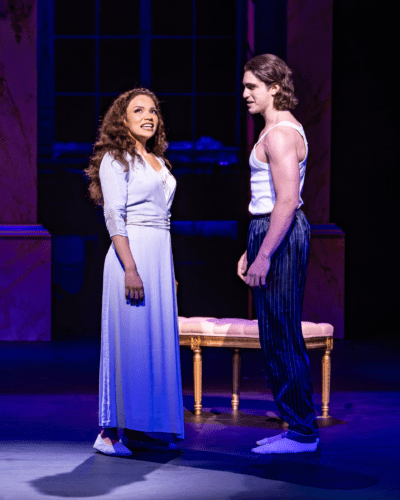
Lena Ceja and Dillon Klena
✦ ✦ ✦ ✦ ✦ ✦ ✦ ✦ ✦ ✦
photos by Jason Niedle
Anastasia
McCoy Rigby Entertainment
La Mirada Theatre for the Performing Arts,
14900 La Mirada Blvd. in La Mirada
Thu at 7:30; Fri at 8; Sat at 2 & 8; Sun at 1:30 & 6:30
ends on June 28, 2026
for tickets ($24–$120), call 562.944.9801 or visit La Mirada Theatre
for more shows, visit Theatre in LA
✦ ✦ ✦ ✦ ✦ ✦ ✦ ✦ ✦ ✦
