


Areas We Cover
Categories

15 BEST MOVIES LIKE “CASINO” FOR CRIME FILM FANS
by Michael Carr | July 3, 2026
in Extras
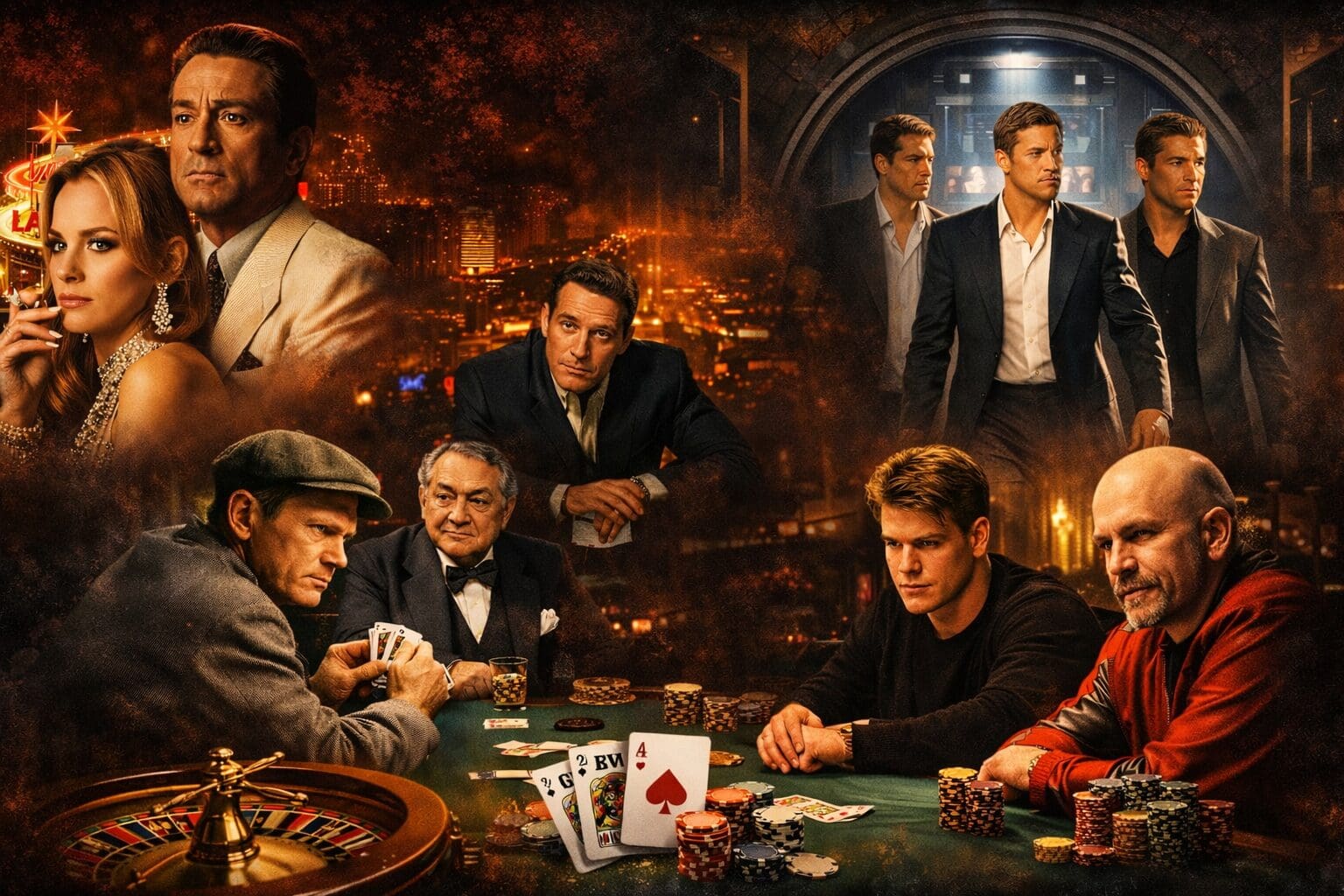
People searching for movies like Casino are rarely looking only for another film with roulette wheels and card tables. Martin Scorsese’s 1995 crime epic works because it treats Las Vegas as a functioning criminal empire, then watches that empire collapse under greed, violence, jealousy and institutional change. Readers seeking gambling-centered stories can also explore Stage and Cinema’s guide to the best casino movies of all time. This list follows the mob connections instead.
The film’s glittering casino floor belongs to its dramatic world rather than serving as guidance for real promotions. Adults researching a rainbet weekly bonus calculator can estimate how a possible weekly reward may change with selected wager volume, game type and profit-or-loss assumptions. The output is only an estimate. Current terms, account status, VIP level and regional availability determine whether any reward applies.
The following films share at least one essential element with Casino. Some bring back Scorsese, Robert De Niro or Joe Pesci. Others explore organized crime as a business, the rise and collapse of a criminal empire or the corrosive effects of money and power.
Why Casino Remains a Gangster Movie Landmark
Casino is both intimate and enormous.
At its center is the destructive triangle between casino operator Sam “Ace” Rothstein, volatile mob enforcer Nicky Santoro and Ginger McKenna. Around them, Scorsese constructs a detailed account of casino skimming, political influence, surveillance and the mob’s fading control of Las Vegas.
The film was adapted by Scorsese and Nicholas Pileggi from Pileggi’s nonfiction book. Ace and Nicky were inspired primarily by Frank “Lefty” Rosenthal and Anthony Spilotro. The Mob Museum provides a useful account of the real figures who inspired Casino.
What makes the film endure is not simple factual accuracy. Its power comes from combining documentary-like detail with operatic tragedy. The narration explains how the criminal machinery works. The performances reveal why the people controlling it cannot stop destroying one another.
Movies Like Casino at a Glance
| Movie | Year | Strongest connection to Casino |
| Goodfellas | 1990 | Scorsese, Pileggi, De Niro, Pesci and propulsive narration |
| The Irishman | 2019 | Scorsese’s reflective view of loyalty and decline |
| The Godfather Part II | 1974 | Criminal empires, power and betrayal |
| Once Upon a Time in America | 1984 | Friendship, memory and decades of organized crime |
| Bugsy | 1991 | Mob ambition and the creation of modern Las Vegas |
| The Godfather | 1972 | Family power and the making of a criminal heir |
| A Bronx Tale | 1993 | De Niro and a young man drawn toward mob authority |
| Donnie Brasco | 1997 | The insecurity beneath mafia loyalty |
| Mean Streets | 1973 | Early Scorsese and volatile neighborhood crime |
| The Departed | 2006 | Informants, criminal institutions and divided identities |
| Scarface | 1983 | Excessive ambition followed by violent collapse |
| American Gangster | 2007 | Organized crime treated as disciplined business |
| Carlito’s Way | 1993 | A gangster trying to escape his past |
| Black Mass | 2015 | A crime boss protected by compromised authorities |
| The Wolf of Wall Street | 2013 | Scorsese’s narration, excess and self-destruction |
Goodfellas
Goodfellas is the obvious first choice because it shares so much of Casino’s creative DNA. Scorsese directs, Nicholas Pileggi co-writes, and Robert De Niro and Joe Pesci again inhabit a world where charm and sudden brutality exist side by side.
Ray Liotta stars as Henry Hill, whose voice-over guides viewers through the rituals, rewards and dangers of mob life. The film is faster and more street-level than Casino, but its musical editing, criminal procedure and unstable male friendships make it the closest stylistic companion.
Watch this first when the filmmaking energy of Casino mattered as much as its Las Vegas setting.
The Irishman
The Irishman feels like Scorsese returning to the criminal world of Goodfellas and Casino after the excitement has burned away.
Robert De Niro plays Frank Sheeran, a truck driver who becomes connected to organized crime and union leader Jimmy Hoffa. Joe Pesci gives one of his quietest performances as Russell Bufalino, while Al Pacino brings theatrical force to Hoffa.
Where Casino moves with the confidence of people who believe their empire will last, The Irishman begins with the knowledge that it will not. Its slower pace supports a mournful examination of loyalty, isolation and consequence.
The Godfather Part II
Francis Ford Coppola’s The Godfather Part II is one of the finest films about criminal power becoming institutional power.
Its parallel narratives follow Michael Corleone as he expands the family empire and Robert De Niro’s young Vito Corleone as he first builds it. Organized crime becomes a story of inheritance, business and moral decay.
Like Ace Rothstein, Michael believes discipline can keep his operation under control. Both men discover that power does not eliminate personal betrayal. It magnifies it.
The film is more formal and restrained than Casino, but its interest in political influence, empire building and lonely authority makes it a close thematic match.
Once Upon a Time in America
Sergio Leone’s Once Upon a Time in America is a dreamlike crime epic about friendship, memory and betrayal.
Robert De Niro plays Noodles, a gangster looking back on the relationships and decisions that shaped his life. James Woods supplies the film’s most unpredictable energy as Max, a friend whose appetite for power keeps growing.
The movie shares Casino’s fascination with time and the way criminal success corrodes intimacy. Its structure is more fragmented and reflective, but both films portray the gangster world as a lost civilization haunted by the people it consumed.
Bugsy
Bugsy is the strongest recommendation for viewers interested in Las Vegas history.
Warren Beatty plays mobster Bugsy Siegel, whose obsession with creating a luxurious desert resort becomes inseparable from his relationship with Virginia Hill, played by Annette Bening.
The film presents Las Vegas before the established casino machinery seen in Scorsese’s movie. Its portrait of Siegel is romanticized, but the combination of organized crime, vanity and impossible ambition makes it a natural companion piece.
Bugsy is about the dream of building the city. Casino is about the mob losing control of what that dream became.
The Godfather
The Godfather remains the defining family saga of American gangster cinema.
Marlon Brando’s Vito Corleone presides over a crime family operating through tradition, obligation and calculated violence. Al Pacino’s Michael initially sees himself as separate from that world, only to become its most ruthless custodian.
The film lacks the restless narration and musical velocity of Casino. Its power comes from silence, ceremony and Michael’s gradual moral transformation.
Stage and Cinema’s discussion of The Godfather and its enduring cinematic power offers additional context for a film that continues to define the genre.
A Bronx Tale
Robert De Niro made his directorial debut with A Bronx Tale, a more intimate gangster movie about competing models of manhood.
A young boy named Calogero grows up admiring local mobster Sonny, played by Chazz Palminteri, while his bus-driver father tries to keep him away from organized crime. The film understands why criminal authority can appear attractive before exposing its limitations.
Unlike Casino, this is not a sprawling history of a criminal system. It stays close to one neighborhood and one young person’s moral education.
Watch it as a thoughtful counterpoint to Scorsese’s fascination with mob access, charisma and belonging.
Donnie Brasco
Donnie Brasco strips the mafia of grandeur.
Johnny Depp plays undercover FBI agent Joe Pistone, who infiltrates a New York crime family under the name Donnie Brasco. Al Pacino is Lefty Ruggiero, an aging mobster whose loyalty to Donnie makes their relationship increasingly painful.
The film’s strongest similarity to Casino is its attention to daily criminal procedure. Status is measured through introductions, favors, money and constant tests of trust.
The mobsters here do not control a glamorous Las Vegas empire. They are often broke, anxious and aware that one mistake can become fatal.
Mean Streets
Mean Streets shows Scorsese developing many of the ideas he would later expand in Goodfellas and Casino.
Harvey Keitel plays Charlie, a young man caught between religious guilt, neighborhood obligations and local crime. Robert De Niro is Johnny Boy, a reckless friend whose debts and impulses place everyone around him in danger.
Johnny Boy is not Nicky Santoro, but both characters turn volatility into a force that destabilizes an entire group.
The film is rougher and smaller than Scorsese’s later epics, yet its popular music, masculine loyalty and sudden violence clearly point toward what came next.
The Departed
With The Departed, Scorsese shifts from the Italian mafia to Boston’s criminal underworld.
Leonardo DiCaprio plays a police officer working undercover inside a crime organization, while Matt Damon plays a criminal informant embedded in law enforcement. Jack Nicholson presides over the story as crime boss Frank Costello.
The film shares Casino’s interest in compromised institutions. Criminal and official systems become so entangled that it is difficult to see where one ends and the other begins.
Its pace is closer to a crime thriller than a historical epic, but the betrayals, divided loyalties and mounting paranoia make it essential viewing for Scorsese fans.
Scarface
Brian De Palma’s Scarface offers the loudest rise-and-fall story on this list.
Al Pacino’s Tony Montana arrives in Miami with almost nothing and builds a drug empire through violence and relentless ambition. His success produces luxury without stability. The larger his operation becomes, the more isolated and self-destructive he grows.
Like Casino, the film presents excess as both spectacle and warning. Expensive interiors and status symbols cannot protect the protagonist from paranoia or damaged relationships.
Scarface is less interested in institutional detail, but it delivers the same certainty that uncontrolled ambition eventually turns inward.
American Gangster
Ridley Scott’s American Gangster treats organized crime as a study in logistics, discipline and presentation.
Denzel Washington plays Frank Lucas, who builds a drug operation by controlling supply and cultivating a respectable image. Russell Crowe plays the detective attempting to expose the organization while confronting corruption within law enforcement.
The film resembles Casino when it explains how an illegal enterprise functions behind an orderly surface. Ace Rothstein and Frank Lucas both understand that reliability can be as important as intimidation.
The key difference is perspective. American Gangster divides its attention between the criminal operation and the investigation closing around it.
Carlito’s Way
In Carlito’s Way, Al Pacino plays a former criminal who genuinely wants to leave his old life behind.
After being released from prison, Carlito Brigante plans to earn enough money to escape New York with the woman he loves. His reputation and loyalty to an increasingly reckless lawyer keep pulling him back toward danger.
Brian De Palma directs with romantic fatalism. Unlike Ace or Tony Montana, Carlito no longer believes power will save him. He understands the trap but cannot completely escape it.
The film is ideal for viewers who appreciated the tragic inevitability beneath Casino’s glamour.
Black Mass
Black Mass tells the story of Boston crime boss James “Whitey” Bulger and his corrupt relationship with the FBI.
Johnny Depp plays Bulger as a cold presence whose status expands because authorities believe he can serve as a useful informant. The arrangement gives him room to eliminate rivals while law enforcement repeatedly looks away.
The connection to Casino lies in institutional protection. Criminal power depends not only on violence but also on officials willing to compromise rules for influence or supposed strategic advantage.
The film is less flamboyant than Scorsese’s work, but its focus on systemic corruption makes it a strong match.
The Wolf of Wall Street
The Wolf of Wall Street is not a mafia movie, but structurally it may be one of the closest films to Casino.
Scorsese follows Jordan Belfort, played by Leonardo DiCaprio, as he builds a financial operation fueled by fraud, salesmanship and extravagant consumption. Voice-over narration explains the mechanics while the filmmaking seduces viewers with the energy of the lifestyle.
As in Casino, pleasure is inseparable from collapse. Money amplifies every appetite, and the protagonist keeps moving long after restraint would have been rational.
For another lively account of criminal performance, see Stage and Cinema’s American Hustle review.
Which Movie Should You Watch First
The best next movie depends on what you liked most about Casino.
| Favorite part of Casino | Best next movie | Why it matches |
| Scorsese’s speed and narration | Goodfellas | The closest stylistic companion |
| De Niro and Pesci together | The Irishman | A quieter variation on their screen dynamic |
| Las Vegas mob history | Bugsy | Explores an earlier stage of the city |
| A criminal empire collapsing | The Godfather Part II | Power grows as trust disappears |
| Grand scale and memory | Once Upon a Time in America | Another decades-spanning crime epic |
| Excess and self-destruction | The Wolf of Wall Street | Similar structure in a different industry |
| A gangster seeking escape | Carlito’s Way | Tragedy built around the difficulty of leaving |
| Undercover tension | Donnie Brasco | Loyalty becomes both professional and personal |
For most viewers, Goodfellas remains the best starting point. It is leaner and more immediately propulsive, while Casino applies similar techniques to a much larger criminal system.
The Scorsese Crime Epic Progression
Watching Scorsese’s three major crime epics in release order creates a revealing progression.
| Film | Central experience | View of organized crime |
| Goodfellas | The thrill of gaining access | Seductive, unstable and fast |
| Casino | The management of an empire | Profitable until ego and exposure destroy it |
| The Irishman | The memory of loyalty and service | Empty, isolating and irreversible |
The best order is Goodfellas, Casino and The Irishman. Together, they move from youthful attraction to professional control and finally to old-age reckoning.
Screen Fantasy and Real Casino Rewards
Movies make casino environments visually irresistible because glamour, danger and sudden reversals create strong drama. Real promotions are governed by less cinematic details, including eligibility, wagering formulas, account levels and withdrawal conditions.
Adults comparing recurring rewards can use Fair Gambling to test the same wager amount, game type and profit-or-loss assumptions across available calculator options. Results are estimates rather than guaranteed payments.
No one should increase spending to reach a projected reward. Gambling should be limited to legal-age adults where it is permitted, using a fixed entertainment budget and no money needed for essential expenses.
What Crime Film Fans Should Watch Next
The finest movies like Casino do more than place mobsters in expensive rooms. They understand organized crime as a system built from relationships, incentives, rituals and fear.
Start with Goodfellas for the closest stylistic match. Choose Bugsy for Las Vegas history, The Godfather Part II for criminal empire building or The Irishman for Scorsese’s most reflective view of the mob.
Each recommendation approaches the gangster genre differently, but all recognize the truth at the center of Casino. Power can build an empire. It cannot make the people inside it trustworthy.
Movies Like Casino FAQs
What are some movies similar to Casino?
The closest recommendations include Goodfellas, The Irishman, The Godfather Part II, Once Upon a Time in America and Bugsy. Each shares organized crime, volatile relationships, period detail or a criminal empire’s rise and collapse.
Is Goodfellas connected to Casino?
The stories are separate, but both films share director Martin Scorsese, co-writer Nicholas Pileggi, actors Robert De Niro and Joe Pesci, true-crime source material, voice-over narration and energetic use of popular music.
Who was Joe Pesci in Casino based on?
Joe Pesci’s Nicky Santoro was principally inspired by Chicago mobster Anthony “Tony the Ant” Spilotro. Ace Rothstein was based largely on casino executive Frank “Lefty” Rosenthal.
Did Ginger sleep with Nicky in Casino?
A light spoiler follows. The film portrays Ginger and Nicky beginning an affair as Ginger’s marriage to Ace deteriorates. Their relationship intensifies the mistrust already threatening the group.
In what order should Goodfellas Casino and The Irishman be watched?
Release order works best. Watch Goodfellas first, followed by Casino and then The Irishman. The sequence shows Scorsese moving from the excitement of entering organized crime to running an empire and confronting what remains afterward.
What are the best mob movies besides The Godfather and Goodfellas?
Strong alternatives include Once Upon a Time in America, Donnie Brasco, A Bronx Tale, The Departed, Carlito’s Way, Black Mass and American Gangster.
