


Areas We Cover
Categories

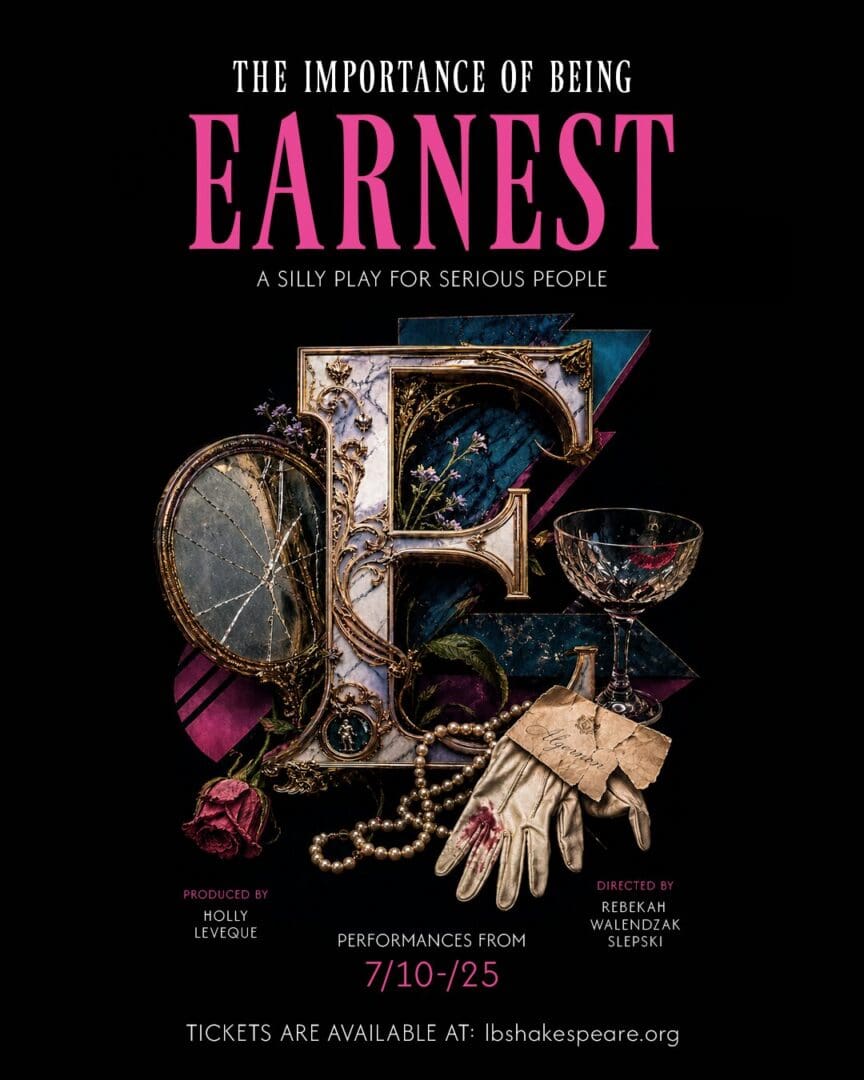
Theater Review: THE IMPORTANCE OF BEING EARNEST (Long Beach Shakespeare Company)
by Judson Feder | July 21, 2026
in Los Angeles, Theater
MORE VICTORIAN THAN
NEW ROMANTIC
Long Beach Shakespeare Company
delivers Wilde’s classic with clarity
and charm, even if its
concept never fully blossoms
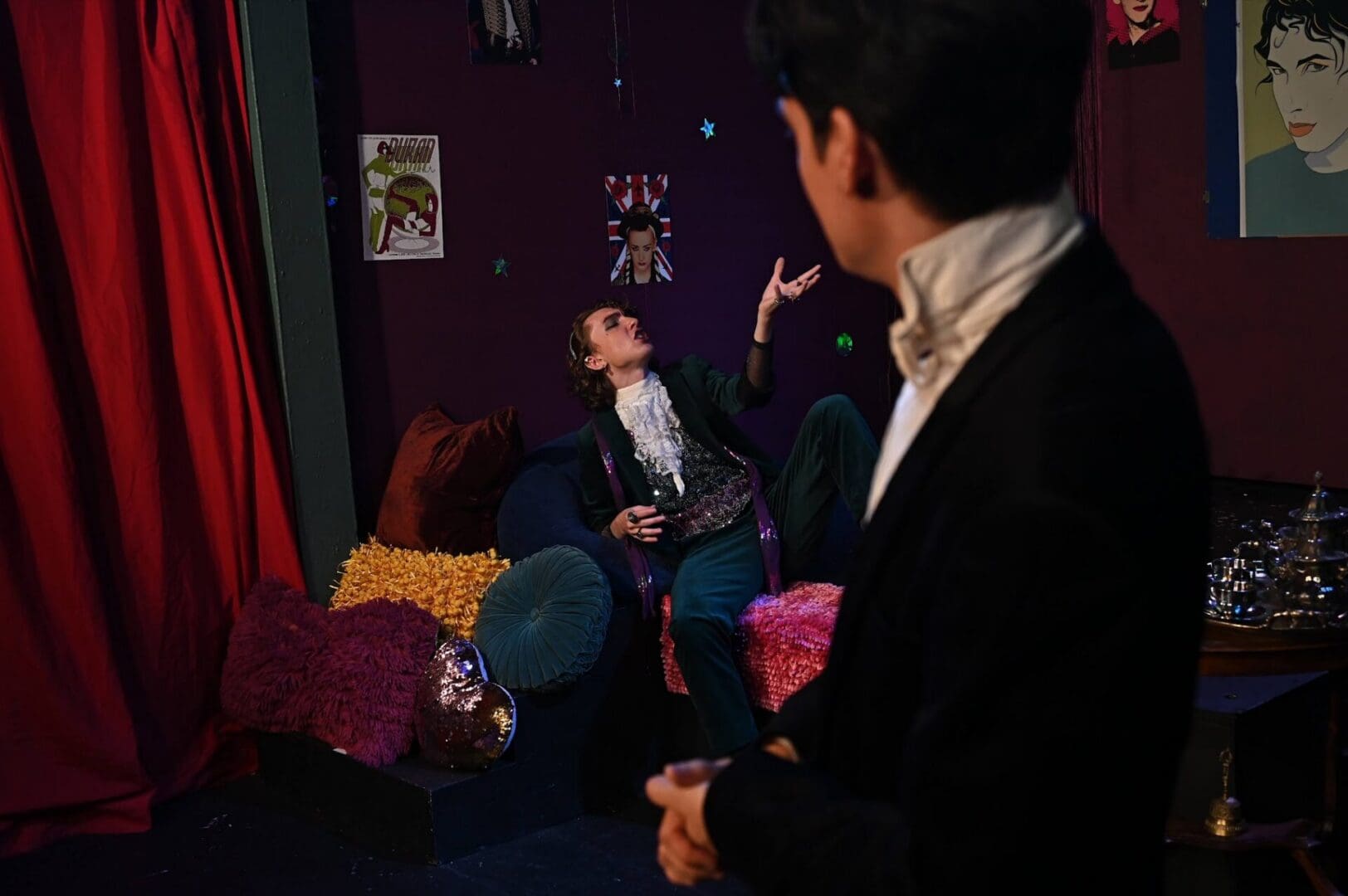
Cole Flores and Adriano Brown
Oscar Wilde’s The Importance of Being Earnest hardly needs reinvention. More than a century after its premiere, its razor-sharp epigrams, social satire, and exquisitely constructed farce remain as funny as ever. Long Beach Shakespeare Company’s latest production promises to filter Wilde’s Victorian comedy through the lens of the New Romantic movement of the 1980s. The connection, however, remains largely theoretical. Beyond a few decorative touches, this is a fairly traditional Earnest—pleasantly performed and faithful to Wilde’s text, though it doesn’t always capture the distinctive rhythm, wit, and glorious absurdity that make the play so enduring.
The evening begins with a small but avoidable distraction: the program. Actor biographies are scattered among pages of advertisements and other material, while two separate—and outdated—cast lists appear in different sections. Since the program is otherwise straightforward, a single accurate cast list and a more logical arrangement of information would have made for a more polished first impression.
Once the performance begins, director Rebekah Walendzak Slepski keeps Wilde’s intricate comedy moving with confidence. Scene changes are smooth, entrances and exits are crisply timed, and the ensemble deserves credit for navigating pages of densely layered dialogue with remarkably few stumbles. Wilde’s deceptively difficult language demands precision, stamina, and spontaneity, while convincing English accents require exceptional projection and enunciation. On that front, this production succeeds admirably.
The advertised New Romantic concept proves less persuasive. Terry Hill‘s costumes are colorful, elegant, and beautifully executed, but they remain unmistakably Victorian in silhouette. Aside from several posters decorating Algernon’s flat and a bit of 1980s music during intermission, little evokes the promised era.
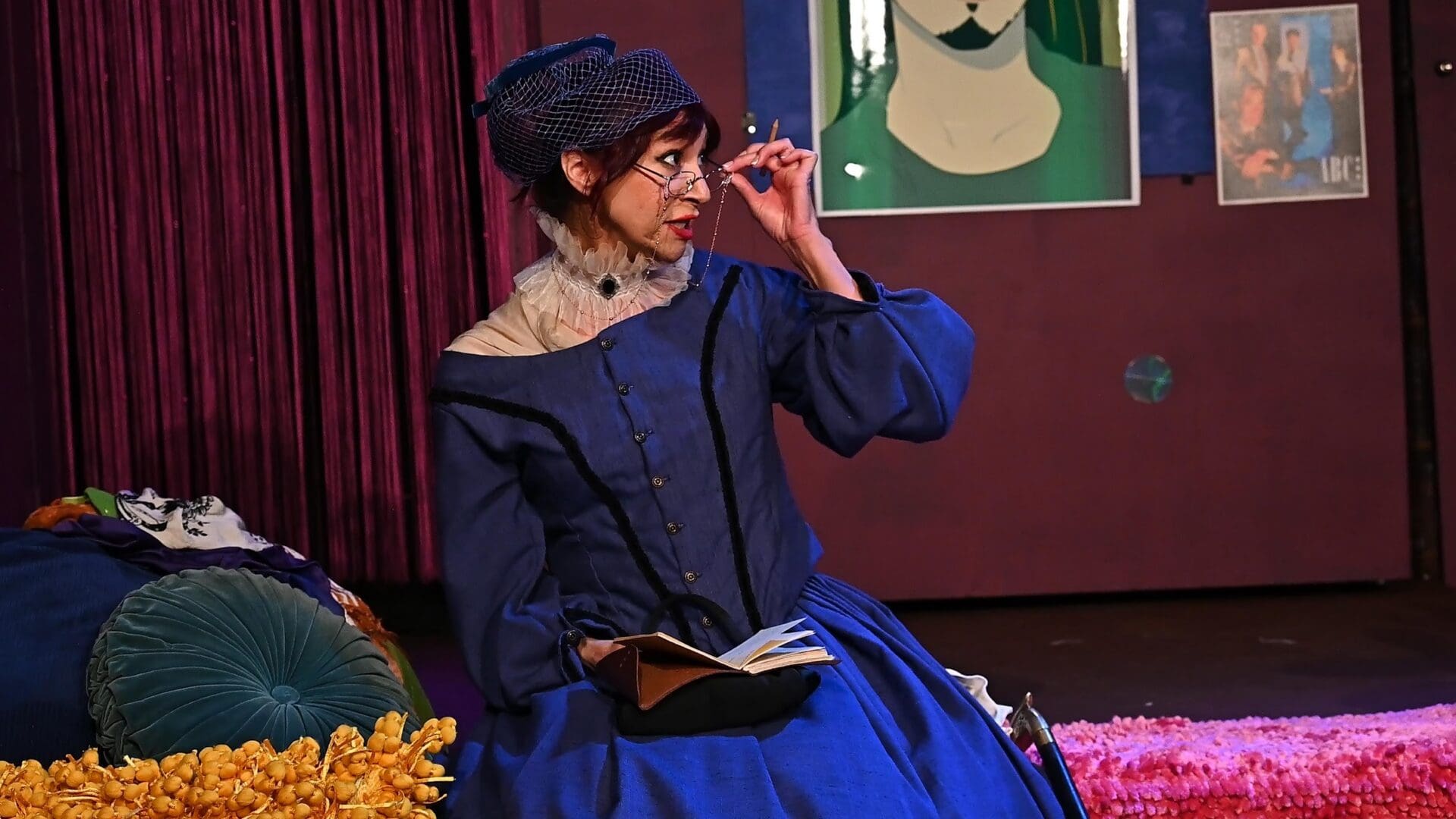
Desi Molinari
The strongest connection to the concept comes through Cole Flores‘s Algernon Moncrieff, whose flamboyance and theatrical androgyny recall figures like Boy George. He leans heavily into a modern, fey esthete, emphasizing mannerisms and vocal inflections that bring a distinctly camp sensibility to the role. It’s an entertaining choice; Flores displays sharp comic instincts and delivers Wilde’s epigrams with confidence. His broad characterization generates laughs, but it sometimes nudges Algernon away from Wilde’s elegant dandy toward a more contemporary theatrical sensibility than the text itself suggests. Opposite him, Adriano Brown capably anchors the evening as Jack Worthing, handling Wilde’s language comfortably while maintaining a convincing English accent for most of the performance, despite an occasional lapse into American speech.
Among the supporting cast, Trixi Anne Agyao emerges as the evening’s standout. Playing Lane, Merriman, and Dr. Chasuble, she gives each role a distinct personality while maintaining perhaps the production’s most consistent English accent. Her Dr. Chasuble is especially assured, combining warmth, clarity, and understated comic timing. If Agyao’s Lane occasionally sounds a touch too refined for a household servant, her versatility more than compensates.
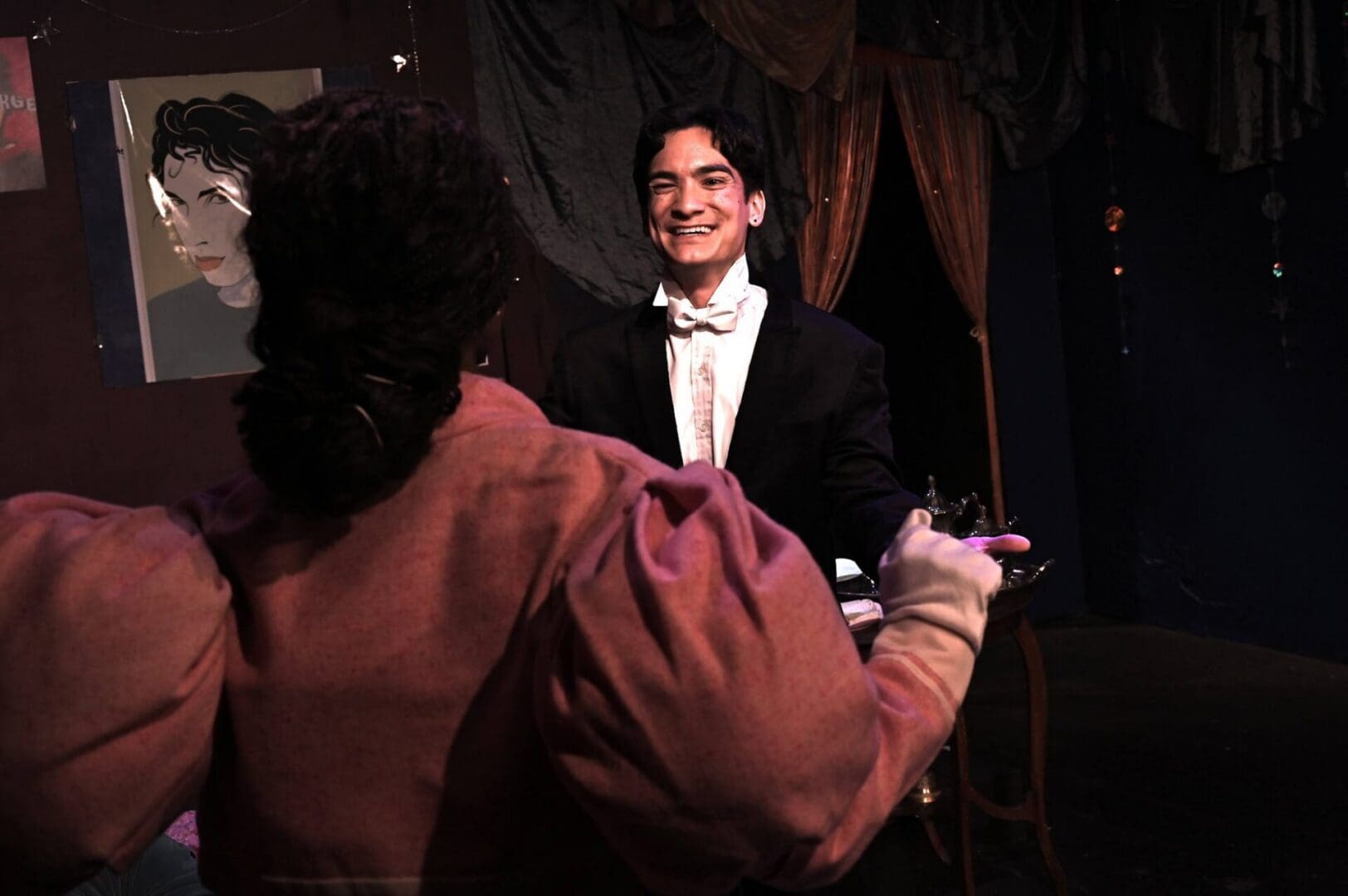
Jack Adriano Brown
Angie Green makes an engagingly poised Gwendolen Fairfax, although a few exaggerated emotional outbursts—particularly during Jack’s proposal—lean toward the manic or childish rather than Wilde’s sophisticated absurdity. Desi Molinari projects Lady Bracknell’s imposing authority with admirable vocal clarity, but an almost unvarying cadence softens the character’s razor-edged wit. Faith Kim‘s repeated business with oversized spectacles as Miss Prism becomes more distracting than amusing.
The production’s cleverest flourish comes during the confrontation between Gwendolen and Cecily, played by Jaqueline Vellandi. As the young women force Jack and Algernon to kneel before covering the men’s ears while privately deliberating, Slepski stages the sequence with wit and imagination. The physical comedy complements Wilde’s dialogue rather than competing with it.
The scenic design remains simple but effective. With modest adjustments in furniture and decorative elements, the stage transforms fluidly among Algernon’s London flat, Jack’s country estate, and the garden. The use of living greenery lends freshness to the outdoor scenes, while Sharon Stukey‘s lighting wisely avoids drawing attention to itself, providing clean illumination and subtle support for shifts in mood.
Laughter comes often throughout the evening, though much of the credit belongs to Wilde himself—his dialogue remains irresistibly funny. The actors project clearly, enunciate carefully, and navigate his rapid-fire exchanges with impressive discipline. At times, however, the performances seem more focused on delivering the lines accurately than on discovering the delicious comic rhythms beneath them. The script’s absurd situations and social satire remain intact, but some moments feel more carefully executed than fully alive.
Long Beach Shakespeare Company’s The Importance of Being Earnest is a competent and affectionate production of one of theatre’s most enduring comedies. While its New Romantic concept remains more promise than realization, the company clearly respects Wilde’s language and delivers an enjoyable evening with a play whose wit remains remarkably durable.
✦ ✦ ✦ ✦ ✦ ✦ ✦ ✦ ✦ ✦
photos by Mark Chen
The Importance of Being Earnest
Long Beach Shakespeare Company
Helen Borgers Theatre, 4250 Atlantic Ave. in Long Beach
ends on July 25, 2026
for tickets ($30 general admission; $20 students), visit LB Shakespeare
✦ ✦ ✦ ✦ ✦ ✦ ✦ ✦ ✦ ✦

The technical director and lighting director is credited to Sharon Stukey not Geoff Barton. Geoff Barton’s name is not involved in this production at all. Geoff Barton is a British music journalist, and he founded the magazine Kerrang! Sharon Stukey works for the Long Beach Shakespeare Company as a stage manager and lighting designer.
Thank you, Samantha, for pointing this out. Geoff Barton did the lighting on Treasure Island, which our writer recently reviewed at the Theatricum Botanicum.