


Areas We Cover
Categories

HOW DAYZ REWARDS SURVIVAL SKILLS OVER SHORTCUTS
by Lamont Washington | July 22, 2026
in Extras, Virtual
Introduction
Ask anyone who’s put real hours into DayZ and they’ll tell you the same thing — it’s not a game that lets you coast. While most multiplayer titles lean on fast reflexes and constant action, DayZ asks for something slower and harder: patience, planning, and the discipline to actually think before you act. Every trip across the map brings its own set of problems, whether that’s scraping together food and clean water or trying not to run into the wrong player — or the wrong infected — at the wrong time. There’s no safe zone waiting for you, no scripted win. Every playthrough just becomes whatever story your choices happen to write.
As the survival genre has grown up over the years, DayZ has stayed proof of something simple: real progress comes from putting in the time, not from finding a shortcut around it. Learning the map, understanding how the survival systems actually work, and adjusting on the fly — that’s the whole game, really.
What Survival Actually Comes Down To
Strip it back, and DayZ is fundamentally about managing what little you have. You start with almost nothing and have to work your way through abandoned towns, forests, and military bases just to get the basics together. And in this game, everything counts — a can of food, a roll of bandages, even a decent backpack can be the difference between making it through the night or not.
That matters a lot more here than in most shooters, where losing your gear is usually just a minor inconvenience. In DayZ, losing what you’ve built up can genuinely set you back hours, which is exactly why every encounter carries real weight — there’s actual something to lose.
A few things tend to separate people who survive from people who don’t: getting food and water sorted early, treating injuries before they spiral into something worse, keeping your inventory tight and organized, staying warm when the weather turns, and knowing when a fight simply isn’t worth having. None of this rewards recklessness. If anything, it punishes it fast.
You Learn By Getting It Wrong
Part of why people stick with DayZ for years is that there’s always more to learn. New players almost always make the same early mistakes — heading out without enough food, or wandering into a military compound way too soon, before they’re actually equipped to handle what’s there.
The players who’ve been at it a while tend to pick up habits that just aren’t obvious at first: moving during quieter hours, planning a route between two points instead of wandering blind, being stingy with ammo, and paying real attention to sound — footsteps, distant gunfire, anything that hints at who else might be nearby. None of that comes from a tutorial. It comes from making the mistake once, remembering it, and doing better the next time.


Why Fair Play Actually Matters Here
A game like this only really works if everyone’s starting from the same place. Every player faces the same environment, the same scarcity, the same risks — and that shared starting point is exactly what makes the encounters memorable. When preparation and strategy are what decide an outcome, rather than who happened to find an unfair advantage, the whole thing feels worth it.
That’s a big part of why communities tend to value fair competition so much, and why server admins put real effort into keeping things stable. On the development side, there’s a constant, ongoing effort to improve anti-cheat systems, patch exploits, and tighten up security — all in service of the same goal: making sure that when someone wins, it’s because they earned it.
Why DayZ Hacks and Cheats Undermine the Whole Point
It’s worth being upfront about this: searches for DayZ hacks and DayZ cheats are common, and it’s easy to see the appeal when you’re staring down a fight you might lose. But using them defeats the entire reason the game works the way it does. DayZ’s tension comes from genuine scarcity and genuine risk — every encounter matters because both players are working with the same limitations. Aimbots, wallhacks, and item duplication exploits strip that away entirely, and with it, the sense of earned progress that keeps most players coming back.
Beyond the fact that cheating ruins the experience for everyone else on the server, it tends to backfire on the player using it too. Anti-cheat systems have gotten a lot better at catching this behavior, and most official and reputable community servers ban accounts caught using hacks or cheats without much hesitation — often permanently. On top of that, a lot of cheat software floating around outside official channels is bundled with malware, meaning the “shortcut” can end up costing a lot more than the hours it was meant to save.
The players who stick with DayZ long-term almost universally land on the same conclusion: the game is genuinely more rewarding when it’s hard. Surviving a firefight because you out-planned someone, not because you could see through walls, is what actually makes the story worth telling afterward.
Community Servers Are Half the Experience
One of the things that keeps DayZ interesting is just how different one server can feel from another. Some lean hard into realism — brutal scarcity, unforgiving mechanics. Others are built more around roleplay, or a faster pace that suits players who don’t want quite as slow a grind. That range means players can find something that actually matches what they’re after, without the underlying survival mechanics changing much at all.
A lot of these communities are run by admins who put real thought into their rules — how combat should work, how players are expected to treat each other, what cooperation looks like on their server. Good rules like that tend to make a server feel welcoming, whether you’ve been playing for years or just joined last week.
Inventory Management Is a Skill in Itself
It’s easy to underestimate how much your inventory affects your odds of survival — arguably almost as much as how good you are in a fight. Carry too much junk and you lose mobility, and worse, you lose track of what you actually have when it matters.
The players who do well tend to prioritize the same handful of things: medical supplies, dependable food, materials for repairs, ammo for whatever weapon they’re actually relying on, and something to help with navigation. Keep that list tight, and you’re able to react fast when things go wrong — and still be ready for whatever’s waiting several hours down the road.
How DayZ Stacks Up Against Other Survival Games
A lot of survival games share the same basic DNA but handle progression pretty differently. Some run on scheduled wipes — resetting everyone back to zero periodically so the playing field stays level, the economy stays fresh, and people are pushed to try new strategies instead of just coasting on what they’ve already built.
DayZ mostly skips that model, but the underlying goal is the same either way — keeping the game interesting and competitive over the long haul. Seeing how different titles approach this actually makes it easier to appreciate why DayZ feels the way it does; the choices around progression shape a game’s identity more than people usually give credit for.
Exploration Never Stops Paying Off
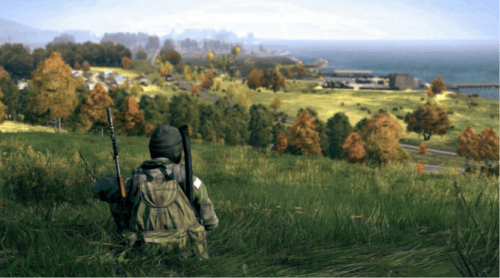
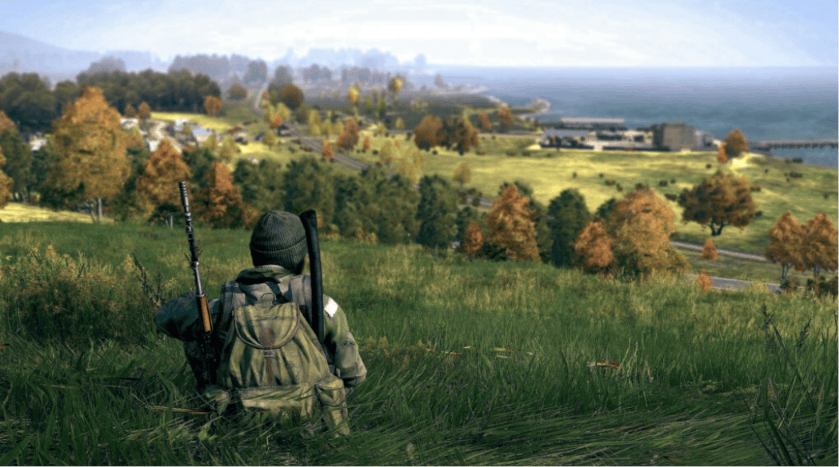
If there’s one thing that defines DayZ, it’s exploration. Every town, forest, base, or half-abandoned village holds both opportunity and risk in roughly equal measure.
Over time, players start to build up a mental map of the world that goes way beyond the in-game map itself — which routes are generally safe, where the good loot tends to show up, which water sources are reliable, where to hunt, and which zones are basically guaranteed to end in a fight. None of that knowledge comes quickly. It rewards people who actually pay attention instead of just sprinting through everything.
Teamwork Changes the Whole Equation
Going it alone in DayZ has its own kind of appeal, but teaming up genuinely shifts your odds. A group can split up supplies, cover more directions at once, divide up who’s doing what, coordinate in a fight, and actually get medical help to someone who needs it — none of which a solo player can pull off nearly as well.
Communication becomes critical in the moments that matter most, where a fast, clear call can be the difference between the whole group making it out or not. And it’s usually those moments — the ones where a group pulled together under pressure — that people end up talking about long after the match itself is over.
Conclusion
What keeps DayZ standing apart is that it consistently rewards patience, preparation, and the ability to adapt — not speed, not luck, not shortcuts. Every choice, down to how you manage your supplies or when you decide a fight is worth having, carries weight that follows you.
Between the realism of its survival systems, the unpredictability of every encounter, and the strength of its community-run servers, it’s easy to see why DayZ has become such an influential name in the genre. Anyone willing to put in the time to actually learn its systems tends to find the same thing — the real reward was never in finding a way around the difficulty. It was in getting through it.
