


Areas We Cover
Categories

Opera Review: FELLOW TRAVELERS (San Diego Opera / Balboa Theatre / San Diego)

by Michael M. Landman-Karny | July 22, 2026
in San Diego, Theater
SEXY, SINCERE… AND SLIGHT
Outstanding chemistry can’t quite compensate
for an opera that compresses too much
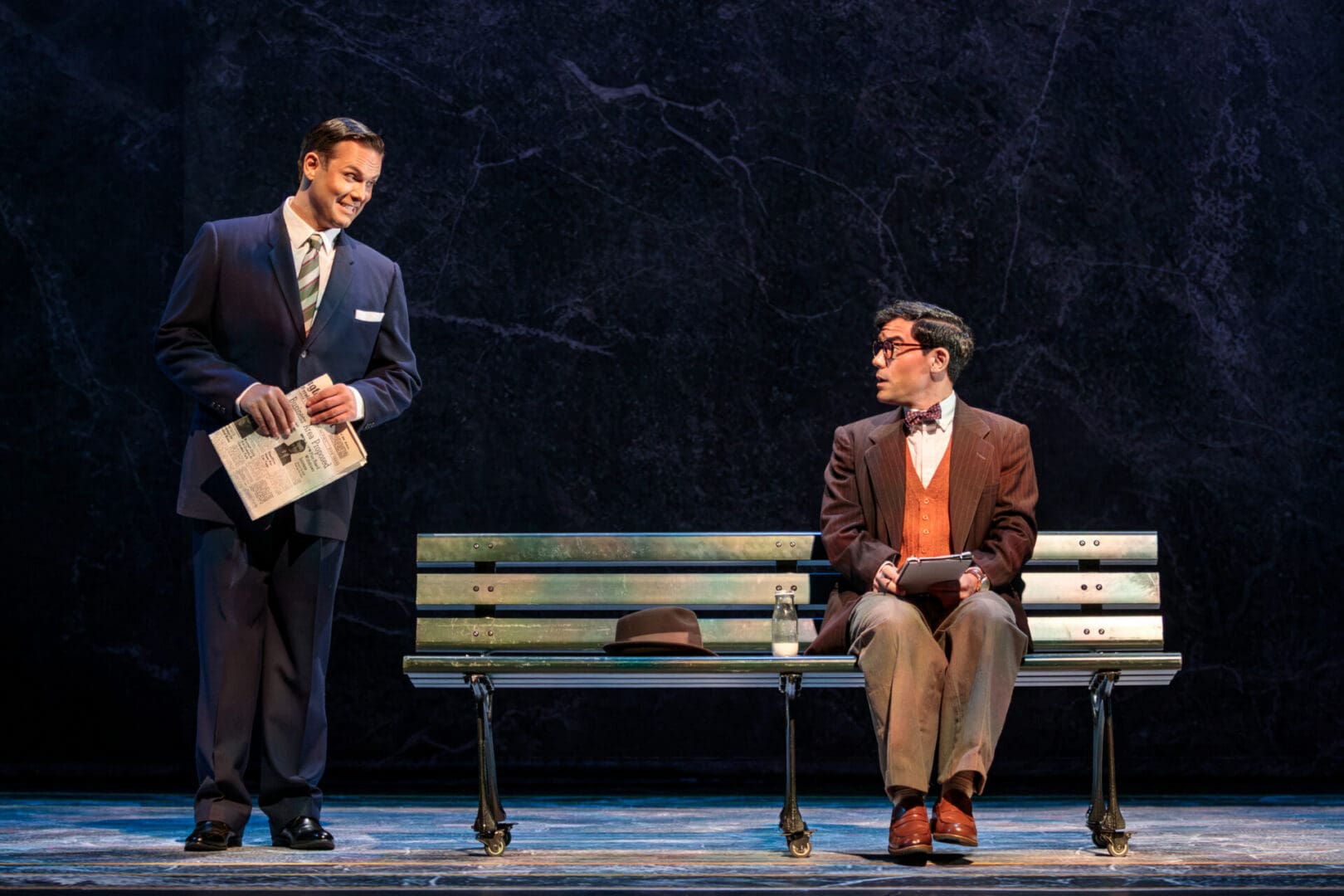
Joseph Lattanzi and Andy Acosta
Andy Acosta has sung Timothy Laughlin enough that the role has started to feel like autobiography. Miami-raised, Cuban American, and publicly out before he was out to his parents, Acosta sang as though it belonged to him. San Diego Opera presented Up Until Now Collective’s touring production of Fellow Travelers—its Southern California premiere—July 10 through 12 at the Balboa Theatre, in the city Acosta has adopted as home. The personal connection showed less in his voice than in his body. Director Kevin Newbury‘s staging leans on physical vulnerability to do work the score doesn’t have time for, and Acosta obliged, chiseled and exposed in ways the program’s nudity warning only hints at. It read as commitment rather than exhibition. Opposite Joseph Lattanzi‘s Hawk, he produced something the compressed libretto doesn’t always earn: two men who visibly wanted each other, not two men the plot simply required to fall in love.
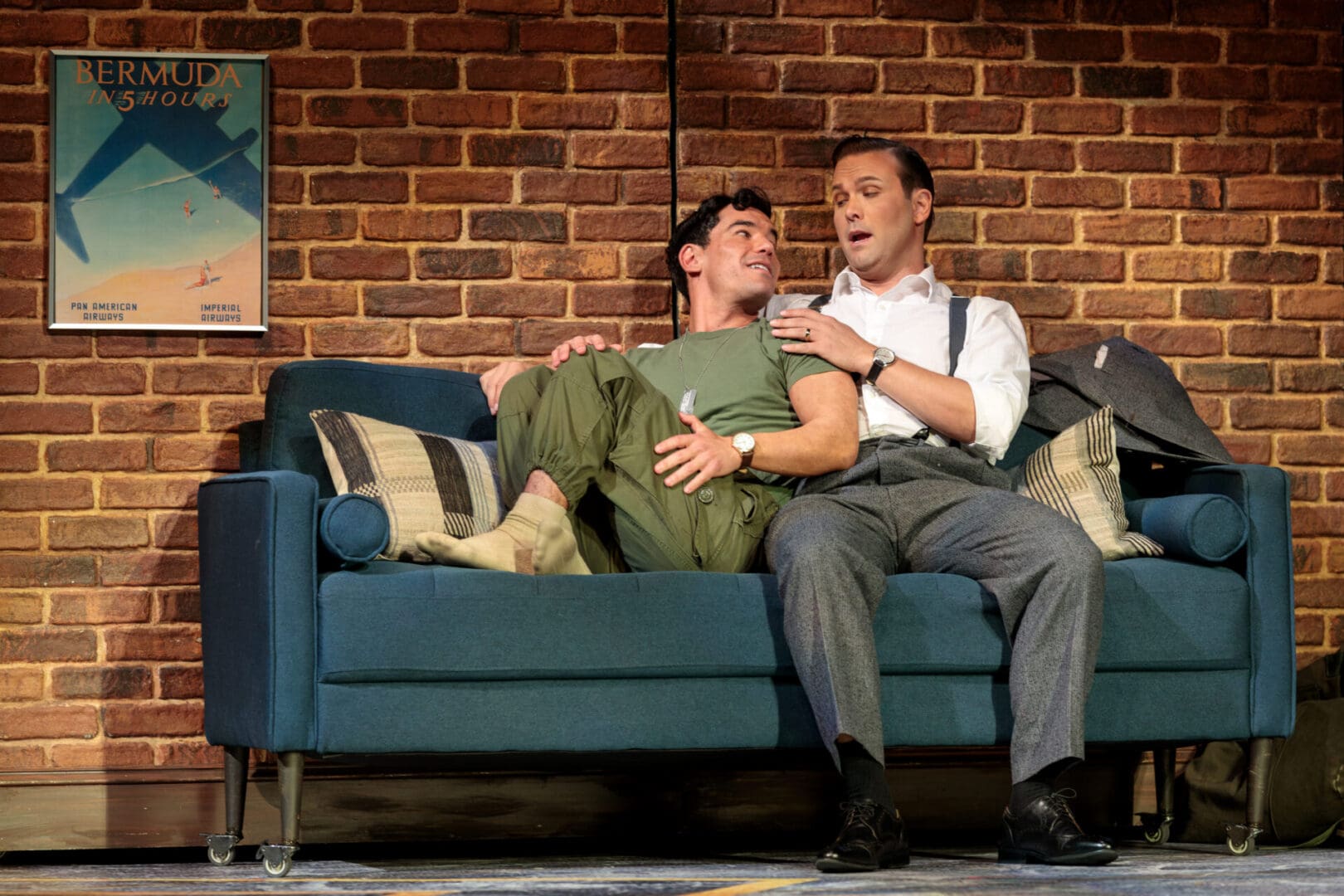
Andy Acosta and Joseph Lattanzi
Thomas Mallon’s 2007 novel frames its 1950s affair inside a coda set decades later. An older Hawk, posted to Estonia after the Soviet collapse, learns of Tim’s death and looks back on the four decades since. We then follow Hawk and Tim from the McCarthy hearings through the Vietnam-era 1960s and the disco 1970s to the AIDS crisis of the 1980s. The opera strips all of that away. Composer Gregory Spears and librettist Greg Pierce condense the story into sixteen scenes and two hours. The opera remains entirely in the 1950s, trusting the chamber score to carry what the novel and TV miniseries had decades of narrative time to build.
That compression matters because Hawk’s self-protection could easily read as a character the libretto has no room to explain. Lattanzi didn’t let that happen. His baritone stayed warm even when Hawk’s choices weren’t, and his stage presence kept the character sympathetic through the very moments the writing gives him every reason not to be. Paired with Acosta, the two leads generated enough heat that the central relationship never had to be taken on faith.
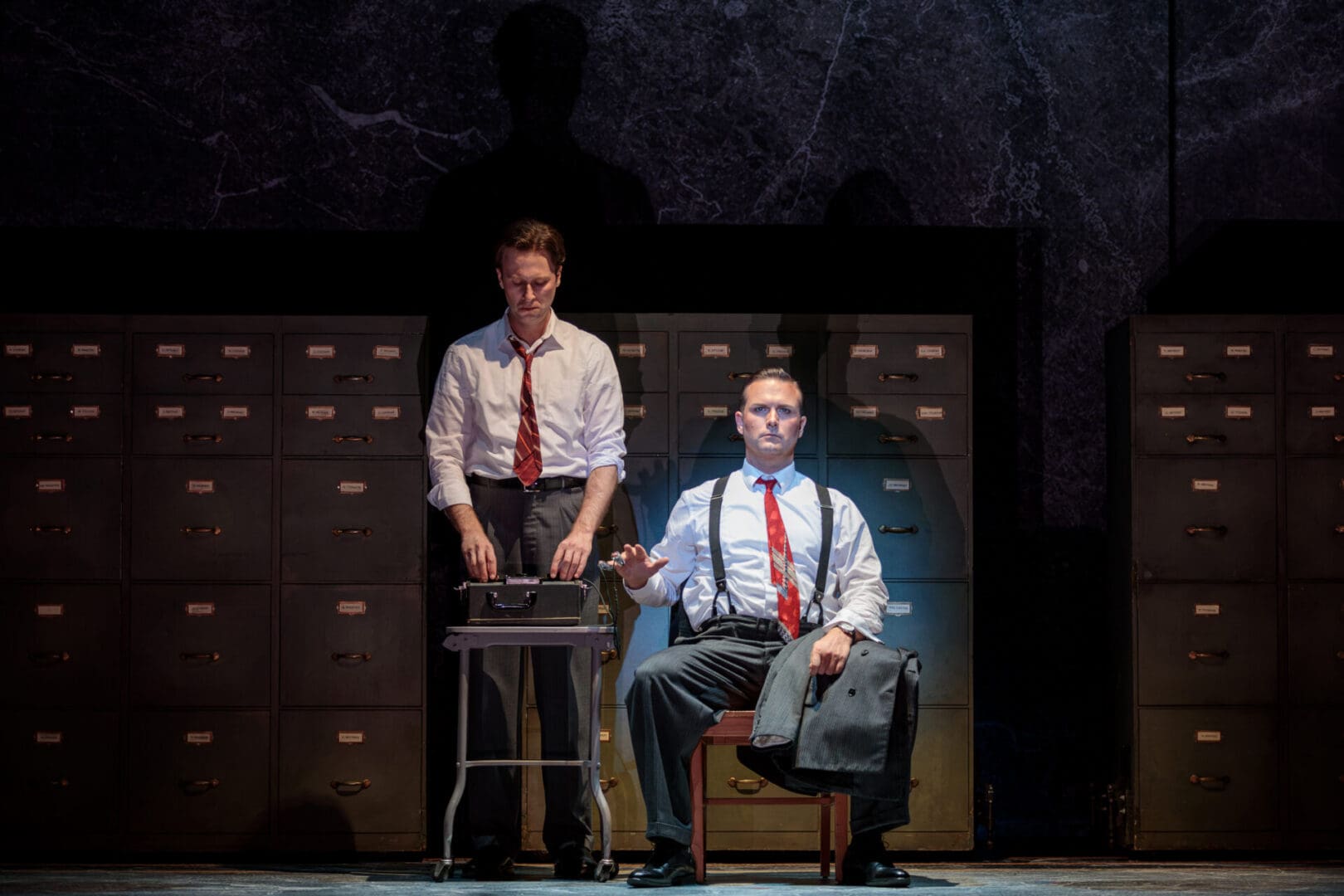
Jeremy Weiss and Joseph Lattanzi
The McCarthy material didn’t receive the same benefit. Spears and Pierce give the senator and his hearings just enough stage time to establish paranoia as mood. The staging didn’t add anything to close that gap. An audience already familiar with the Lavender Scare reads the brevity as economy. An audience that isn’t watches the hearing scenes come and go too quickly to explain themselves, and the menace remains texture instead of becoming history. The miniseries could afford to slow down and show the machinery; this opera does not. That’s the tradeoff. Compress a novel’s political machinery into sixteen scenes and something goes missing. What went missing was legibility for anyone walking in cold.
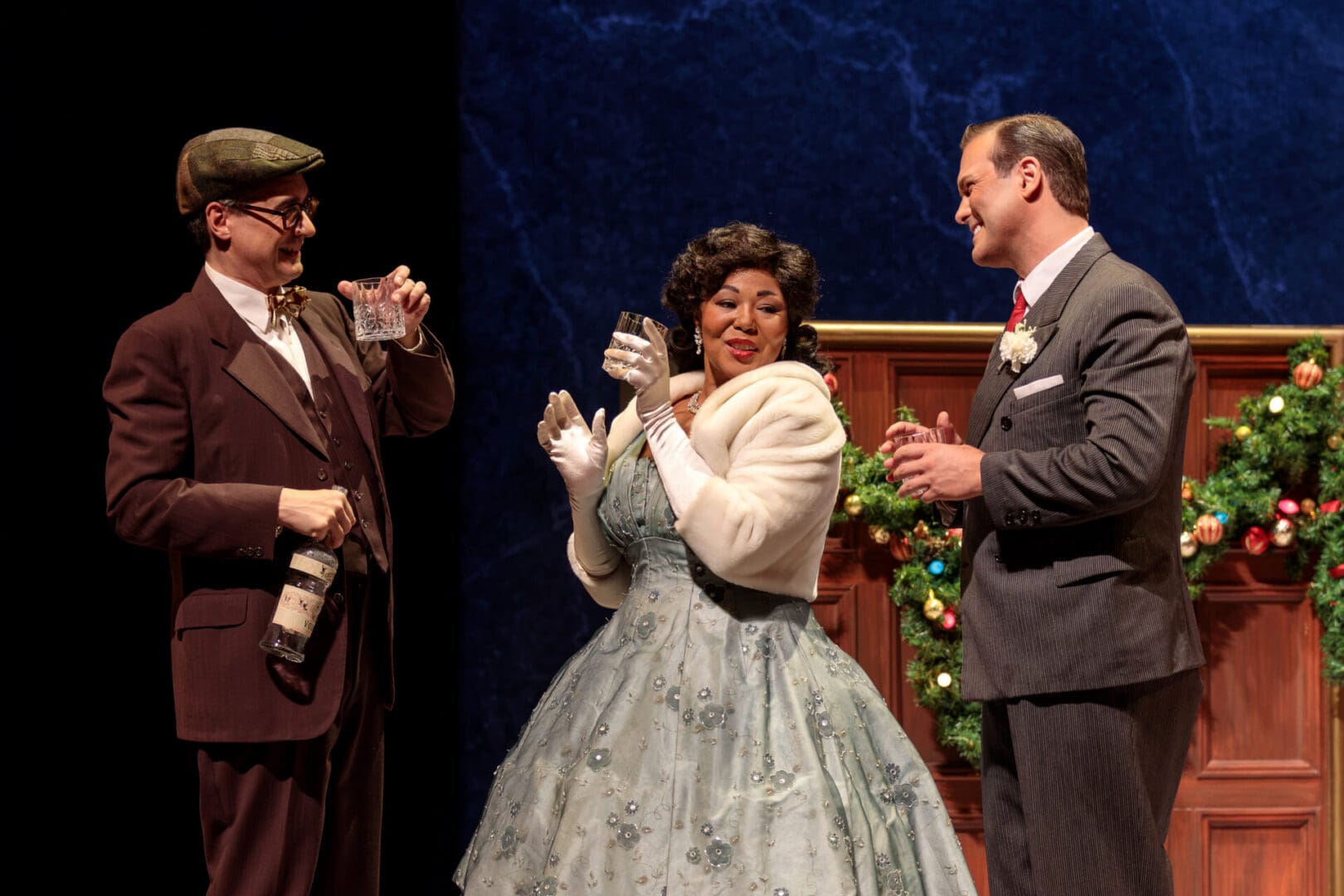
Kyle Pfortmiller, Amber R. Monroe, and Joseph Lattanzi
Amber R. Monroe‘s Mary was the night’s clearest vocal instrument. Mary is a functional role placed mostly to warn the audience what is coming, but Monroe’s voice argued for more stage time than the part gives her. This is a soprano who should be tackling heavier Italian repertoire, not carrying exposition in someone else’s love story.
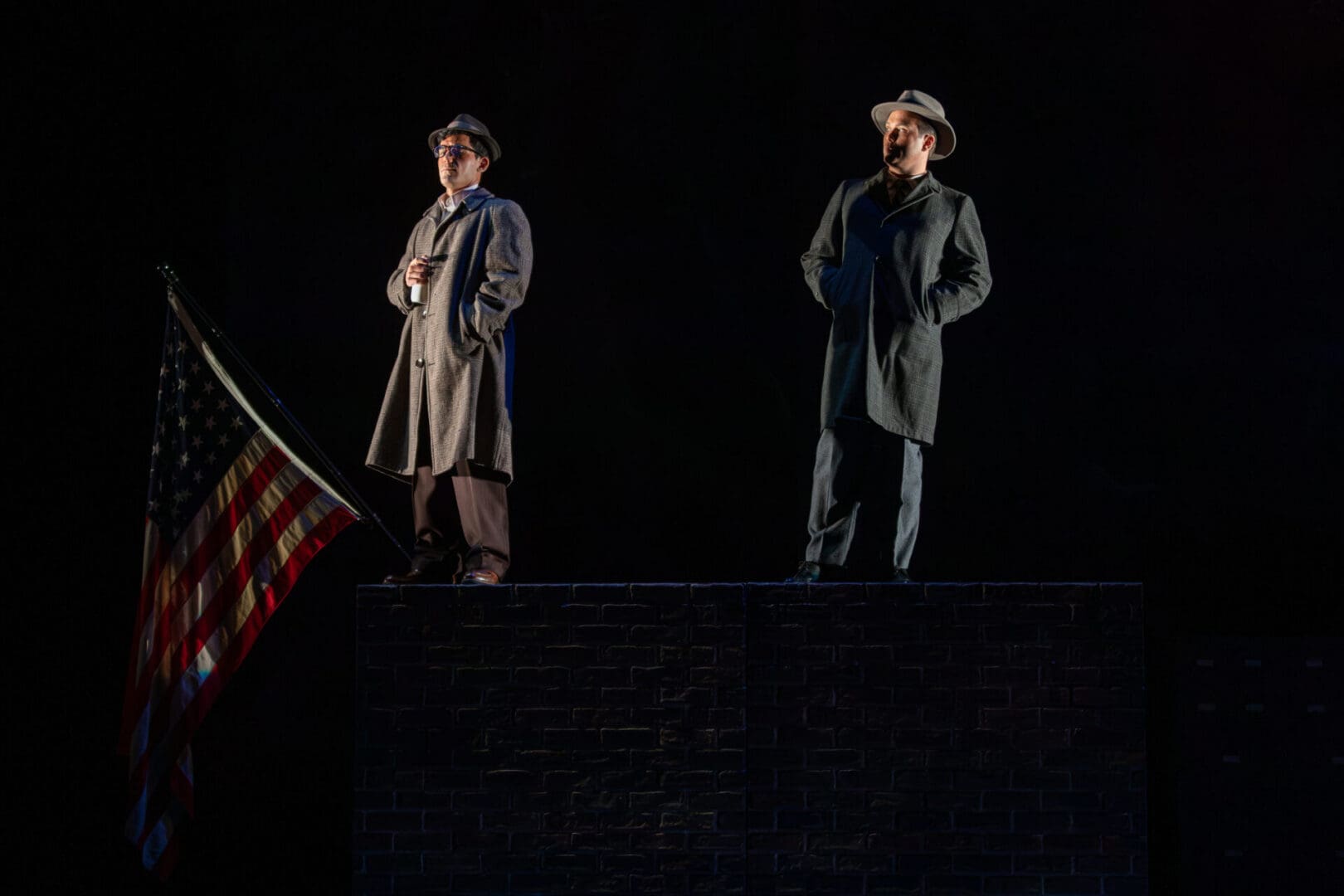
Andy Acosta and Joseph Lattanzi
Vita Tzykun‘s scenic design worked in inverse proportion to how much the production asked of it. A bare stage gave the two central performances room to carry scenes alone, the right call for material this intimate. But the same sparseness that let Tim and Hawk breathe left McCarthy’s Washington looking thin, with no visual weight to offset what the libretto already shortchanges.
The San Diego Symphony, led by resident conductor Bruce Stasyna, gave Spears’ score exactly what it needed and nothing more. It found warmth in the propulsive minimalism without ever pushing the sentiment past what a scene earned. The Balboa Theatre’s mid-sized house suited the chamber-scaled writing well. Voices carried without strain, and the orchestra never buried a lyric under its own momentum. It’s a smaller house than this opera sometimes plays, much to its benefit.
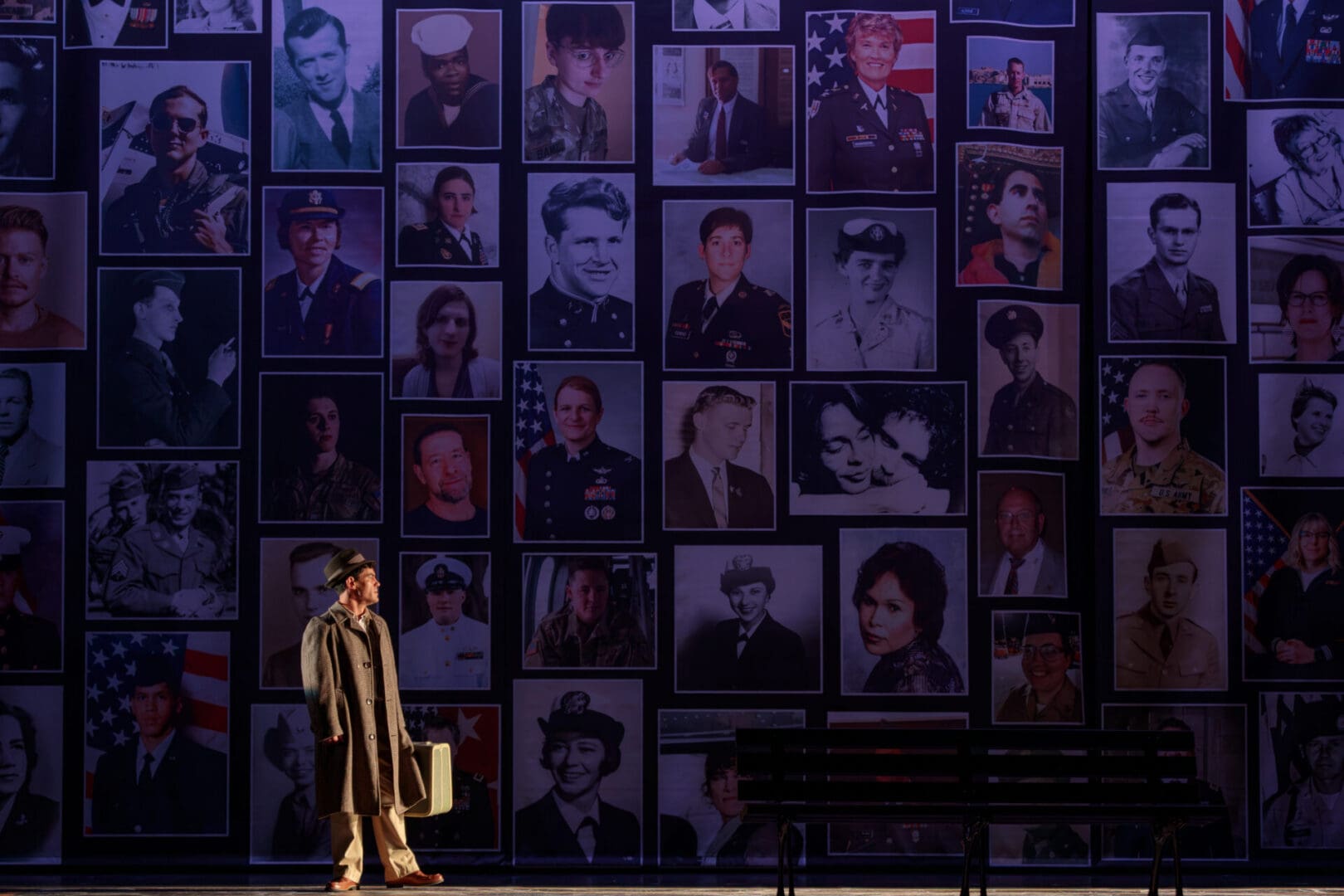
Andy Acosta
The one real misstep came at the very end. After two hours built on Tim and Hawk’s interiority, the curtain gave way to the Lavender Names Project, a photo display honoring people purged from government jobs during the Lavender Scare. It was unveiled as the house lights remained up. The initiative itself, a partnership with the American LGBTQ+ Museum collecting stories from those affected by the purge, matters on its own. As the final image of this staging, however, it felt bolted on rather than earned. The photographs functioned as a factual epilogue, appended to a story that had already made its emotional case without needing the historical record read into it. The opera closes on Tim. This production closed on a slideshow instead. The two didn’t fit together.
✦ ✦ ✦ ✦ ✦ ✦ ✦ ✦ ✦ ✦
photos by Karli Cadel
Fellow Travelers
San Diego Opera
Balboa Theatre, 868 Fourth Ave. in San Diego
ended July 12, 2026
for future shows, visit San Diego Opera
✦ ✦ ✦ ✦ ✦ ✦ ✦ ✦ ✦ ✦
