


Areas We Cover
Categories

Theater Review: HAIR: THE AMERICAN TRIBAL LOVE-ROCK MUSICAL (Kokandy / Chicago)
by C.J. Fernandes | July 25, 2026
in Chicago, Theater
YESTERDAY’S REBELS
Time has softened the musical’s
edges, but not its beating heart
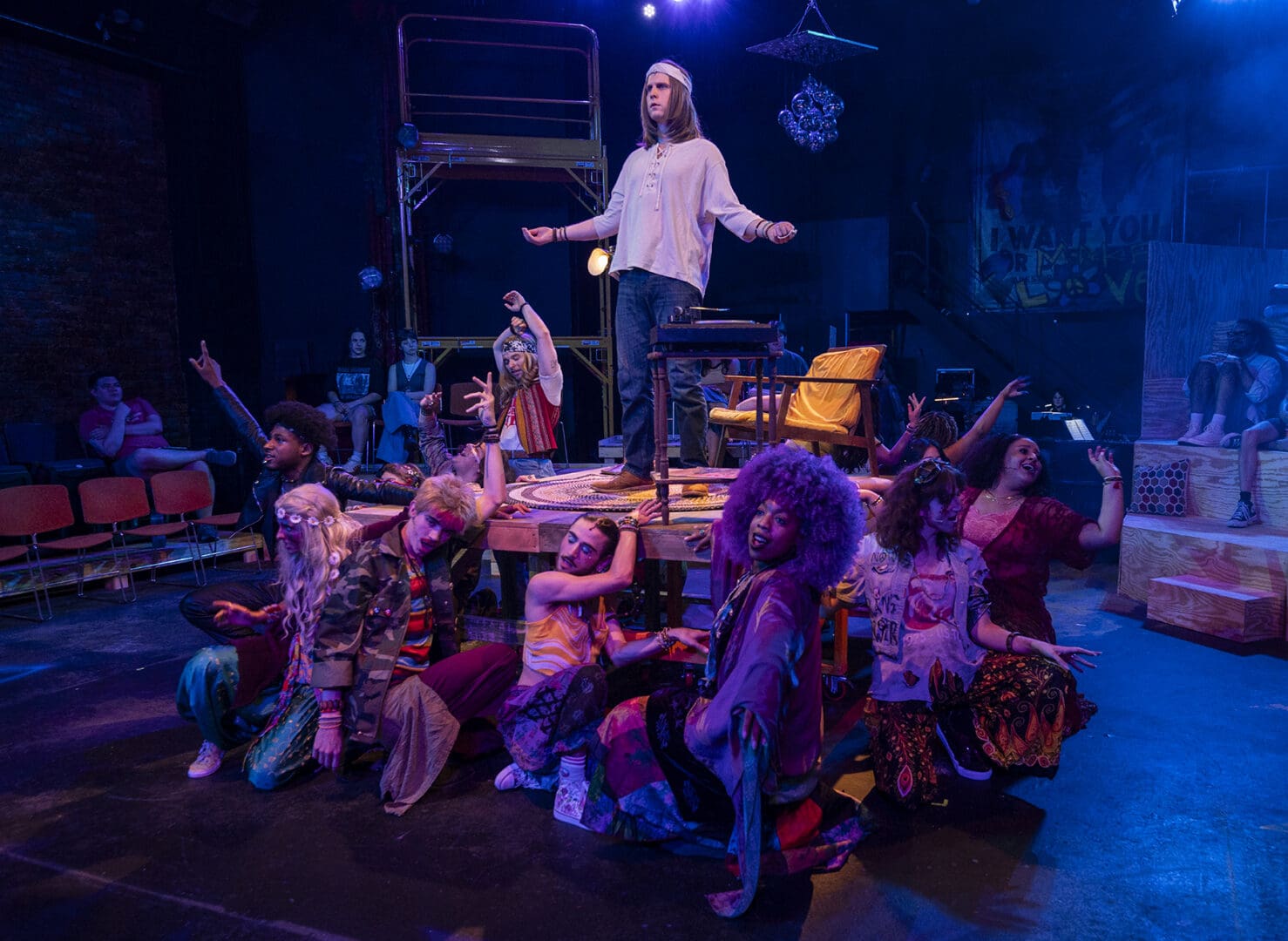
(clockwise from center) Gavin Rhys, Diana Marilyn Alvarez, Nicki Rossi, Chosen Mitchell, Quinn Simmons, Stone TeSelle, Shayla Florence, Joshua Emmanuel, and Zac Richey
In 1968, a rock musical featuring a ragtag group of hippies took Broadway by storm. With book and lyrics by Gerome Ragni and James Rado, a score by Galt MacDermot, and featuring a large cast of mostly unknowns, minimal dialogue and no plot to speak of, copious amounts of profanity, blasphemy, anti-establishment rhetoric, and the first-ever nude scene on Broadway—full frontal, natch—Hair: The American Tribal Love-Rock Musical shocked, offended, and exhilarated audiences who’d never seen anything like it on the Broadway stage before. It was a smash hit, received almost unanimous critical acclaim, and while it didn’t receive much awards attention in the theatre, its songs conquered the pop charts, won Grammys, and insinuated themselves into the cultural consciousness in ways that subsequent musicals could only aspire to.
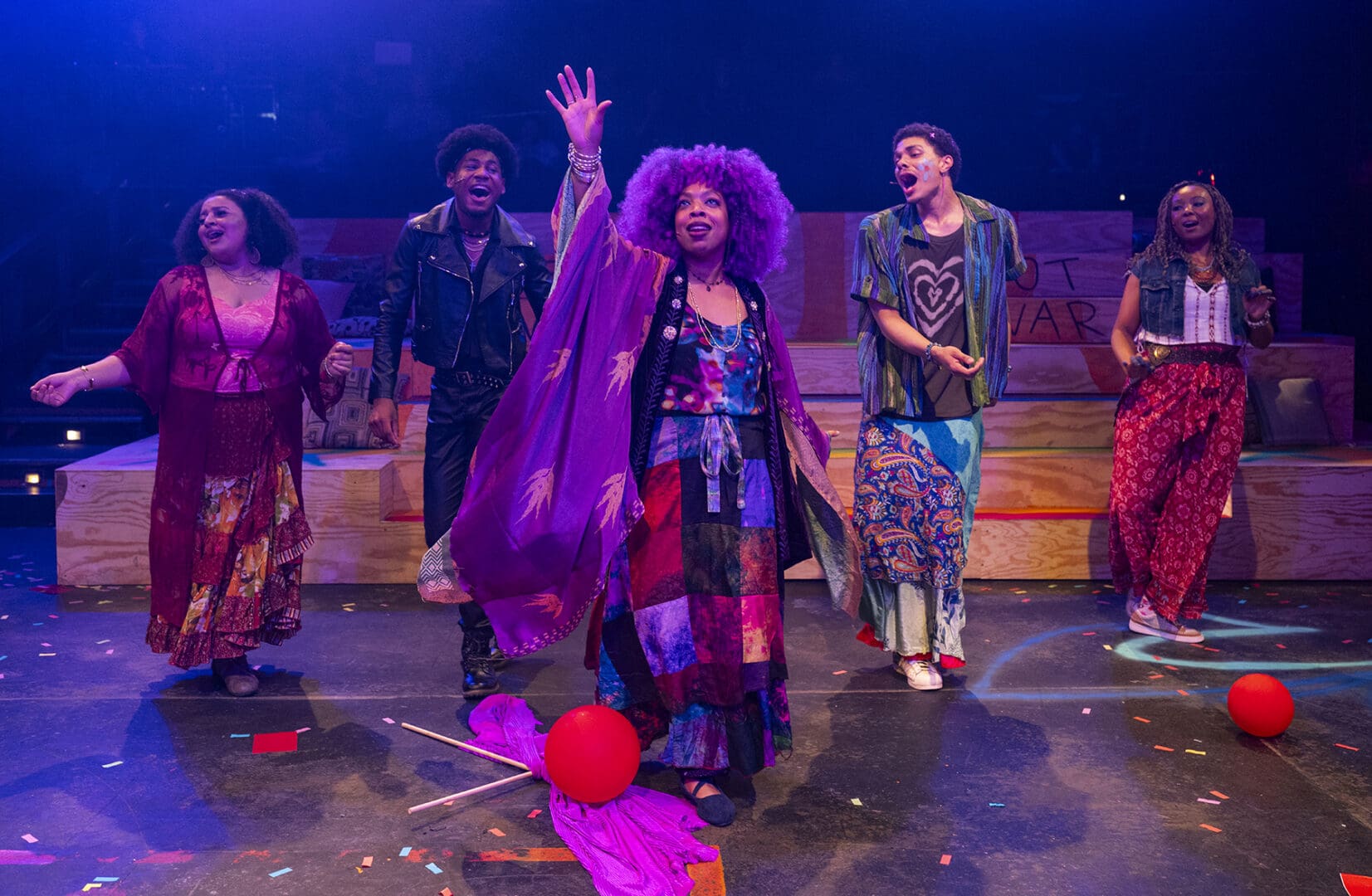
Diana Marilyn Alvarez, Joshua Emmanuel, Chosen Mitchell, Kijani X, and Caitlin Dobbins
But that was almost sixty years ago, and time has a way of smoothing out rough edges; what was once transgressive is now normative, and what was once shocking is now commonplace. The last time I watched any version of Hair was at the beginning of this shiny new millennium, a quarter of a century ago, when I rented the DVD of the 1979 movie adaptation, and even then it came across as a curiosity, a relic of another era. So it was with some trepidation that I made my way to the lovely Chopin Theatre in Wicker Park to take in Kokandy‘s new revival of Hair.
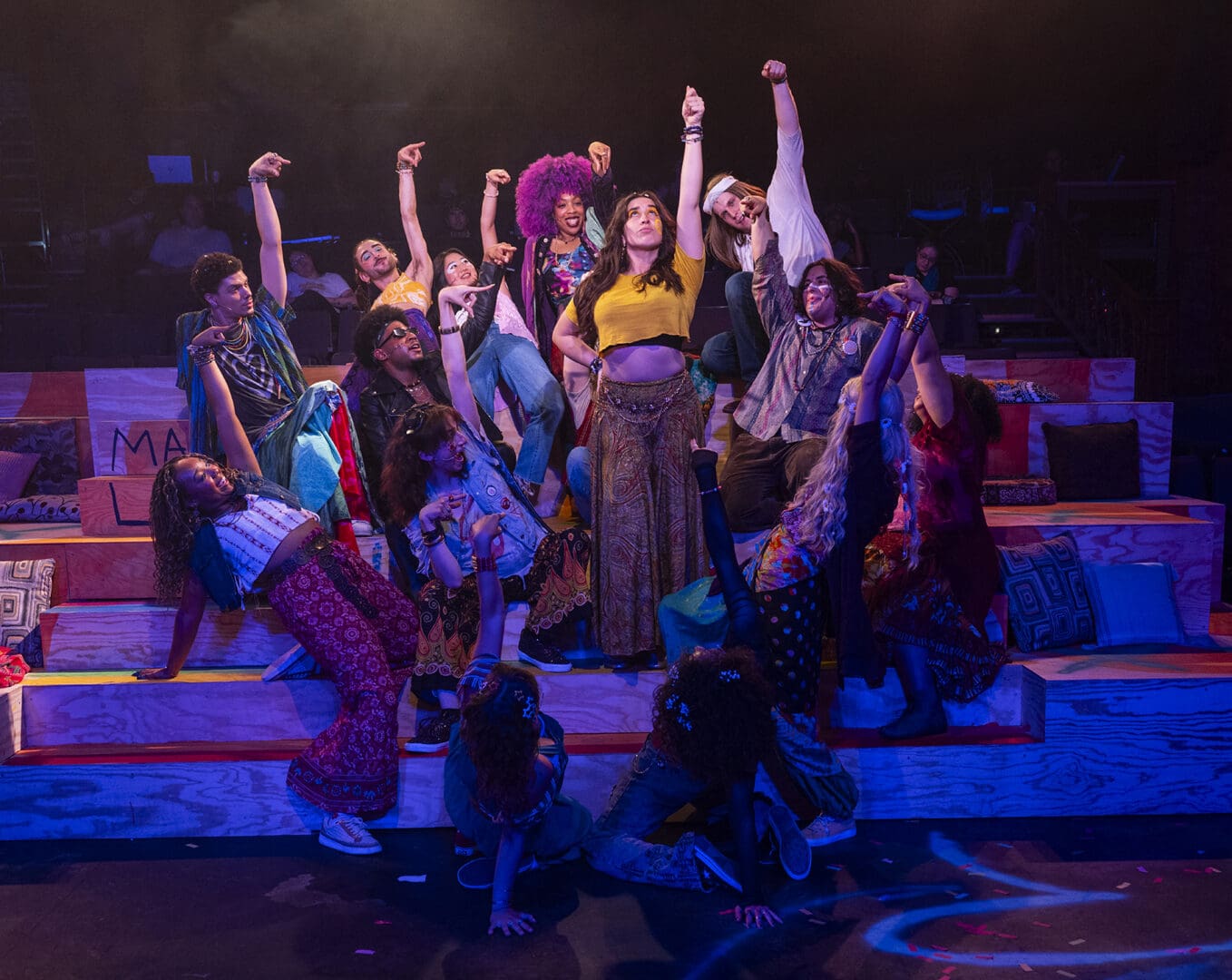
Catherine Rodriguez O’Connor (center)
Radically reconfiguring the mainstage at the Chopin, Eleanor Kahn‘s scenic design sacrifices the first several rows of seats to create a roughly hewn platform of unfinished pine. Smaller platforms flank the central space, with seating provided in the form of cushions. In the corner, a construction scaffold provides more performance space. A central platform bears a précis of a 1960s living room. The orchestra, led by the most excellent Kara Olander, is tucked into a corner behind a screen. The walls are covered with scribbled political slogans and drawings—the audience is invited to contribute during intermission and following the show—and from the center of the ceiling, a solitary, highly stylized draft card is suspended. The overall effect is ravishing, and I was thoroughly charmed.
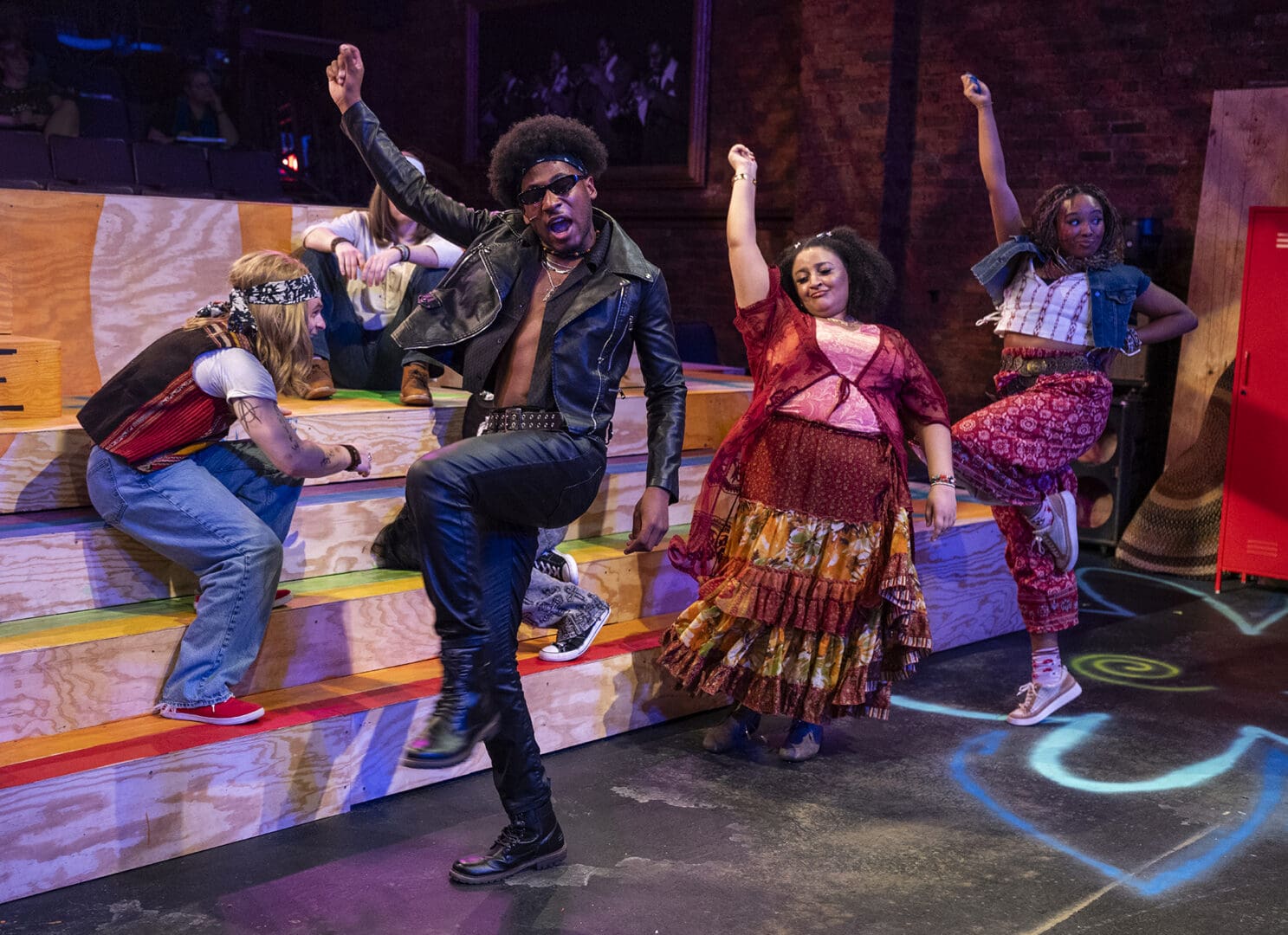
Zac Richey, Gavin Rhys, Joshua Emmanuel, Diana Marilyn Alvarez, and Caitlin Dobbins
Hair concerns a group of hippies called “The Tribe.” When the play begins, several members of the Tribe move around the space, interacting with the audience while, on the central platform, sits Claude (Gavin Rhys), the audience surrogate. Claude has just been drafted into the Vietnam War, and after he yanks his draft card free from its suspension wires, the entire Tribe moves into the main space with Dionne (a glorious Chosen Mitchell) leading the cast in a stunning version of “The Age of Aquarius.” The cast is large, but a few faces immediately separate themselves from the pack: the de facto ringleader Berger (a scene-stealing Zac Richey), the very-pregnant Jeannie (Nicki Rossi), the sweet and gentle Woof (Stone TeSelle), and slumming-rich-girl Sheila (Catherine Rodriguez O’Connor).
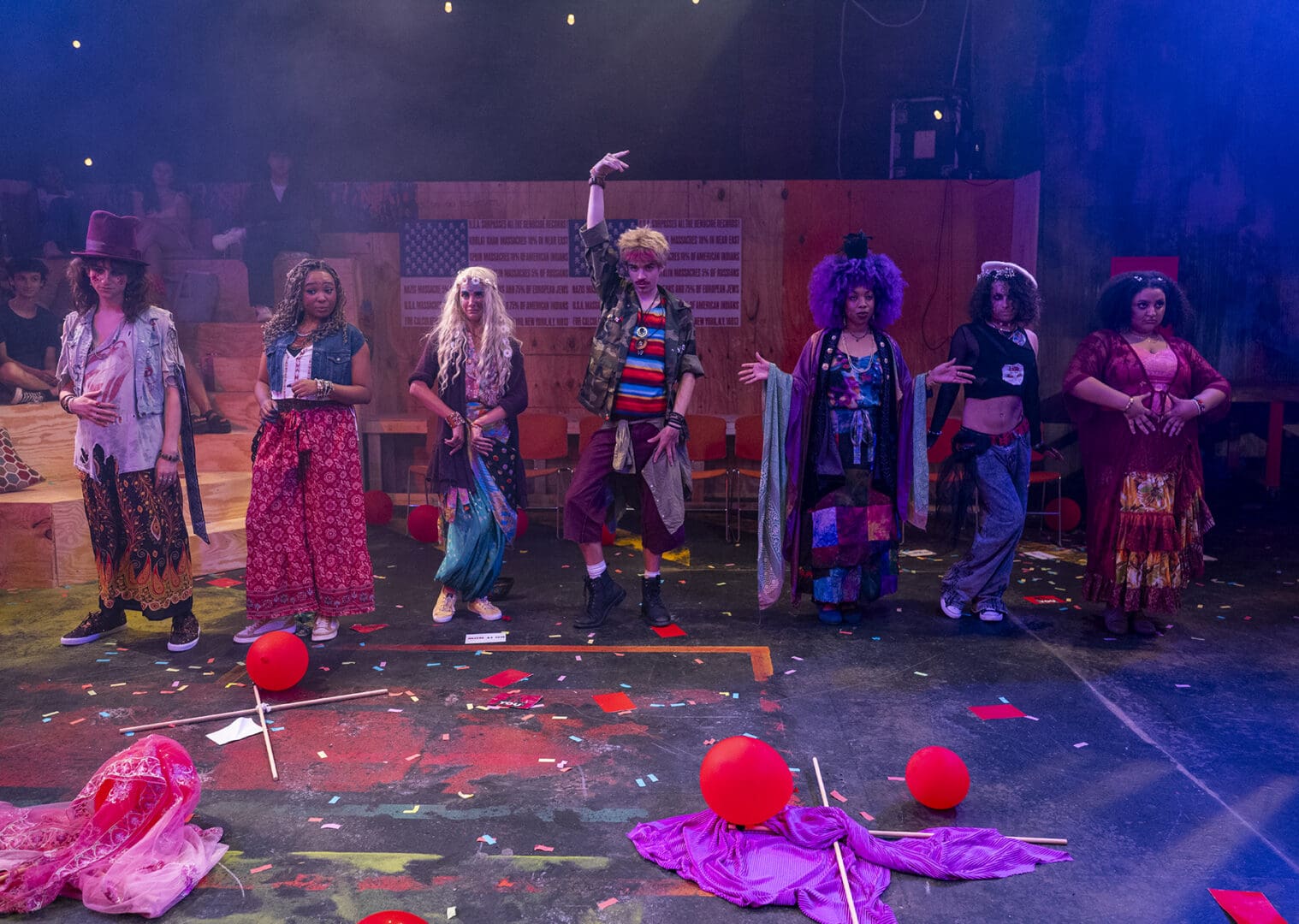
Nicki Rossi, Caitlin Dobbins, Shayla Florence, Stone TeSelle, Chosen Mitchell, Wolfie J, and Diana Marilyn Alvarez
Aside from whether Claude will show up at the draft office and allow himself to be conscripted, there isn’t much of a plot here. What there is, however, is a lot of glorious music. In most musicals, you’re lucky if you get a couple of songs that can stand on their own outside the confines of the show. Hair has an astonishing number of bangers. And to absolutely no one’s surprise, Kokandy and director Brennan Urbi—who also handles choreography—have assembled a phenomenally talented cast who sing the hell out of them. The cast is near-flawless. Maybe Gavin Rhys (Claude) could let loose a little more. He was slightly stiff, but it was also opening night. I’ve no doubt it’s just a blip.
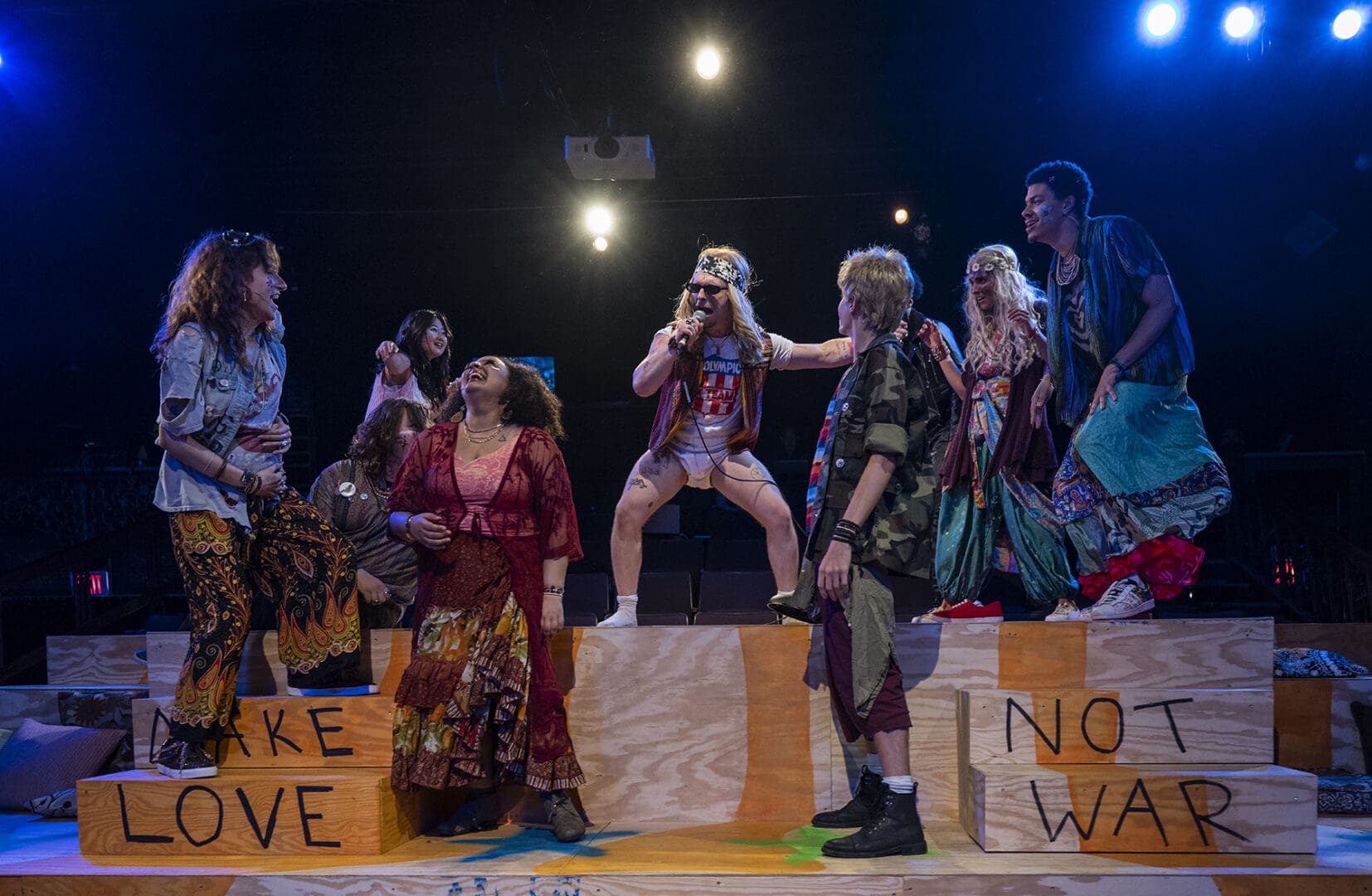
Nicki Rossi, Mateo Palm, Amy Yesom Kim, Diana Marilyn Alvarez, Zac Richey, Stone TeSelle, Shayla Florence, and Kijani X
My only real issue with the production is Matt Reich‘s sound design. Maybe the reconfiguration created more of an echo in the space, or the instrumentation overpowered the singers, but whatever the reason, the group numbers tended to be difficult to follow, with “Black Boys/White Boys” the most affected. I could tell by watching the audience exactly which members were familiar with the two songs: they were the only ones laughing.
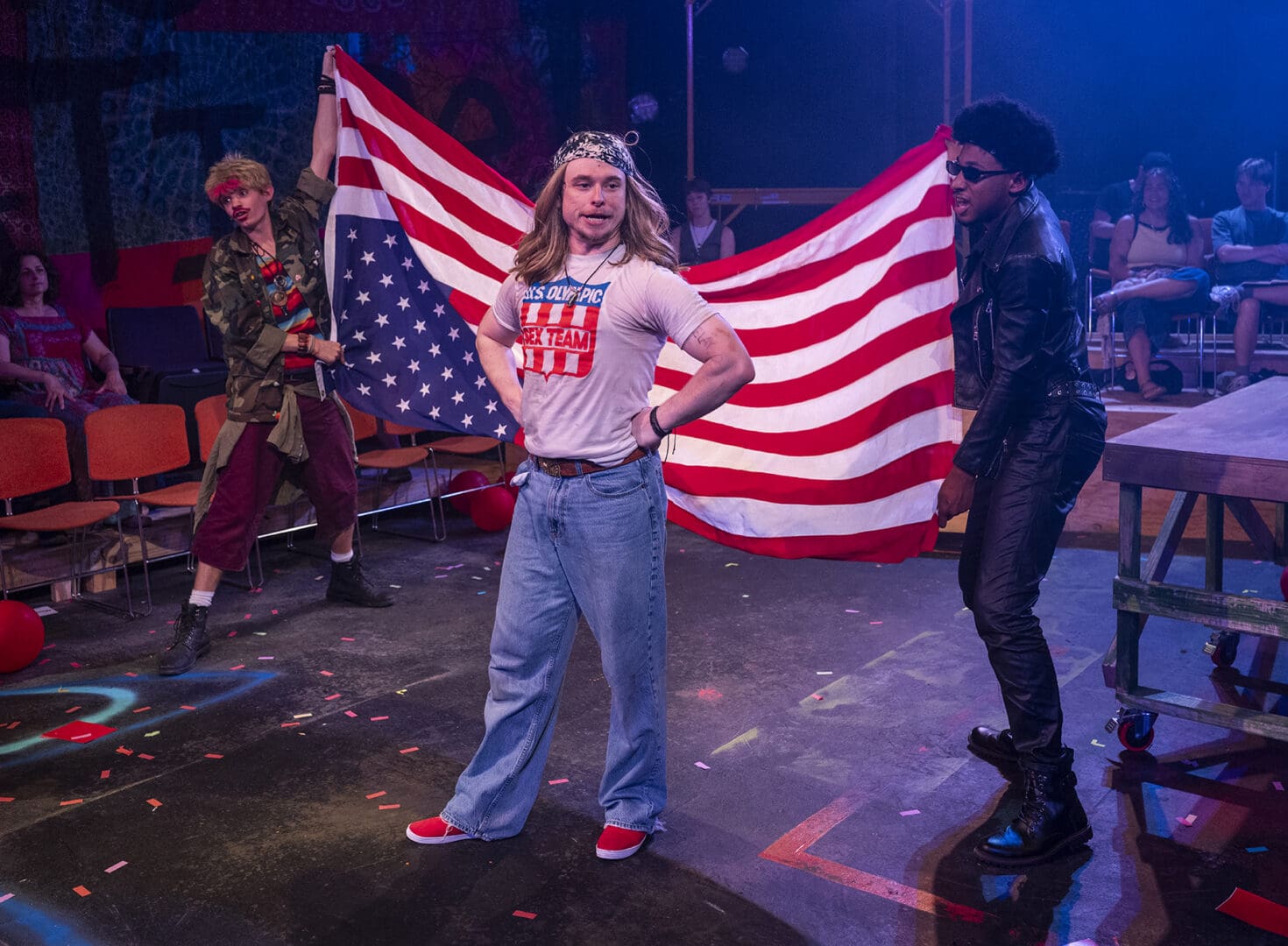
Stone TeSelle, Zac Richey, and Joshua Emmanuel
Even so, this is wonderfully done. By now, Kokandy has established itself as one of the best companies in the city for musicals. They elevate everything they take on, and their instincts are on point for almost all the changes. I heaved a massive sigh of relief when I realized that the “love-in” had been cut—performative nudity is so last century—but the curtain informing us that “This is a satire” prior to the still abrasive and shocking “Colored Spade” was a misstep. I get why they did it. We live in an age where a few humorless scolds incapable of understanding context or nuance could bring down a screeching mob onto the show, but even so, way to neuter the one still-transgressive aspect of the show, guys.
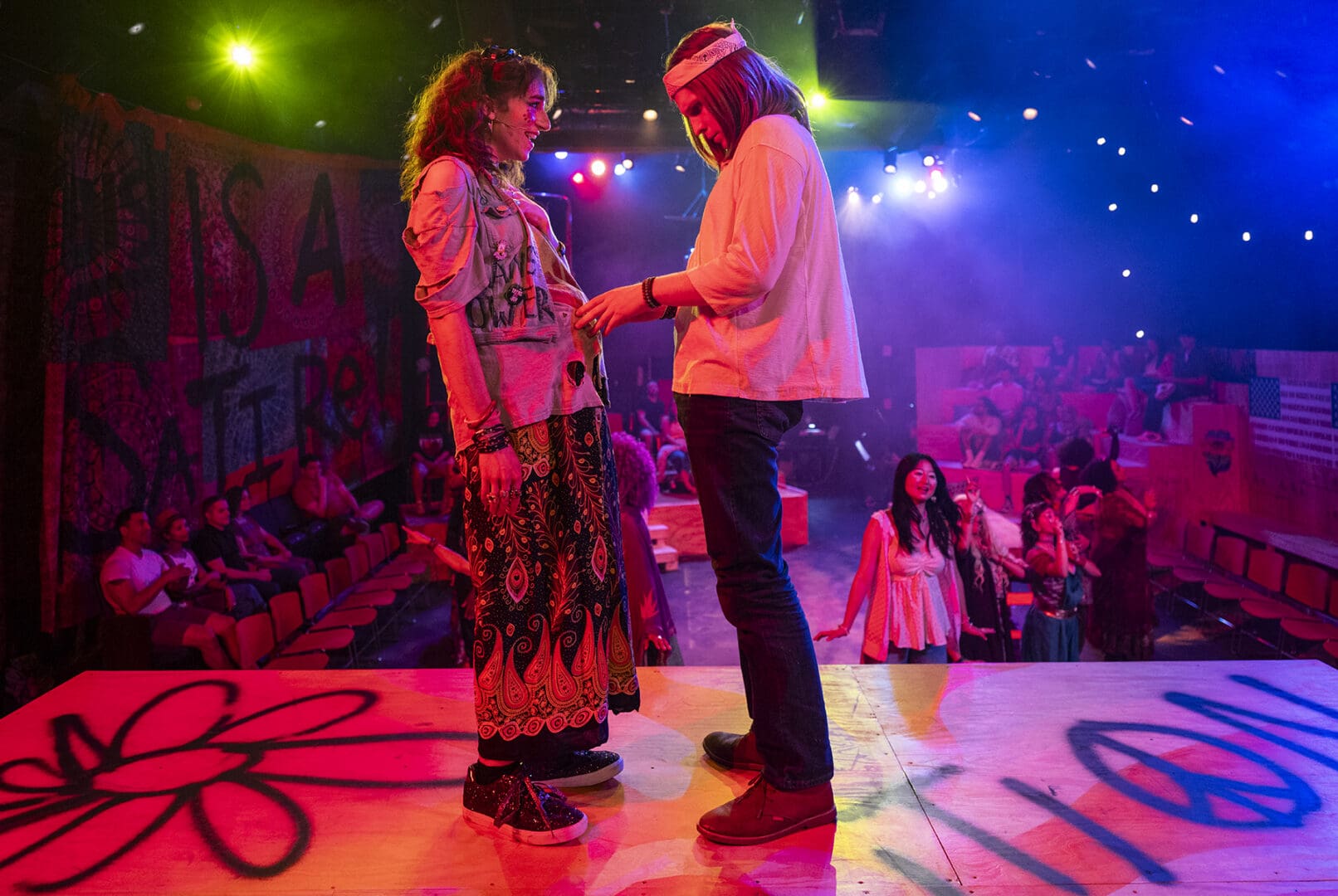
Nicki Rossi and Gavin Rhys
And that’s the key word here. More than five decades after it shocked Broadway, is Hair still transgressive? Most of its issues have faded into the past. Miscegenation, swearing, nudity are all over the place now. Antiestablishmentarianism has been co-opted by the right. The draft no longer exists. And the show’s timid nods toward non-normative sexuality and gender constructs are rendered quaint by the fact that the Kokandy ensemble, rather matter-of-factly, includes multiple non-binary and queer performers. That’s not to say that the show is irrelevant. Removed from its era, what stands out most about Hair is its joyous, irresistible depiction of the political fervor and boundless optimism of the young: youth determined to affect social change by whatever means they have at hand. The issues may be different, and the wars change even as they stay the same, but there is always a status quo and there are always powerful authority figures determined to maintain and exploit it.
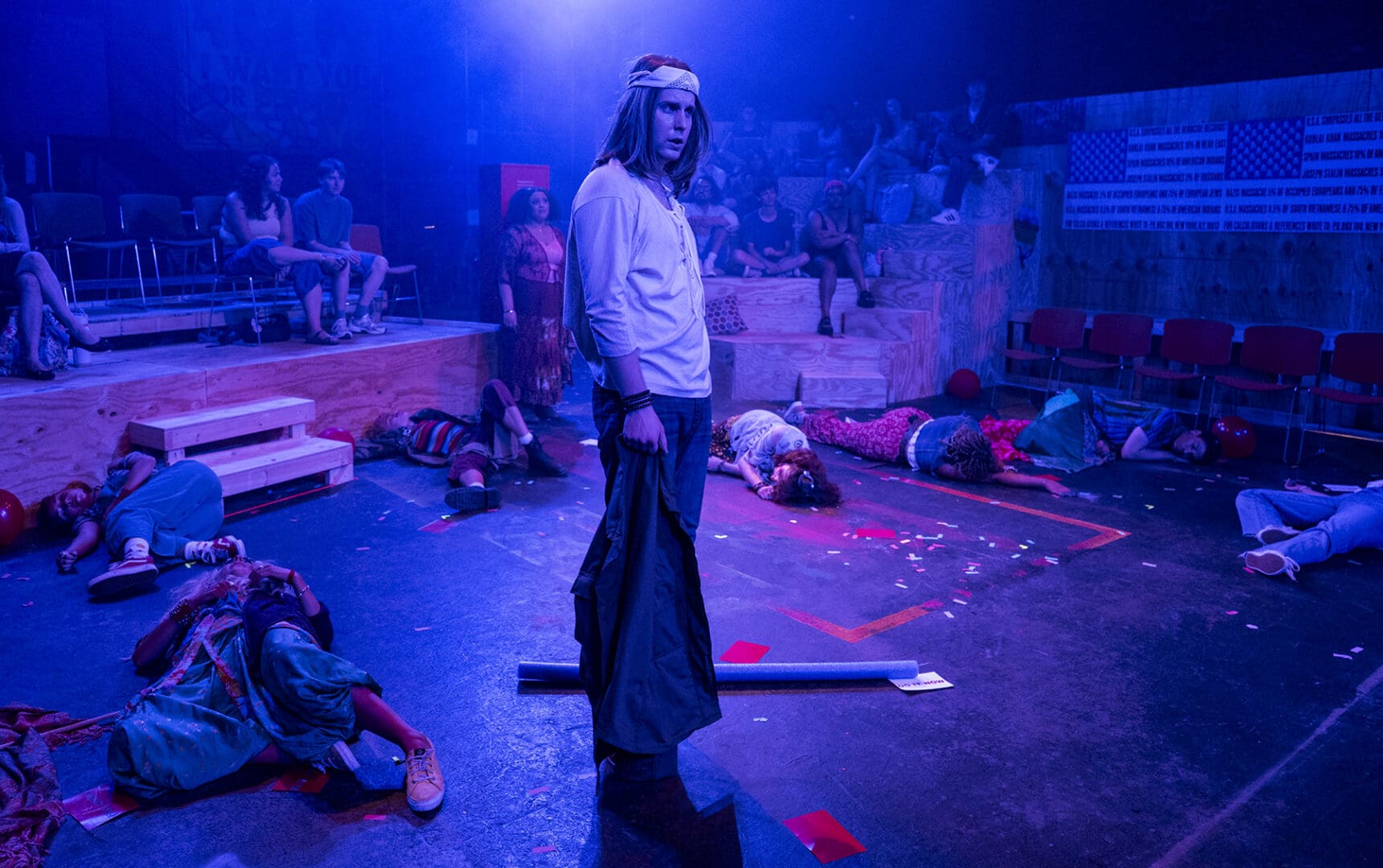
Gavin Rhys
And there will always be young people who fight those powers. Who ignore common sense, practical advice, the odds against them, and their own well-being to fight for causes purely because they believe they should.
Where would we be without them?
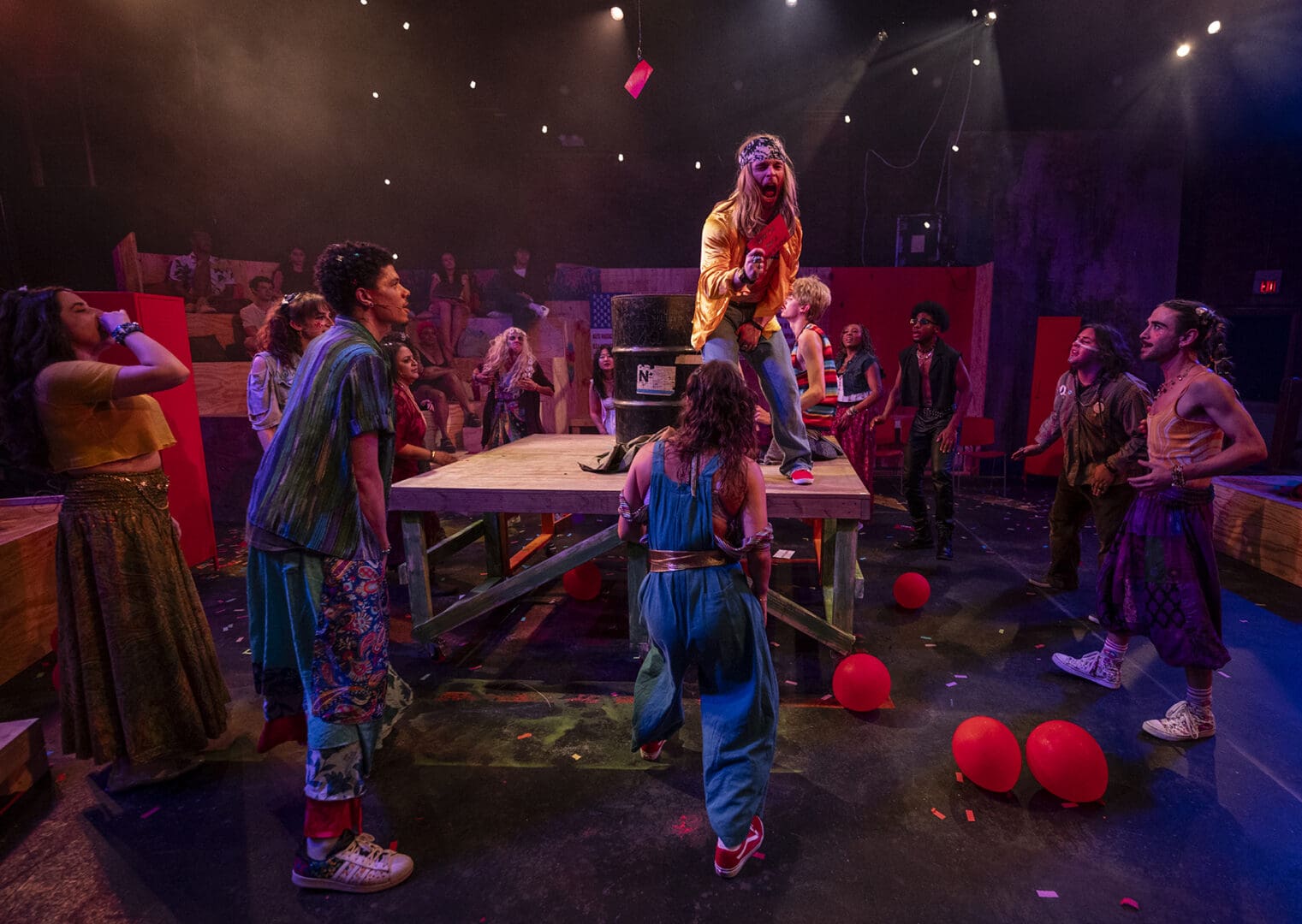
Zac Richey (center)
✦ ✦ ✦ ✦ ✦ ✦ ✦ ✦ ✦ ✦
photos by Michael Brosilow
Hair: The American Tribal Love-Rock Musical
Kokandy Productions
Chopin Theatre, 1543 W. Division St. in Chicago
Thurs–Sat at 7; Sun at 5 (no performance Sat, July 4; added performance Mon, July 6 at 7)
ends Sept 13, 2026
for tickets ($28.52–$65.87), call or visit Kokandy Productions
for more shows, visit Theatre in Chicago
✦ ✦ ✦ ✦ ✦ ✦ ✦ ✦ ✦ ✦
