


Areas We Cover
Categories

Theater Review: MARBLE (The Gift Theatre / Copernicus Center / Chicago)

by C.J. Fernandes | August 6, 2026
in Chicago, Theater
A CRACK IN THE ORDINARY
Four remarkable performances make the leap
from surrealism to domestic drama worthwhile
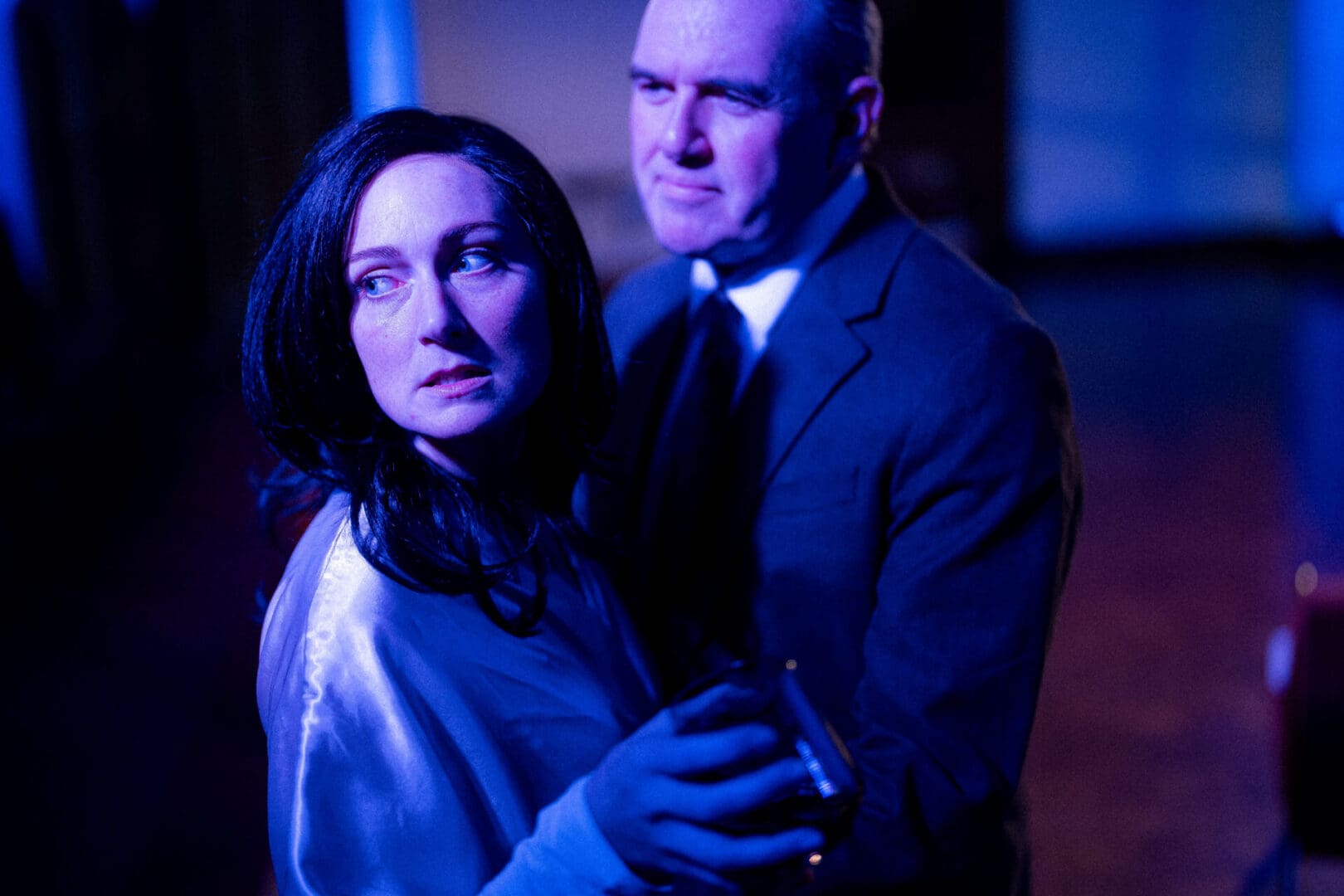
Brittany Burch and John Gawlik
Marina Carr’s Marble, now in its Chicago premiere at the Copernicus Center as part of The Gift Theatre‘s 25th Anniversary “Homecoming” season, opens with a delicious premise. Two old friends, Ben (John Gawlik) and Art (Paul D’Addario), are drinking and smoking cigars when Art blurts out that he’s had a dream about Ben’s wife. And not just any dream, but a graphic erotic dream where they both made mad, passionate love in a marble room. He doesn’t understand it, nor does he want to. Art is happily married to Anne (Cyd Blakewell) and doesn’t see the harm in indulging himself. As he points out, he’s only met Ben’s wife for a few minutes over the years, and it’s not like it’s real. It’s just a dream. When a slightly miffed Ben returns home and tells his wife Catherine (Brittany Burch) about the incident, Anne shocks him by revealing that she too had an erotic dream the previous night. In that dream, she was making love to Art. And it was in a marble room.
From this surreal synchronicity, Carr spins out a familiar tale of jealousy and one hell of a mid-life crisis. Feeling empty and unfulfilled by her life, Catherine begins to obsess about the dream and by extension, Art. Much to Ben’s dismay, the dreams keep coming, night after night, and Catherine begins to spiral, neglecting her house and children. All she can think about is the dream and how it makes her feel alive. Nothing else matters.

John Gawlik
Scenic designer Merje Veski‘s set is a sparsely furnished living room. The furniture is posh mid-century modern. An elegant decanter, surrounded by snifters, sits on a bar cart mid-room. The overall impression is one of tasteful, well-appointed comfort. The two couples are financially well-off.

John Gawlik and Brittany Burch
Director Kay Martinovich is an old hand with the surreal and is in her element in the first—and vastly superior—act, mining a surprising number of laughs from the absurdity of the situation. Her mise en scène is especially evocative, positioning the non-speaking couple in striking silent tableaux when the scene shifts to the other pair. This framing does a better job than the script at conveying the slow shift from dream into nightmare in which these four people find themselves.
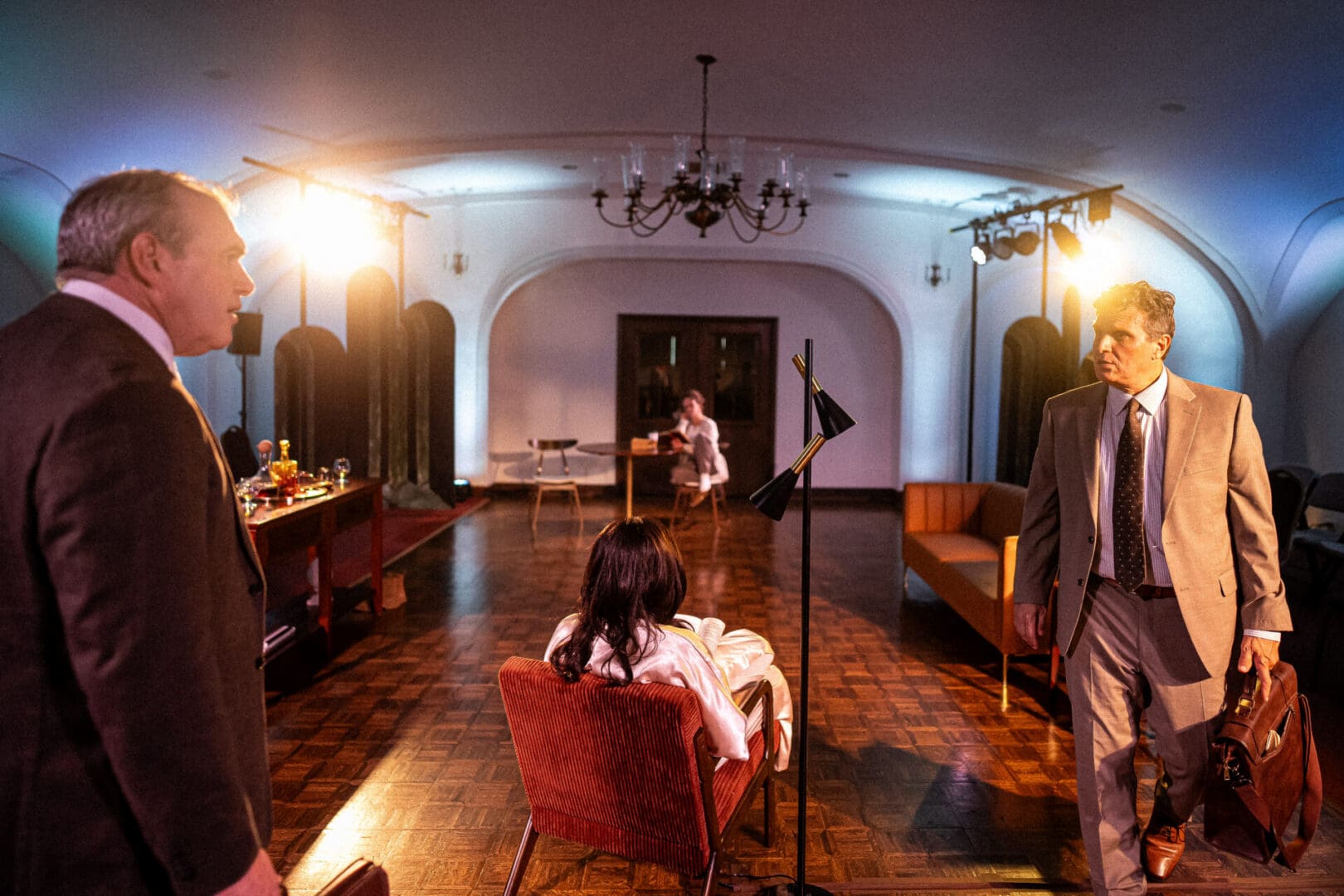
John Gawlik. Brittany Burch, Paul D’Addario, and Cyd Blakewell (rear)
Act II switches back to the quotidian with warp speed and Marble evolves into a standard issue domestic drama as Catherine, no longer content with just dreaming, decides to force fate’s hand and risk losing it all. The entire thing proceeds like a trainwreck in slow motion with a brutal denouement, the inevitability of which does not detract from its power.

Cyd Blakewell
Marble is consistently gripping and absorbing. It’s also consistently frustrating, chiefly in the imbalance between its characters. Carr has wrought two beautifully complex creations in Anne and Catherine, but the men are severely underwritten. Art, in particular, is barely a sketch, and Ben is entirely reactive, with seemingly no inner life of his own.

Paul D’Addario, Brittany Burch, and John Gawlik
The Irish accents are flawless, even if they’re entirely unnecessary. Aside from the rhythms of some of the dialogue, there is nothing particularly Irish about the characters or the situation, and the play isn’t moored to any place or time, which works against it. Details that would flesh out the roles are frustratingly scant. It all falls to the actors, but, boy, do they deliver.

Paul D’Addario and Cyd Blakewell
If you’re the type of person for whom the acting is paramount when it comes to theatre, this show is for you. You are unlikely to see a better quartet of performances onstage this season. All four of them are phenomenal: Burch is a dizzy delight in the first act and is devastating in the second when she comes crashing down to earth. Blakewell beautifully underplays for most of the play, her matter-of-factness covering up a terrifying insecurity and a fear of abandonment, until her walls are torn down. Gawlik is excellent as the angry husband who loses both his best friend and his wife to a bizarre circumstance, and despite getting the shortest shrift in terms of characterization, D’Addario is heartbreaking as a fundamentally decent man who has found himself in over his head both intellectually and emotionally.

Paul D’Addario
Marble is best when it focuses on the union between Catherine and Ben, two people who, over the years, have changed. Gawlik has an exquisite stretch in the second half of Act I. His slow realization that the woman who’s shared his house and bed for years is someone he no longer recognizes is the play’s most emotionally effective sequence. Where it fails is in developing the other half of the dream couple. Art’s motivations and decisions make little to no sense, and his relationship with Anne is similarly underdeveloped. This production gets away with it only because of the chemistry between D’Addario and Blakewell. Jettisoning the absurdity of the setup in favor of melodrama in the second act is also a mistake because it abandons the one thing that separates Marble from countless other dramas about unfulfilled marriages—“Madame Bovary in Dublin” reads one of the scribbles from my notebook.
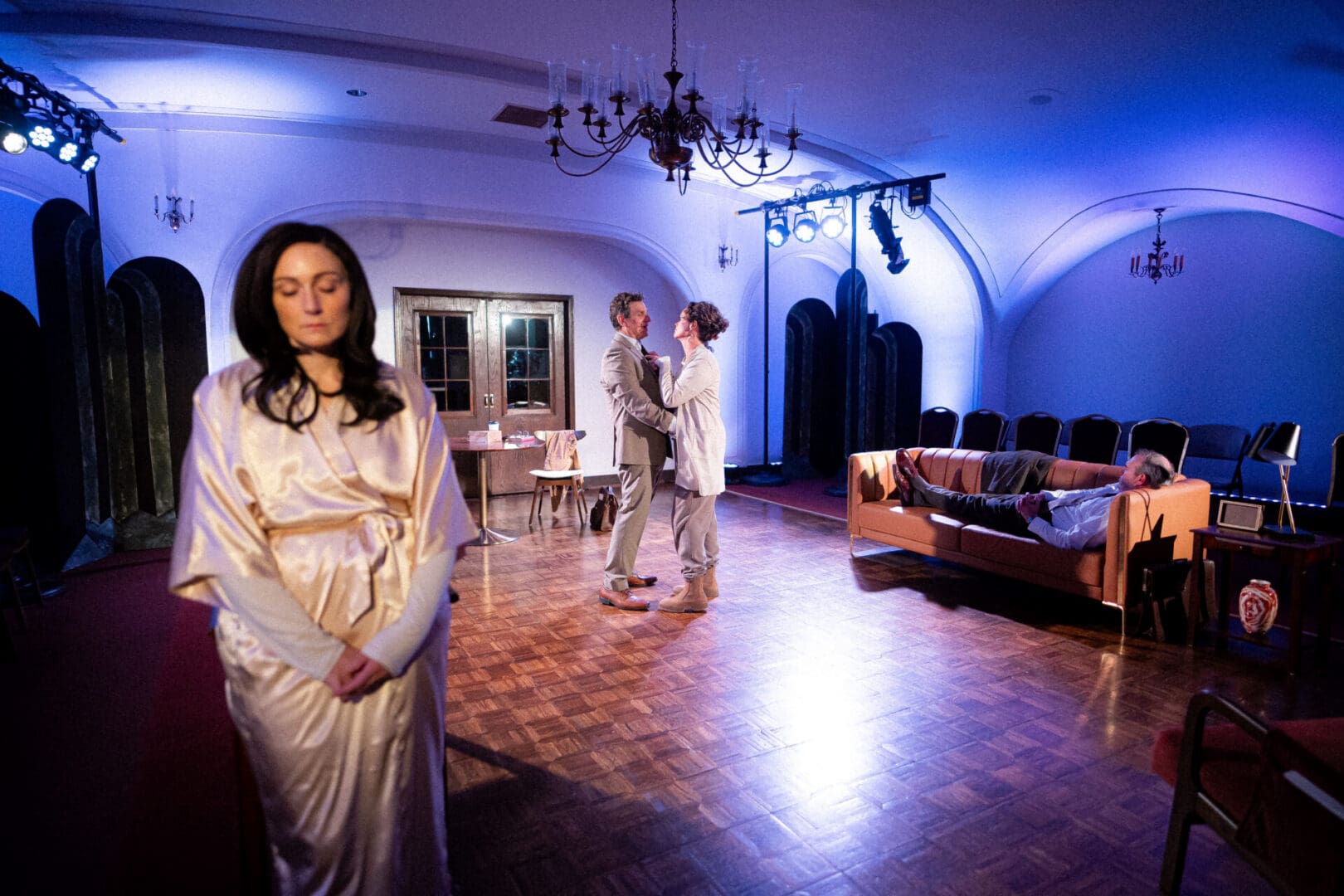
Brittany Burch, Paul D’Addario, and Cyd Blakewell
Ultimately, Marble works because of the power of performance. With Martinovich’s confident direction and the talents of four remarkable actors at its service, an uneven script is elevated into a gripping and ultimately devastating depiction of two marriages in free fall.
✦ ✦ ✦ ✦ ✦ ✦ ✦ ✦ ✦ ✦
photos by Joe Mazza-brave lux
Marble
The Gift Theatre
Copernicus Center, 5216 W. Lawrence Ave. in Chicago
Thu.–Sat. 7:30; Sun. 2
ends on August 30
for tickets ($45–$50), call 773.283.7071 or visit The Gift Theatre
for more shows, visit Theater in Chicago
✦ ✦ ✦ ✦ ✦ ✦ ✦ ✦ ✦ ✦
