


Areas We Cover
Categories

Concert Review: DUDAMEL CONDUCTS BEETHOVEN AND LORENZ (LA Phil / Disney Hall)
by Michael M. Landman-Karny | February 18, 2026
in Concerts / Events, Los Angeles, Music
THREE THEORIES OF WITNESS
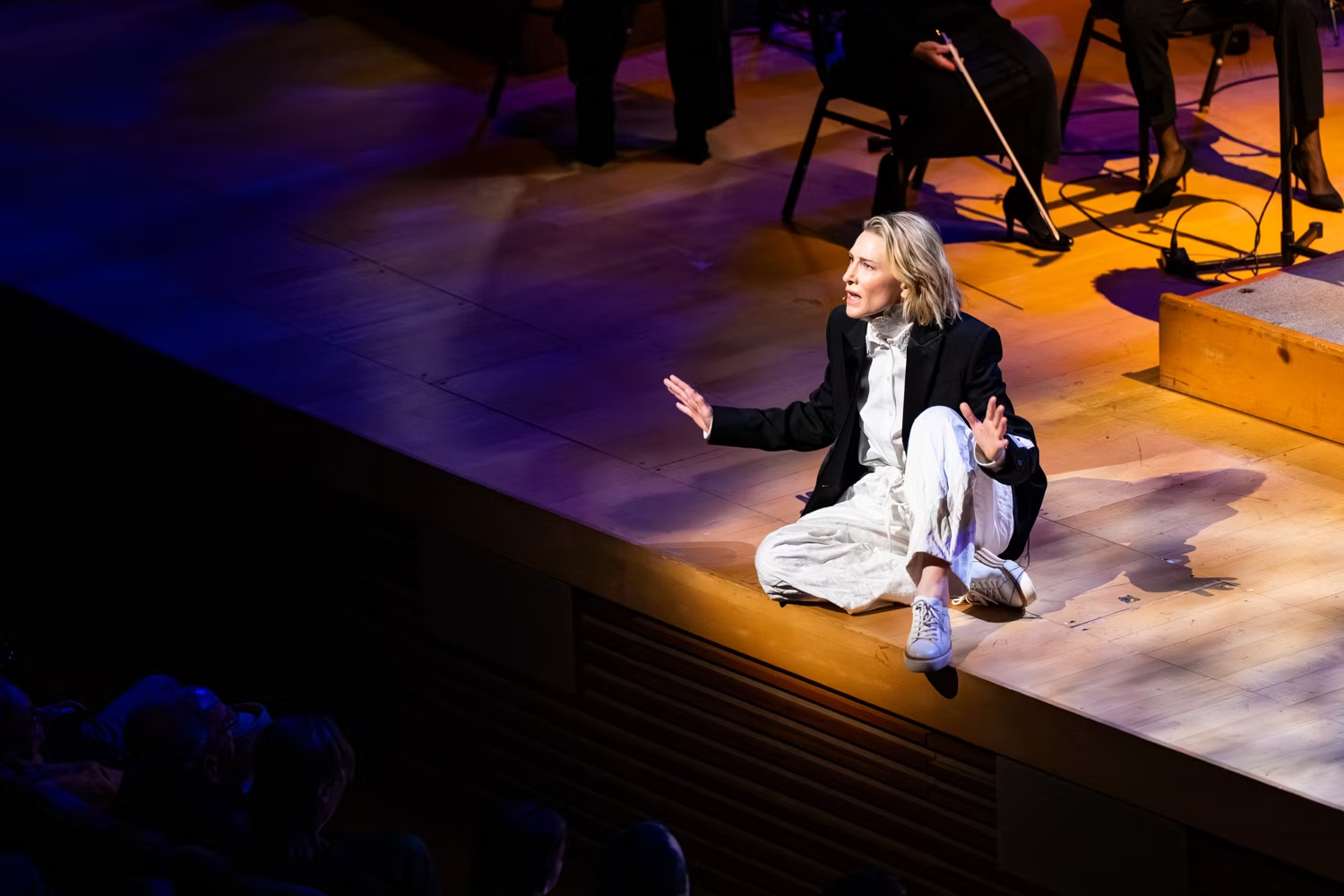
Cate Blanchett (as Count Egmont) narrating Beethoven’s Egmont with text by Jeremy O. Harris
At Disney Hall with the LA Phil on February 12, Ricardo Lorenz’s Humboldt’s Nature opened the evening by staking out a proposition: that orchestral music can think, not merely illustrate. The piece follows Humboldt’s intellectual life not as biography but as cognitive event, a consciousness moving through accumulated observation toward something it cannot quite name. Brass writing in the opening pages establishes scale without triumphalism, and a piano figure that recurs throughout, differently weighted at each appearance, functions less as leitmotif than as argument returning to test its own premises.
The guácharo movement is the score’s most distinctive achievement. Cave darkness, rendered without ornithological literalism, accumulates through low strings and held woodwind tones into something genuinely unsettling: the absence of light made audible rather than described. Harp textures in “Sailing on Air” sustained a suspension that recalled, without quoting, late Ravel. Where the piece occasionally falters is at the junction between its programmatic ambitions and its harmonic vocabulary, which sometimes settles for the evocative when Humboldt’s own obsessiveness might have demanded something more abrasive. Still, a composer who takes ecological grief seriously enough to let it disturb his conclusions earns a particular kind of attention.
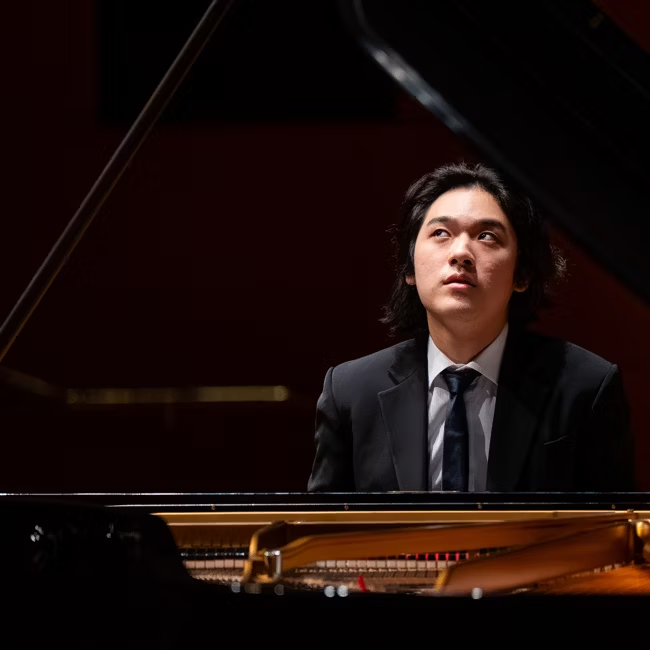
Yunchan Lim
Yunchan Lim’s account of the Schumann A-minor opened with a gesture so deliberate it took a moment to recognize as confidence. The orchestra surged; he entered at a lower temperature, establishing immediately that the relationship between soloist and ensemble would be conversational rather than competitive. The oboe motto, when the piano absorbed it, had a quality of spoken inflection: not quite recitative, but language-adjacent, following the logic of breath. His pedaling throughout was structural rather than decorative, binding phrases without softening their edges.

Yunchan Lim performs Robert Schumann’s Piano Concerto at Disney Hall on Feb. 12. 2026.
The cadenza unfolded without the customary manufactured tension, arpeggios maintaining such transparent voice-leading that the orchestra’s return felt not like rescue but like a natural continuation of thought already in progress. In the finale, Schumann’s cross-rhythms, that deliberate displacement which has undone more technically accomplished pianists, were absorbed into a larger pulse that made the syncopation feel like emphasis rather than obstacle. What distinguished the performance overall was its willingness to leave questions open. Lim is twenty-two; he plays as though he understands that settling an interpretation prematurely is its own kind of failure.
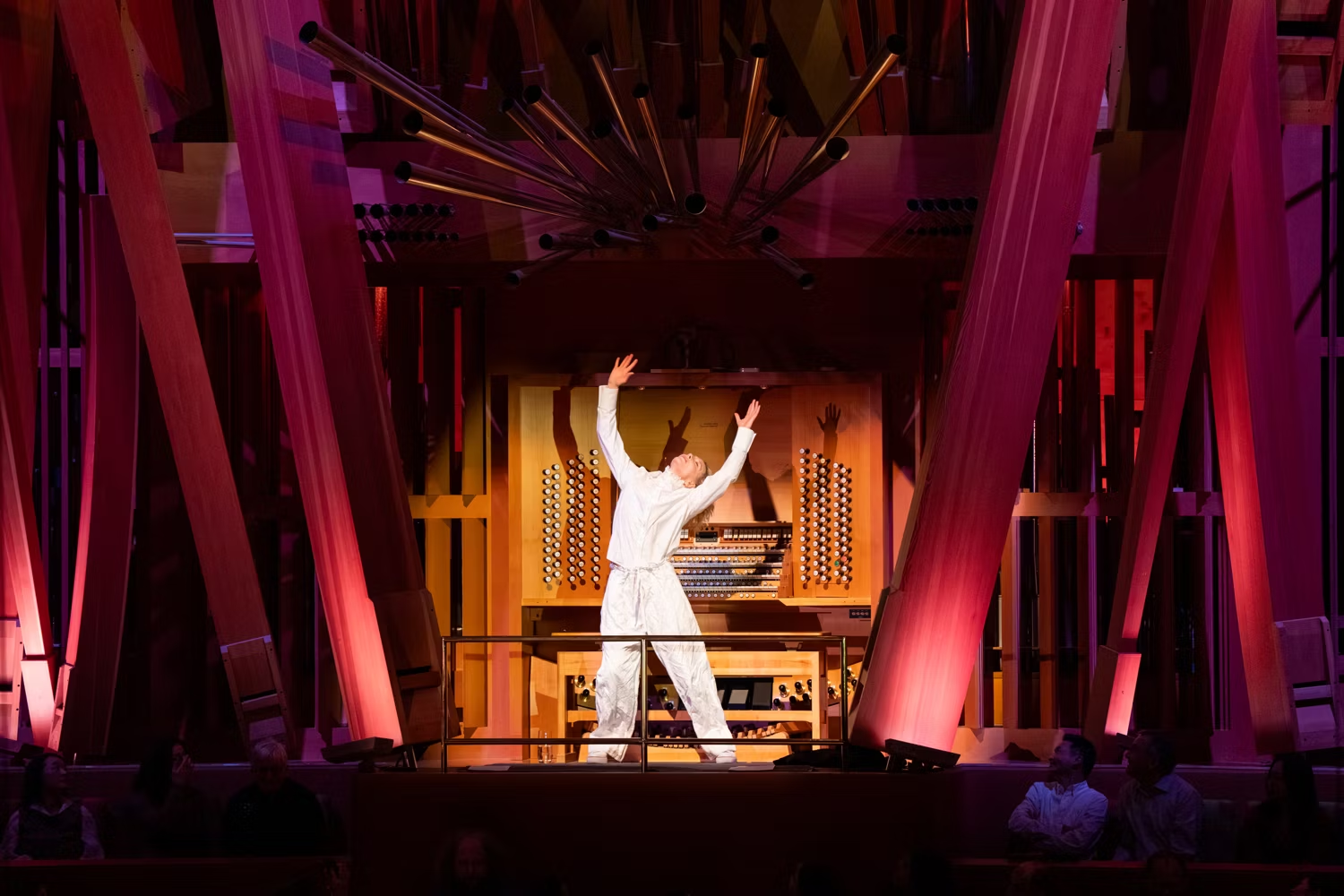
Cate Blanchett (as Count Egmont) narrating Beethoven’s Egmont
The Egmont presented a harder problem. Beethoven’s incidental music has been serving as political shorthand since well before the twentieth century, its C-minor-to-C-major architecture carrying whatever cause an era requires. Jeremy O. Harris’s adaptation worked through direct address and contemporary accumulation: Nuuk, Portland, Minneapolis, Bethlehem, Tehran, Brussels. Names dropped as evidence, their weight depending on what the listener already carries into the hall. Harris is most persuasive when he trusts Goethe’s structure to do the argumentative work, least so when a colloquia R-rated pivot breaks the ritual register he is otherwise sustaining. A sequence built around dancing, ecstatic and inconsolable simultaneously, found a genuinely Beethovenian emotional frequency: that specific combination of transport and grief that the composer understood better than almost anyone.
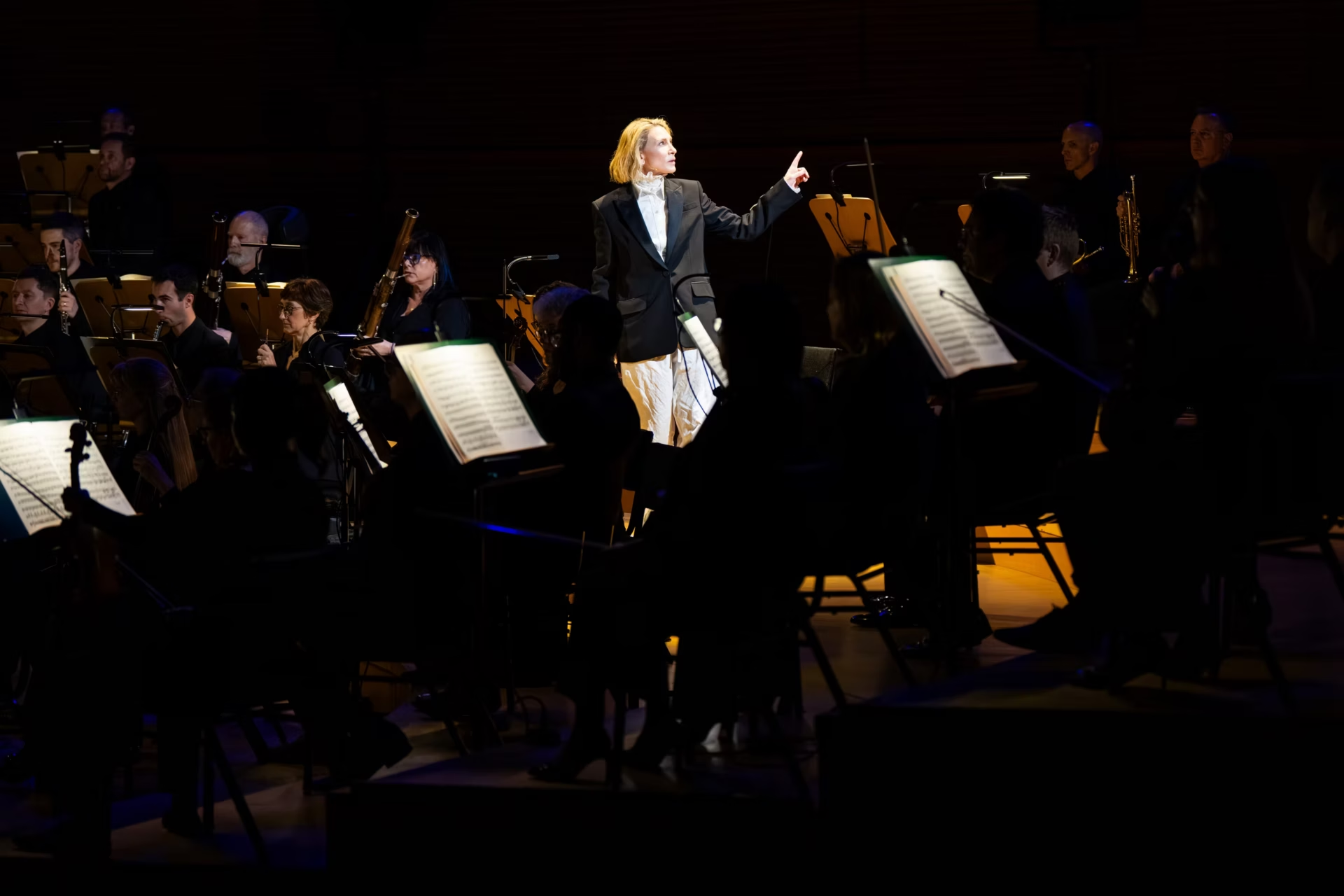
Cate Blanchett
Cate Blanchett navigated text of uneven finish with the particular skill of an actor who can make preparation invisible. Rising opera star Elena Villalón’s lyric soprano carries genuine warmth, but Beethoven’s vocal writing in Egmont wants a weight that only a dramatic soprano can supply. The notes were there but the volume and urgency were not.
Three works, three different theories of how music touches history, and only one of them fully delivered. Lorenz works from inside his subject’s consciousness, and the music intrigues steadily without quite breaking through to transformation; the ecological grief is audible, but it wants a harmonic ruthlessness the score doesn’t yet trust itself to pursue. Harris argues by adjacency and accumulation, the names of contemporary suffering dropped as evidence whose weight depends entirely on what each listener carries into the hall, a method with real power and real limits, often in the same sentence. Lim simply played the Schumann. That simplicity is the point. In a program dense with interpretive apparatus, his performance had the quality of something stripped to necessity: not ascetic, not cold, but concentrated in the way that reveals rather than demonstrates. The cadenza’s logic, the finale’s absorbed syncopation, that first entrance pitched deliberately below the orchestra’s temperature. These weren’t choices that announced themselves as choices. They cohered afterward, in memory, the way significant experiences tend to: not as a performance recalled but as something that continued to occur.
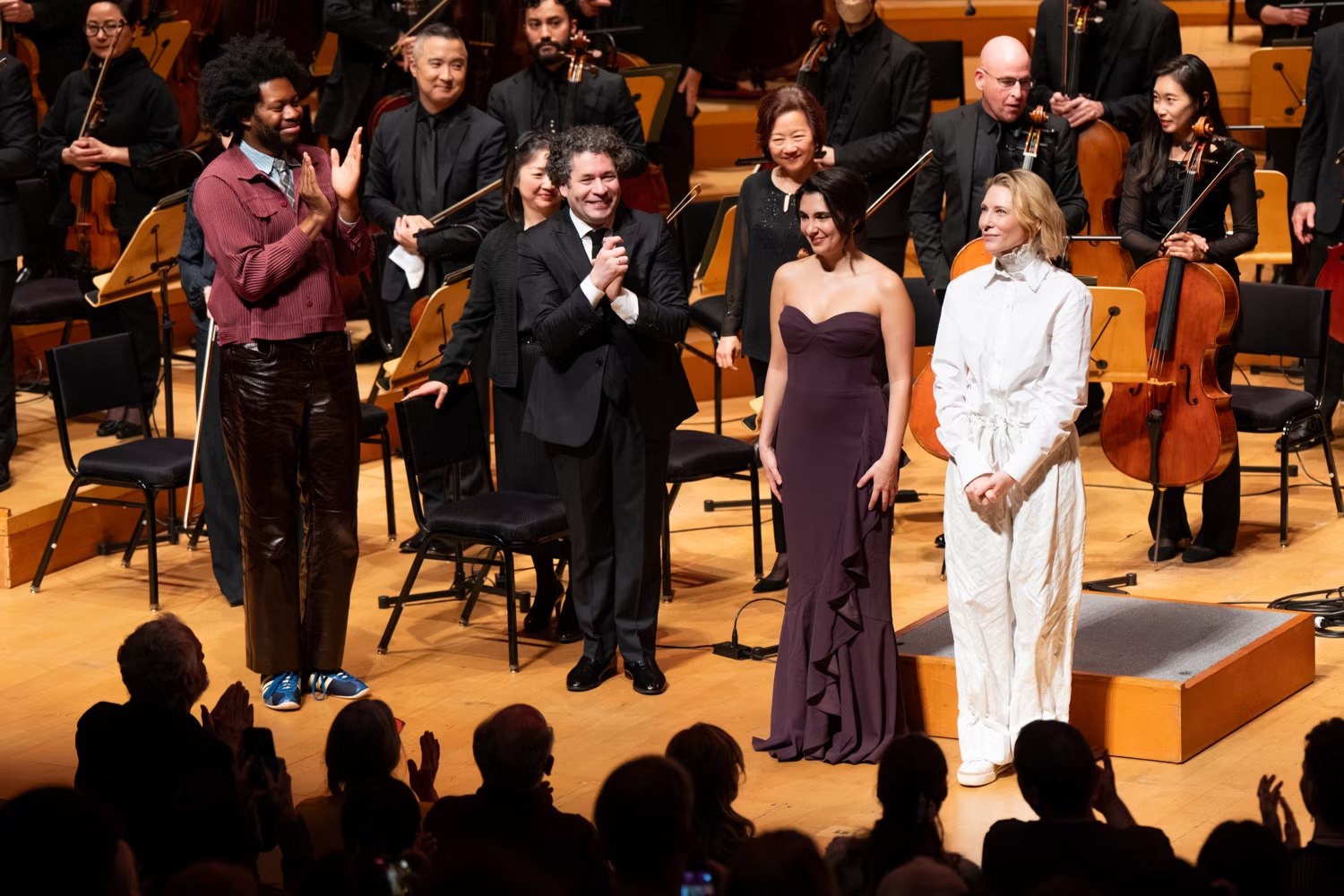
Jeremy O. Harris, Gustavo Dudamel, Elena Villalón, and Cate Blanchett
photos by Elizabeth Asher/Los Angeles Philharmonic Association
