


Areas We Cover
Categories hhhh

Theater Review: ANATOMY OF A SUICIDE (The Metal Shop Performance Lab and JunkHeart / Redtwist Theatre / Chicago)

by C.J. Fernandes | August 17, 2026
in Chicago, Theater
DYING TO BREAK THE CYCLE
Three generations speak across time
in a harrowing, beautifully orchestrated
exploration of trauma and inheritance
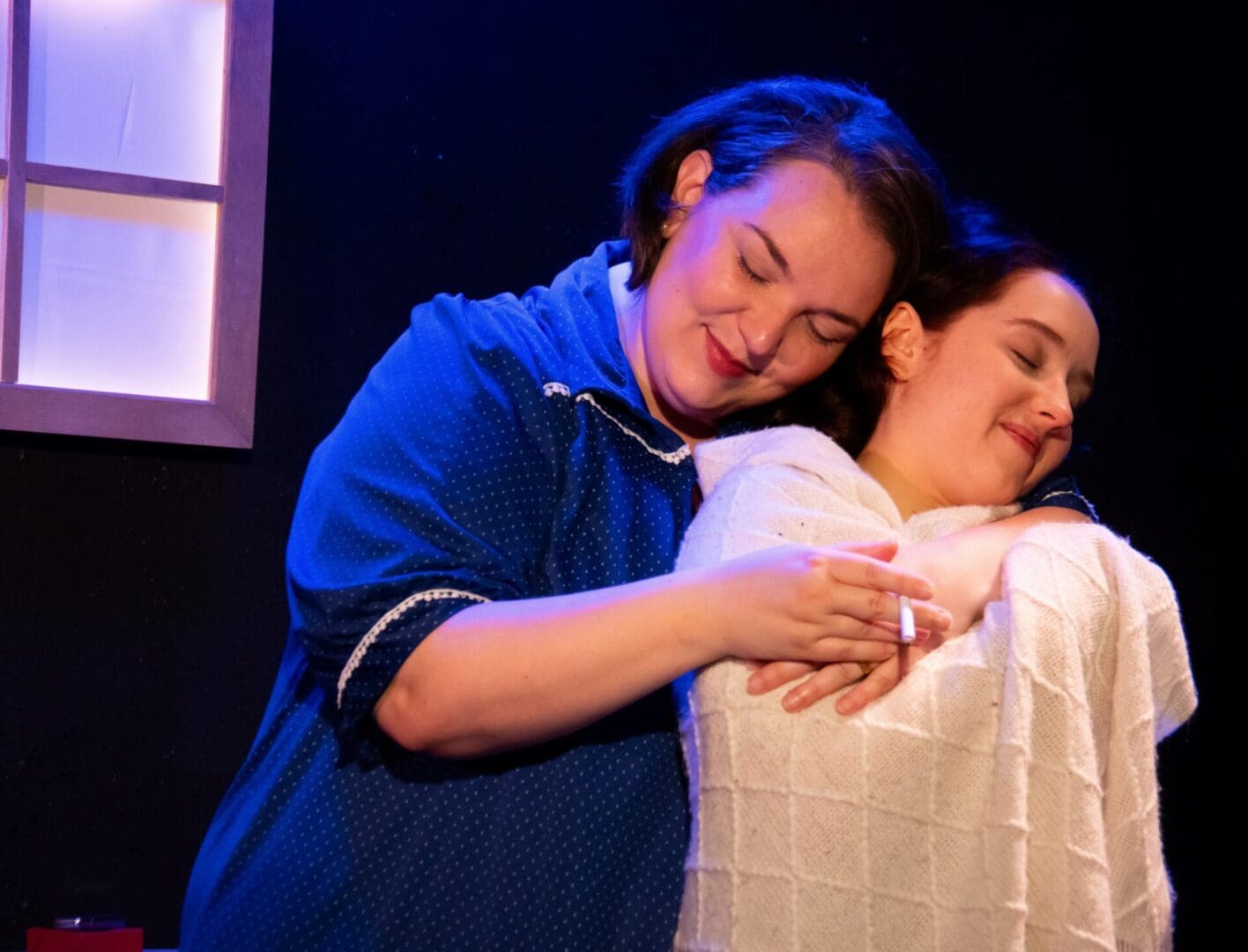
Tatiana Pavela and Laila Malak in ANATOMY OF A SUICIDE by The Metal Shop Performance Lab and JunkHeart at Redtwist Theatre
To a theatre-lover, going to a first production from a theatre company is like being on a blind date. You don’t know what to expect. You’re slightly nervous, slightly apprehensive, slightly excited, but most of all, you’re slightly hopeful. Alice Birch’s Anatomy of a Suicide, now in performance at the Redtwist Theatre space on Bryn Mawr, is the first baby—yes, I’m mixing my metaphors; no, I do not care—of two companies, a collaboration between The Metal Shop Performance Lab and JunkHeart, and as debuts go, this one’s a doozy.
Covering three different timelines, all of which are performed concurrently—you read that correctly—the play opens in the late 1960s with a scene between Carol (Tatiana Pavela) and her husband John (Josh Razavi) in a hospital recovery room: Carol has just had her stomach pumped, her wrists sewn up and bandaged, and been resuscitated from drowning. Carol has tried to kill herself about as thoroughly as she can manage. Still, she insists that it was an accident. John points out that the freezer is full of meals. She must have cooked for hours. Is she hungry? The doctors said she would be hungry. Did she realize that she left the water in the tub running? The floors in the house are ruined. Carol answers “no,” over and over again. This excruciating exchange, exquisitely performed by both actors, sets a template for conversations for the rest of the play: two well-meaning people who simply do not understand each other.
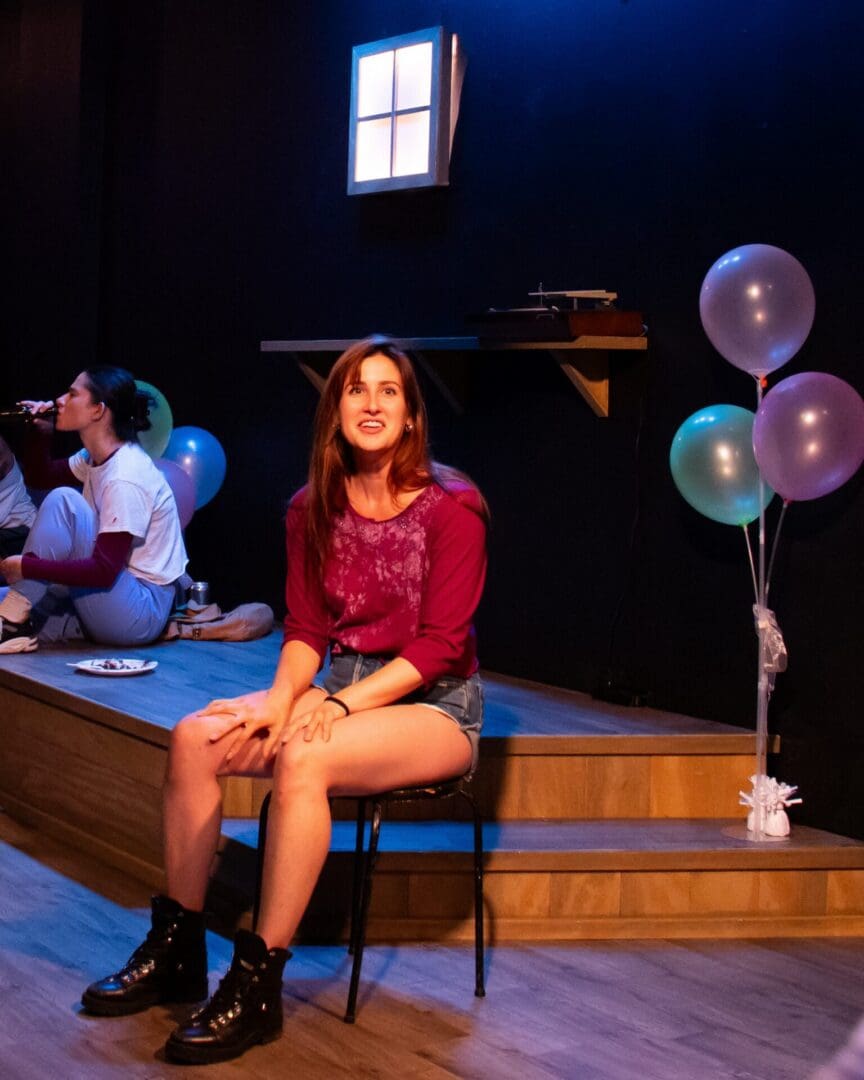
Isabel Lee Roden and Taigé Lauren
Following the first scene, we are introduced to Anna (Taigé Lauren), who is strung out on heroin in a hospital emergency room with no idea of how she got there—there’s an elegant bit where Carol hands over her hospital gown to Anna as the latter walks in—or even why she’s there. And following that we meet Bonnie (Isabel Lee Roden), a doctor in another emergency room, as she tends to a fishing injury in the palm of an attractive young woman, who repeatedly hits on her. Repeatedly because Bonnie is both present and completely oblivious to what’s going on, and her reaction when she finally realizes that her patient is making a pass at her is one of befuddlement.
The connections between these three women are gradually revealed as the play progresses, but they’re fairly easy to suss out. The three timelines are performed simultaneously, with lines occasionally synchronized between the actors across all timelines. Director Alex Mallory keeps all these balls in the air with remarkable flair, constructing beautiful tableaux with the actors that manage to be both aesthetically pleasing and thematically appropriate. Once you get used to the overlapping conversations, it’s surprisingly easy to follow all the different threads.
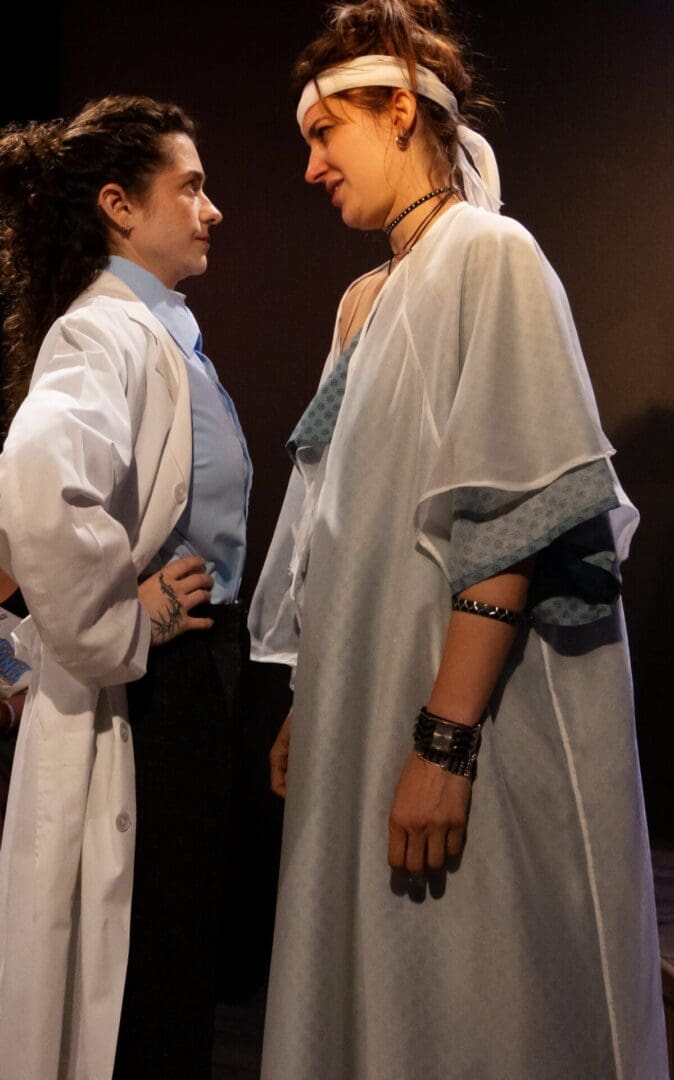
Wisterman and Taigé Lauren
The performances are jaw-dropping. Pavela has a remarkable way of projecting intensity from stillness and a beautifully expressive voice, capable of conveying shifts in emotion and temperament with the slightest modulation. Lauren is achingly vulnerable; her Anna is a raw wound, wearing her emotions openly for all the world to see. Anna is the part most likely to be overplayed, being as she is the most emotionally volatile of the three women, but Lauren is never less than flawless, and the emotional high point of the show is her astonishing monologue to the documentarian who will eventually become her husband—Raúl Alonso in a sweet, perfectly pitched supporting performance. As Anna stutters and falters through the story of her life to date, in another timeline, Carol has given birth to a baby girl who has been temporarily moved from her presence. The absence of the child sends her into what I can only describe as a controlled manic state. Frozen and whimpering, repeating the same word over and over again, her distress bridges time and communicates itself to Anna, who is repeatedly distracted by the sounds of anguish coming from her mother, decades in the past.
It’s an incredibly powerful scene, and not for the first time did I wish the production at Redtwist Theatre were on a proscenium so I could take in both actors at once. If you can choose, I’d recommend picking a seat close to the entrance of the theatre for the least amount of neck strain.
But thanks to Mallory’s inventive staging and the vocal brilliance of the two actors, the scene works on an auditory level as well, and it would be a fascinating exercise to put oneself through multiple viewings of this production, focusing on a different actor each time and letting the other timelines provide an aural accompaniment—a sort of radio play filtering through alongside the visual.
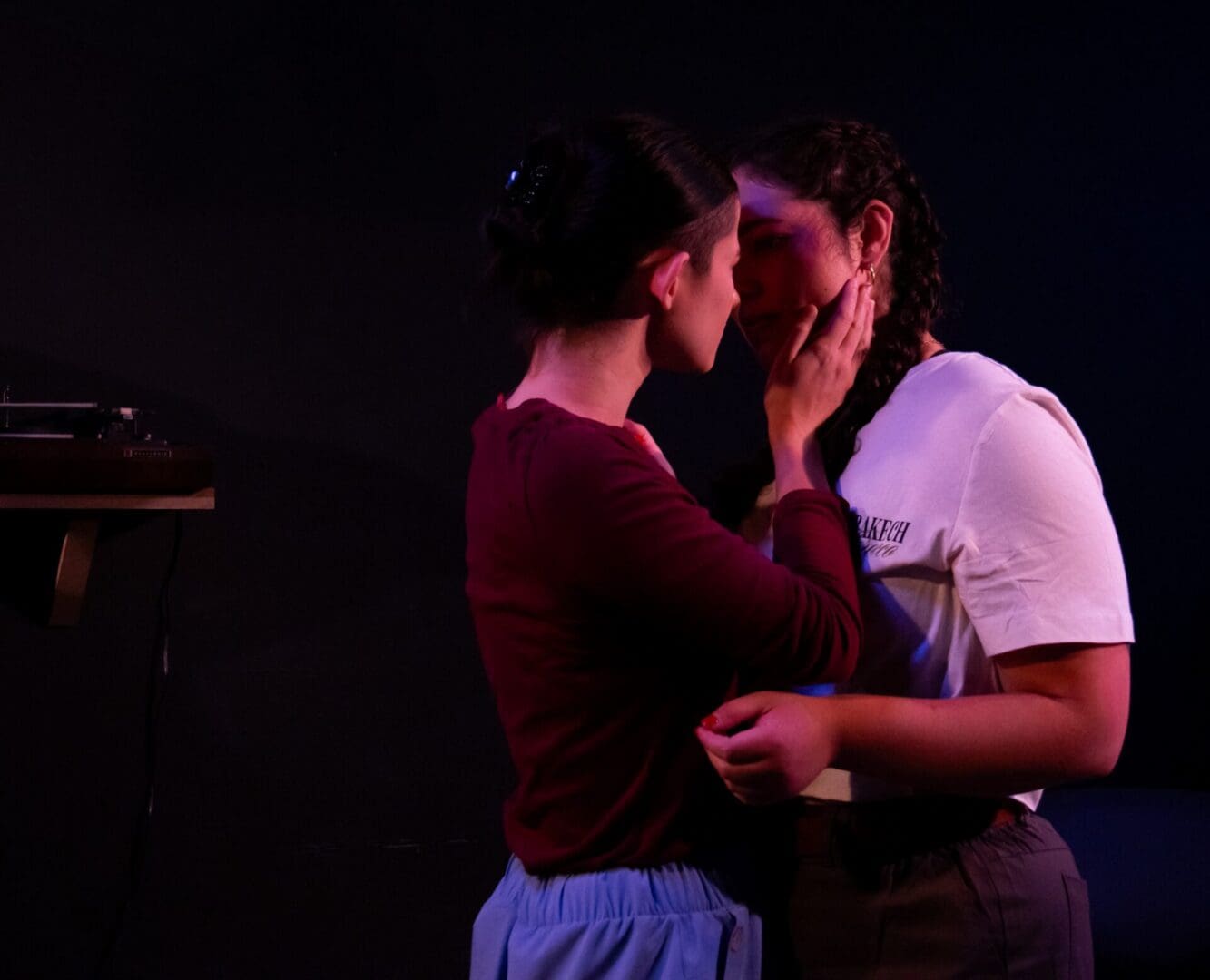
Isabel Lee Roden and Allyce C. Torres
Compared to Carol and Anna, Bonnie is a very tricky part. In sharp contrast to Anna, Bonnie is locked up tight. The inability to communicate what’s wrong with them plagues Carol and Anna. In Bonnie, that inability is taken to pathological extremes. She cannot communicate. Bonnie’s scenes in the first act are an exercise in cringe, as she mishandles just about every social situation she’s placed in. Of the three actors, Roden’s performance is the least likely to be appreciated because it is the least showy, but it is every bit the equal of the other two leads. It isn’t until the second act that Roden gets a “big” scene, and the reason that scene is so effective is because of all the work they’ve put into the character leading up to it.
I could go on for ages about these three actors, but the supporting cast is equally fine. Razavi is heartbreaking as a man who’s lost his wife and sees his daughter slipping away, and is unable to do anything about it. Alonso’s documentarian Jamie is an underwritten part, but he makes it work by overloading it with charisma and charm. And thank heavens for Jocelyn Maher, who plays a series of abrasive, outspoken, blunt characters who bring desperately needed humor to the entire enterprise. But watch how delicately she fleshes them out in between the laughs, creating fully actualized characters in the few minutes allotted to each one.
This is an extraordinarily difficult play to direct and perform. And it’s harrowing to watch. But Birch’s precise dialogue finds moments of grace and beauty in surprising places, frequently when you least expect it. The conceit of shared words and lines between the timelines works wonderfully in every instance. The same four actors—Maher, Allyce C. Torres, Faiz Siddique, and Wisterman—playing multiple similar—but not-quite-the-same—characters across different timelines adds a fascinating note of Jungian synchronicity to the themes of transgenerational trauma and inheritance.
I can’t say that I enjoyed Anatomy of a Suicide. This is not the sort of play that one “enjoys.” But I will say that I was deeply moved—and shaken—by it to an extent that is quite unusual for me. The Metal Shop Performance Lab and JunkHeart’s first full-length production is an unqualified triumph; that rare production where every element clicks into place perfectly.
Take a bow.
✦ ✦ ✦ ✦ ✦ ✦ ✦ ✦ ✦ ✦
photos by Mollie Menuck
Anatomy of a Suicide
The Metal Shop Performance Lab and JunkHeart
Redtwist Theatre, 1044 W. Bryn Mawr Ave. in Chicago
Wed–Sat at 7:30; Sun at 3:30
ends on August 30, 2026
2 hours and 15 minutes, including intermission
recommended for ages 14+
for tickets ($20–$35), visit The Metal Shop
for more shows, visit Theatre in Chicago
✦ ✦ ✦ ✦ ✦ ✦ ✦ ✦ ✦ ✦
