


Areas We Cover
Categories

HOW A HYGROMETER HELPS PREVENT BASEMENT MOLD IN THEATERS AND HOMES
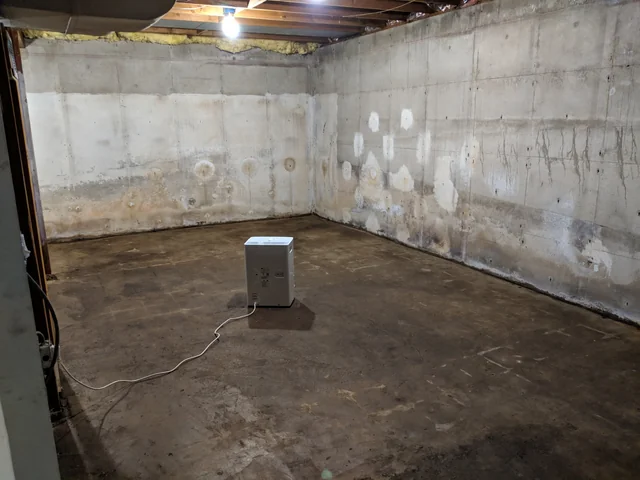
Basements are notorious for cool, dank environments, making them prime real estate for mold. If you’ve ever walked downstairs to fetch a holiday box or laundry and noticed a lingering, earthy odor, high humidity is likely the culprit.
Mold spores are everywhere, but they need moisture to settle and thrive. Fortunately, preventing mold in your basement doesn’t require expensive renovations. By using a simple, reliable house humidity gauge to monitor humidity, you can catch dampness early and keep your subterranean space clean, clear, and healthy.


Why Basements Are Mold Magnet Spots
Basements sit below ground, surrounded by soil that naturally retains moisture from rain, snowmelt, and groundwater. This creates a few natural vulnerabilities:
- Minimal Ventilation: Basements typically lack large windows or cross-breeze pathways, trapping moist air inside.
- Cooler Temperatures: Cool air cannot hold as much water vapor as warm air. When warm, humid air hits cold concrete walls or pipes, it reaches its dew point and creates condensation.
- Abundant “Food” Sources: Drywall, wooden studs, cardboard boxes, and carpet provide the organic matter mold feeds on once dampness takes hold.
What Level of Humidity Triggers Mold Growth?
Mold growth typically begins when indoor relative humidity (RH) consistently stays above 60%. To maintain a healthy, mold-free basement, aim for a relative humidity level between 30% and 50%. Staying below 50% keeps the environment dry enough to suppress mold spore germination while remaining comfortable for daily living and storage.
Step-by-Step: Prevent Basement Mold with Smart Humidity Control
Monitor Humidity Level in Basement Daily
You can’t manage what you don’t measure. Placing a digital hygrometer in your basement gives you real-time visibility into moisture fluctuations so you can take action before mold appears.
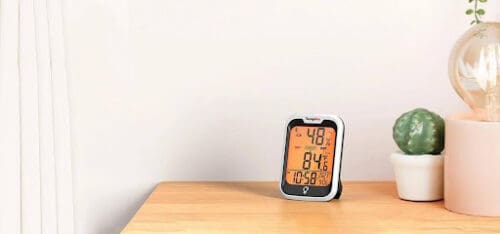
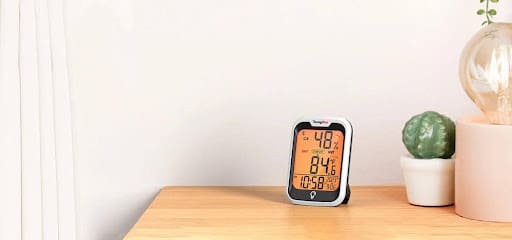
When monitoring a dark, isolated area like a basement, walking downstairs every few hours to check a small display can be inconvenient. The TempPro TP358 Bluetooth Indoor Hygrometer Thermometer offers a convenient, high-precision solution for home environmental monitoring. ThermoPro is now TempPro! The name is new, but its products, service, and dedication to customers remain unchanged.
Key Advantages for Basement Mold Prevention
- Remote Monitoring via Bluetooth App: With an impressive wireless range of up to 260 feet, you can check your basement’s moisture levels right from your smartphone on the main floor or in bed.
- Instant Out-of-Range Alerts: Set custom high & low humidity thresholds in the app. If your dehumidifier fills up or stops working and humidity spikes above 60%, your phone receives an immediate push notification.
- Data Tracking & Historical Graphs: The app stores historical temperature and humidity data over hours, days, or year. This allows you to track whether your moisture issues happen only during heavy rains or continuously throughout the summer.
- Large Clear Backlit Display: The large LCD screen features a comfort indicator icon (DRY, COMFORT, WET) that instantly alerts anyone in the room if the environment has entered a mold-vulnerable range.
Run a Dehumidifier
When your hygrometer reads above 50% RH, turn on a dehumidifier. Set the unit’s humidistat to maintain 45–50% RH for hands-off protection.
Improve Air Circulation
Use standard floor fans or ceiling fans to keep air moving across cold surfaces. Moving air speeds up evaporation and prevents static pockets of condensation from settling on walls or behind storage bins.
Seal Foundation & Pipe Leaks
Inspect foundation walls for hairline cracks where water might seep in during heavy rains. Pipe insulation should also be applied to cold water pipes to stop damp condensation droplets from forming.
Elevate Storage Off the Floor
Keep cardboard boxes, furniture, and textiles slightly elevated using plastic shelving or wooden pallets. Never stack items flush against exterior foundation walls, as this traps dark, humid air where mold thrives undetected.
FAQs about Preventing Mold in Basement
Where is the best place to put a hygrometer in a basement?
Place it at waist height, away from direct heat sources, exterior doors, or the direct exhaust stream of a dehumidifier. For best results, position it in an area known for dampness or poor airflow.
What is the difference between absolute and relative humidity?
Relative humidity measures how much water vapor is in the air compared to the maximum amount the air can hold at its current temperature. This is the metric that hygrometers display and the metric that directly influences mold growth.
Can mold grow in low temperatures?
Yes. While mold prefers warm temperatures (70°F-90°F), high humidity is its primary requirement. Certain mold strains can easily spread in cool, damp basements as long as the relative humidity stays above 60%.
Final Thoughts
Preventing basement mold doesn’t require complex guesswork or round-the-clock manual checks. By pairing smart moisture management practices with an accurate, real-time tracking tool like the TempPro TP358 Bluetooth Indoor Hygrometer Thermometer, you can catch dangerous humidity spikes long before mold spores take hold.
Taking control of your subterranean air quality is one of the easiest ways to protect your home’s structural integrity and ensure your family breathes clean, safe air year-round. Place a digital humidity monitor downstairs, set your humidity alerts, and enjoy peace of mind knowing your basement is dry, safe, and mold-free.
