


Areas We Cover
Categories

Theater Review: THE BIRTH OF THE PILL (TimeLine Theatre / Chicago)

by C.J. Fernandes | September 17, 2026
in Chicago, Theater
AN EASY PILL TO SWALLOW
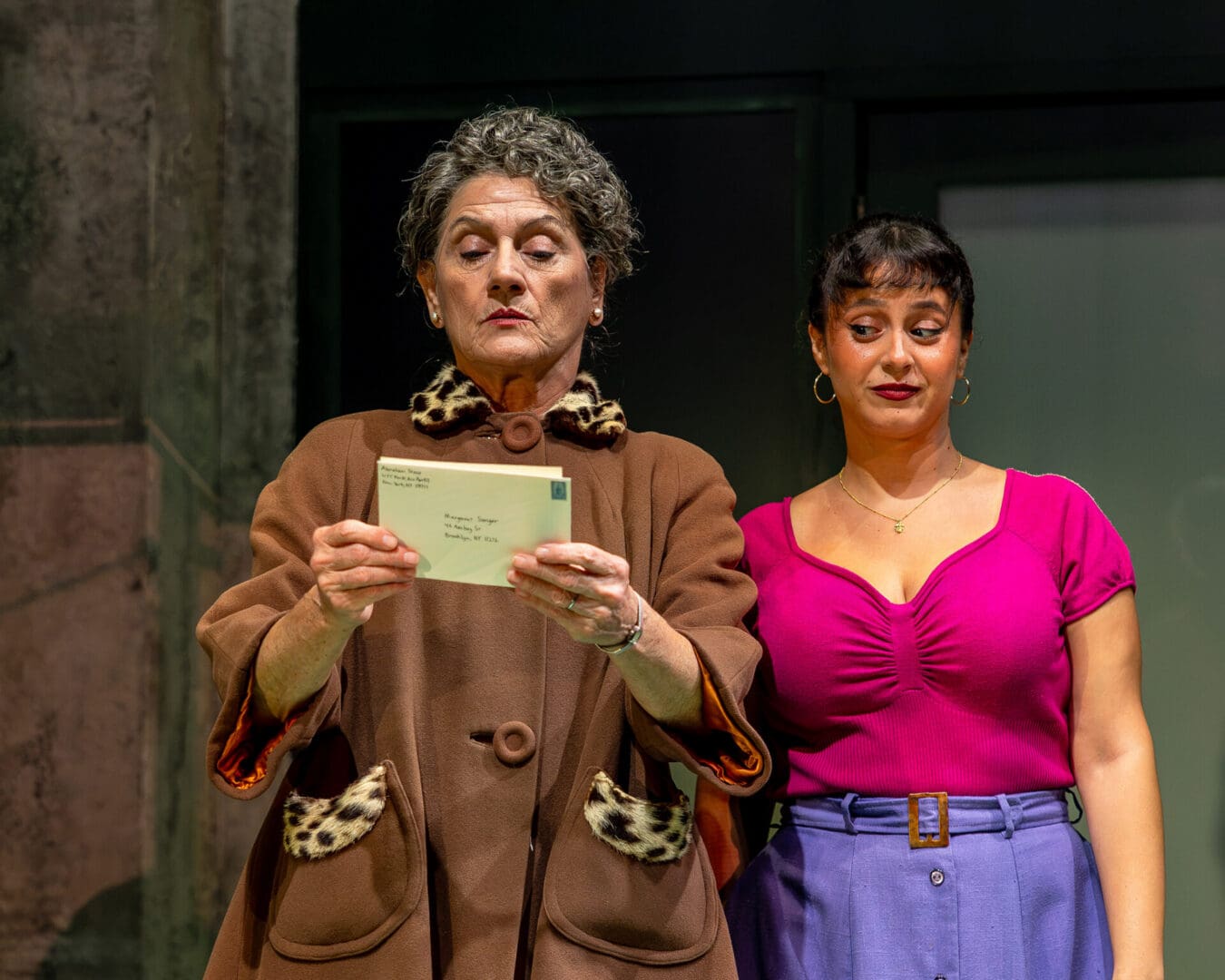
Margaret Sanger (Janet Ulrich Brooks, left) and Ramona Delgado (María Victoria Martínez)
The opening production of TimeLine’s first full season in its gorgeous new home in Uptown, the world premiere of Jessica Huang’s The Birth of the Pill, gets off to an inauspicious start. On Regina García’s lovely set, all warm earth tones and tourmaline tiles, a young woman, Ramona Delgado (María Victoria Martínez), sits on a park bench. She’s just finished reading The Birth of the Pill, Jonathan Eig’s bestselling and critically adored account of the development of the birth control pill (Eig later won a Pulitzer for his 2023 biography of Martin Luther King Jr.). What follows is about five minutes of painful banter from Delgado toward the audience. She exhorts them to read the book, drops a few hints as to the play, and generally behaves in a manner akin to the annoying emcee at your nephew’s bar mitzvah, at which point I found myself wishing I had partaken in a stronger pre-show tipple than coffee.

Goody Pincus (Mitchel J. Fain, left) and Margaret Sanger (Janet Ulrich Brooks, right)
Then something magical happens: Martínez snaps her fingers, the glorious Janet Ulrich Brooks strides onto the stage as Margaret Sanger, and we’re in a dank Planned Parenthood clinic in New York City in 1951. Sanger is “retired” but fretting about the clinic and the finances. Her replacement has joined forces with her archenemy, the Catholic Church. Her fundraising is never-ending. Most of all, she fears that her Holy Grail of Contraception, an oral contraceptive in pill form, is starting to look like a pipe dream. But then she receives an invite to a party; and not just any party, but a party where one of the guests is Gregory “Goody” Pincus (Mitchell J. Fain), one of the world’s leading researchers in ovulation hormones. Pincus agrees to take on the challenge of developing a pill, but he needs funding, which has to be somewhat secret because at this time, contraception is still illegal in the good ol’ USA.
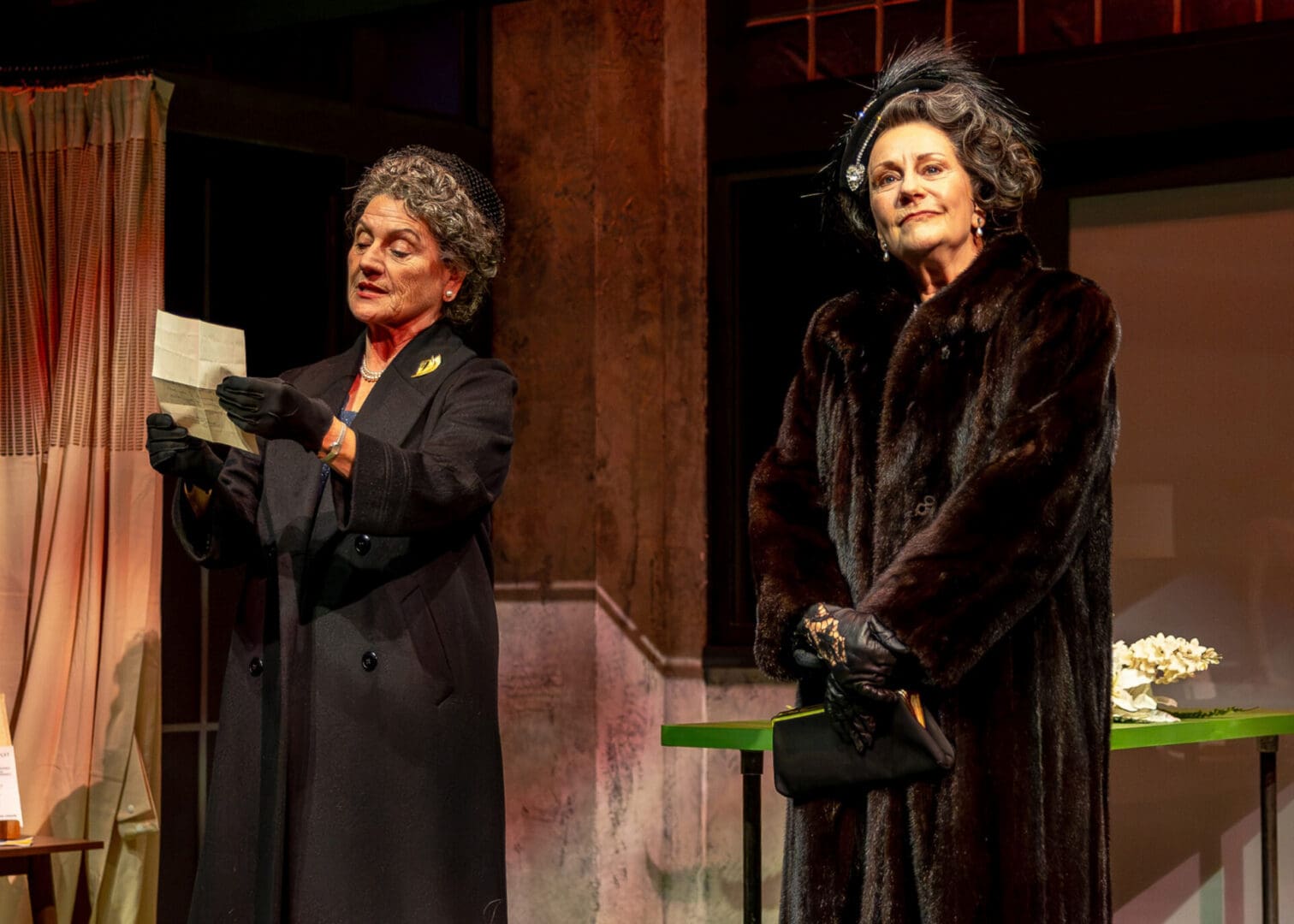
Margaret Sanger (Janet Ulrich Brooks, left) and Katharine McCormick (Mary Beth Fisher, right)
Enter Katharine McCormick (a delightful Mary Beth Fisher), an old friend of Sanger’s and a fellow suffragist. Already wealthy in her own right, McCormick’s millionaire husband has just passed and left his considerable fortune to her. What better use for it?
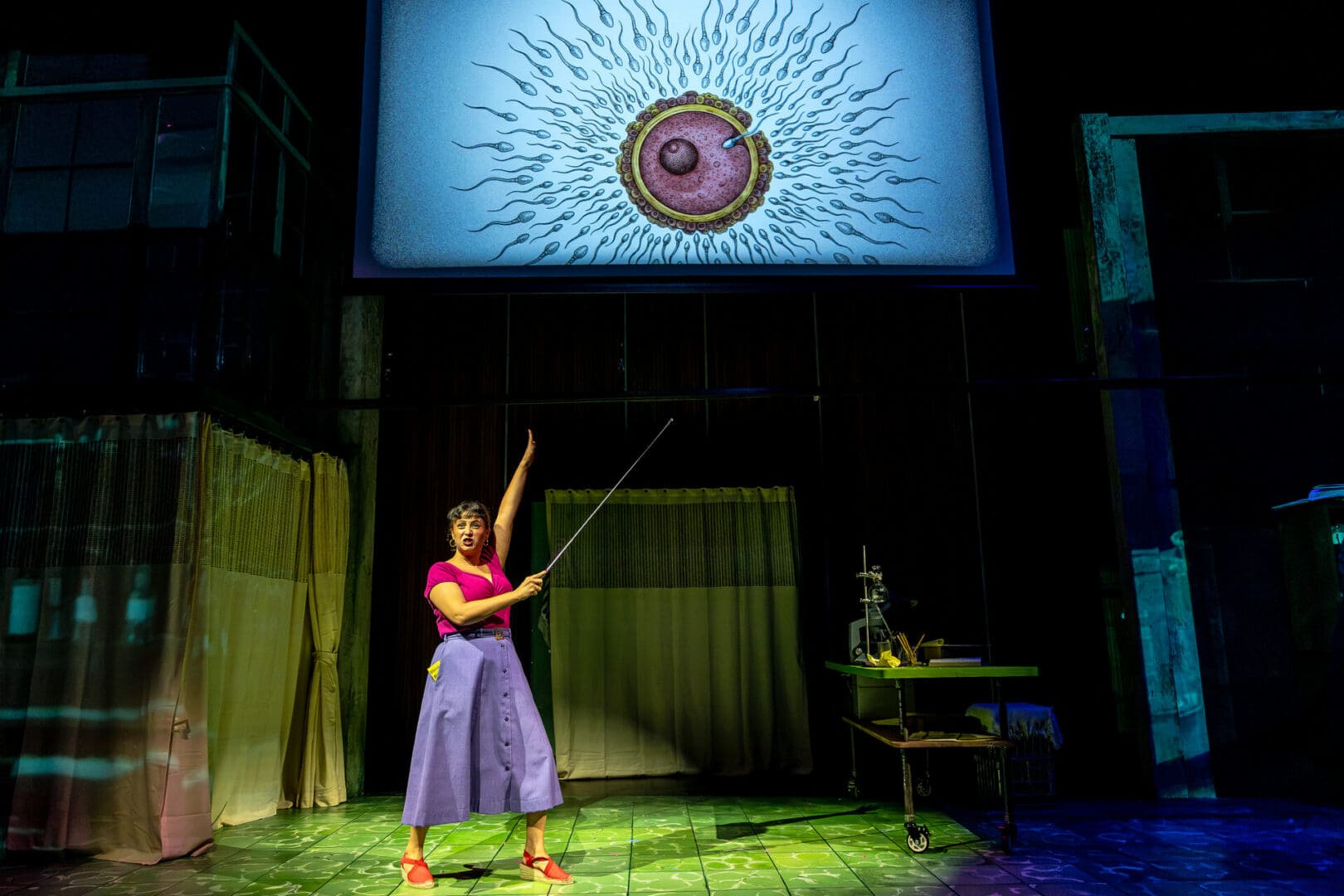
Ramona Delgado (María Victoria Martínez)
These three conspirators, along with Pincus’s fellow researcher Min Chueh Chang (Rammel Chan in a sweetly modest performance), are later joined by the studly physician John Rock (David Parkes) — I’m not being a lech; the play asks, nay demands that we objectify him — and our quintet of heroes is complete.
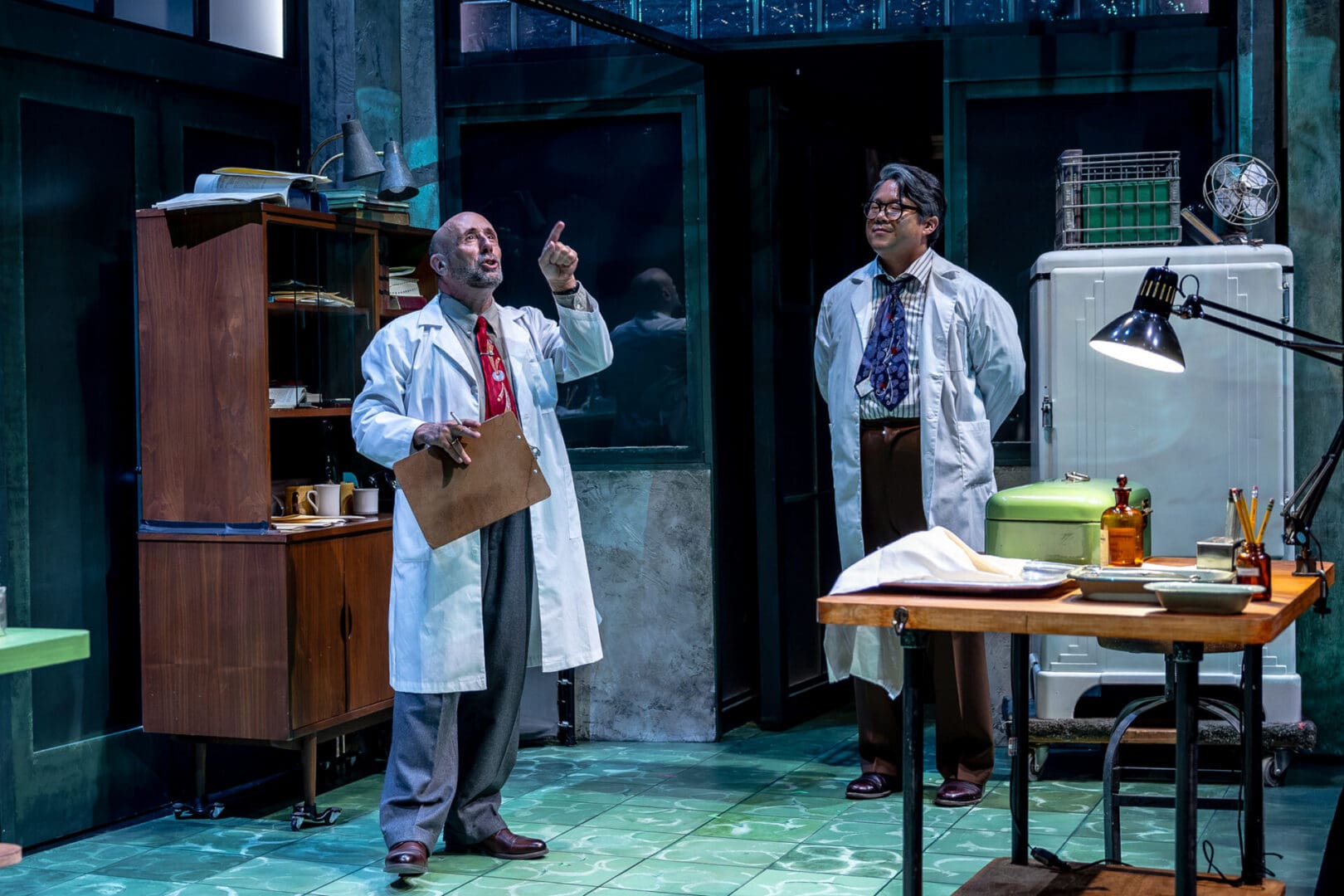
Goody Pincus (Mitchel J. Fain, left) and Min Chueh Chang (Rammel Chan)
Director Sandra Marquez is the hand at the helm, and a mighty assured hand it is. It helps that she’s been handed a terrific script and a crackerjack cast. It’s a tricky thing adapting a nonfiction book where (a) everyone knows how it ends, and (b) your lead character has some questionable associates — more on this later — but Huang pulls it off with a generous helping of humor and a nifty gimmick that embraces the artificiality of the stage, breaking the fourth wall innumerable times, mostly to excellent effect. This does raise the level of difficulty for the actors, but I’m not sure that there’s anything this cast can’t pull off. Fain and Chan are more or less the straight men in this setup and are flawless. As the physician who conducts the human trials, Parkes is absolutely hilarious and surprisingly sweet, which only makes him more attractive — I’m telling you, the play wants us to ogle him — and Brooks and Fisher are superb; they dominate the proceedings so thoroughly that there is a noticeable dip during the one scene when neither one of them is on stage. I could watch the two of them banter and bicker for hours.

Margaret Sanger (Janet Ulrich Brooks), Min Chueh Chang (Rammel Chan), Goody Pincus (Mitchel J. Fain), Katharine McCormick (Mary Beth Fisher), and John Rock (David Parkes)
Sharing the stage with these vets who are absolutely killing it, Martínez wisely retreats for the most part, occupying the edges of the frame, staying in the picture but never quite the focus of it until the end. It’s a clever choice on the part of the writer and director because it feeds into the most powerful portion of the play: addressing the overlooked and forgotten contributors to the FDA approval of the pill. Unfortunately for the actress, it also means that she doesn’t get to build her character up, saddled as she is with stepping in for other minor characters when needed. When her big moment comes, it doesn’t quite click. The framing device is a problem, and that holds true for the coda as well, which comes across as stiff and forced, despite a lovely marine metaphor for the never-ending battle for women’s bodily autonomy.
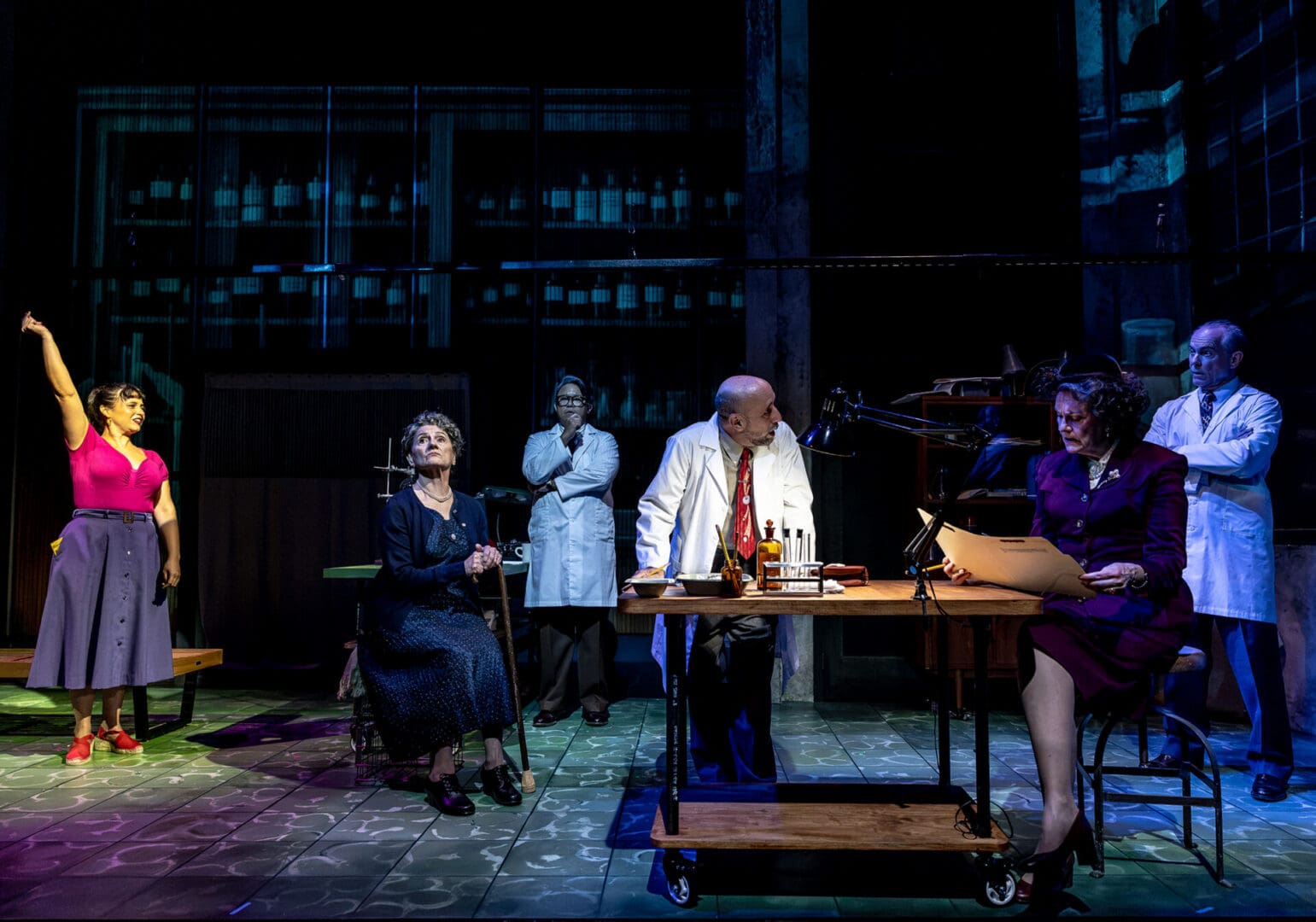
Ramona Delgado (María Victoria Martínez, left) narrates the story of the development of the birth control pill, featuring from left: Margaret Sanger (Janet Ulrich Brooks), Min Chueh Chang (Rammel Chan), Goody Pincus (Mitchel J. Fain), Katharine McCormick (Mary Beth Fisher), and John Rock (David Parkes)
Huang’s script, to its eternal credit, doesn’t shy away from Sanger’s lectures with eugenicist Clarence Gamble, nor does it let her off the hook when it comes to his views, which she mostly endorsed. It also focuses on the unsung heroes of the process: the impoverished women of Rio Piedras, Puerto Rico, who were the first human subjects of the pill, and whose reporting of the severe side effects of the (too high) dosage was largely ignored. In its exploration of the issues surrounding informed consent and exploitation of the poorest sections of society, it reminded me of another wonderful nonfiction book, Rebecca Skloot’s The Immortal Life of Henrietta Lacks, which investigated the life of Henrietta Lacks, a poor black woman from Baltimore, whose cervical cancer cells, taken from her without permission, revolutionized not just cancer research but the investigation of myriad other diseases.
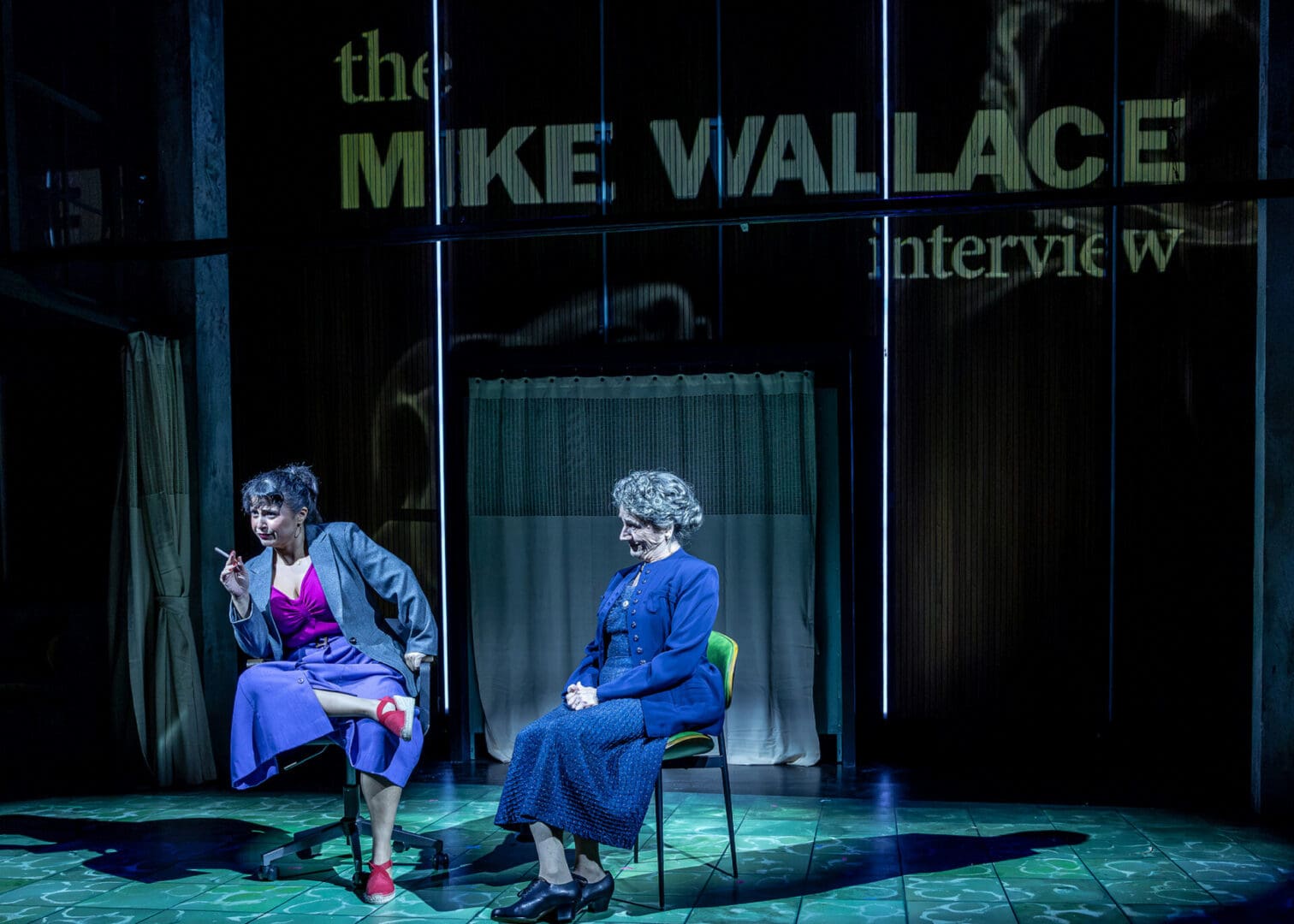
Ramona Delgado (María Victoria Martínez, left) assumes the identity of renowned journalist Mike Wallace during a recreation of his interview with Margaret Sanger (Janet Ulrich Brooks)
Eig and Huang posit that the invention of the birth control pill is one of the most seismic inventions of the twentieth century, if not in human history, and it’s hard to argue otherwise. But they also want us to understand the hidden costs associated with its development. It doesn’t matter if Sanger’s legacy is tarnished by her association with Gamble. She changed the world to an extent that few individuals ever have, and for the good. But she didn’t do it alone.
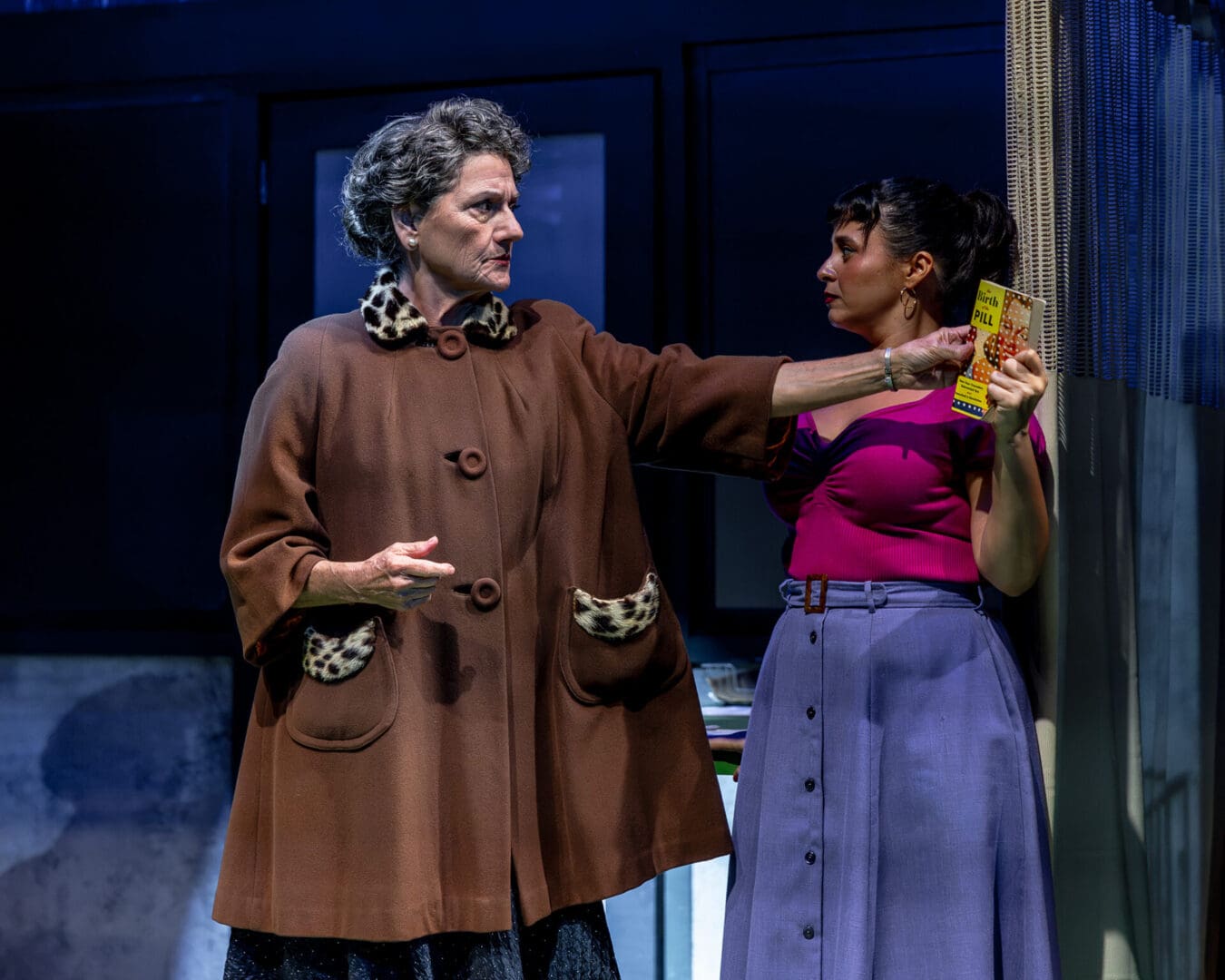
Margaret Sanger (Janet Ulrich Brooks, left) and Ramona Delgado (María Victoria Martínez, right)
The Birth of the Pill has the intellectual honesty to acknowledge the unethical aspects of the human trials of the pill. More interestingly, it also has the nerve to question whether any of this could have been accomplished without that moral murkiness, and the smarts to leave that question unanswered.

Jonathan Eig (Mitchell J. Fain, left) and Ramona Delgado (María Victoria Martínez, right)
✦ ✦ ✦ ✦ ✦ ✦ ✦ ✦ ✦ ✦
photos by Brett Beiner Photography
The Birth of the Pill
TimeLine Theatre
5035 N. Broadway in Chicago
ends on October 11, 2026
for tickets ($65–$100), call 773.281.8463 x1 or visit TimeLine Theatre
for more shows, visit Theatre in Chicago
✦ ✦ ✦ ✦ ✦ ✦ ✦ ✦ ✦ ✦
