


Areas We Cover
Categories

ORCHESTRAS ARE NOW PLAYING VIDEO GAME MUSIC: HOW GAME SOUNDTRACKS ENTERED THE CONCERT HALL
by Connor McCormick | September 12, 2026
in Extras, Music
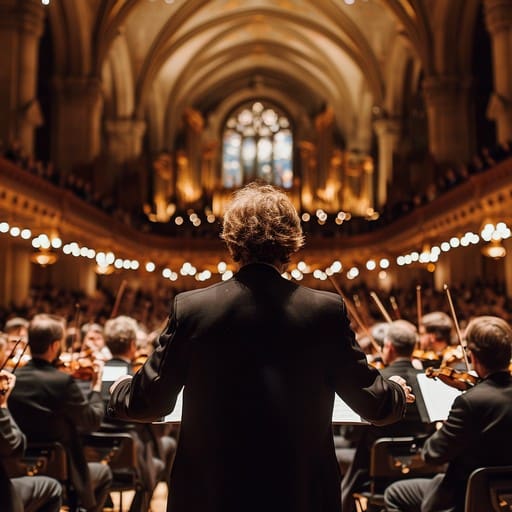
Walk into a symphony hall on the right evening, and you might find a full orchestra and choir performing not Beethoven or Mahler, but the score to a video game. The audience, many of them dressed for a night at the theatre, applaud between movements and rise for a standing ovation at the end. A generation ago the idea would have seemed absurd. Today, video game music has become one of the most reliable ways to fill a concert hall, and it represents a genuine shift in what audiences consider worthy of the orchestra.
From Background Noise to Concert Repertoire
For decades, game music was dismissed as background noise, a loop of simple melodies buried beneath the action. That perception was always unfair to the composers working within the technical limits of early hardware, and it became untenable as games grew into a serious storytelling medium. Modern game scores are written for full orchestras, recorded by world-class ensembles, and composed with the same care as any film score.
The turning point was the recognition that game music does something distinctive. Because a player might spend dozens or even hundreds of hours inside a single game, its themes become deeply familiar, woven into memory in a way a two-hour film rarely achieves. When those themes are performed live, the emotional response from an audience can be extraordinary, closer to the reaction a beloved musical draws than a typical orchestral program.
The Concerts That Built a Movement
The phenomenon is not a novelty act. It is a touring industry with its own flagship productions. Video Games Live, founded by composer Tommy Tallarico, has performed with orchestras around the world and helped prove there was a genuine audience for the format. The Legend of Zelda: Symphony of the Goddesses brought Nintendo’s most iconic melodies to major venues with full orchestra and choir.
Perhaps the most enduring example is Distant Worlds: Music from Final Fantasy, an official touring concert series that has performed the music of the Final Fantasy games in concert halls across the globe for more than fifteen years. Complete with orchestra, choir, and screens showing scenes from the games, it is the clearest proof that game music can anchor a full evening of orchestral performance and sell out prestigious venues while doing it. Even institutions as storied as the London Symphony Orchestra have recorded game scores, a stamp of legitimacy that would have been unthinkable not long ago.
Why Certain Games Draw the Symphony
Not every game leaps the concert hall. The ones that do tend to share a particular quality: music treated as central to the experience rather than an afterthought.
The Final Fantasy series is the classic example, but among modern titles, few illustrate the point better than Final Fantasy XIV. The long-running online role-playing game has built a reputation for one of the most ambitious and beloved soundtracks in the medium, ranging from sweeping orchestral pieces to vocal themes and even live-band arrangements. Its music is a genuine reason players stay devoted to the game for years, and that devotion is exactly what fills seats when the music is performed live. Around such games, an entire culture has grown, from soundtrack releases and concert tours to community events and the Final Fantasy XIV boost services that help committed players reach the content tied to their favourite musical moments. When a score inspires that level of attachment, a concert hall is a natural destination for it.
An Audience the Arts World Cannot Ignore
What makes this movement significant for the arts more broadly is who it brings through the doors. Orchestras have spent years worrying about ageing audiences and shrinking attendance. Game music concerts consistently draw younger, more diverse crowds, many of them attending a live orchestral performance for the first time.
For these audiences, there is no snobbery about what belongs in a concert hall and what does not. They come because the music means something to them, and in doing so they discover the power of a live orchestra. Some return for the standard repertoire, having learned that a symphony hall is a place where music they love can be heard. In that sense, game music is not diluting orchestral culture; it is refreshing it.
The Sound of a New Cultural Era
The presence of video game music in the concert hall reflects a larger truth: games have become a central part of contemporary culture, sitting alongside film, television, and theatre rather than beneath them. Their music has earned its place on the same stages that host the classical canon, judged by the same standard of whether it moves an audience.
The next time a symphony announces a season, it is increasingly likely to include an evening of game music among the Beethoven and the Brahms. Far from cheapening the tradition, these concerts are introducing a new generation to the thrill of live orchestral performance, using the music that generation grew up with. The concert hall has always evolved to reflect the culture around it. Right now, that culture includes a controller, and the orchestra is playing along.
