


Areas We Cover
Categories

Theater Review: THE HUMANITIES (Victory Gardens Theater / Chicago)

by C.J. Fernandes | September 19, 2026
in Chicago, Theater
FIVE MONOLOGUES
IN SEARCH OF A PLAY
A sharp, funny satire of academia wrestles
with difficult questions—and nearly
gets derailed by its sexual detours
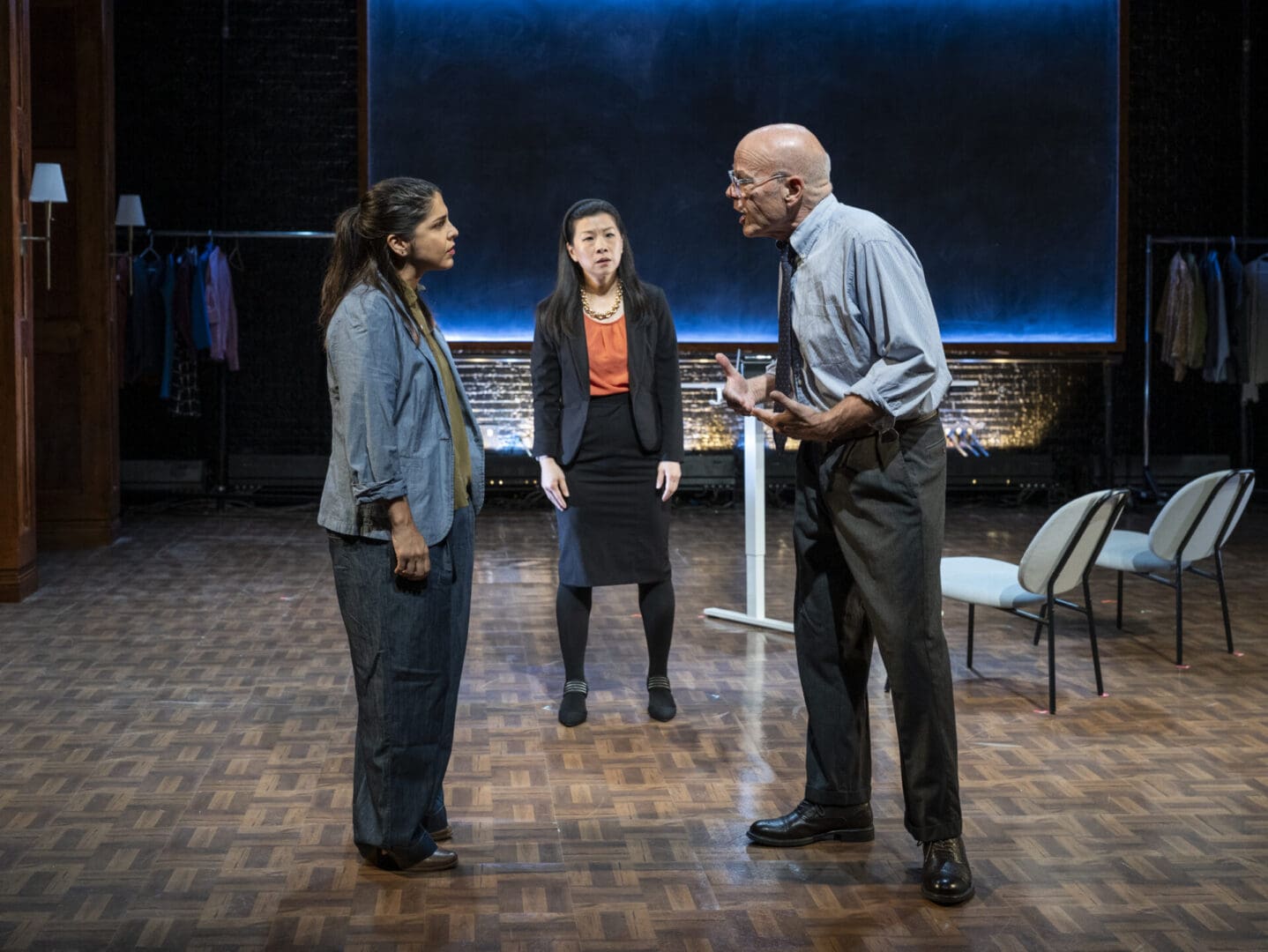
Isa Arciniegas, Sabine Wan, Steve Pickering
They’re back! After a four-year hiatus, during which time I’m sure some serious soul-searching was conducted, Victory Gardens Theater returns to the Chicago theater scene with The Humanities, a world premiere from local playwright Zayd Ayers Dohrn.
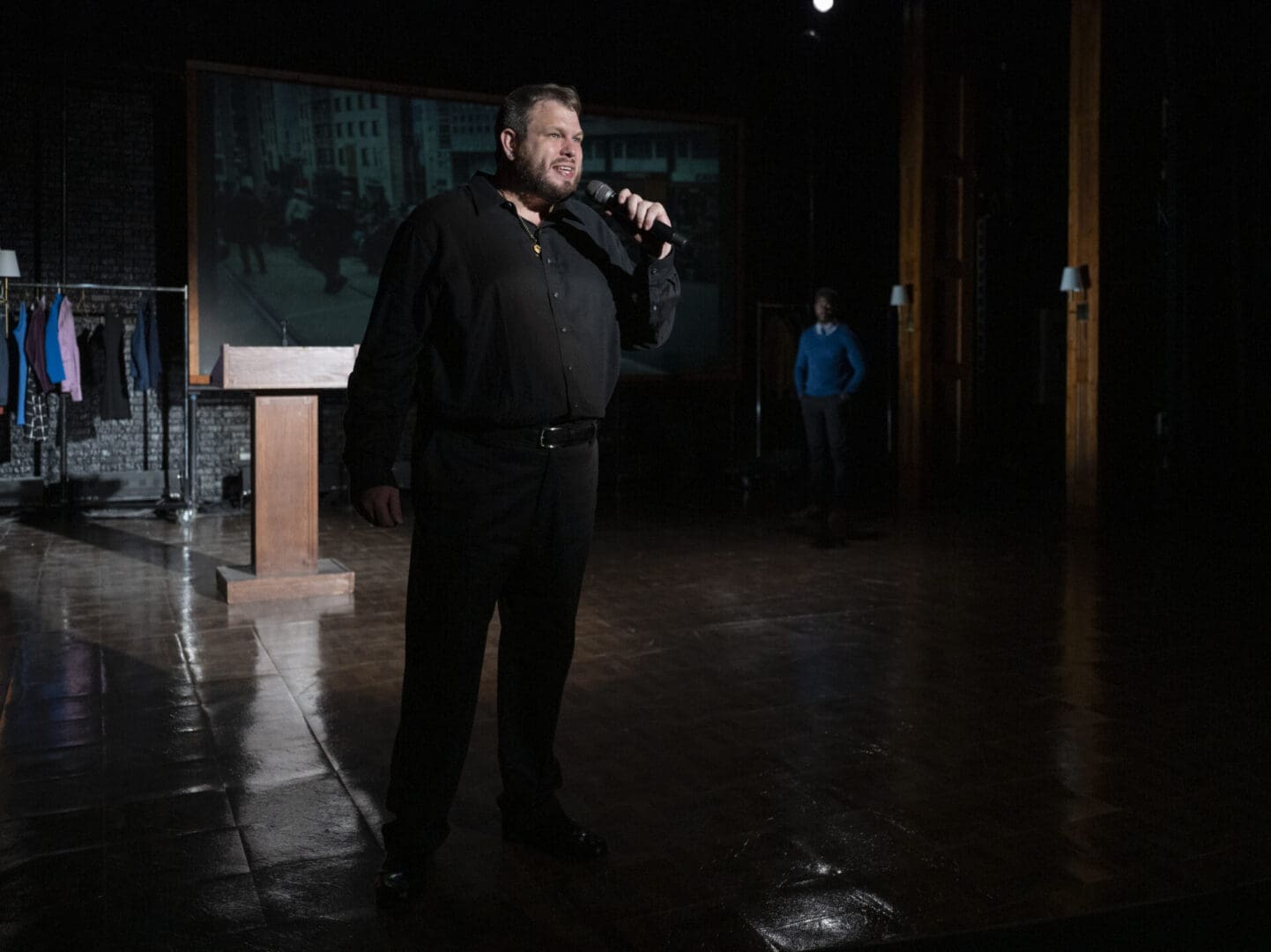
Daniil Krimer
Directed by Artistic Director Edward Torres, The Humanities unfolds in the present day at the fictional Lincoln University. Martin Honnager (Steve Pickering), the head of a department in the school of Liberal Arts, has invited Luka Jarry (Daniil Krimer), a former student of his, to give a talk at the school. Martin is vaguely aware that Jarry has some notoriety in the real world, but he hasn’t been paying much attention. He’s subsequently shocked to find out that the student body is so upset about the invite that they’ve begun circulating a petition against the lecture, and tacitly against him; even worse, his colleague and protégé Milta (Isa Arciniegas) has signed it as well. The Dean (Sabine Wan) is furious at him for putting the university in a no-win situation. His wife Margot (Naomi Evans), a professor in the art department, finds the entire thing amusing and pays minimal attention. She is more focused on the newest faculty member in Martin’s department, Jonas Sorel (Ernest Bentley), a young, handsome, and ambitious Black man.
Jonas hasn’t even moved into his office before he’s plunged into this maelstrom of university drama, both political and sexual.
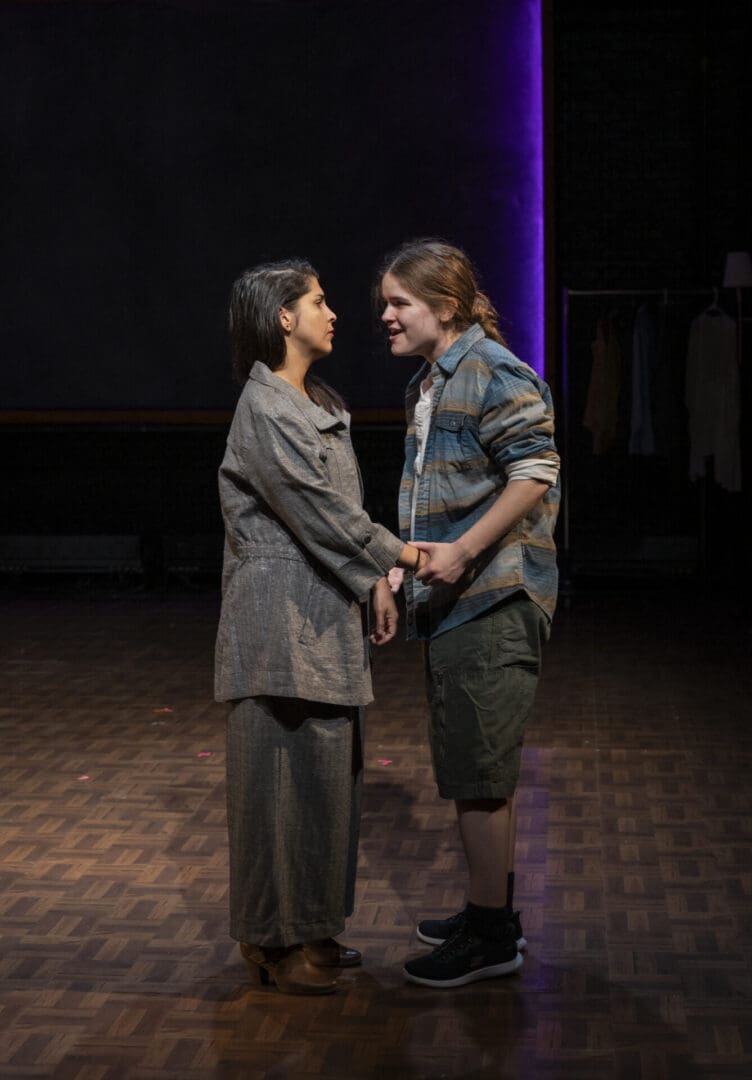
Isa Arciniegas, Piper Murphy
So, we have five professors, one provocateur, and we’ll soon meet three students: the politically active Hampton (Derrick Sanders III) and Xander (Piper Murphy), and the politically neutral Anthony (Devaughn Asante Loman).
The Humanities is structured as five books, spread out over two acts. Each of these books is introduced with a monologue from one of the professors, with a sixth monologue from Luka Jarry at the midway point of the play. These monologues take the shape of press releases, lectures, and introductions. In between, the characters argue, flirt, bicker, pair off, and fuck. The scenes are very short, and there’s an excessive amount of scenery moved on and off the stage.
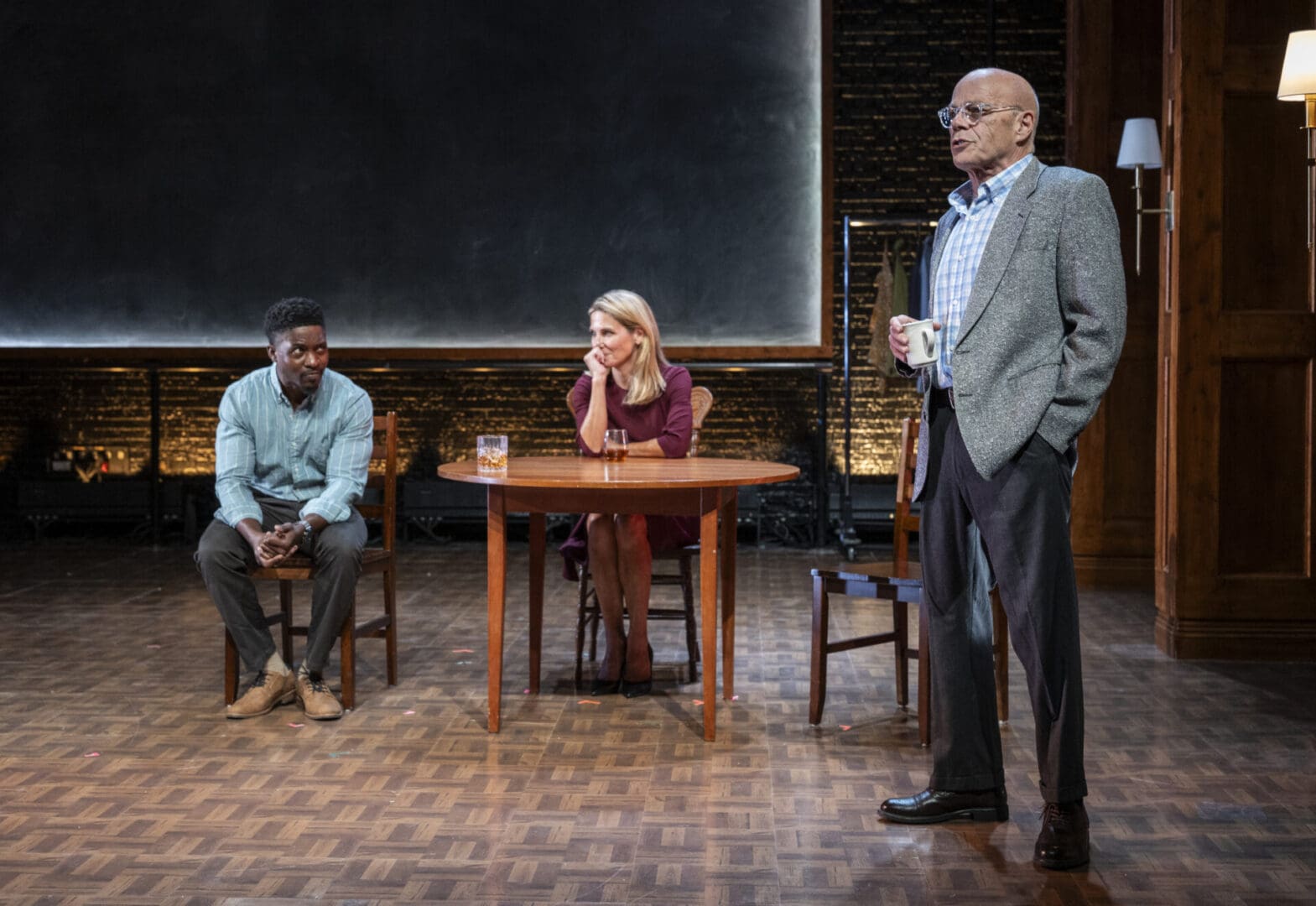
Ernest Bentley, Naomi Evens, Steve Pickering
Permit me a rant: What is with the ridiculous number of scene changes on the Chicago stage this year? It’s almost like a memo went out demanding a minimum number of interruptions while actors move furniture on and off the stage. And it isn’t just restricted to the large theaters either. The Biograph has a decently sized stage, Brian Sydney Bembridge’s set design is bare-bones, and it’s not like the actors even use the entire space. Surely areas could have been designated as different spaces within the play.
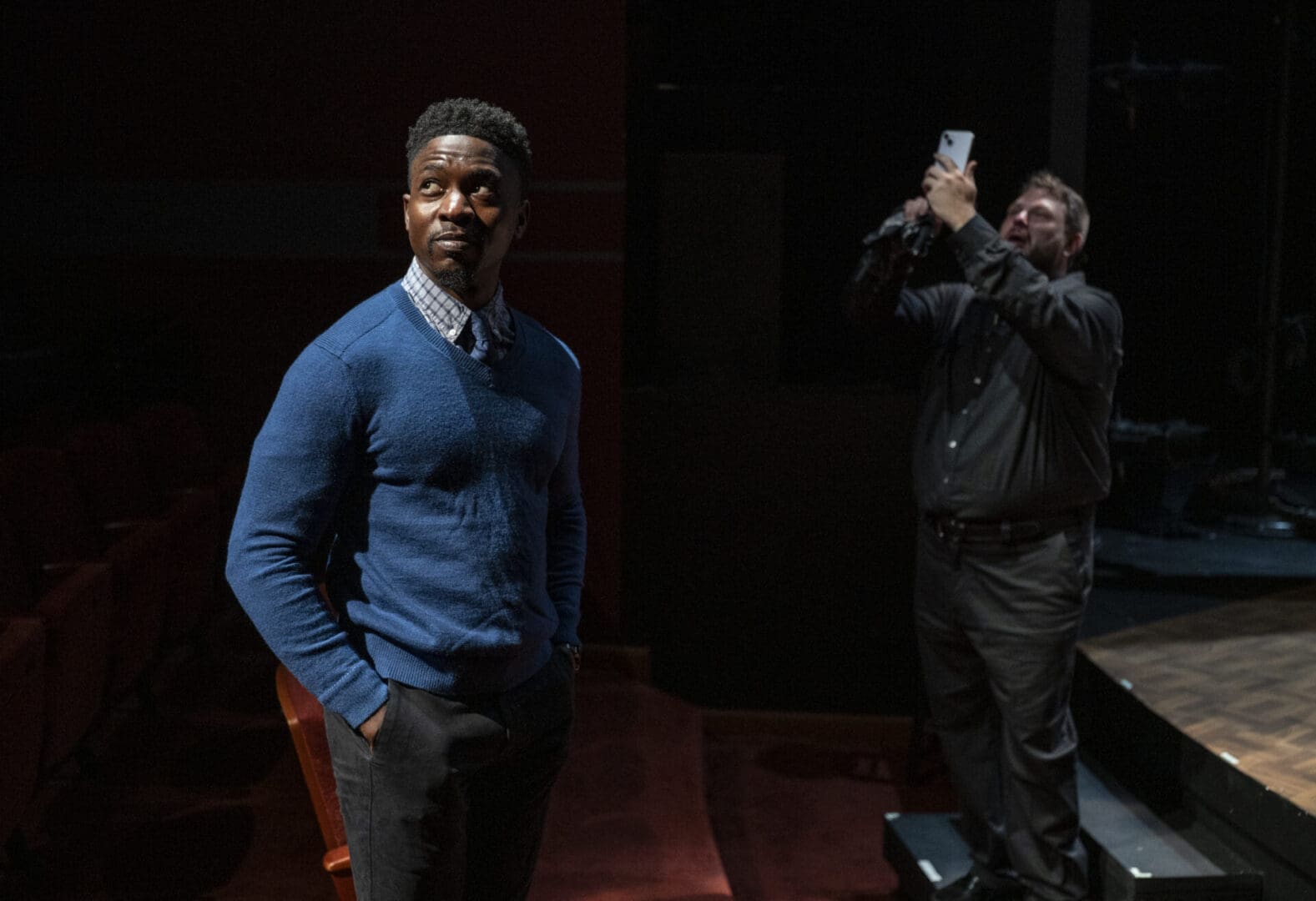
Ernest Bentley, Daniil Krimer
Now that that’s off my chest, back to the main event. The Humanities is a strange beast of a play. Broadly speaking, it concerns itself with free speech on university campuses and the privilege of the straight, white male academic. That’s the good stuff. What’s not so good—downright awful, in fact—are the sexual hijinks in between. I’m not sure what’s the point; the closest explanation I could come up with is that he’s trying to make some sort of statement about the male gaze. It doesn’t help that, much like in his script for the Tom Morello musical Revolution(s), Ayers Dohrn struggles with creating fully realized non-cis-male characters. An excellent example in The Humanities is provided by the two meet-cutes: the meeting between Milta and her former student Xander in a queer bar is excruciating to watch. By far the most poorly written scene in the play, it’s like the two characters don’t know how humans speak, and it doesn’t help that the actors have zero chemistry with each other. Compare that to the marvelous scene where Hampton and Anthony meet. Before Hampton has even settled down beside Anthony, you know they’re going to wind up in bed.
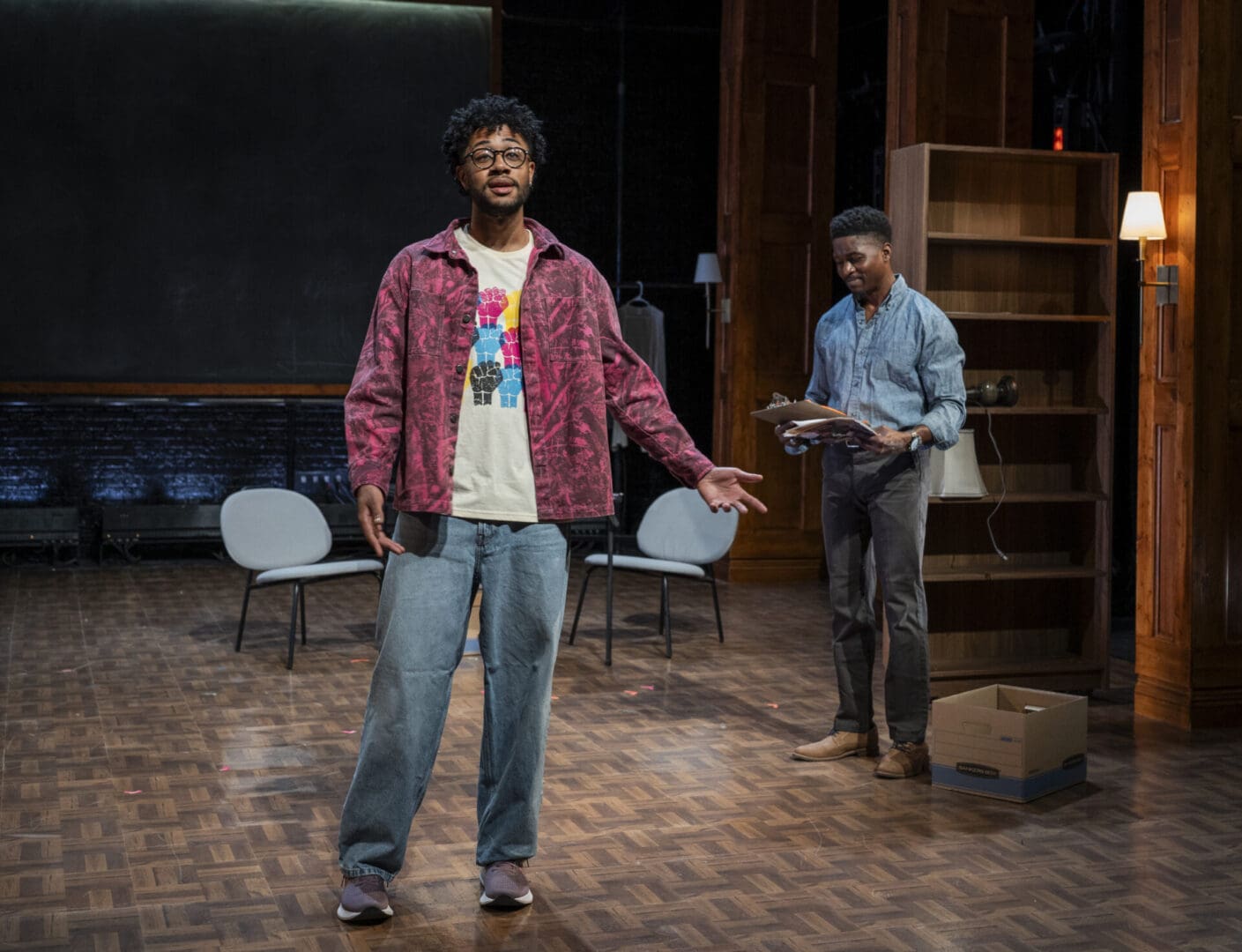
Derrick Sanders III, Ernest Bentley
This is a problem that plagues all the female characters. Of the actors playing them, Evans is the only one who overcomes the two-dimensionality of her character, and she seems to pull it off by sheer force of will and a magnetic stage presence. Arciniegas is a talented actor, but Milta is so irrelevant to the main proceedings that she could be excised from the play entirely with minimal edits to the other scenes.
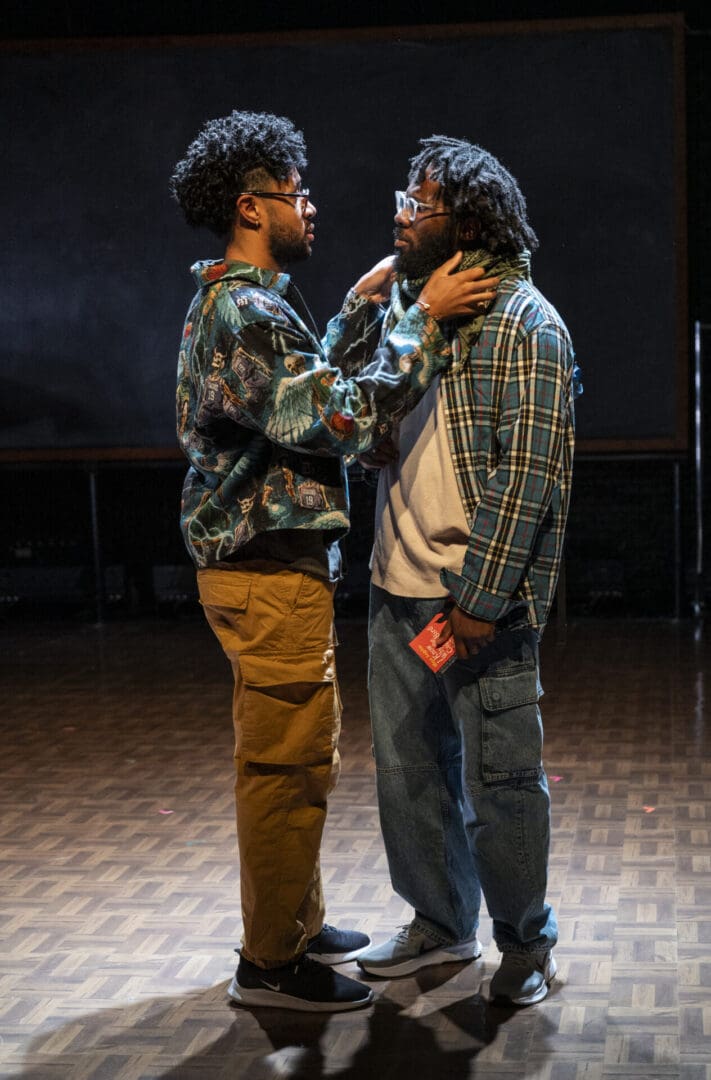
Derrick Sanders III, Devaughn Asante Loman
And yet, this is still a recommended show. Much like the girl with the curl in the middle of her forehead, when The Humanities is good, it is very, very good. Strip off (pun intended) the sex-related rubbish and the gratuitous, and frankly, silly nudity—isn’t every post-coital couple made up of one naked and one clothed person?—and you’re left with a sparkling satire about the ivory tower of higher learning. This is Ayers Dohrn’s milieu (he’s a professor at Northwestern), and it shows. The writing is sharp, the arguments are wonderfully academic, and the actors sink their teeth into the meaty dialogue, relishing the material. It’s also funny as hell.
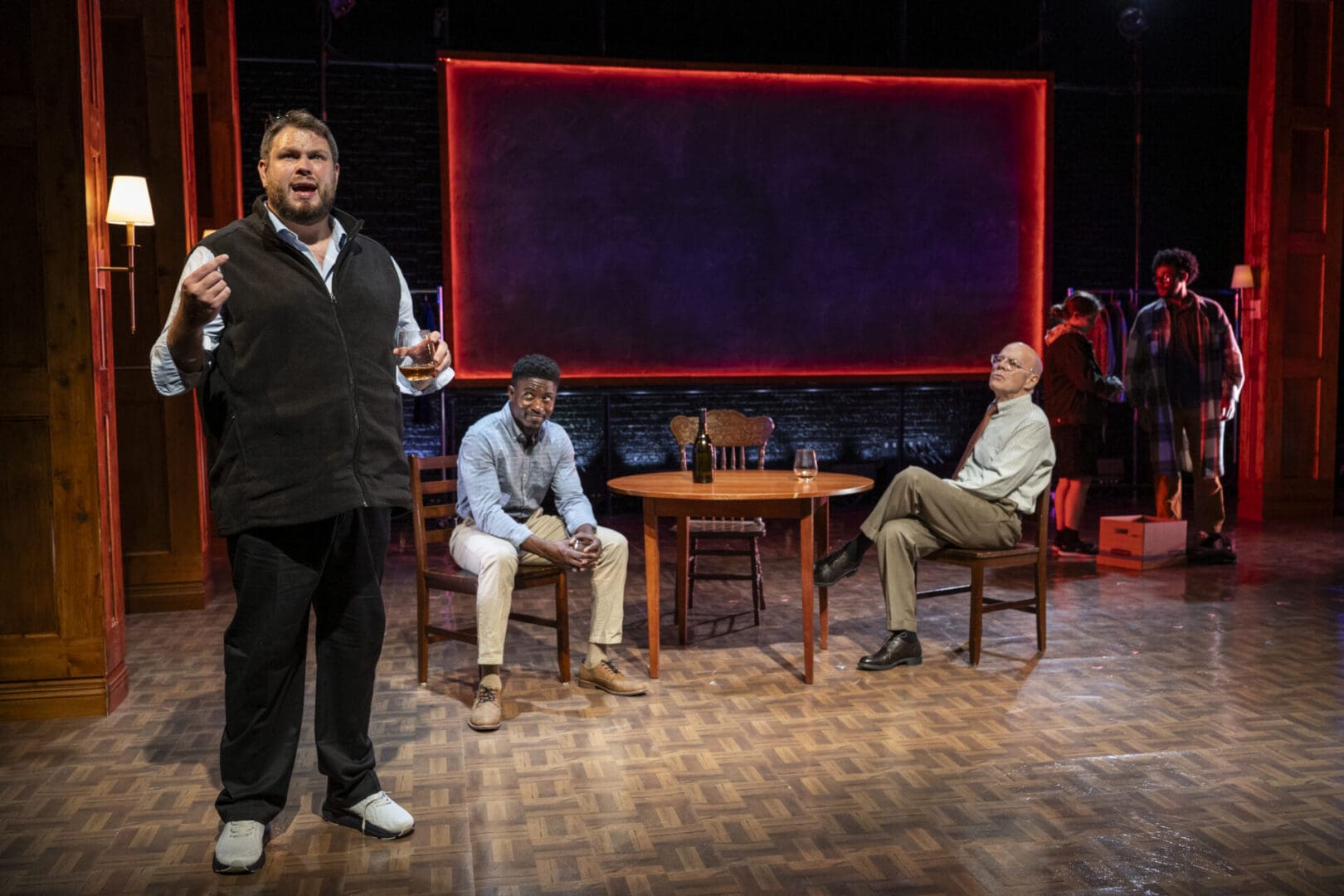
Daniil Krimer, Ernest Bentley, Steve Pickering
I had Wan’s tossed-off “I just hope you can contextualize all this for your students” as the line of the play, but then we get Pickering’s glorious lecture about authority that weaves in Louis Althusser, Judith Butler, and Cartesian epistemology before flipping the scene on its head to show us how two people can process the same material in drastically different fashion. Pickering is purportedly a “retired actor,” to which I say, “Nuh uh”; he’s far too good to be doddering off in retirement. It’s unacceptable.
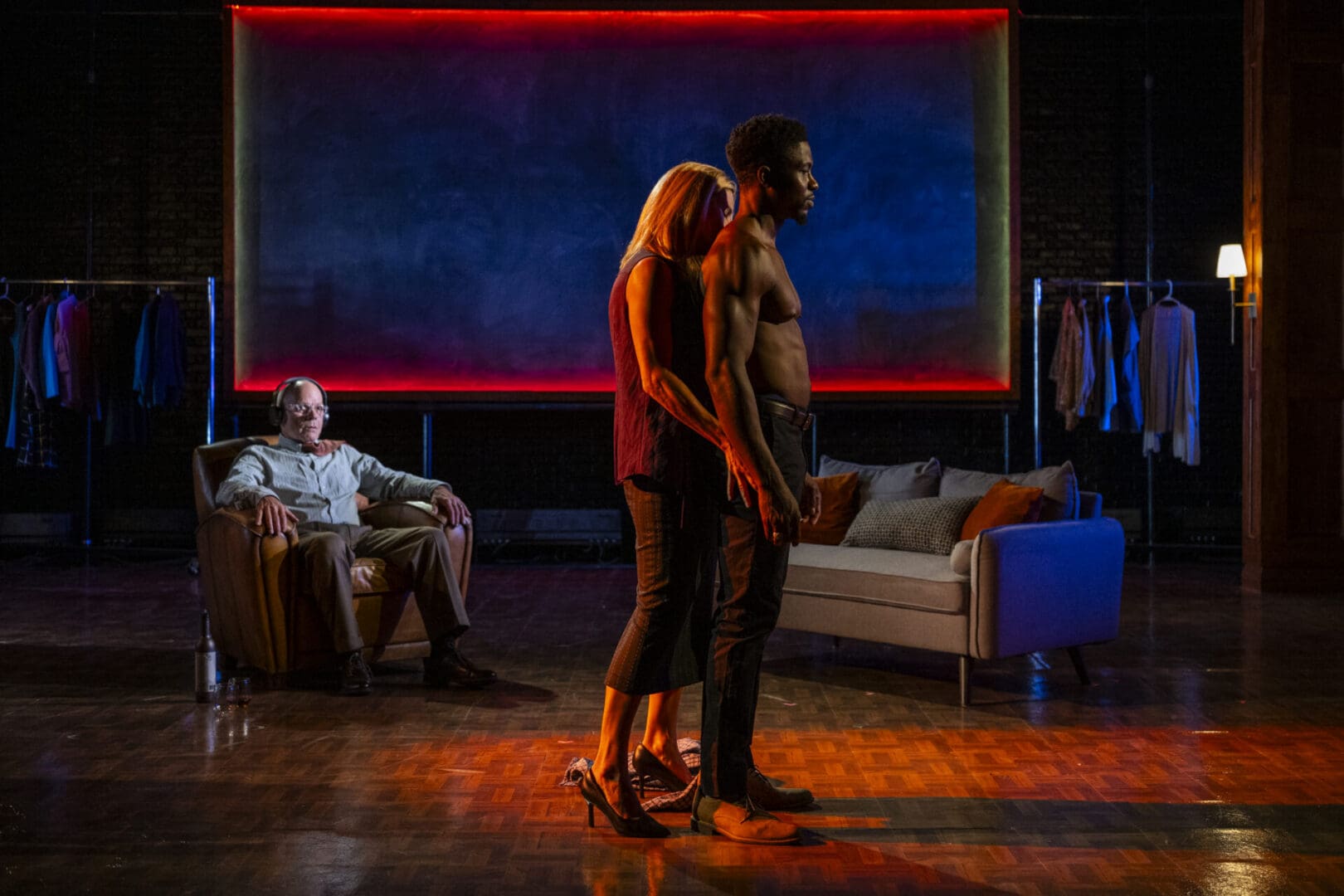
Steve Pickering, Naomi Evens, Ernest Bentley
Wan bookends the play with precisely delivered politician-talk—she is a dean, after all—and Evans is a force of nature in her big moment, analyzing the history of the depiction of female genitalia and nudity on canvas and on screen; points deducted for the sex scene taking place on one side of the stage during the monologue. A scene so awkward that, were it in a book, it would be a shoo-in for the Literary Review’s Bad Sex in Fiction Award.
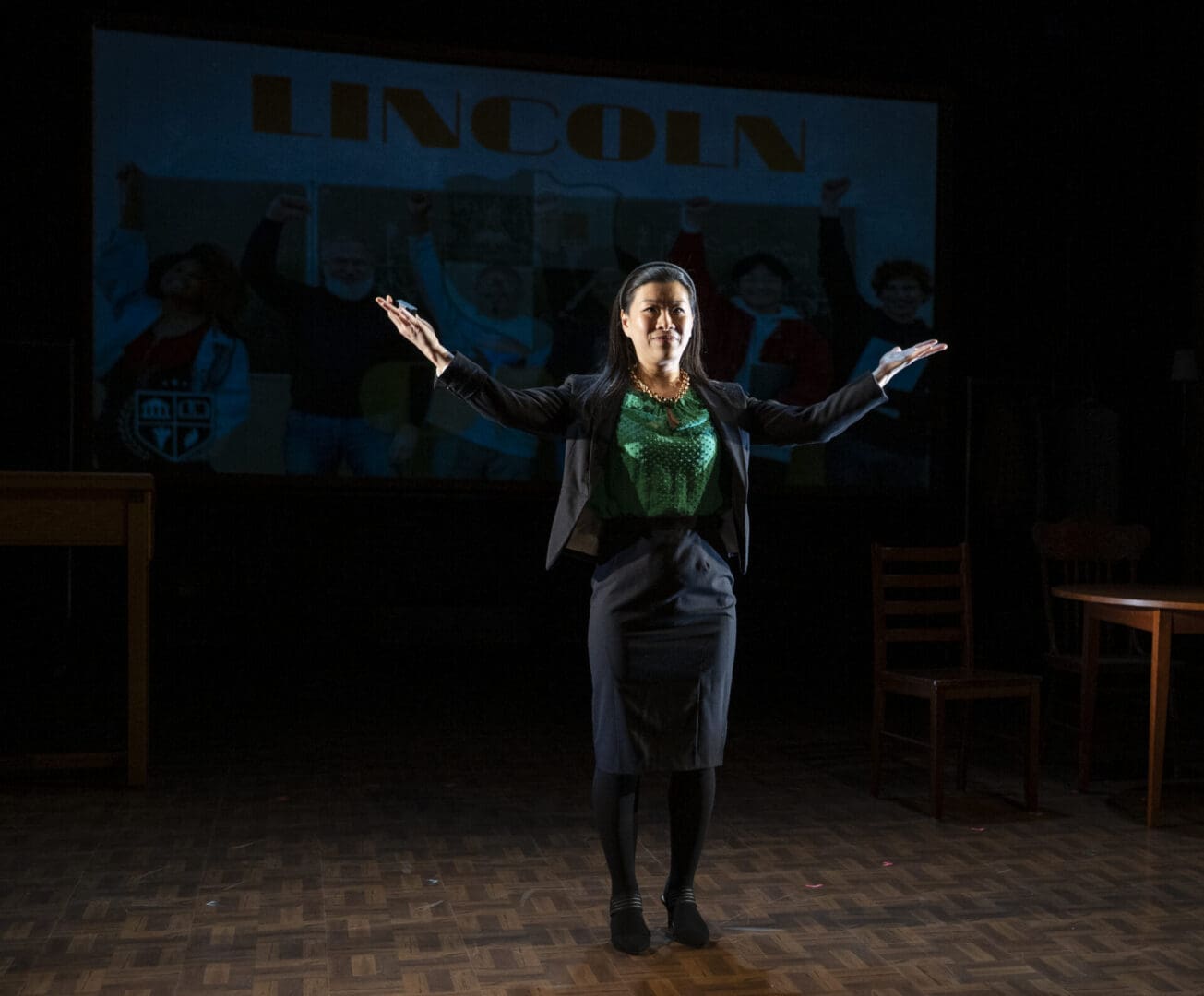
Sabine Wan
The best acting on stage comes from Bentley as the newest faculty member, Jonas. It’s a cool, watchful, and restrained performance, and Bentley keeps his cards very close to his chest. Of all the characters, his motivation is the most cryptic, and until the very last scene, where he is let down by the script, he is close to unreadable. It’s a fascinating, beautifully layered performance.
The other bit of brilliance involves Luka Jarry, a character clearly modeled on right-wing provocateur Milo Yiannopoulos, right down to his sexual predilections, and played to perfection by Krimer. In Jarry’s monologue, Ayers Dohrn achieves the apotheosis of satire: it’s a piece of writing so precisely and exquisitely constructed that, depending on your political bent, it works either way; case in point, the patrons in my vicinity who perhaps did not realize that they were not supposed to be applauding Jarry.
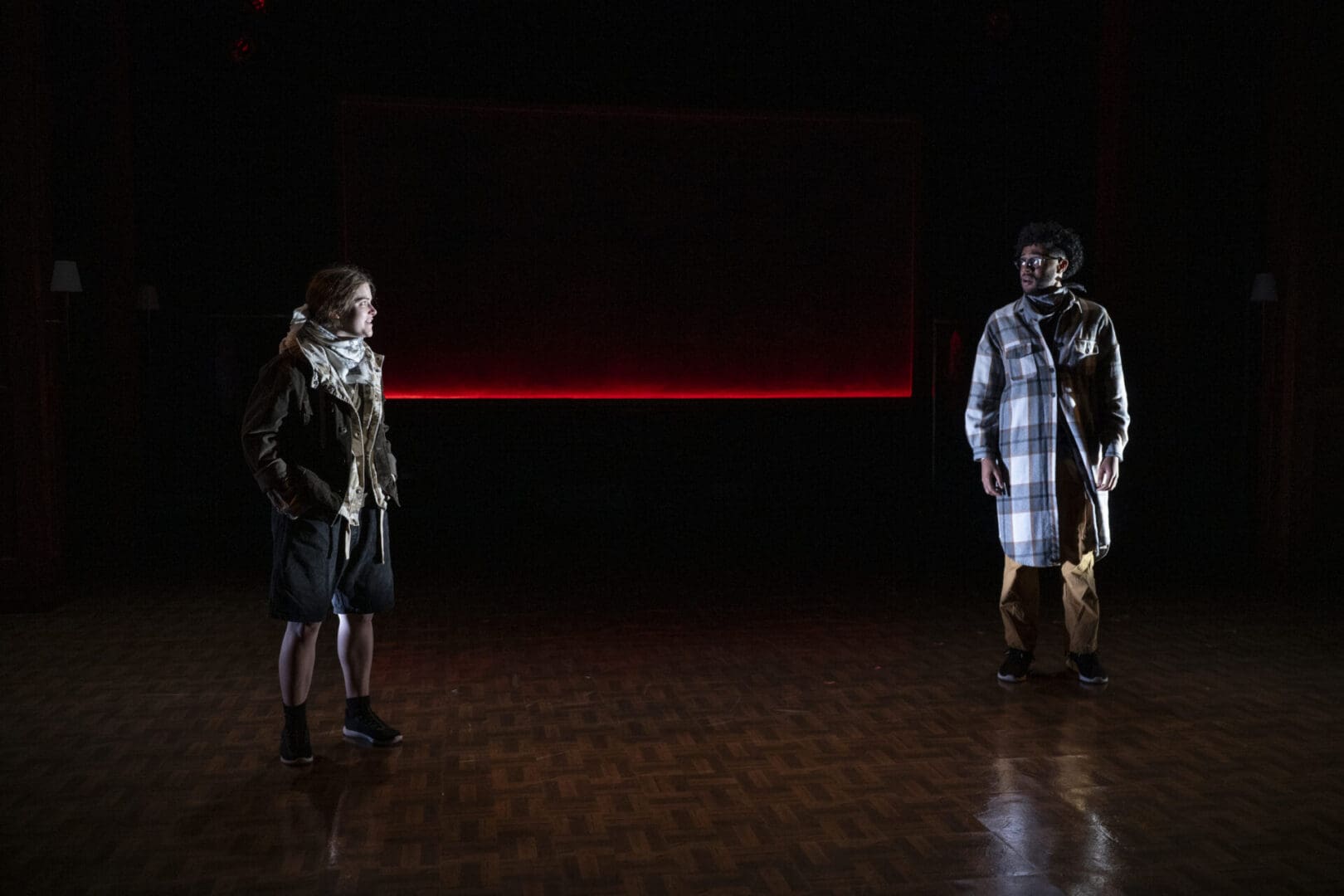
Piper Murphy, Derrick Sanders III
There is a sixth monologue, one delivered by Milta. Unfortunately, but in keeping with the points mentioned earlier, I cannot recall anything about it at all.
Ayers Dohrn and Morello’s Revolution(s), which had its world premiere at the Goodman last winter, is a more focused work, but The Humanities, despite all its flaws, is a much better play. It fizzles a bit, wrapping up its primary plotline in a predictably ironic denouement, but I suspect that the ending, as well as the dross in the plot, will fade in the memory.
This last weekend was a glorious one for theater in Chicago with the openings of Idle Muse’s Witch, TimeLine’s The Birth of the Pill, and Victory Gardens’ The Humanities: three plays that stubbornly insist on asking difficult questions and forgoing easy answers. I thoroughly enjoyed all of them, and if The Humanities got docked a star, it’s not because of the sex stuff but because, of the three shows, it’s the only one that wimps out in the end.
✦ ✦ ✦ ✦ ✦ ✦ ✦ ✦ ✦ ✦
photos by Michael Brosilow
The Humanities
Victory Gardens Theater at the Biograph, 2433 N. Lincoln Ave. in Chicago
Thu–Fri at 7:30; Sat at 2:30 & 7:30; Sun at 3
ends on October 4, 2026
for tickets (starting at $55), visit Eventbrite
for more shows, visit Theater in Chicago
✦ ✦ ✦ ✦ ✦ ✦ ✦ ✦ ✦ ✦
