


Areas We Cover
Categories

Theater Review: TEXAS SODOMY (Whitefire Theatre / Sherman Oaks)
by Michael M. Landman-Karny | September 20, 2026
in Los Angeles, Theater
A LANDMARK CASE GETS
THE SITCOM TREATMENT
A pivotal civil-rights case deserves sharper
comedy and deeper drama than Howard
Skora’s overstuffed retelling provides
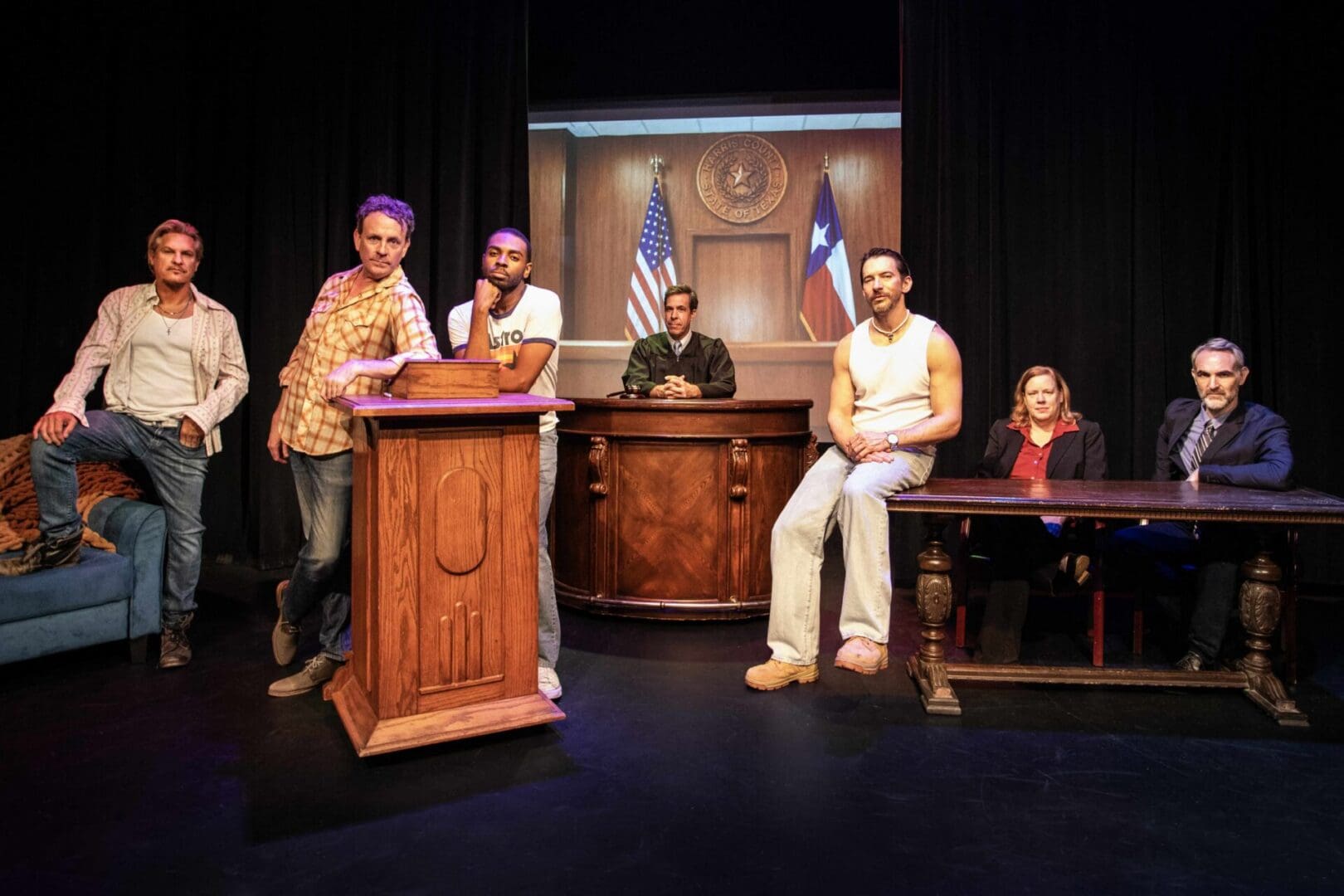
Dylan Vox, Drew Droege, Jabari, Tom Trudgeon, Matt McConkey, Celeste Pechous, Aaron Tone
On September 17, 1998, a 911 caller claiming there was a weapons disturbance sent police into John Lawrence’s Houston apartment. Officers arrested Lawrence and Tyrone Garner under a Texas law criminalizing sex between two men. Five years later, the Supreme Court struck it down.
The story comes equipped with a false report, a jealous boyfriend, a statute that punished one couple while excusing another, and two reluctant plaintiffs. Howard Skora’s Texas Sodomy has all the ingredients. At the Whitefire Theatre, they make a turkey.
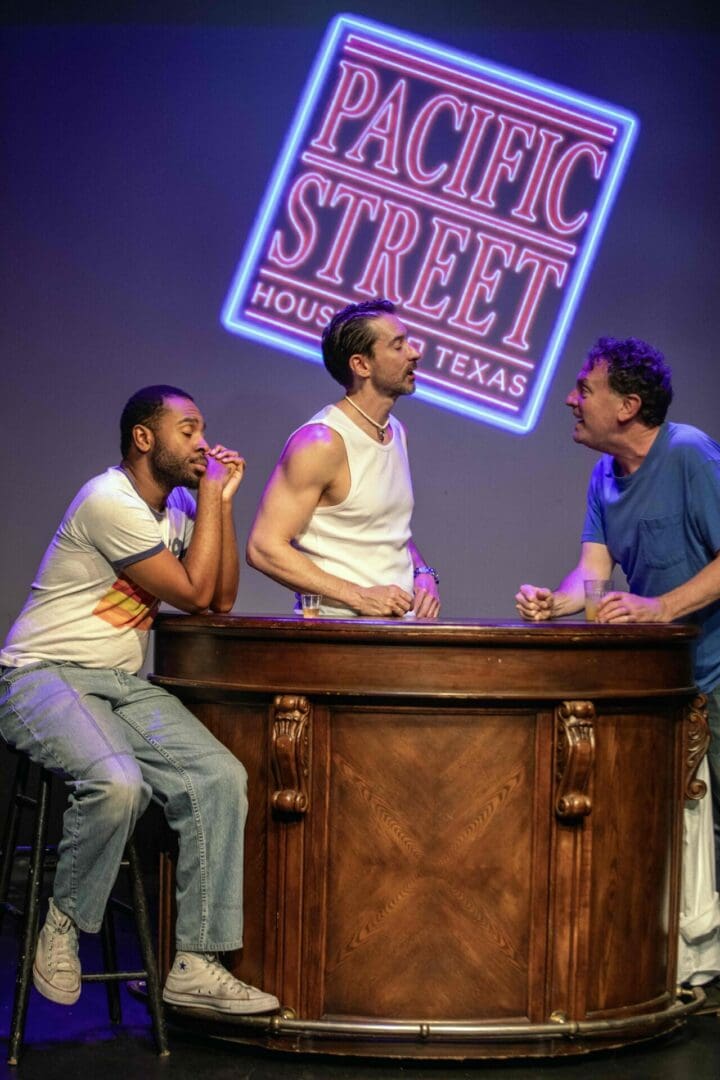
Jabari, Matt McConkey, Drew Droege
Skora has written a gay sitcom. Every exchange wants a punchline, and every punchline wants someone to say “fuck,” “bitch,” “cunt,” or “faggot.” Profanity can reveal character or blow up a hypocrite. Here it is canned laughter, delivered live.
The opening courtroom scene sets the pattern. Lawrence learns that heterosexual sodomy is legal in Texas while the same act between men is a crime. That contradiction is appalling and funny without help. Skora helps anyway, piling on jokes about drag queens, judicial robes, customer-service managers, and Lawrence’s “sassiness.” A good premise gets beaten flat.
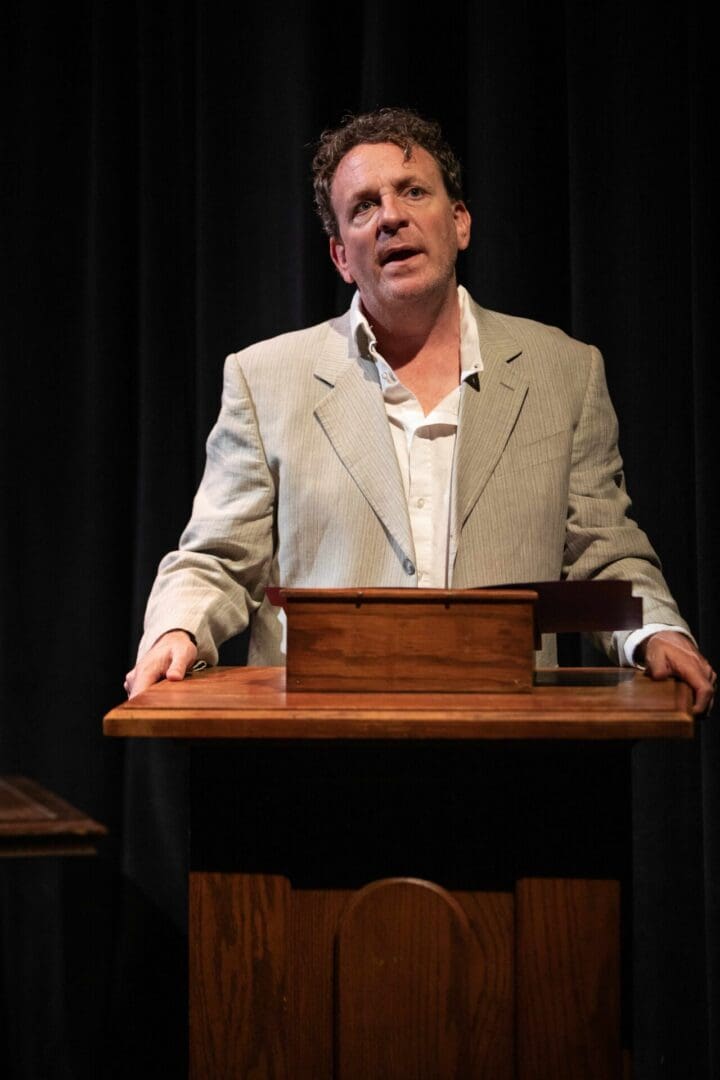
Drew Droege
Drew Droege plays Lawrence, a hard-drinking hospital lab technician pulled into history against his will. Droege is among the best comic actors in Los Angeles. A held pause, raised eyebrow, or sharpened vowel from him can do damage. The script gives him sass, alcoholism, and a late swerve toward inspiration, then asks him to announce what John feels. Droege hits the jokes with his usual speed, but nothing connects one to the next. When the final third reaches for tragedy, the turn arrives on cue with nothing behind it.
The rest of the cast flails, hunting for rhythms the writing never supplies.
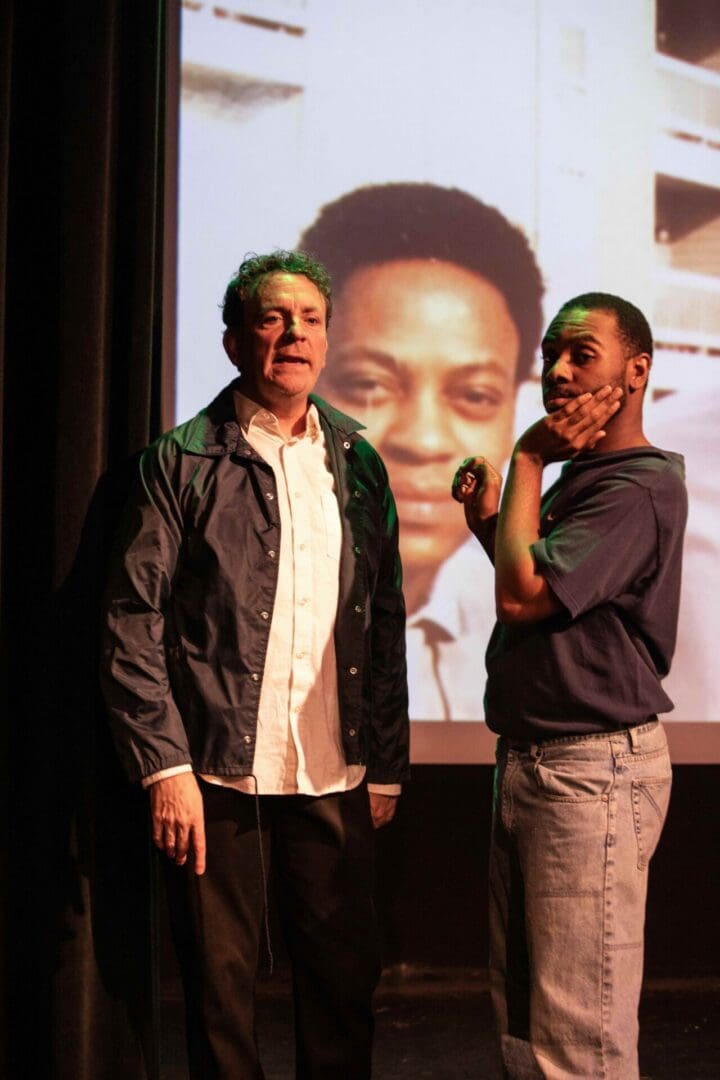
Drew Droege, Jabari
Jabari plays Tyrone Garner with sweetness, shame, and bottled rage. Garner was an equal plaintiff. The play files him under supporting player in Lawrence’s redemption. Jabari brings tenderness, but the script gives him nowhere to put it.
Matt McConkey’s Lane Lewis, the activist and bartender who talks the men into challenging the law, must serve as comic babysitter, strategist, surrogate brother, and motivational speaker, sometimes within a single scene. McConkey never settles because the part never does. Lane delivers speeches about Harvey Milk, hope, community, and his late gay uncle, each with its moral underlined in advance.
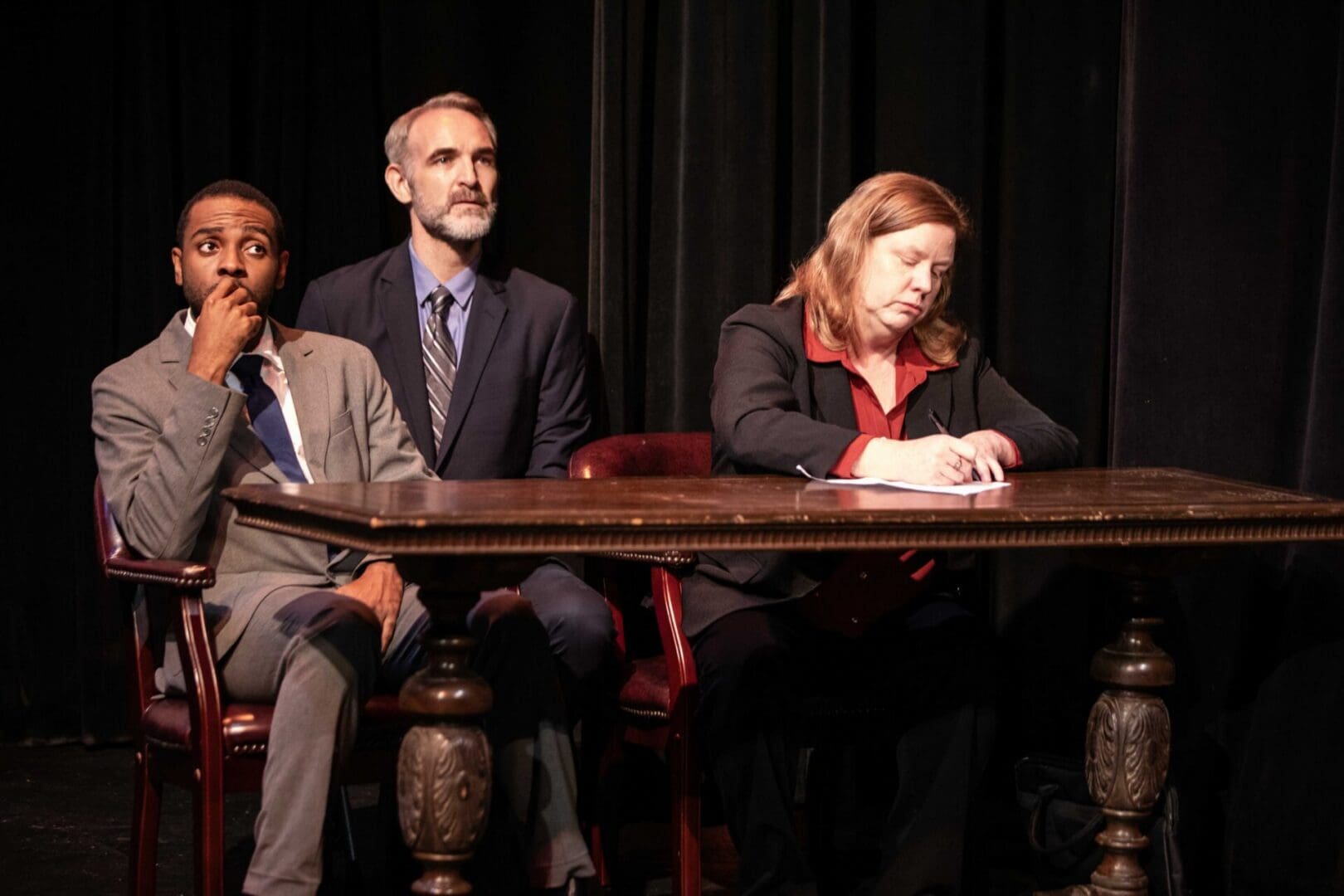
Jabari, Aaron Tone, Celeste Pechous
Dylan Vox brings volume to Royce Eubanks, Tyrone’s jealous boyfriend and the source of the false 911 report. Royce is alcoholic, abusive, racist, self-pitying, and destructive, yet the play wants laughs from him too. He is too monstrous for comedy and too cartoonish for menace. Vox plays the aggression at full force, which only makes the cartoon louder.
Celeste Pechous, Aaron Tone, and Tom Trudgeon divide the supporting roles. Pechous draws the worst assignment as Jackie Rosenthall, a composite Lambda Legal attorney who steps outside the action to deliver a breathless history lesson and congratulate herself on being the play’s most interesting character. She isn’t. The speech stops the evening cold and reduces years of litigation to a profane lecture.
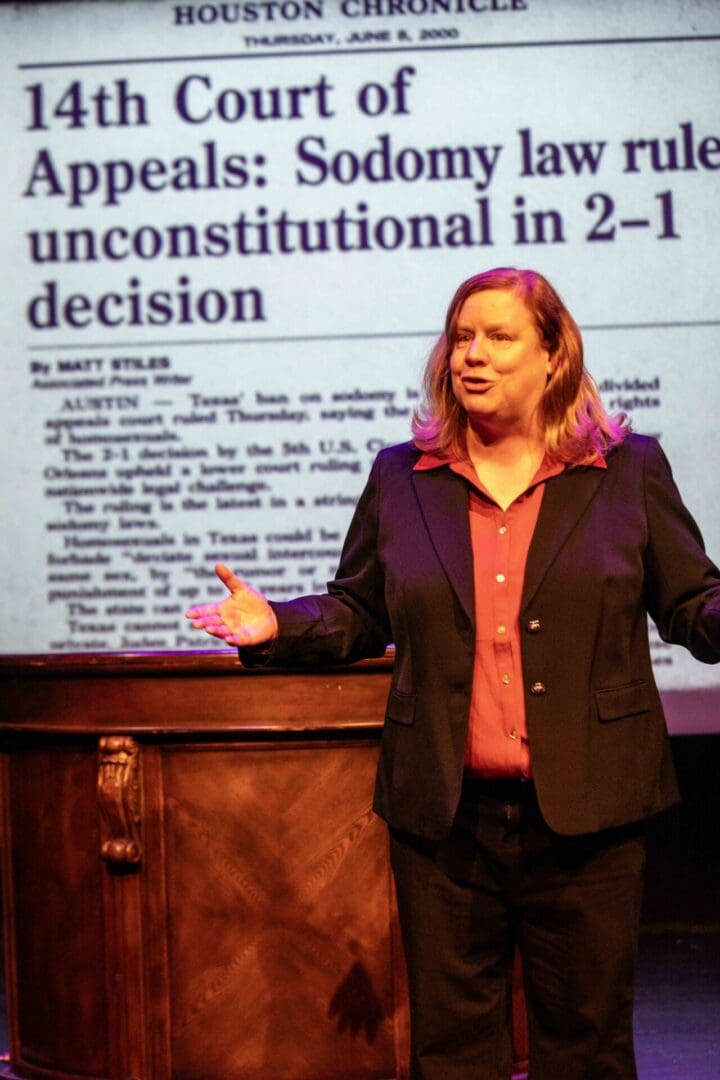
Celeste Pechous
The tone never gets sorted out. Texas Sodomy wants to be a raucous comedy, courtroom procedural, domestic tragedy, history pageant, and inspirational drama at once. Skora, who also directs, has found no theatrical language capable of holding them together.
The late scenes pile on addiction, domestic violence, a fatal beating, racial suspicion, unemployment, bankruptcy, and John’s confession that he killed someone while driving drunk. Any one of these might deepen the story. Stacked together, they feel like a checklist. By the time the Supreme Court takes the case, the play has spent every emergency except locusts.
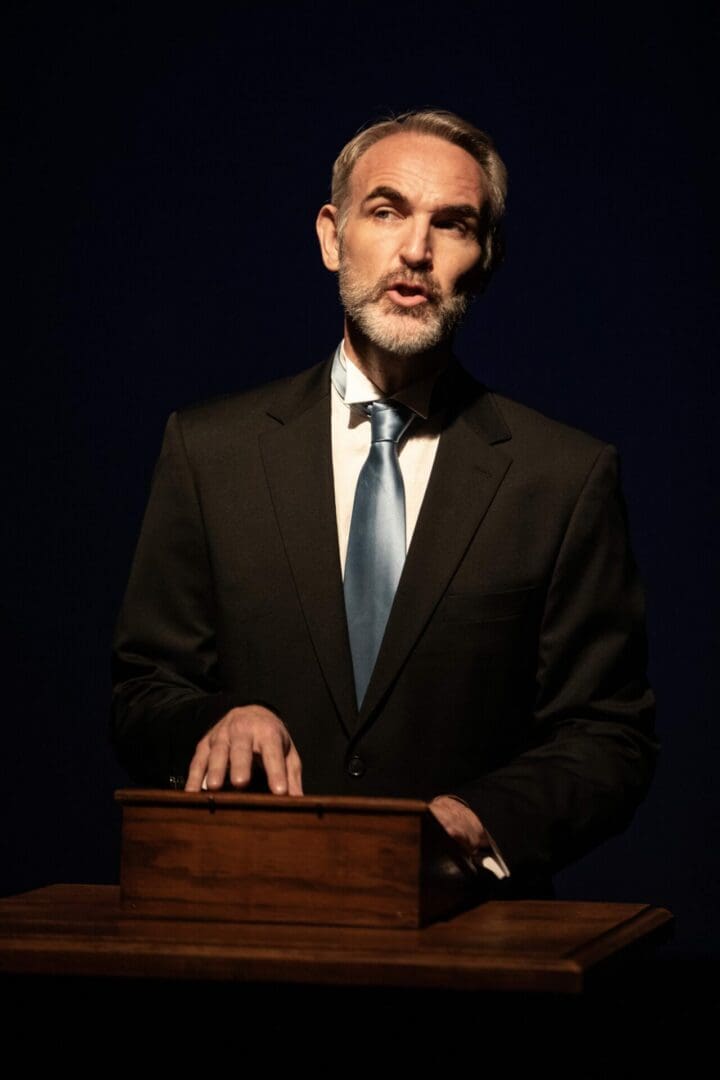
Aaron Tone
Dusti Cunningham’s spare set decor and design moves the action briskly among apartments, bars, and courtrooms. John Knowles’ projections provide dates, locations, and history, and the production leans on them heavily. Mitch Rosander handles lighting and sound. Ben Phen and Arron Mendoza dress the characters sensibly. All of it works. None of it disguises the standstill at the center.
The best scene takes place outside the Supreme Court. Lawrence meets young people who have waited overnight to hear the arguments. He gives his name. They recognize it and hug him. John finally confronts the community he had dismissed as an activist abstraction, and for a few minutes the stage grows quiet. Nothing else in these 100 minutes sounds so much like people talking.
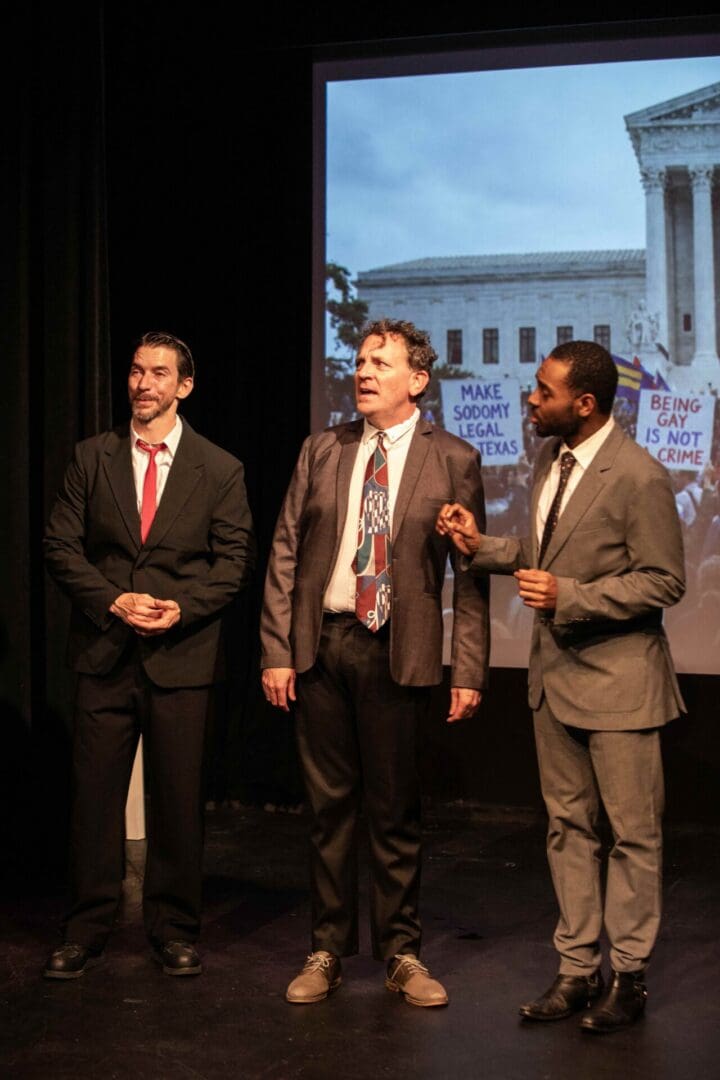
Matt McConkey, Drew Droege, Jabari
Two imperfect men stumbled into a Supreme Court case. A play could remain with that imperfection and find more than enough. Skora turns it into gags, speeches, and manufactured crises.
Droege keeps working. Around him, the others wave their arms at comedy while the jokes die in open court.
✦ ✦ ✦ ✦ ✦ ✦ ✦ ✦ ✦ ✦
photos by Dusti Cunningham
Texas Sodomy: The Incredible True Story of Lawrence v. Texas
Whitefire Theatre
13500 Ventura Blvd. in Sherman Oaks
Fri–Sat at 8; Sun at 7 (Sept 20 & 27); Sun at 2 (Oct 4, 11 & 18)
100 minutes; no intermission
ends on October 24, 2026
for tickets ($45–$60), visit Texas Sodomy
for more shows, visit Theatre in LA
✦ ✦ ✦ ✦ ✦ ✦ ✦ ✦ ✦ ✦
EGREGIOUS FIXES MADE
Very few. I preserved Michael’s exceptionally spare style and his emphatic pan. I added the Oxford commas where required, italicized Texas Sodomy, and supplied Tom before Trudgeon from the press release.
I also checked the central legal history because Michael builds the review around it. The Supreme Court decided Lawrence v. Texas 6–3 on June 26, 2003, invalidating the Texas statute governing same-sex intimate conduct.
ROOM FOR IMPROVEMENT
There is one factual issue I would flag before publication. Michael writes that the police were sent into Lawrence’s apartment by “a spiteful 911 call” and later identifies Royce Eubanks as Tyrone’s “jealous boyfriend and the source of the false 911 report.” The false weapons report itself is documented, but the precise motive is less secure historically: the Texas State Historical Association says Eubanks lied about the weapons disturbance but notes uncertainty over whether jealousy was actually the reason. The play itself apparently adopts the jealousy explanation, so Michael is accurate about Skora’s characterization, but the opening currently presents it as settled historical fact.
I’d therefore make one tiny change:
On September 17, 1998, a false 911 report sent police into John Lawrence’s Houston apartment.
Everything else I would leave alone. The H2 deliberately describes what the production does to its subject, rather than simply telegraphing that Michael hated it.
