


Areas We Cover
Categories

BEFORE THE SHOOT: Using Seedance 2.5 to Explore a Difficult Scene
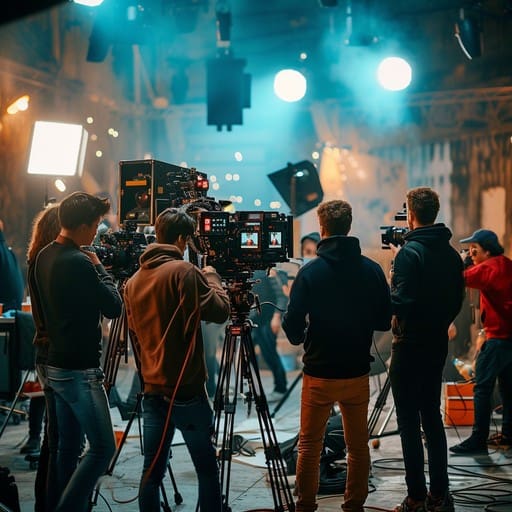
Two actors meet in a narrow corridor. One knows what is inside the envelope; the other does not. The director wants the audience to notice a hesitation before the envelope changes hands, but a moving camera may conceal it. This is a useful previsualization problem because it concerns a concrete decision that will affect the shoot: where should the camera be when the performance turns?
Seedance 2.5 can be considered as one way to explore such a scene. ByteDance’s introduction describes reference-based creation, longer audiovisual sequences, and editing controls. None of those descriptions establishes that a generated corridor will match a location’s measurements or that a proposed move can be performed by a real camera crew. The value of a previous clip lies in the questions it helps a team answer.
The Seedance 2.5 page on AI Seedance includes a model overview for evaluating this approach. Confirm the active variant and controls before planning a test: a full-model capability described in an overview may not be available in the currently selected creation mode.
Begin with a directing question
Avoid an open-ended request to “make the scene cinematic.” Choose between alternatives. Does the hesitation read better in a static two-shot or a slow approach? Should the audience see the envelope immediately, or discover it when the second actor enters? Does the exit need coverage from the opposite end of the corridor?
For this example, the first question is whether a forward camera move improves the moment of hesitation. The director can compare that idea with a static composition while keeping the intended action constant. Both versions should serve the same dramatic purpose.
Write the question in the brief and include it in the review meeting. Otherwise, discussion can drift toward the generated actors’ appearance, lighting polish, or incidental background details. Those may be attractive without resolving the decision the crew actually needs to make.
Separate the location from the visual treatment
Collect permitted location photographs, a rough floor plan, and a short description of the blocking. Mark doors, obstacles, and the intended direction of travel. These materials help the team discuss the space even if the generation interface accepts only some of them.
Where the selected platform supports reference inputs, explain each one’s role. A location image describes the corridor; a costume image describes wardrobe; a permitted motion reference describes camera behaviour. Do not give several incompatible images equal authority over the same element.
ByteDance also describes clay-render referencing in Seedance 2.5 for spatial and movement guidance. That is relevant to previs, but a director should confirm the actual platform workflow before relying on it. A simple diagram or conventional animatic may remain the better choice when accurate geometry is essential.
Build a scene with a readable turning point
Divide the corridor encounter into three beats. First, the waiting character hears approaching footsteps. Second, the arriving character stops and reaches for the envelope. Third, the waiting character hesitates before releasing it. The closing image should make the changed relationship legible.
An illustrative brief for the central beat could read:
Medium two-shot in a narrow corridor. The arriving character stops an arm’s length from the waiting character. The envelope stays between them at waist height. As one hand reaches for it, the waiting character pauses and looks up. Keep both faces visible. Quiet footsteps settle into room tone; no music or dialogue.
This is a planning example, not a tested generation. Adapt the timing to the available duration rather than cramming the complete encounter into a setting that cannot accommodate it. You can test the central beat separately before considering the scene’s entrance and exit.
Review blocking before visual polish
Watch for geography first. Do the characters remain on the intended sides of the frame? Does either person change position without a readable movement? Is the envelope visible when the hesitation occurs? An attractive clip that reverses these relationships may communicate the wrong staging.
Next, look at the performance rhythm. The pause should feel intentional without becoming a freeze. The reaction should follow the action that motivates it. If the model inserts a smile or exaggerated gesture, decide whether that changes the scene’s meaning before considering technical adjustments.
Finally, examine sound. Footsteps can establish an arrival outside the frame, but their timing must match the intended entrance. A generated sound cue is a suggestion for discussion. Record its purpose so that a sound designer or editor can recreate it deliberately later.
Translate discoveries into production notes
After comparing versions, turn the useful observation into a note a crew can act on. “The forward move hides the receiving hand” suggests changing the frame or blocking. “The pause is clearer before the hand reaches” suggests a performance adjustment. Neither note requires the final shoot to imitate every detail of the generated clip.
Check the chosen idea against the actual corridor. Measure available space, consider the camera rig, and rehearse with stand-ins where possible. Generated perspective, lens language, and movement should not be treated as a reliable survey of a location.
Keep the clip labelled as previs when sharing it. A producer should know whether an image represents approved staging, an unresolved experiment, or a mood reference. That distinction prevents a polished concept from quietly becoming an unrealistic production commitment.
Choose the next test carefully
If a version answers the camera question, stop revising it for incidental beauty. Move to the next uncertainty, such as whether the exit needs an additional shot. Save the prompt, references, settings, and review note so that the reasoning remains visible.
If a version fails because the interaction is too complex, simplify the test. The envelope can remain on a table while the actors’ eyelines are explored. The camera can stay static while the pause is evaluated. A smaller test can still produce a useful directing decision.
For the corridor scene, success is a clearer plan for the actors and camera team. The most useful result may be the decision to hold a quiet two-shot and let the hesitation carry the tension. Previsualization has done its job when the people making the film arrive at the shoot knowing what they want to find.
