


Areas We Cover
Categories

Chicago Theater Review: KOWALSKI (Lookingglass Theatre Company)
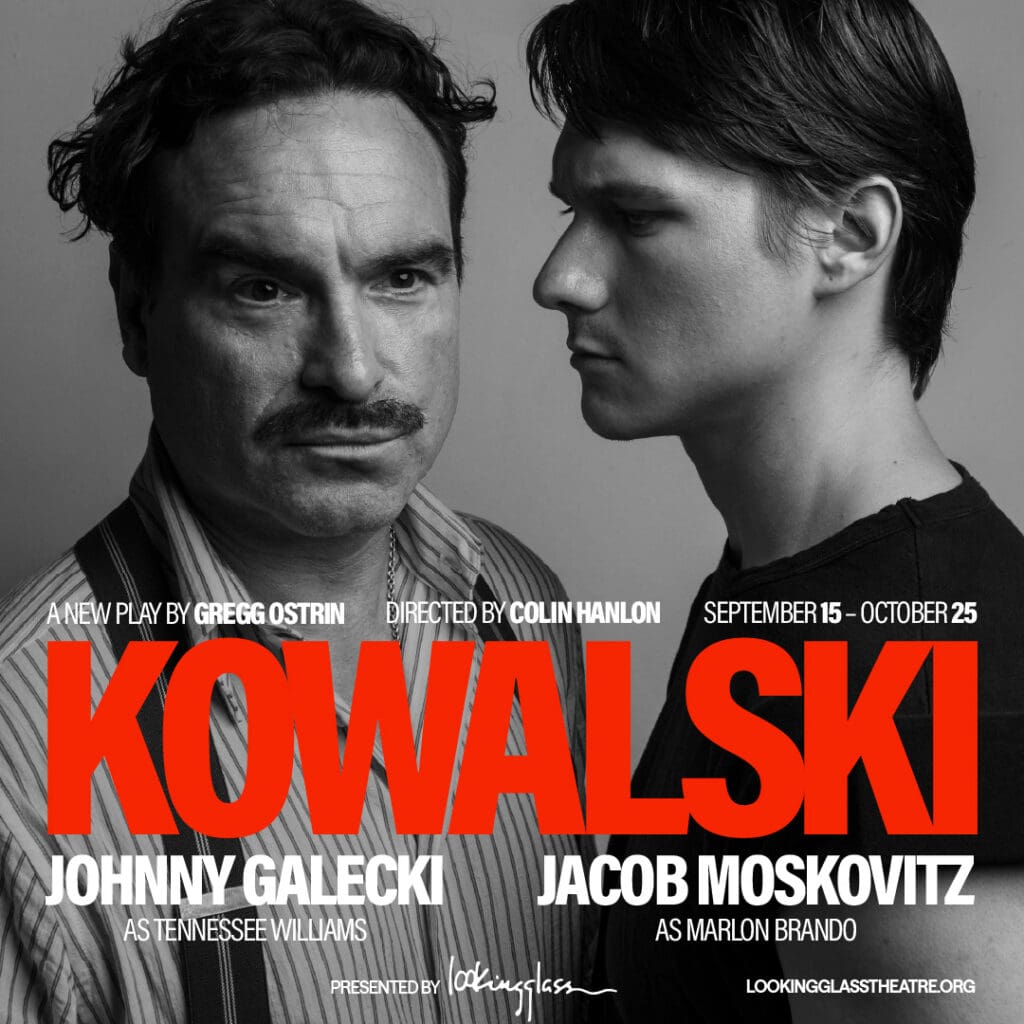
by C.J. Fernandes | October 5, 2026
in Chicago, Theater
A STREETCAR NAMED BRANDO
Johnny Galecki’s marvelous Tennessee Williams
anchors an enormously entertaining imagined encounter
that offers more theatrical fun than insight
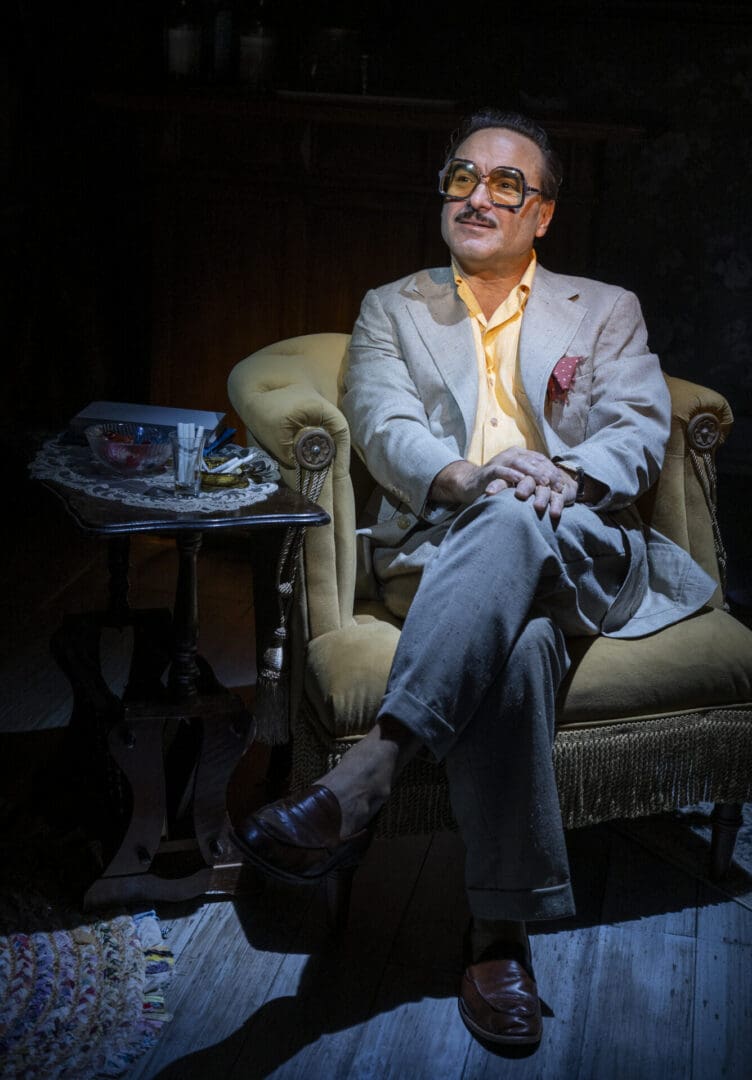
Johnny Galecki
In the summer of 1947, an up-and-coming young actor called Marlon Brando hitchhiked his way to Provincetown, Massachusetts, to audition for the part of Stanley Kowalski in A Streetcar Named Desire, the eagerly awaited new play from playwright Tennessee Williams. He arrived three days late, fixed the leaking toilet in the house, drank copious amounts of the host’s alcohol, and gave the most incredible audition that Mr. Williams had ever seen.
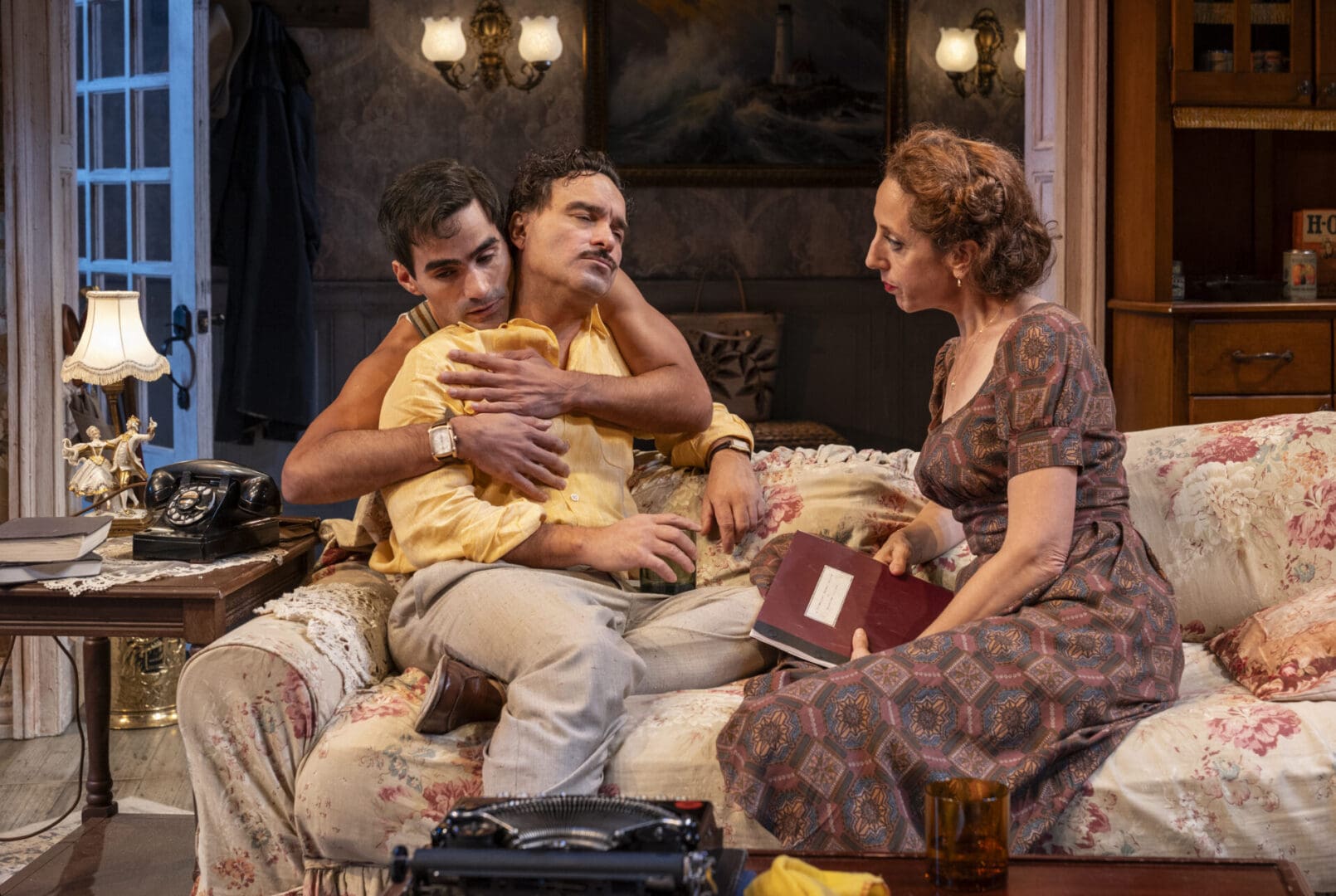
Reece Dos Santos, Johnny Galecki, Alison Cimmet
Or so said Tennessee Williams when he appeared on The Dick Cavett Show in 1972, around the time his newest play, Small Craft Warnings, opened Off-Broadway. By then, Brando had taken Broadway, and subsequently Hollywood, by storm. He’d been nominated for five Oscars, won one (On the Waterfront), and been screwed out of another (A Streetcar Named Desire). Less than a year after Williams’ appearance on Cavett, Brando would win a second Oscar for his indelible performance as Don Vito Corleone in The Godfather. We have no idea how much of Williams’ account is true. It’s a great story, but it’s also being told by a great storyteller, and if there’s one thing all great storytellers know how to do, it’s take a shard of truth and pad it out into a convincing narrative.
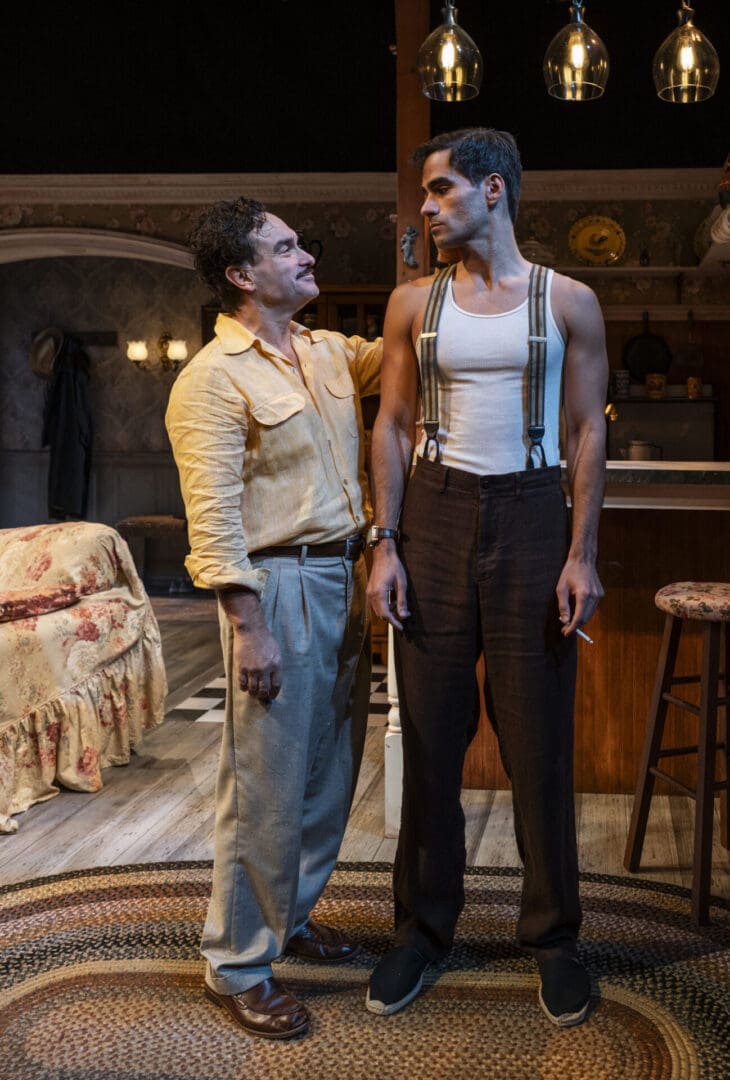
Johnny Galecki, Reece Dos Santos
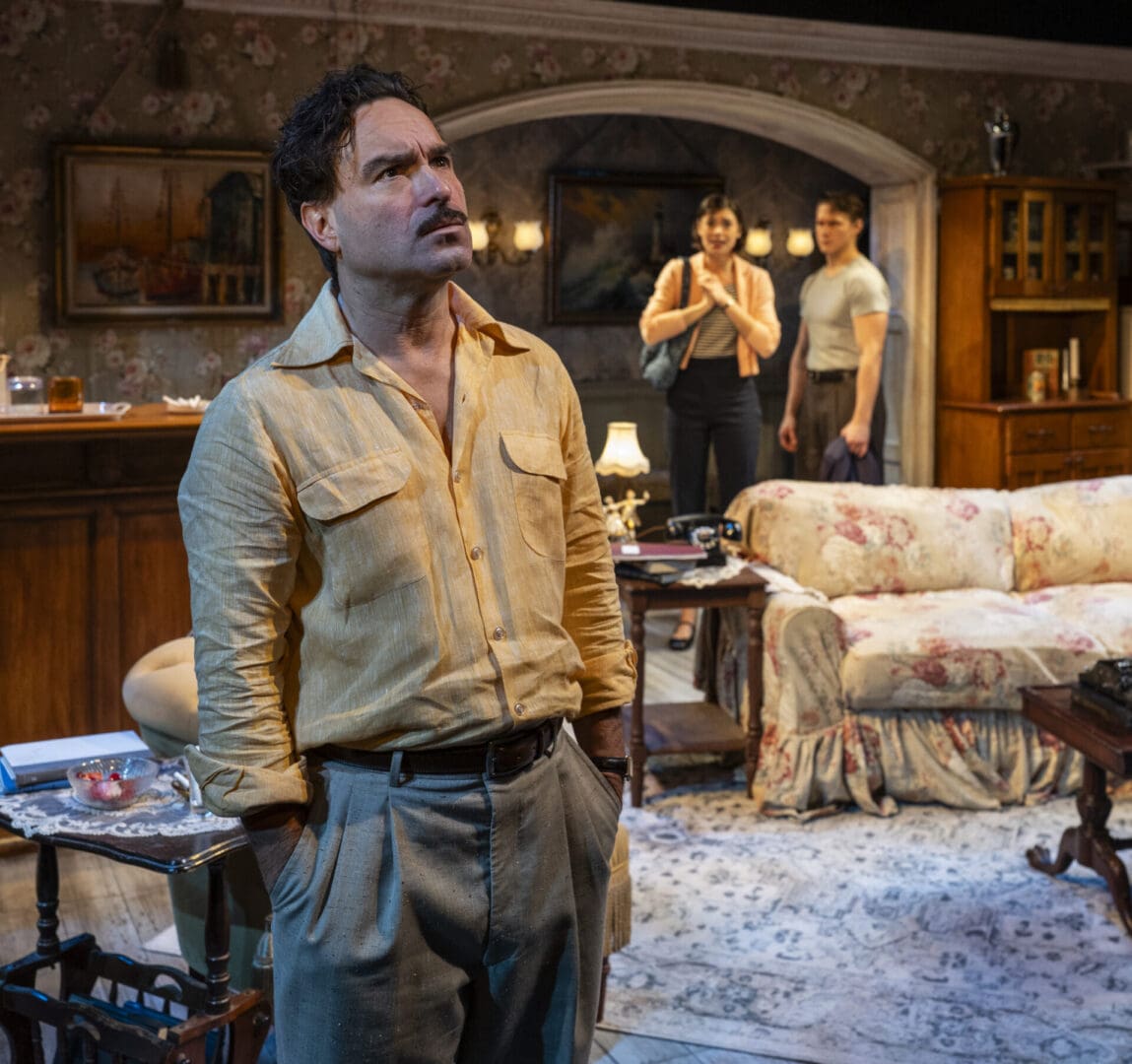
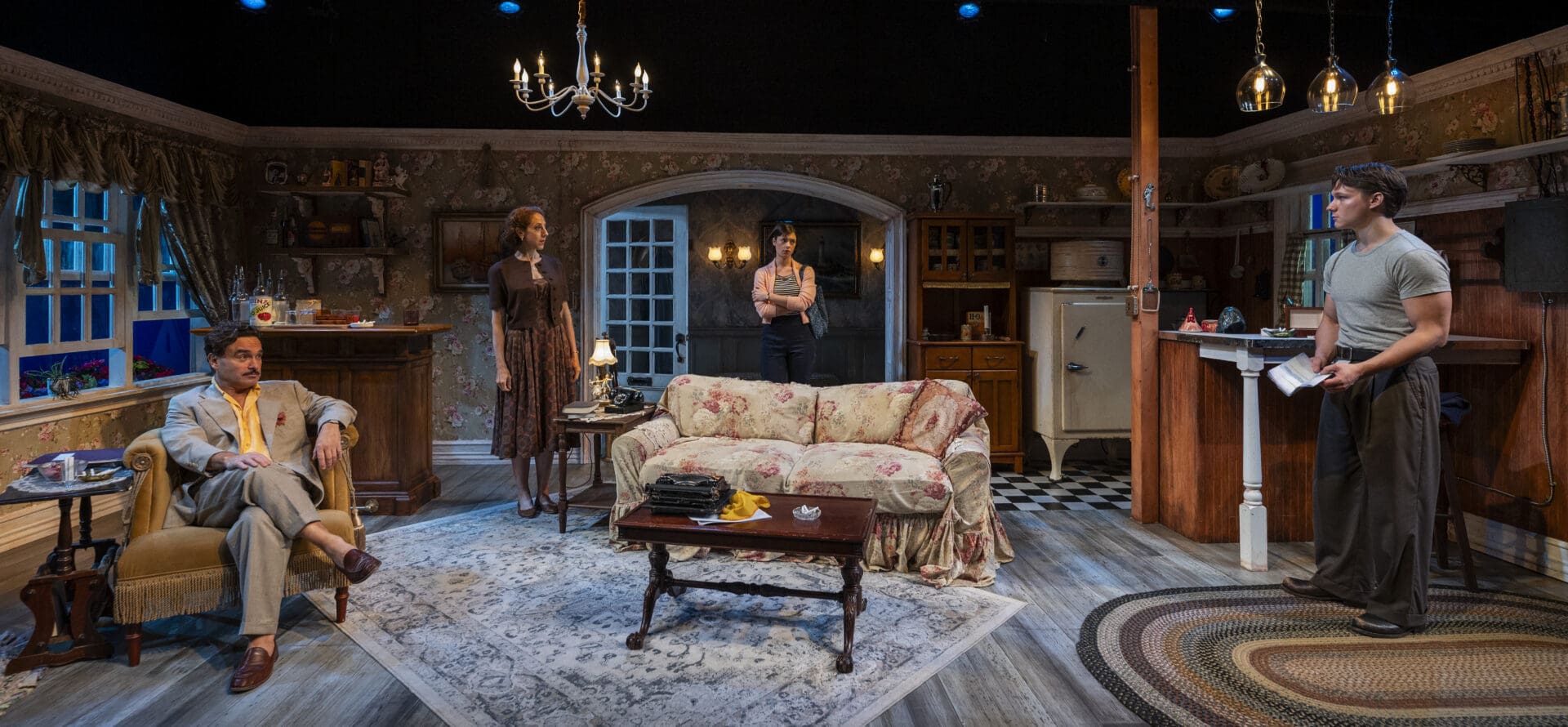
It’s important to bear that in mind when you settle into your seat at Lookinglass Theatre to take in Kowalski, playwright Gregg Ostrin’s imagined account of the events of that evening. In David Gallo’s charmingly cluttered and kitschy cottage set, an impatient Williams (Johnny Galecki) paces while Margo Jones (beautifully played on this occasion by understudy Paige Eva Cilluffo) takes her time reading his new play.
(A bit of trivia: Aside from being Williams’ best friend and the co-director of his breakout hit The Glass Menagerie, Miss Jones is pretty much the reason why regional theatre exists, having spearheaded the movement to develop theatrical hubs outside of New York City.)
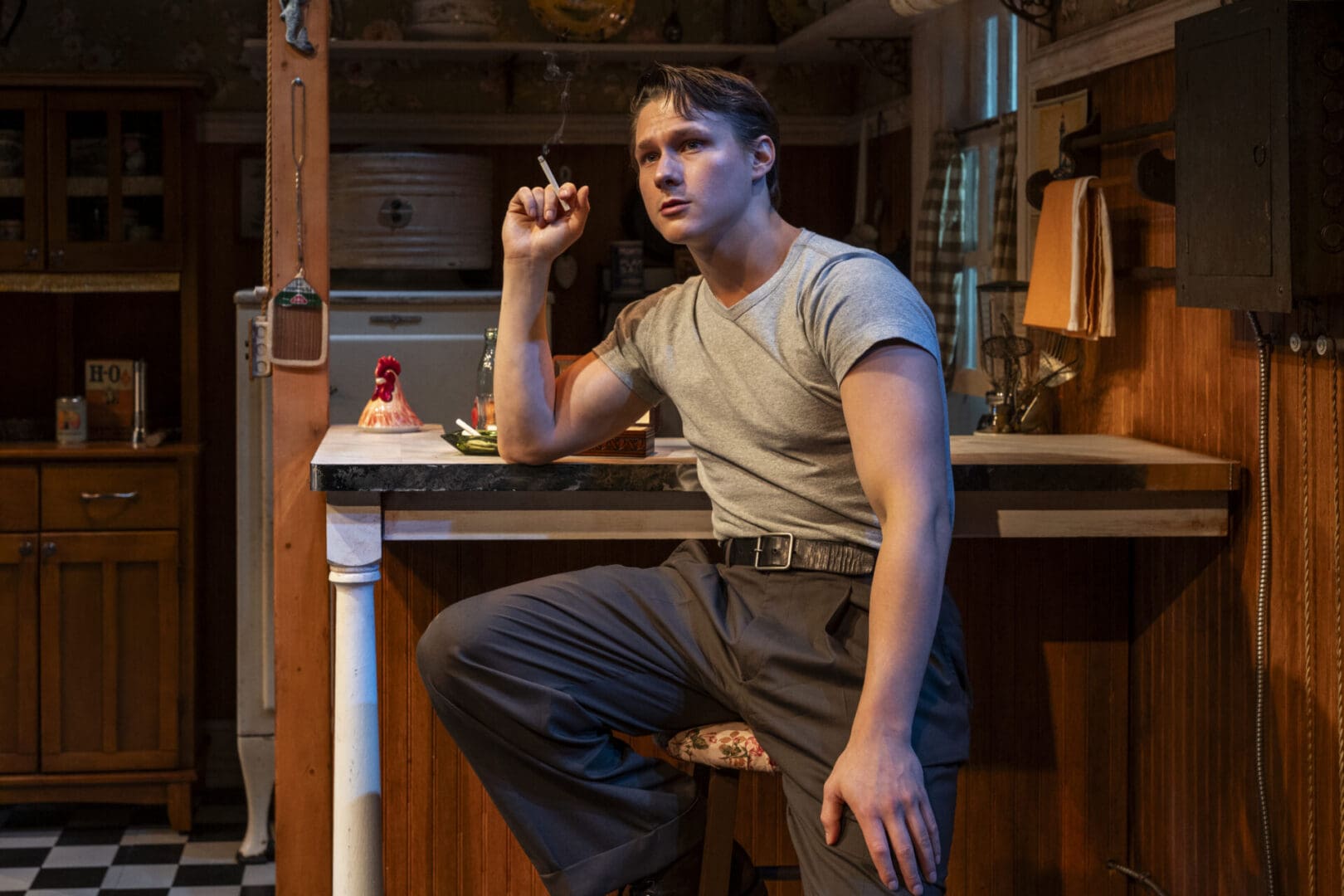
Jacob Moskovitz
After what seems like an eternity to Williams, Margo sits up and proclaims that the new play is a masterpiece; A Streetcar Named Desire will revolutionize theatre. Their celebration is ruined by the entrance of Williams’ bad-tempered, jealous lover Pancho (Reece dos Santos). A brief spat ensues, after which Pancho storms off, soon followed by Margo. Williams has to stay behind. The director Elia Kazan has begged him to audition a young actor for the part of the brutish Stanley Kowalski. The actor, who’s just been fired from a play by Tallulah Bankhead, is called Marlon Brando (Jacob Moskovitz), and he’s three days late.

Johnny Galecki, Alison Cimmet
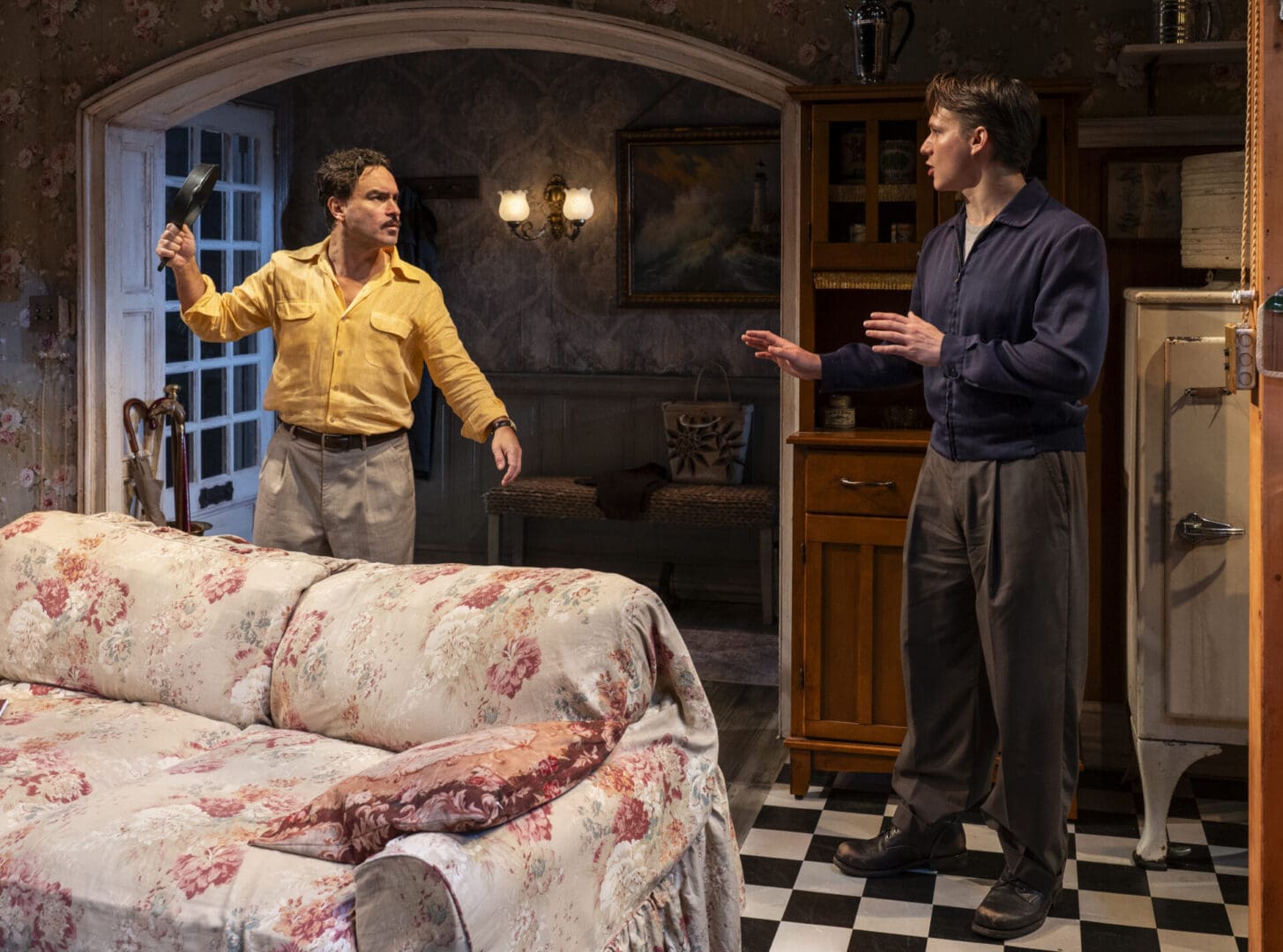
Unobtrusively directed by Colin Hanlon, Kowalski is surprisingly straightforward for a play that imagines the meeting between one of the greatest and most influential actors of the last hundred years and his equivalent in the world of American playwrights. Brando finally arrives, breaks into the cottage when no one answers the door, and calmly helps himself to some cookies. After the initial confrontation, the two men settle into a back-and-forth. Williams is clearly charmed by this sullen young man, who is blunt to the point of rudeness, and the only thing more impressive than Brando’s biceps is the size of the chip on his shoulder.
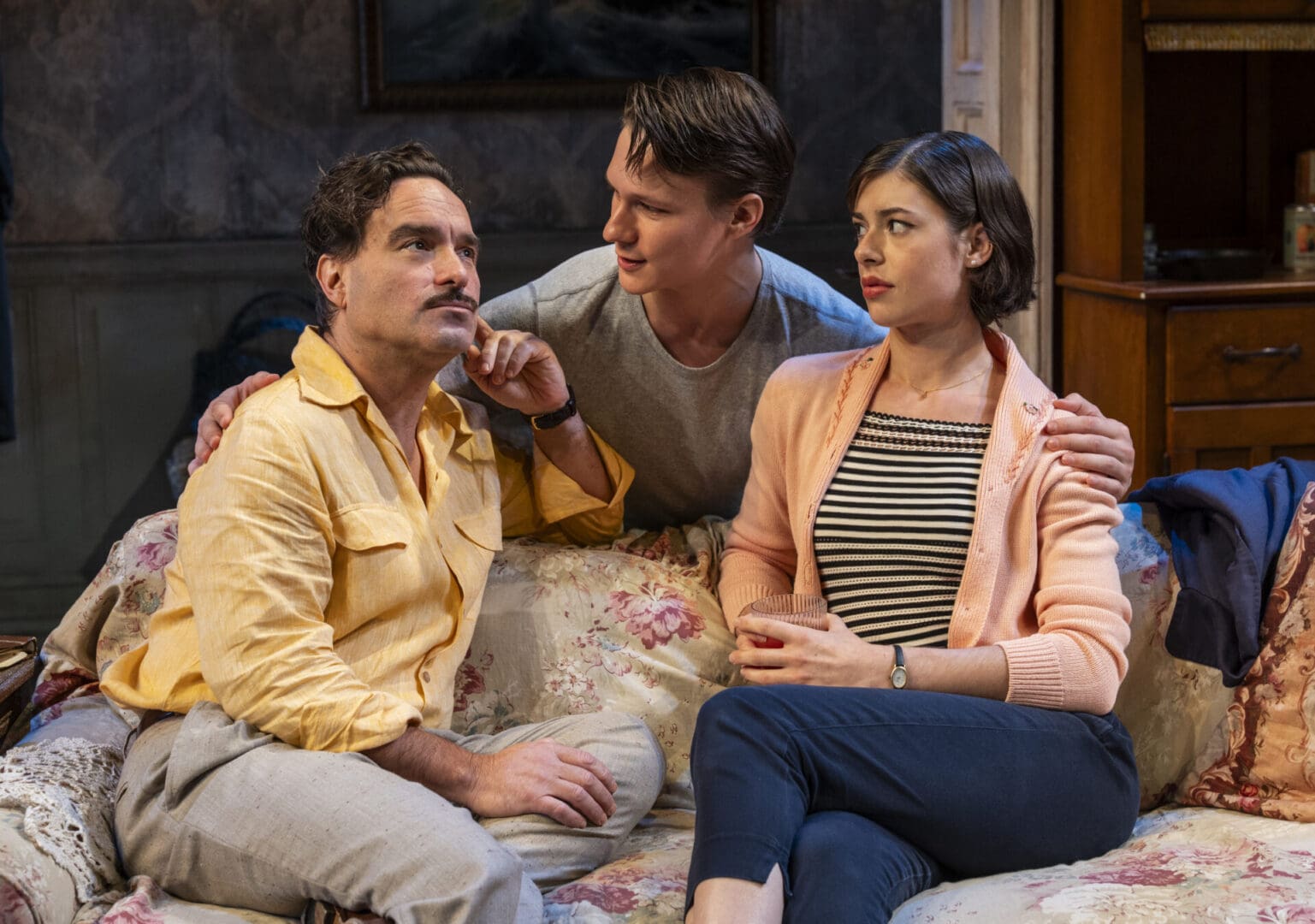
Johnny Galecki, Jacob Moskovitz, Ellie Ricker
Kowalski is structured like classic two-hander thrillers—Sleuth and Deathtrap immediately come to mind.
There’s even a third character introduced when the games between the two start to lose their luster: Jo (Ellie Ricker), Brando’s traveling companion and aspiring girlfriend, who becomes a pawn in their psychological contest. But it doesn’t quite have the same stakes. We know that Brando gets the part. The “how” is the meat of the play.
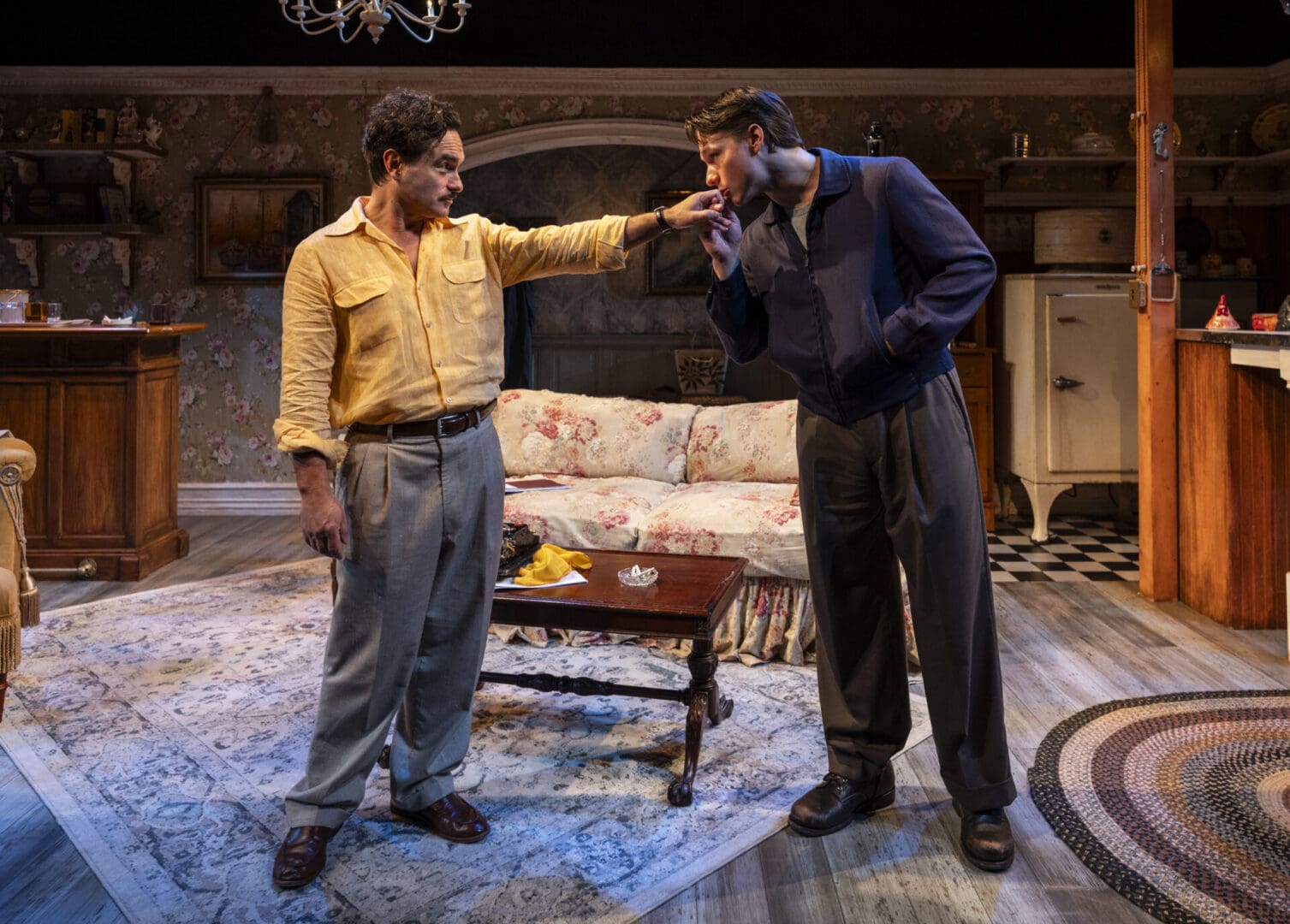
Johnny Galecki, Jacob Moskovitz
There is an apocryphal story about Brando’s approach to his film performances that says that at the beginning of every movie, he would deliver two versions of his first scene: one that he poured his heart and soul into, and one that was technically flawless. If the director couldn’t tell which was which, the famously lazy Brando would coast through the rest of the shoot, putting in the minimum effort required of him, and frequently not even that.
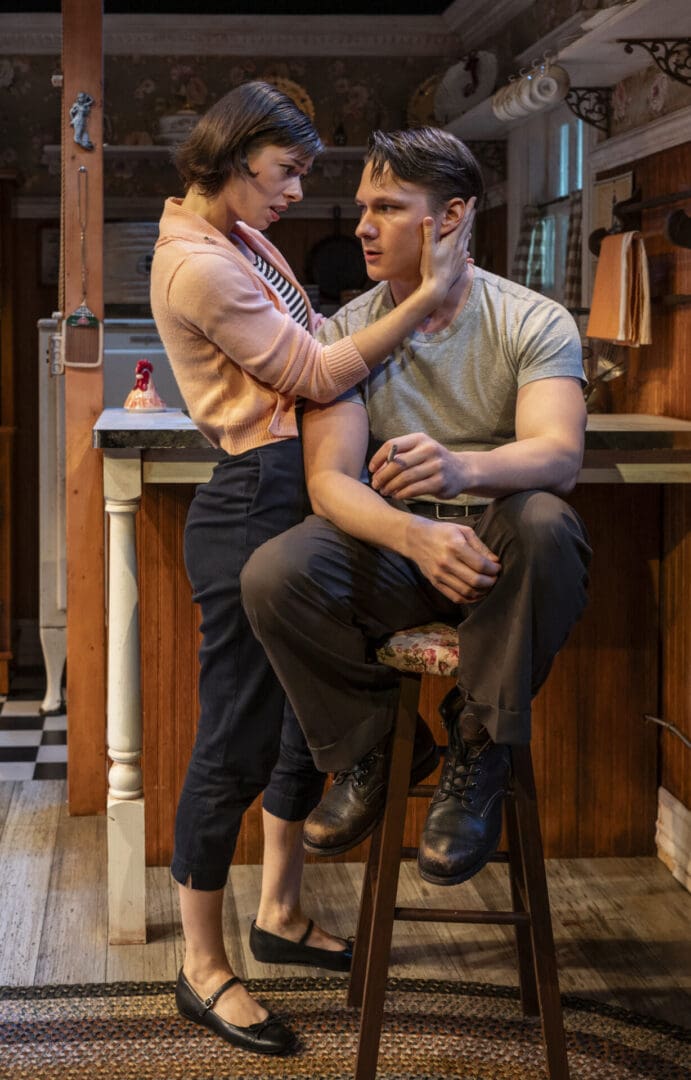
Ellie Ricker, Jacob Moskovitz
Those two types of performances are on display in Kowalski. As Brando, Moskovitz is technically flawless. He’s got the swagger, the arrogance, and the mumbling down pat, not to mention the look. But there’s a certain something missing: the element of danger and unpredictability that elevated Brando from a merely beautiful man to an irresistible object of lust for men and women alike. To be fair, a good portion of this is due to the mechanics of the script, which require that Brando be a cipher throughout. It’s necessary for the O. Henry–ish ending to work.
But maybe I’m being too harsh on Ostrin. Maybe not seeing the real Brando is the point here. Because we can’t possibly know what Brando, or Tennessee Williams, or any celebrity for that matter, is really like. All that we know of them is their public persona, and what Ostrin has created here is not a conversation between Marlon Brando and Tennessee Williams, but a conversation between the two men as we imagine them to be.
Or maybe I’m just overthinking the whole damn thing.
Johnny Galecki, Ellie Ricker, Jacob Moskovitz
I have no such reservations about Johnny Galecki’s turn, though. His Tennessee Williams is absolutely marvelous. Shrugging off all traces of his wildly successful sitcom career, he prances, preens, and parries with exquisite timing. It’s an intelligent, witty performance, laced through with a vein of loneliness and isolation. I will admit to skepticism going into the show—here we go; Tennessee Williams as embodied by Leonard Hofstadter—but I emerged chastened. It’s a revelatory performance that lingers in the memory, which should bode well for the play if it hits Broadway.
Johnny Galecki, Jacob Moskovitz
Kowalski is an enormously entertaining evening at the theatre. It’s just not particularly insightful. And that’s okay. Enormously entertaining should be good enough, but it just feels like an opportunity’s been missed. Early in the proceedings, prior to the arrival of Brando at the cottage, there’s a scene that stunned the entire audience into silence, and Hanlon holds his cast in a near-freeze-frame for what seems like an eternity, prolonging Williams’ agony and forcing us to register his shame, anger, and humiliation. It’s Galecki’s finest moment onstage, and it is electrifying.
A bit more of that “truth” and this could have been a great play. As it stands, we’ll have to settle for merely great fun.
Johnny Galecki, Alison Cimmet, Ellie Ricker, Jacob Moskovitz
✦ ✦ ✦ ✦ ✦ ✦ ✦ ✦ ✦ ✦
photos by Michael Brosilow
Kowalski
Lookingglass Theatre Company
Water Tower Water Works, 163 E. Pearson St. in Chicago
ends on November 8, 2026
for tickets (from $54), call 312.337.0665 or visit lLookingglass
for more shows, visit Theater in Chicago
✦ ✦ ✦ ✦ ✦ ✦ ✦ ✦ ✦ ✦
