


Areas We Cover
Categories

Cabaret Review: 37TH NEW YORK CABARET CONVENTION (Mabel Mercer Foundation)
by Rob Lester | October 26, 2026
in Cabaret, New York
THREE NIGHTS, ONE GRAND SONGBOOK
A generous feast of cabaret favorites,
delivered with warmth, wit,
and occasional excess
37th New York Cabaret Convention
FIRST NIGHT—ONCE IN A BLUE MOON: A TRIBUTE TO MABEL MERCER
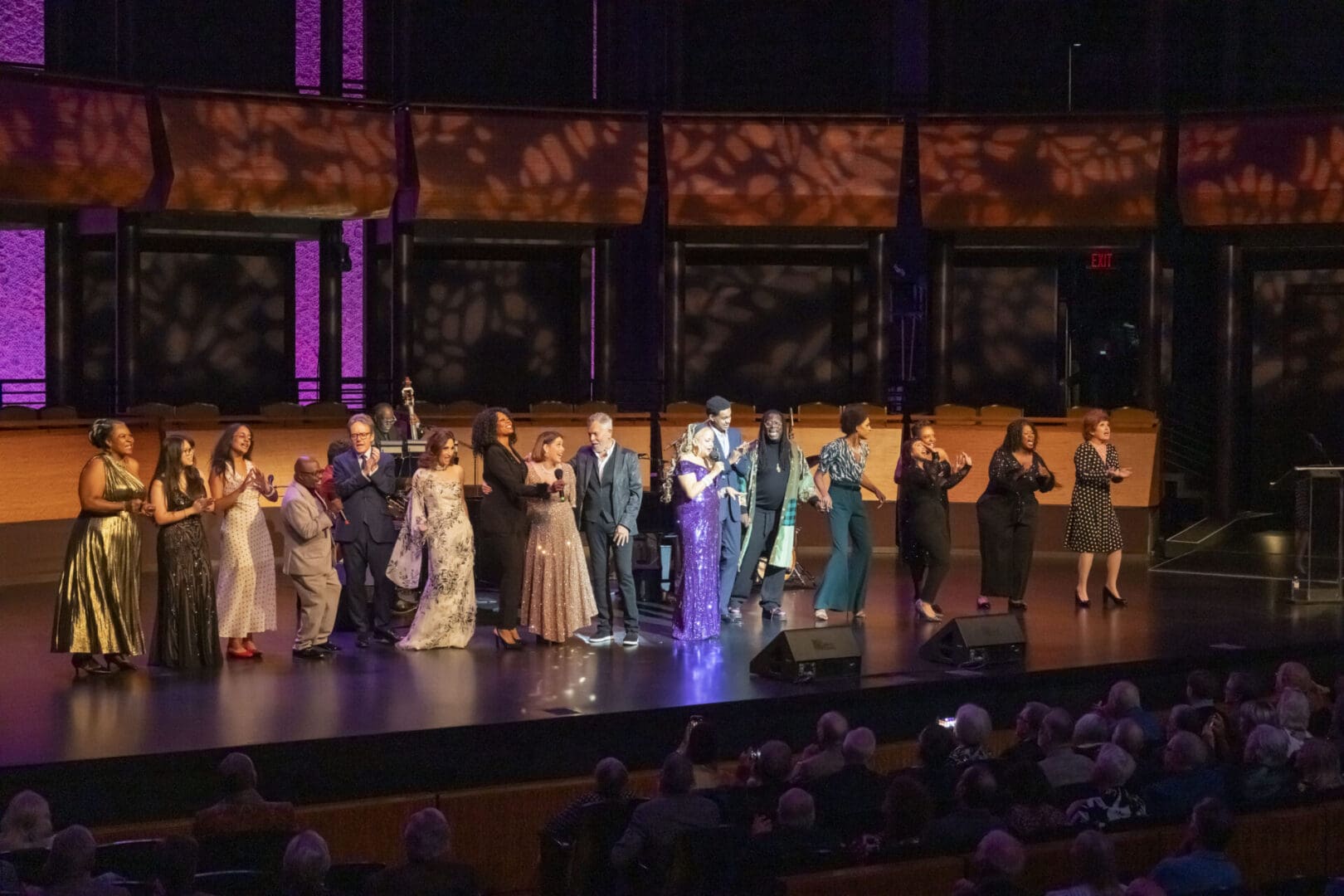
Years have gone by since the influential and revered cabaret singer Mabel Mercer held court with elegant, minimalist performances of standards and lesser-known treasures she championed. (She passed away in 1984 and the Foundation named for her was established the next year.) So, it seemed a fitting reminder of her legacy, repertoire, and stylings for the organization to organize bringing the spotlight firmly back to that history and tradition. It happened, happily, on the first night of the three consecutive evenings of its annual series of Cabaret Convention concerts in the Jazz at Lincoln Center complex. In this 37th edition, the building’s Rose Theater bloomed with mostly splendid renditions of quality songs and some fond comments about the lady being saluted and the late Donald Smith, her devoted manager and friend, who headed the Foundation and hosted the concerts for many years.
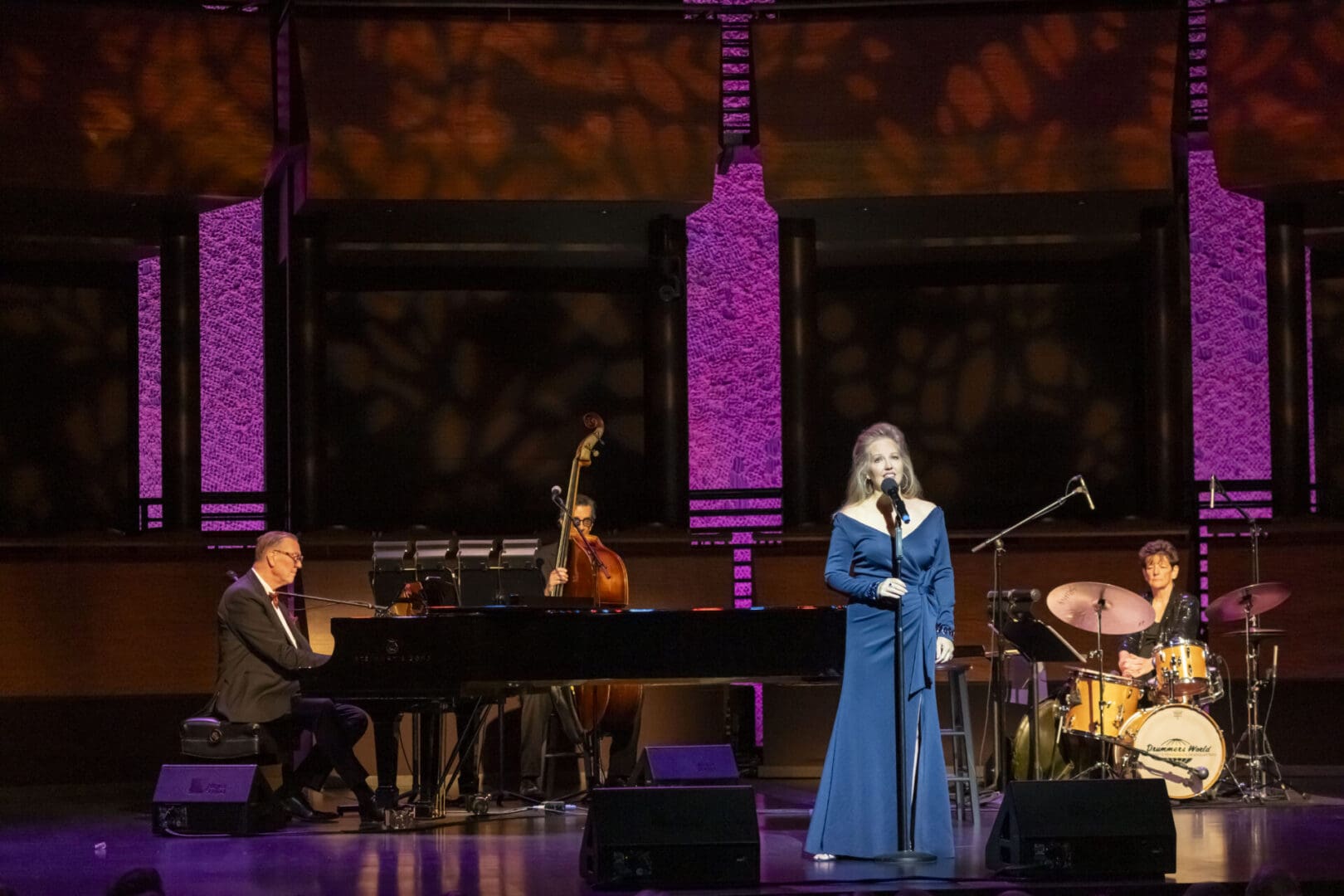
Stacy Sullivan (center right), Jon Weber (piano), Ritt Henn (bass), and Sherrie Maricle (drums)
The large company included NYC cabaret regulars like Meg Flather and West Coasters such as Amanda McBroom. Some provided their own pianists, but the sensational and sensitive keyboardist Jon Weber was the official musical director, with Ritt Henn in place on bass and Sherrie Maricle behind the drum set.
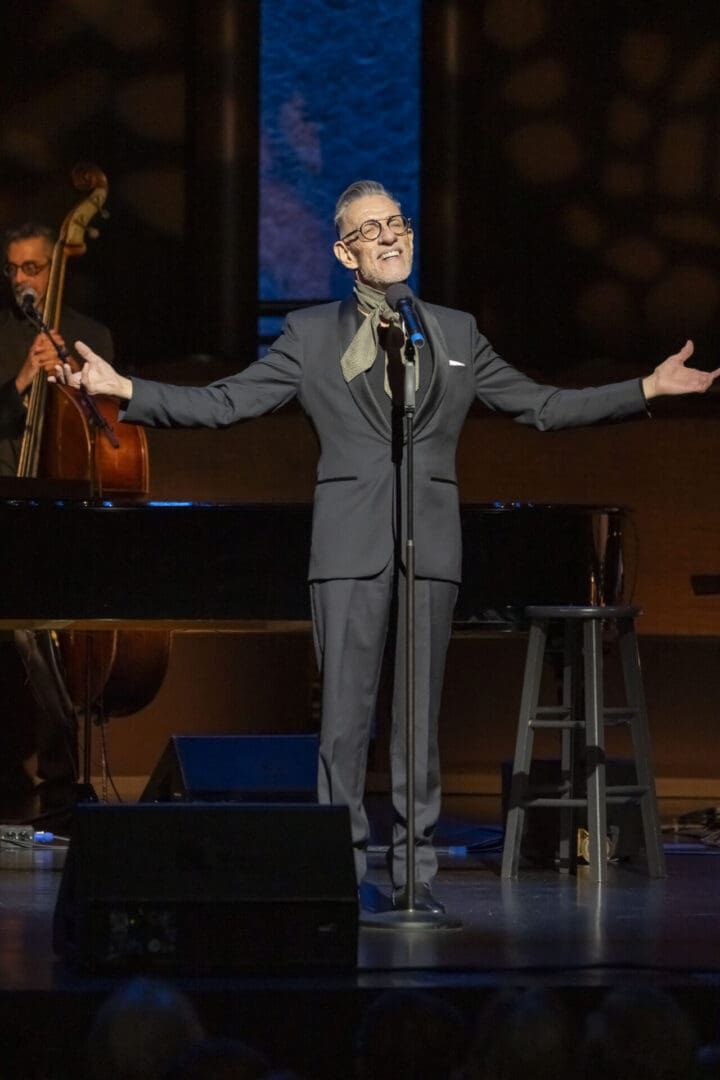
Phillip Officer
Mabel Mercer’s signature approach was to put the emphasis on artful lyrics more than the muscle of a song’s melody, which (conveniently) was apt for the limited vocal range in her later years. This style, a kind of cross between singing and speech, known as parlando, was generally NOT adopted by the concert’s participants, although it might have been an opportunity for more people with aging or small voices to suitably follow suit. A glowing Phillip Officer began “Fly Me to the Moon” by speaking most of the verse. His recent accomplishments include an album and live show dedicated to Mercer material.
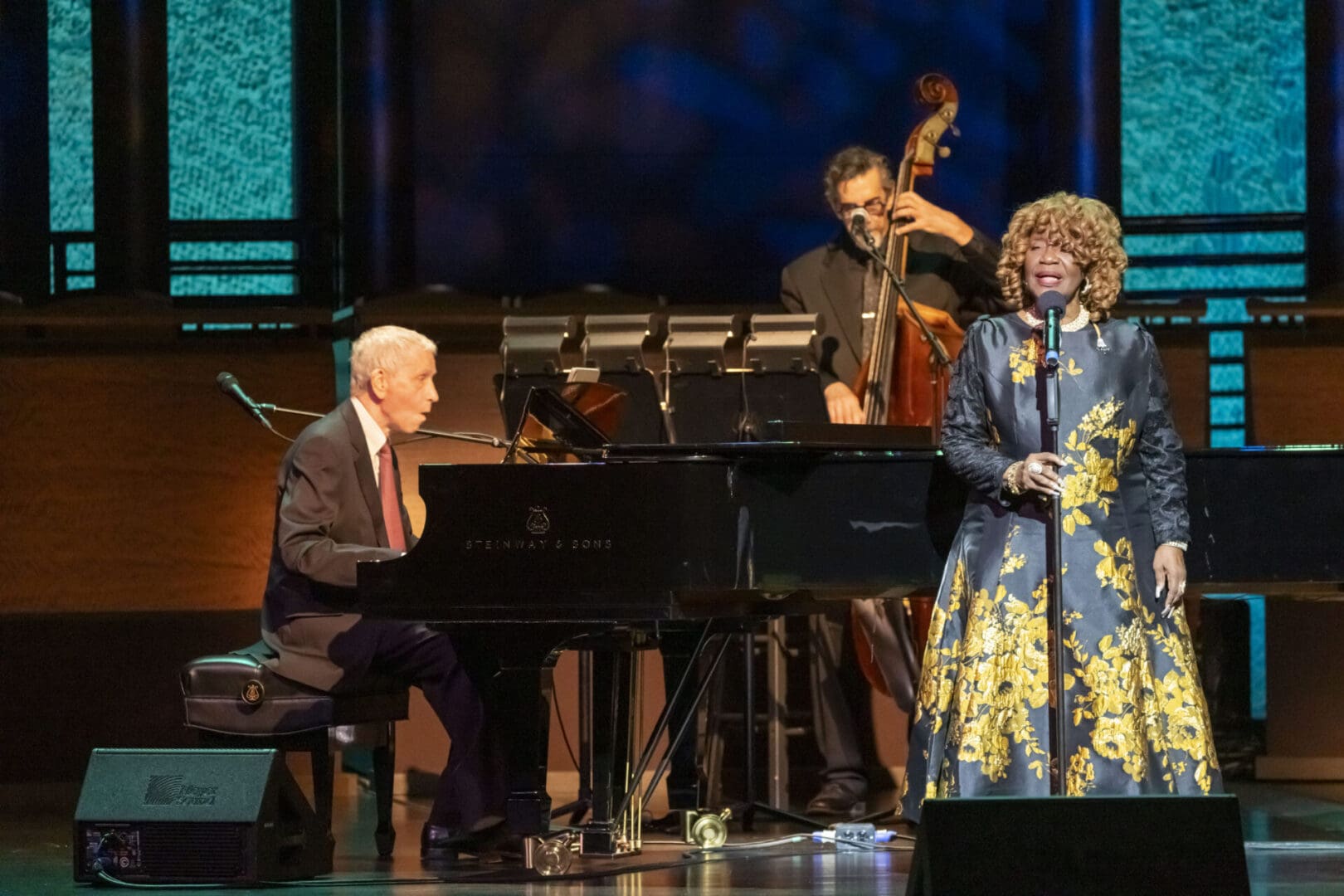
Avery Sommers
The important impact of lingering over lyrics, being as much an actor as a singer, was illustrated in invested, inhabited interpretations by Barbara Brussell (“Mira”), Charles Busch (“Both Sides Now”), Avery Sommers (“The Way We Were”), and a comical Sidney Myer (“I’m Glad I’m Not Young Anymore”).
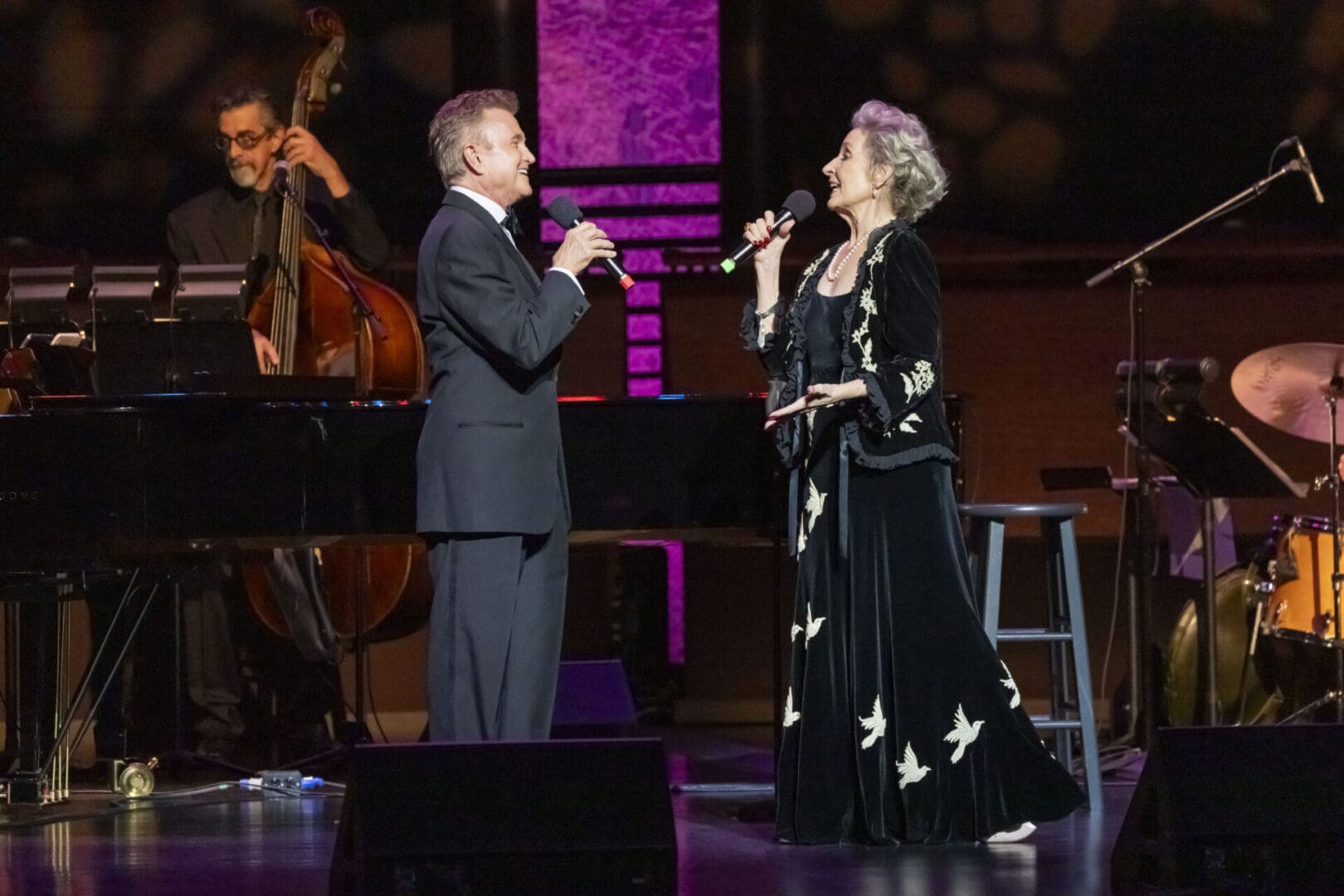
Jeff Harnar and Andrea Marcovicci
Numbers written by Cole Porter were prominent. Appropriate, given that his material was favored by the grande dame being honored, who dedicated one whole album to his oeuvre. The night’s co-hosts, Andrea Marcovicci and Jeff Harnar, combined coyly on “Looking at You,” and he soloed on “It’s De-Lovely,” taking his cue from the Mercer precursor and deftly dashing off the many extra choruses, with humor and precision. Tovah Feldshuh’s teary Porter pick was “Ev’ry Time We Say Goodbye.” Clint Holmes did a hot version of Porter’s “It’s All Right with Me” after a self-penned piece titled “1944,” about his parents, noting that he, like Mercer, had a black father and a white mother.
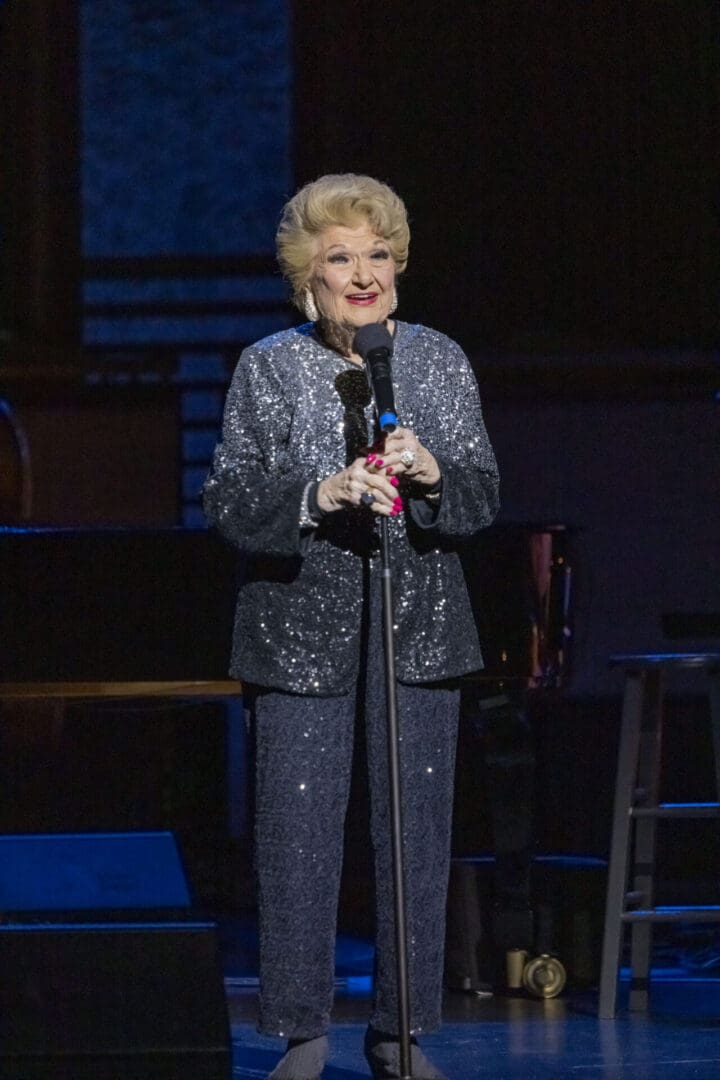
Marilyn Maye
Rodgers & Hart songs were in the mix, too. With flair and glorious harmonies, the Moipei Triplets tackled “Wait ’Til You See Her.” Francesca Amari took the sorrowful path for “Little Girl Blue,” and audience darling, the dazzling, showstopping Marilyn Maye, included “My Romance” in a powerhouse mega-medley right before the finale, rapturously wrapping up several songs, as if to say, “There wasn’t time for all the Mabel memories, but here’s a whole big bundle before we say goodnight!”
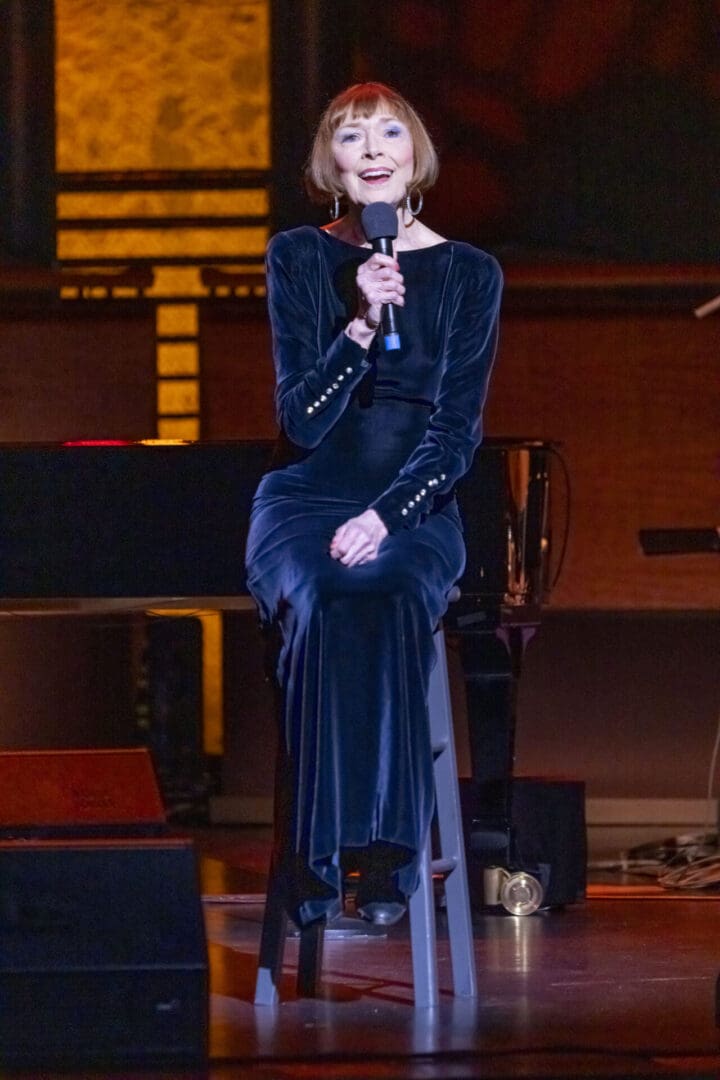
Karen Akers
While most of the night was heavy on the Great American Songbook, European imports of importance were included. Karen Akers brought melancholy with the French-born melody and some of the original French lyrics to “Autumn Leaves.” England’s Noël Coward was represented by her pensive and poignant treatment of “Matelot.” Coward’s plucky and playful side was in evidence with a song about animal attraction, thanks to the endearing charm of Marissa Mulder with “Chase Me, Charlie,” a tale of two kitties.
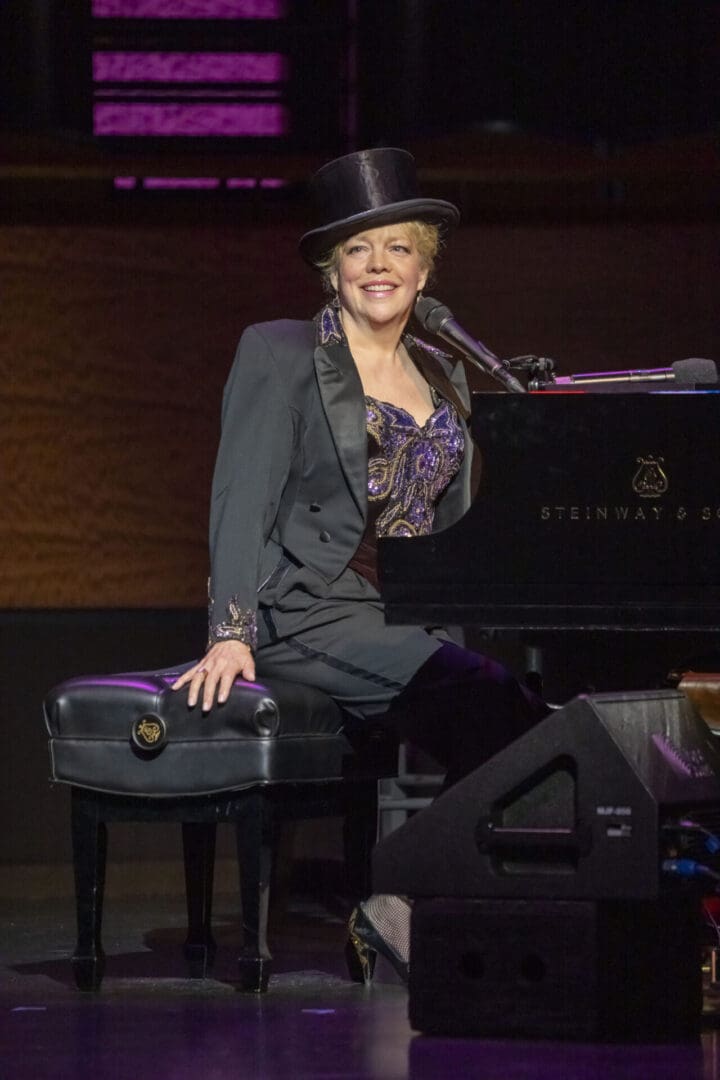
KT Sullivan
Artistic Director KT Sullivan appeared onstage for the first-night finale, singing with sister Stacy Sullivan for the touching and respect-drenched song “As Long As We Sing,” which their mother, Elizabeth Sullivan, wrote in honor of Miss Mercer. The company of vocalists who’d taken their turns during the program joined them for the last portion.
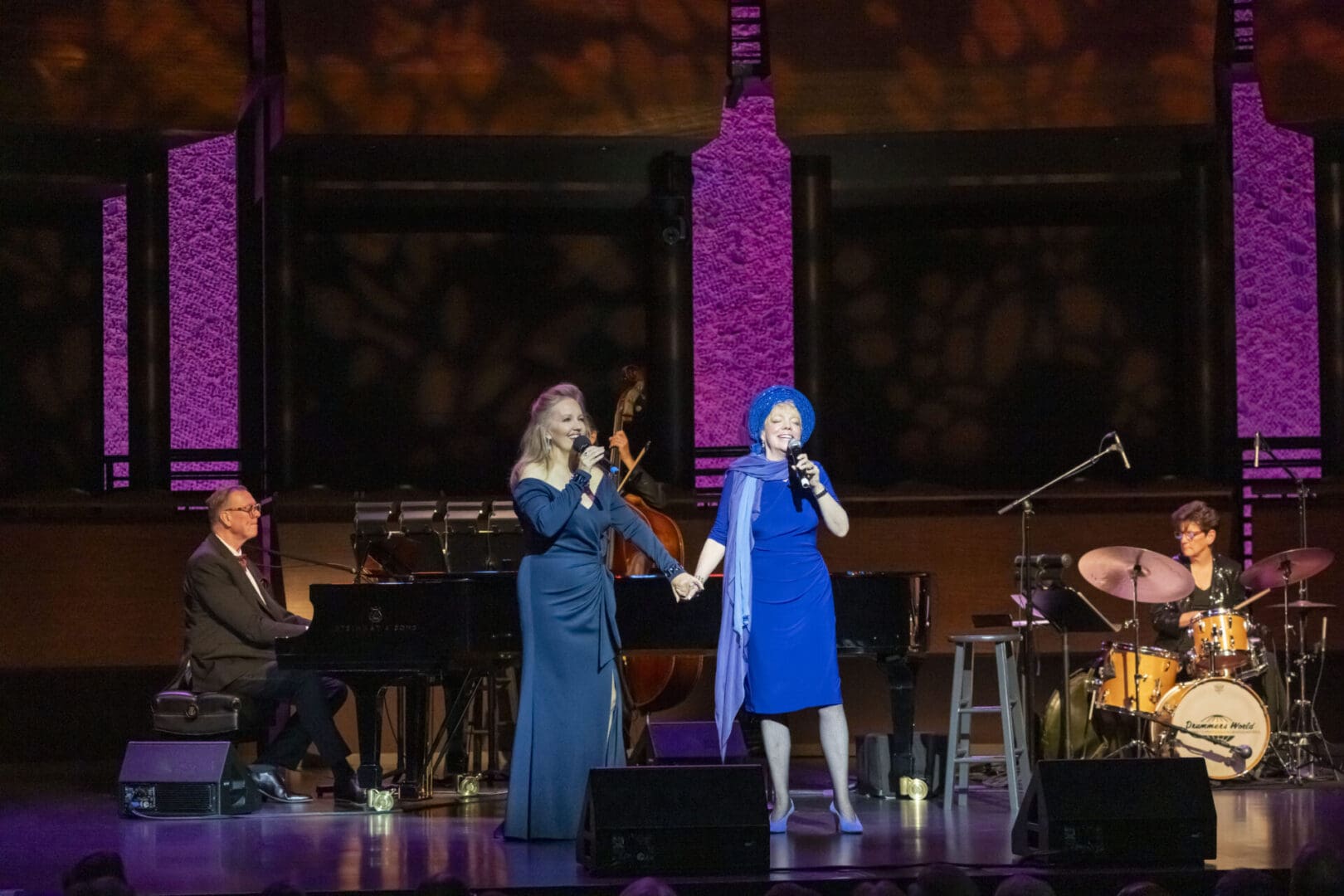
Stacy and KT Sullivan
Although Mabel Mercer’s M.O. for singing may have been “Less is more,” there was plenty of “more” in the concert as far as vocal chops, embellishments, and generous length, making it just the start of a three-day feast.
SECOND NIGHT: SPOTLIGHT ON SONGS OF SAMMY DAVIS, JR.
It was an oddly uneven evening, even though the odds should have been in favor of all favorable results, with plenty of classic songs and some accomplished artists and award winners on the bill. But, oh, the highlights! Some attendees of the Convention’s October 14 salute to entertainer Sammy Davis, Jr. might have wondered about the meaning of the concert’s title. It was called Sammy: All the Way…And Then Some! Did it promise a start-to-finish, no-holds-barred examination of his career and life, and then go beyond that? Did it simply indicate that there’d be no unrelated material followed by a musical postscript? Hmmm… Should we logically expect the Jimmy Van Heusen/Sammy Cahn song “All the Way” to have a special meaning as an anchor to the program, even though it would be more expected in a tribute to Frank Sinatra? Maybe it was an “inside” reference — a litmus test to bring a smile of recognition to fans who, like me, have a shelf full of old Davis discs, one of which is titled All the Way…And Then Some!
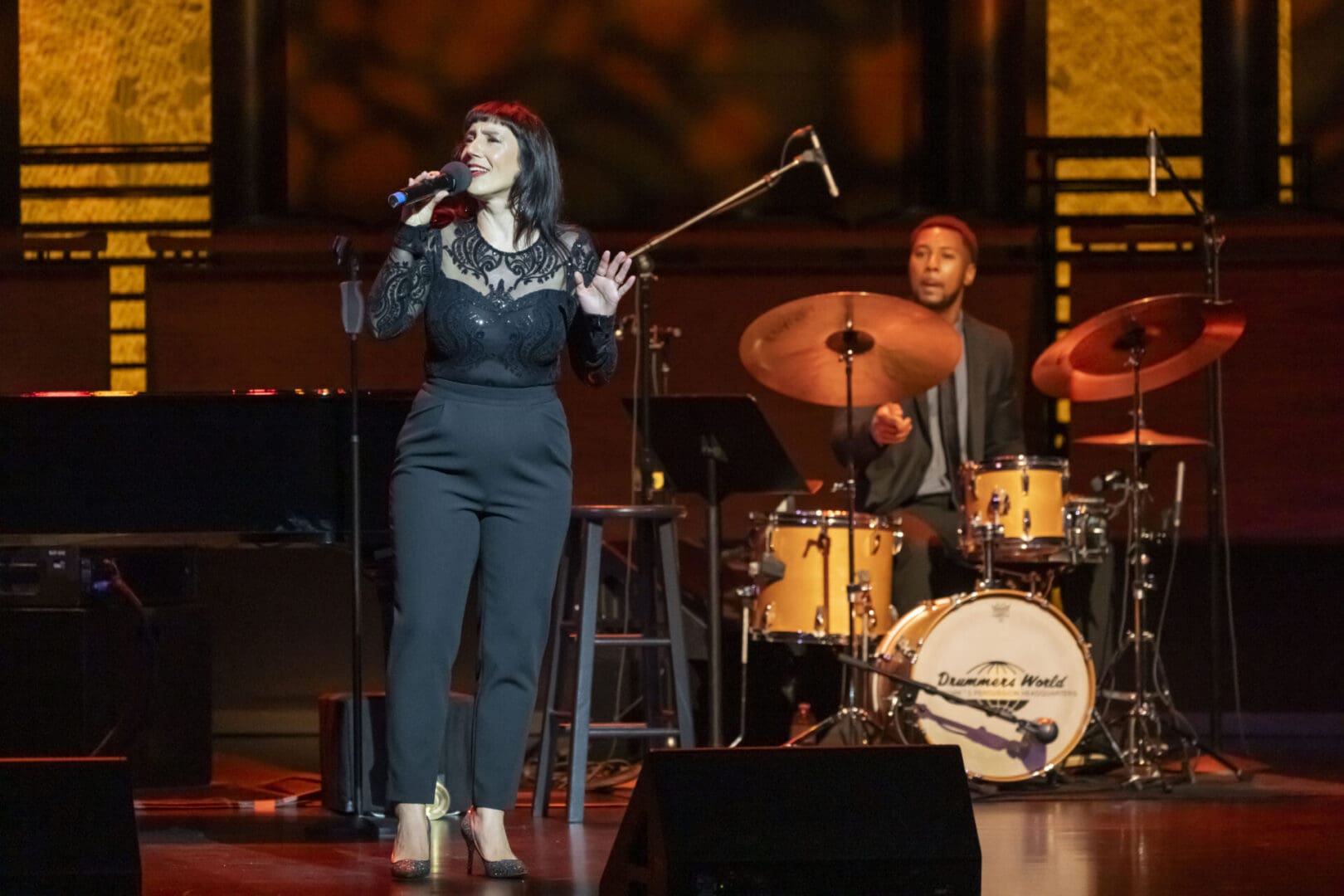
Gabrielle Stravelli
And, yes, that LP includes “All the Way” and some other Sinatra staples (and then some others!), BUT this concert’s set did NOT include “All the Way” at all. It did make room for one track from that 1958 recording: Porter’s “Night and Day,” which was presented with aplomb, unfussy bright-voiced energy and confident jazz smarts by Gabrielle Stravelli. It was a breath of fresh air in an evening that sometimes saw performances that weren’t very dynamic and involving — or, contrastingly, were over-decorated and self-indulgently flashy in a manner that reminded more of the hammy side of Sammy or his penchant for wearing lots of jewelry, something you may remember about Mr. Entertainment (title of a Davis album).
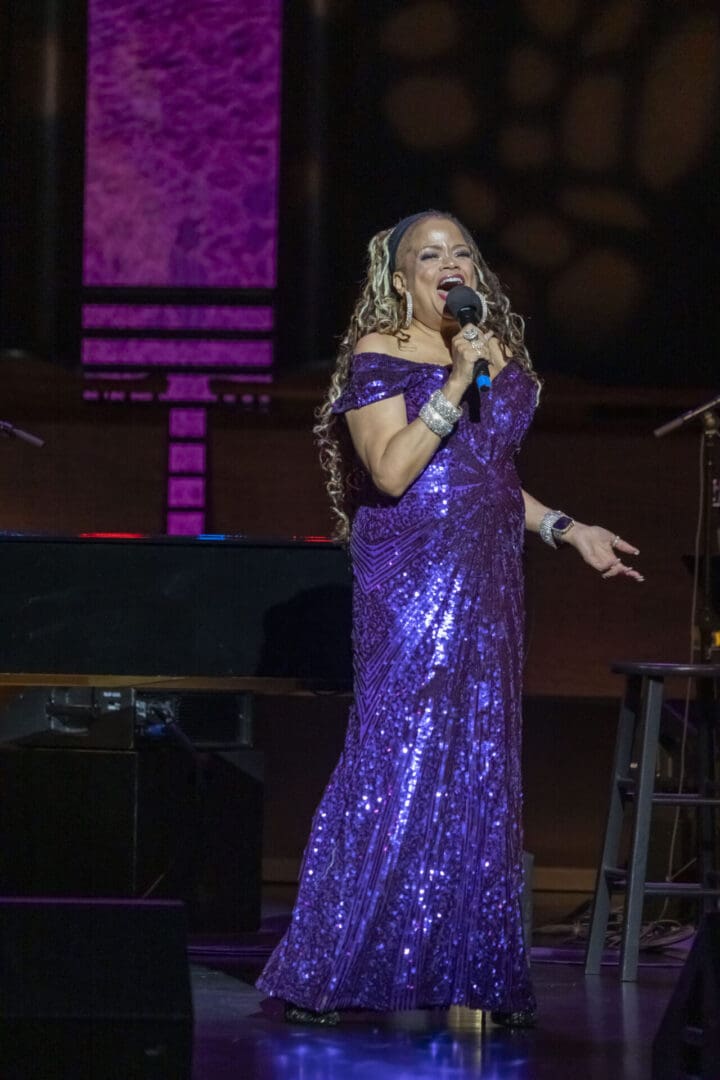
Natalie Douglas
Another Porter item opened this portrait of Sammy Davis, Jr. (title of another Davis album) when uber-enthusiastic host Natalie Douglas chose to begin with “Begin the Beguine.” I’m being nitpicky, but it was a bit distracting when this fine performer alternated her pronunciation (to be or not to be “bee-gin” or “buh-gin” the “buh-geen”), but dictionaries give various options. Never mind; when she graced the evening with the story-song “Mr. Bojangles,” it was remarkably moving, magical, spare, and special. Far less “spare” or terse were her gushing introductions of most performers, using seemingly half the adjectives of hyperbolic praise to be found in a thesaurus, rattling off their accomplishments, most of which were dutifully detailed in the bios in the printed program (wherein the bio of the honoree was, noticeably, shorter). While having the host offstage is OK for a one-sentence “Please welcome…,” this program had the stage in darkness for many—long—intros, which made them feel even longer.
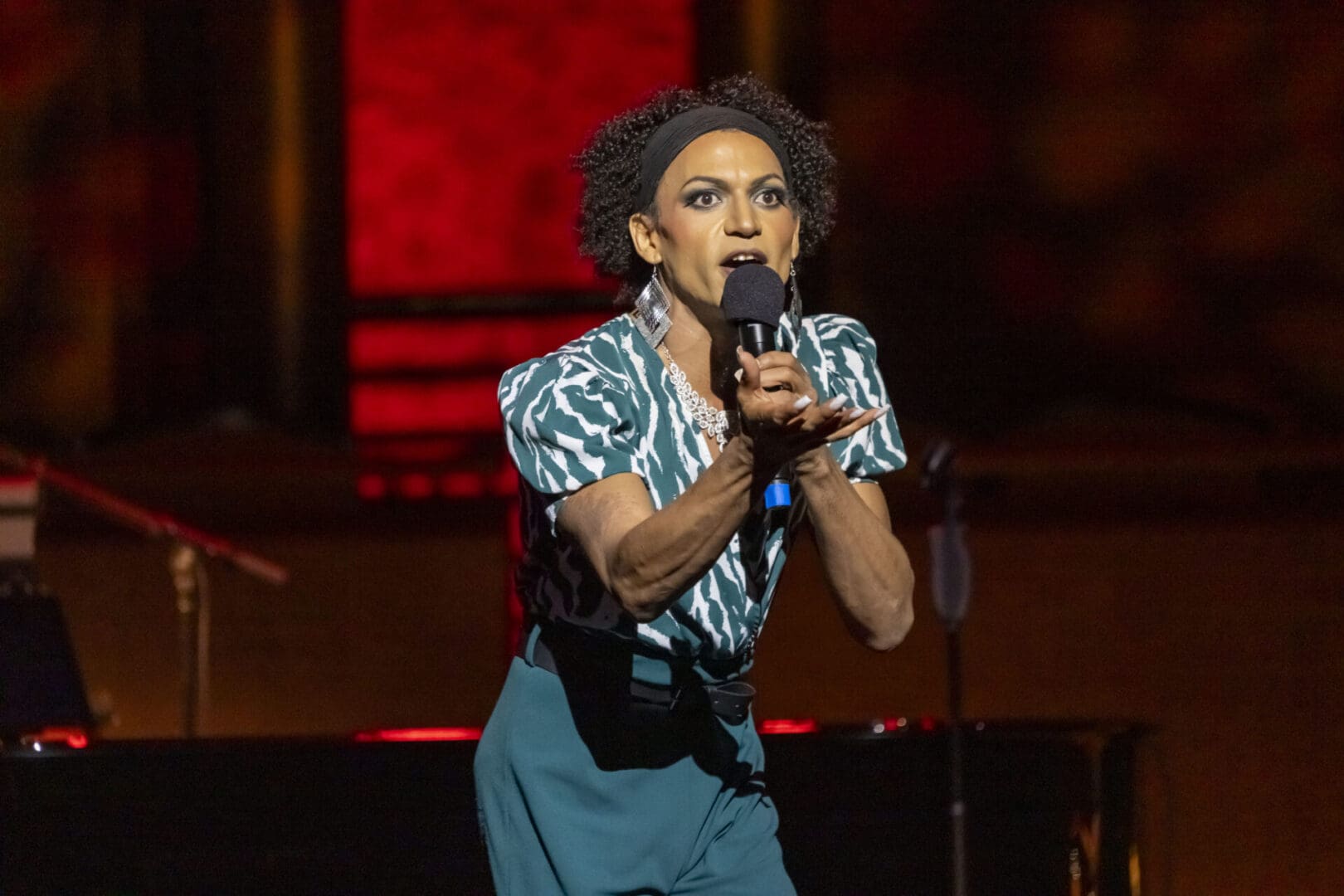
Diva LaMarr
Starting commandingly a cappella, Diva LaMarr owned a palpably personal and searing “I Gotta Be Me” from the musical Golden Rainbow. Speaking of “golden” and musicals, Barbara Fasano was, thankfully, pure authentic cabaret torchy with a medley of the title song of Golden Boy, a musical Davis starred in, combining it with the standard “I Could Have Told You So.” She was accompanied on piano by her husband Eric Comstock, whose own solo was “Too Close for Comfort,” from another Davis Broadway vehicle, Mr. Wonderful.
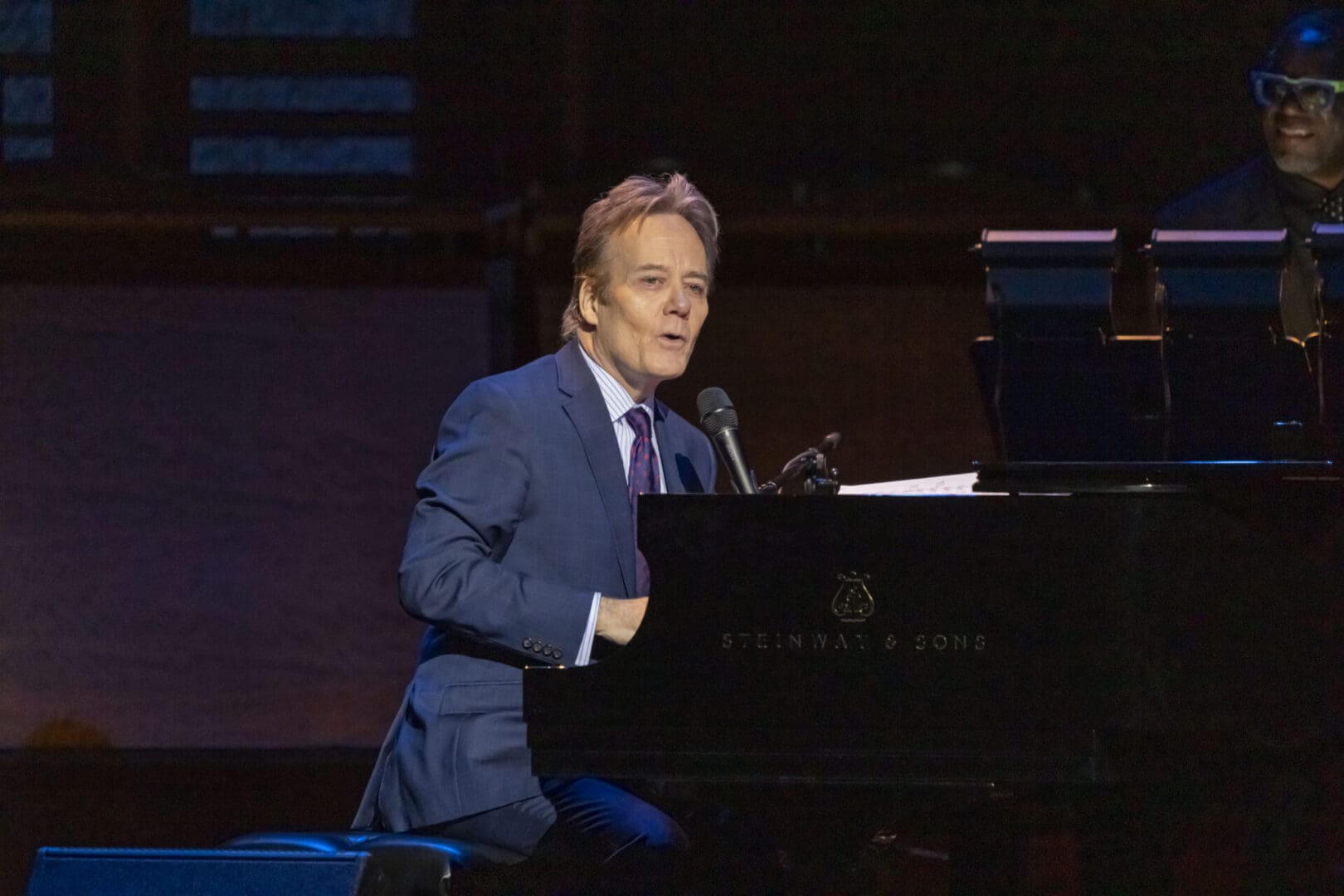
Eric Comstock
What tunesmiths were most represented? Appropriately, in the hands of several participants (David Raleigh, Luz Velazquez, NaTasha Yvette Williams, Stephanie Pope, Klea Blackhurst, and the host and full company for the finale of “The Candy Man”), with varying success, there were many numbers penned by the men whose work had been prodigiously recorded and performed by the man of the hour: the team of Anthony Newley and Leslie Bricusse, plus one nod to the score of Doctor Dolittle written solely by the latter.
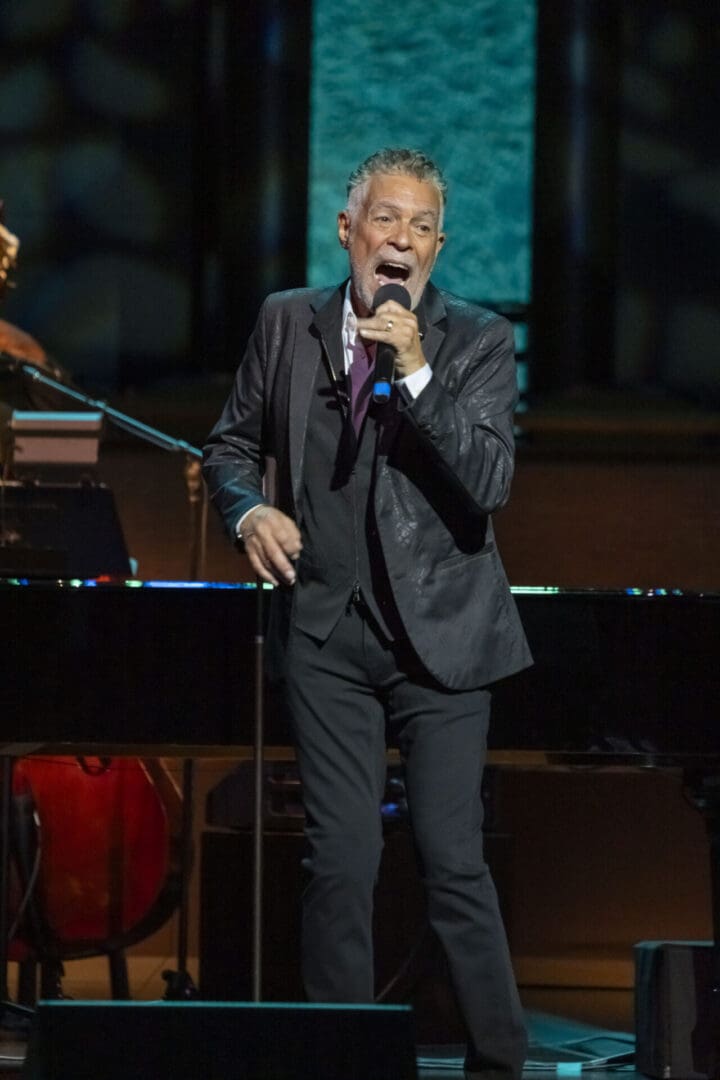
Clint Holmes
The most impressive performance of the night came close to the end. Just when the audience was about to assume “that’s all” (title of yet another Davis album), an artist who was not listed was brought out as a surprise for an extended segment and (a surprise to him) was presented with the Foundation’s Lifetime Achievement Award. The award honoree was Clint Holmes, who’d also closed the first act of the night before. He did a strong interpretation of the early Sammy Davis hit, “Hey There,” and then presented the specialty piece — a lengthy and glorious West Side Story mega-medley, accompanied almost exclusively by percussion. It was truly stunning from start to finish.
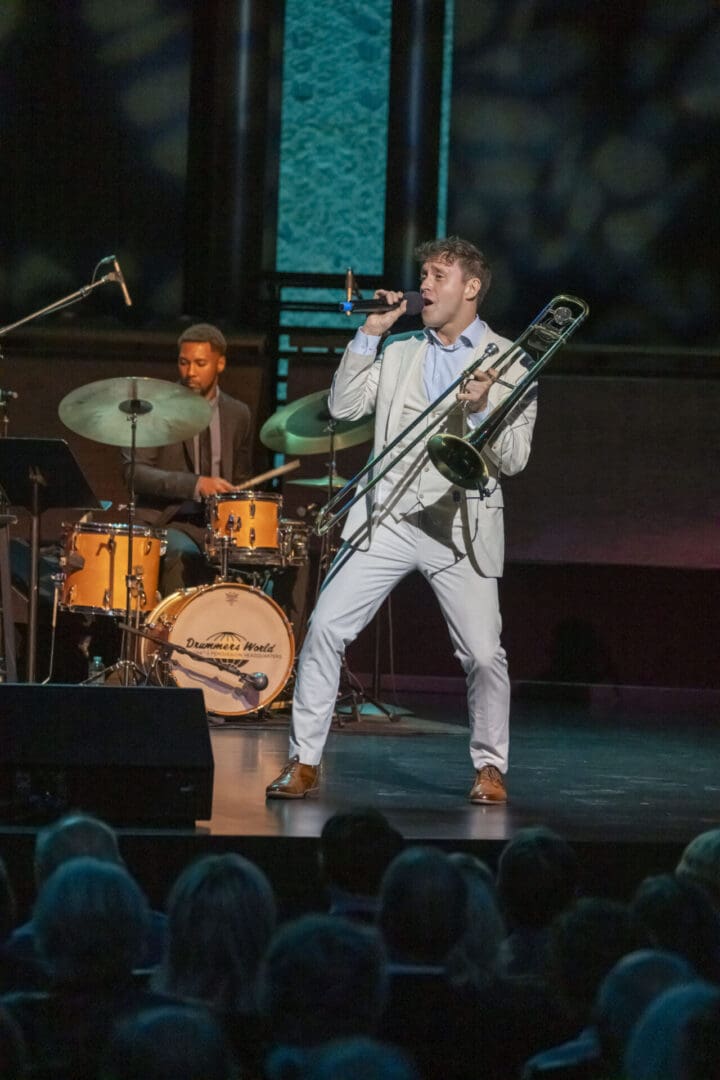
Jonathan Arons
Evoking Sammy’s multitasking talents, with the TV theme from Baretta, Jonathan Arons switched back and forth between dancing, singing, and playing trombone. With some exceptions, such as vocalists who accompanied themselves on piano, the “house band” was the trio of pianist Dionne James Hendricks, bassist Lavondo Thomas, and drummer Shawn Dustin.
Davis the dynamo is a hard act to follow, and while not everyone followed in his footsteps all the way (and then some), and one or two stumbled or definitely went their own way, there was still a fair amount of the impact of the wham of Sam (yes, the title of yet another Davis disc on my shelf).
THIRD NIGHT: WITH A SONG IN MY HEART
…And checking out the third and final night, it checked some of the same boxes to bring tradition and variety.
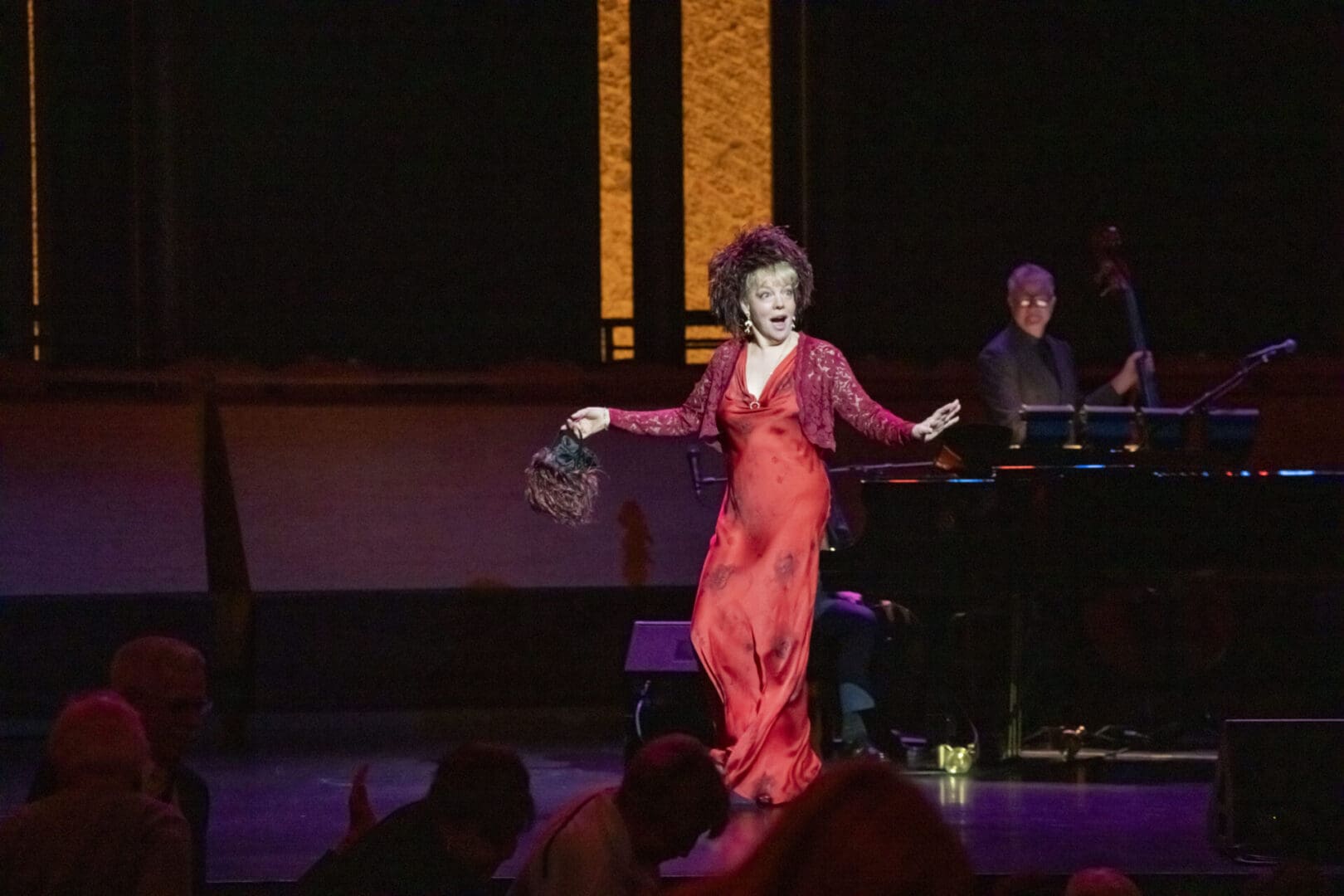
KT Sullivan
Check: Cole Porter. As with the first two evenings, songs of Cole Porter came up — sunny side up, in two valentines to NYC in the opening segment by smiling KT Sullivan, host/Artistic Director. They were “I Happen to Like New York” and “Take Me Back to Manhattan.”
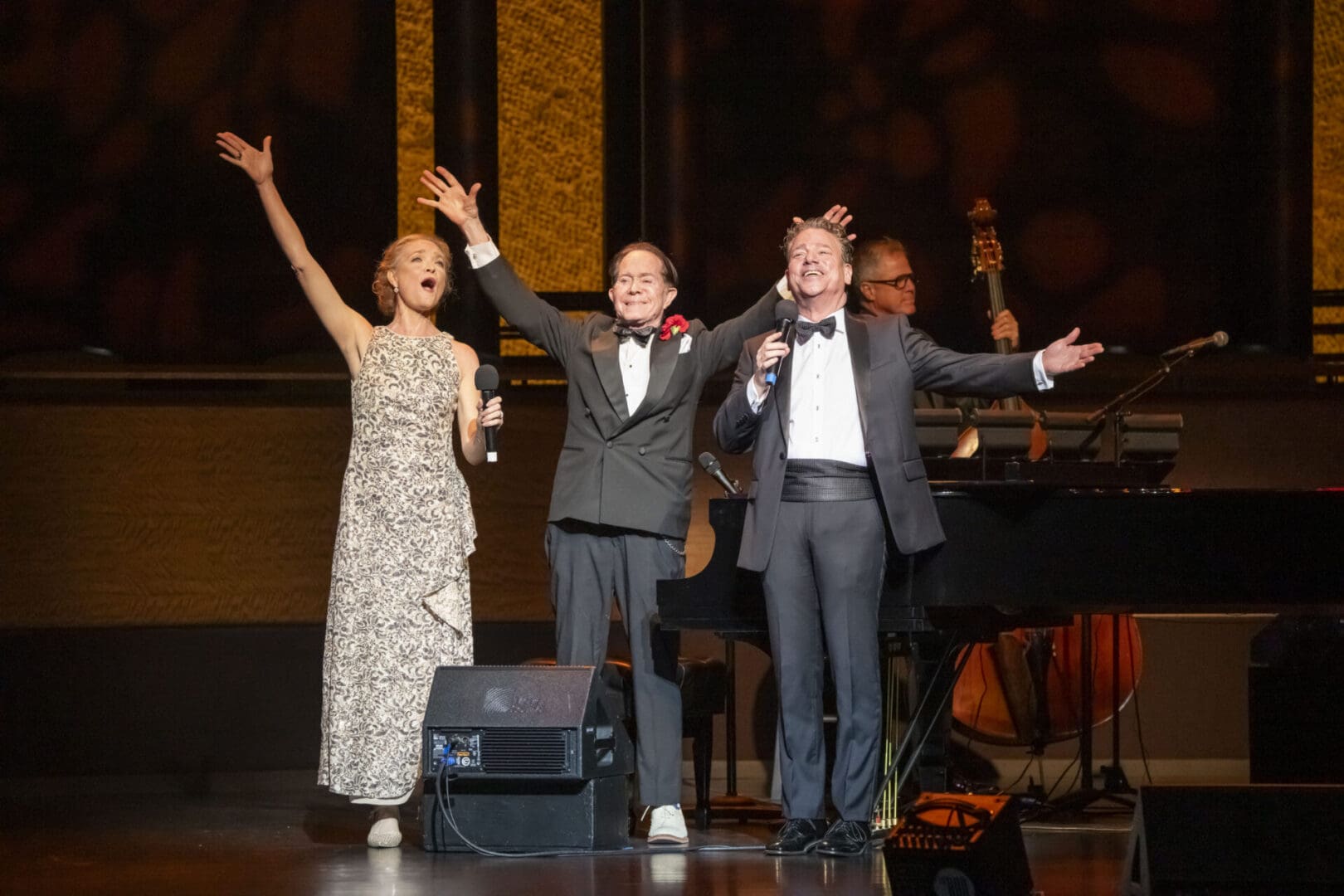
Shana Farr, Steve Ross, and Craig Rubano
Check: Rodgers & Hart. A classic by the duo again appeared, this time also serving as the title for the concert — With a Song in My Heart. It was dignified, formal, grand, and serious, with genuine feeling. The sumptuous arrangement teamed Steve Ross on piano and vocals with singers Shana Farr and Craig Rubano. Another R&H ballad, “You’re Nearer,” came along in combination with “Come a Little Closer,” a gem by John Wallowitch, making it a pleasing “proximity package” for the duo of Tim Cahill and Jim Harder.
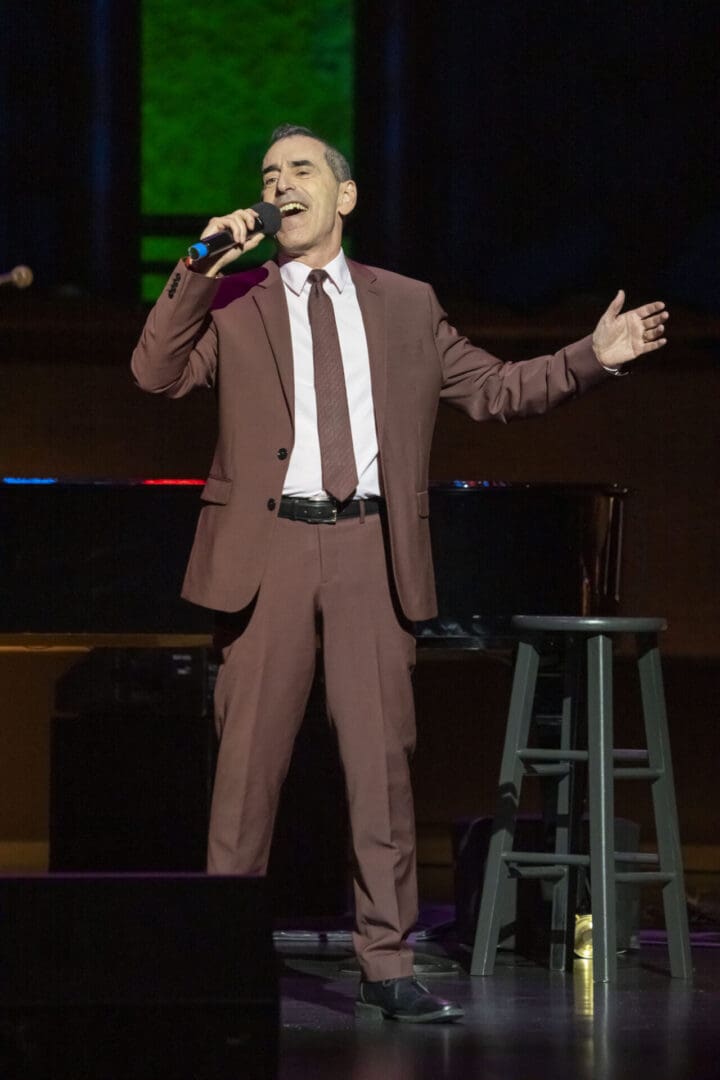
Brian De Lorenzo
Check: Standards sung in different styles. On the first night Phillip Officer took a romantic path with “Fly Me to the Moon,” but the final evening had Brian De Lorenzo adding some swing. On the middle night T. Oliver Reid brought intense determination to “I’m Gonna Live Till I Die,” whereas Susan Mack on Night 3 beamed blithe celebration.
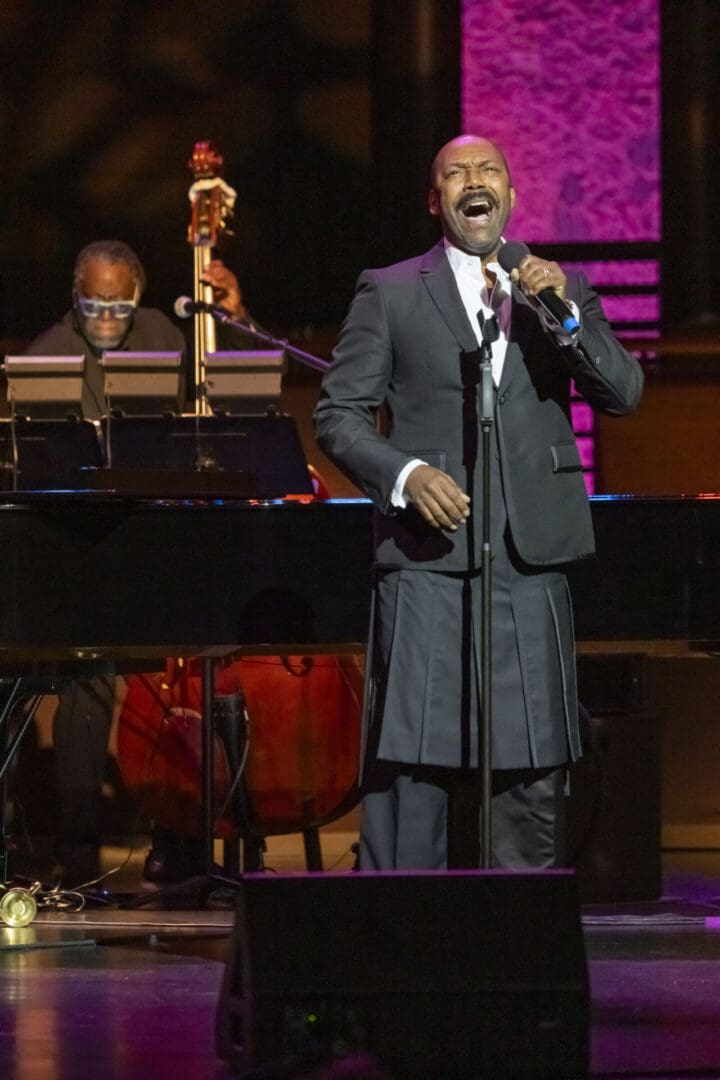
T. Oliver Reid
Ben Jones
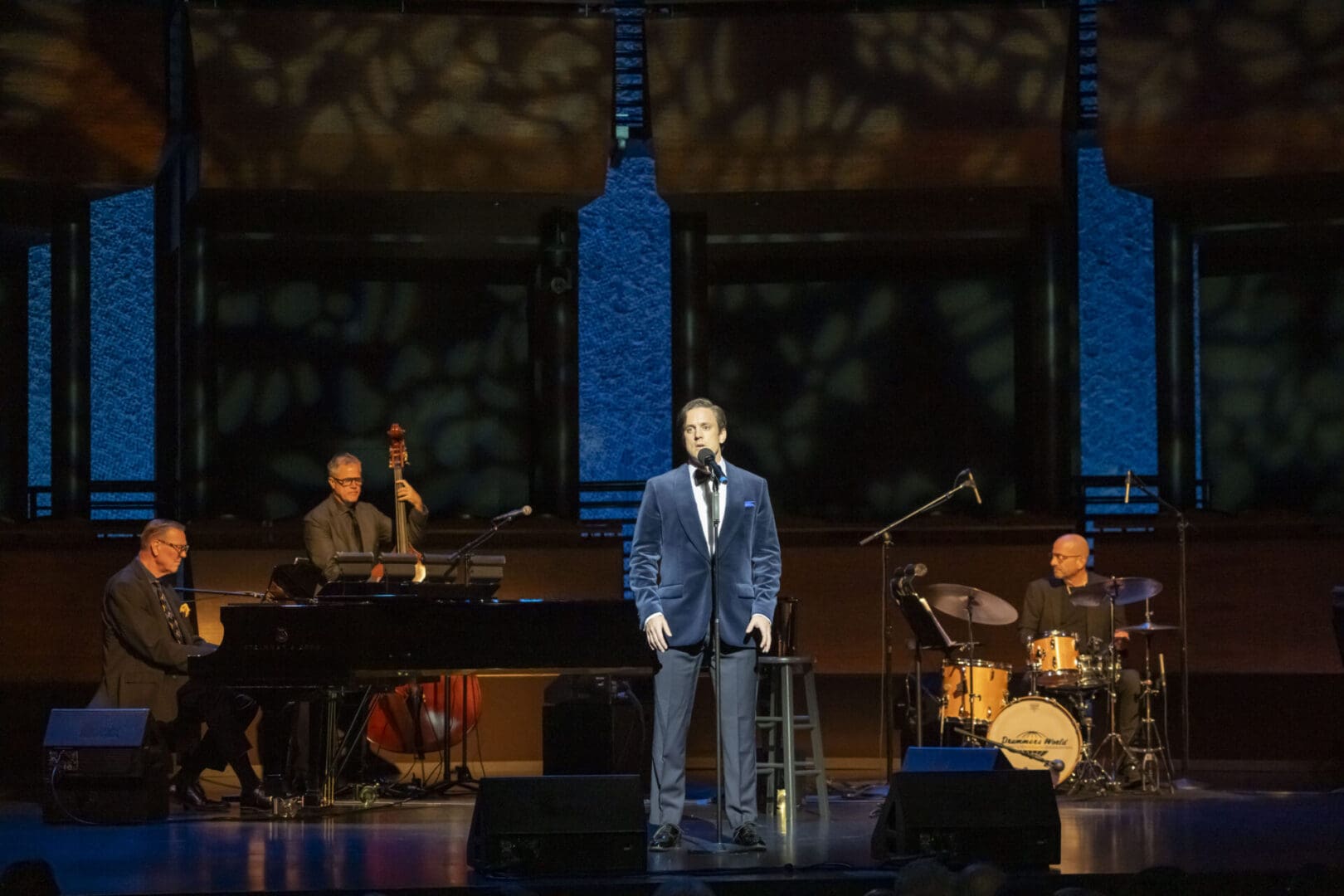
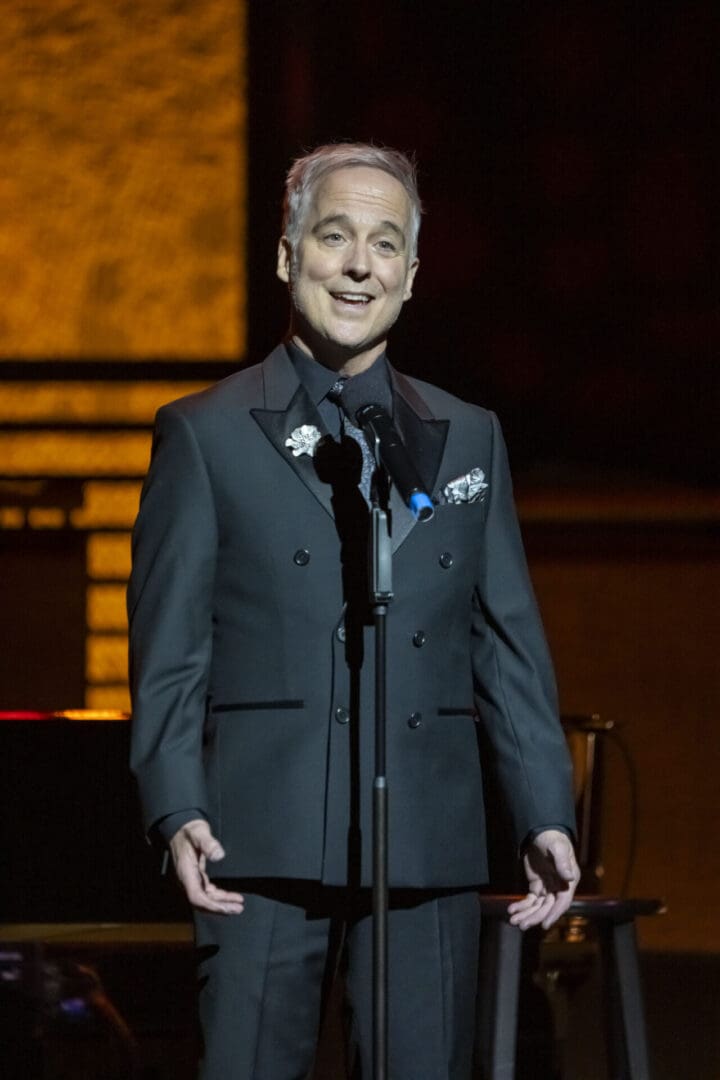
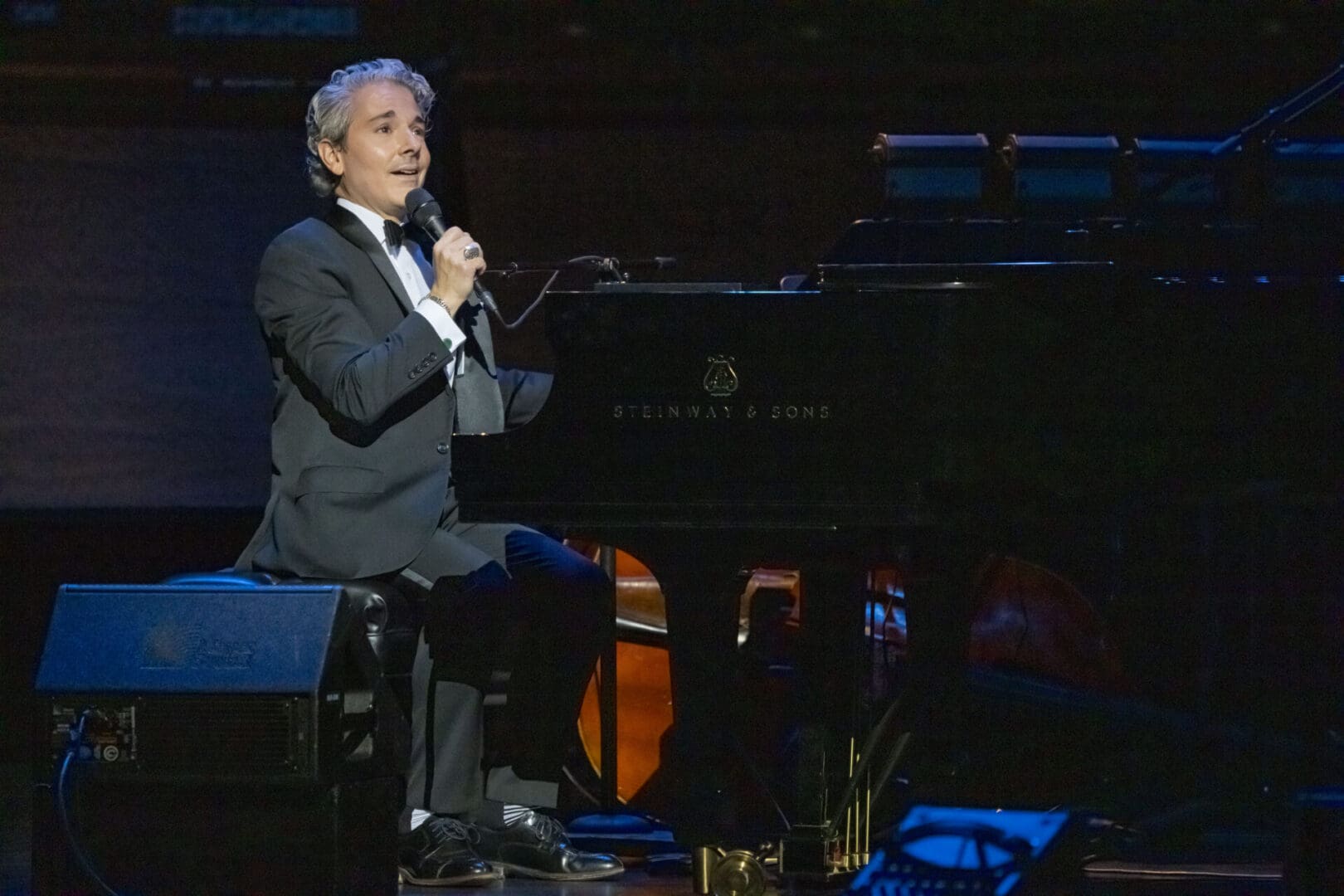
Check: Expanding the canon. The more traditional approach to cabaret repertoire, focusing on time-tested standards of the early and middle decades of the 20th century, still left room for some broadening of the boundaries. Among these were Ben Jones, riveting with the ABBA number “Slipping Through My Fingers,” and Tim Connell, similarly sorrowful with “The End of the World” by Matt Alber, from 2008. And again the program allowed for material beyond the Great American Songbook classics and their English lyrics; other languages were heard. Accompanying himself on piano, Eric Yves Garcia turned to French and Marta Sanders chose a Spanish number from her early years. Italian jazz vocalist Mafalda Minnozzi offered something most will know from either its original Portuguese words or the popular English treatment: “The Girl from Ipanema.”
Tim Connell
Eric Yves Garcia
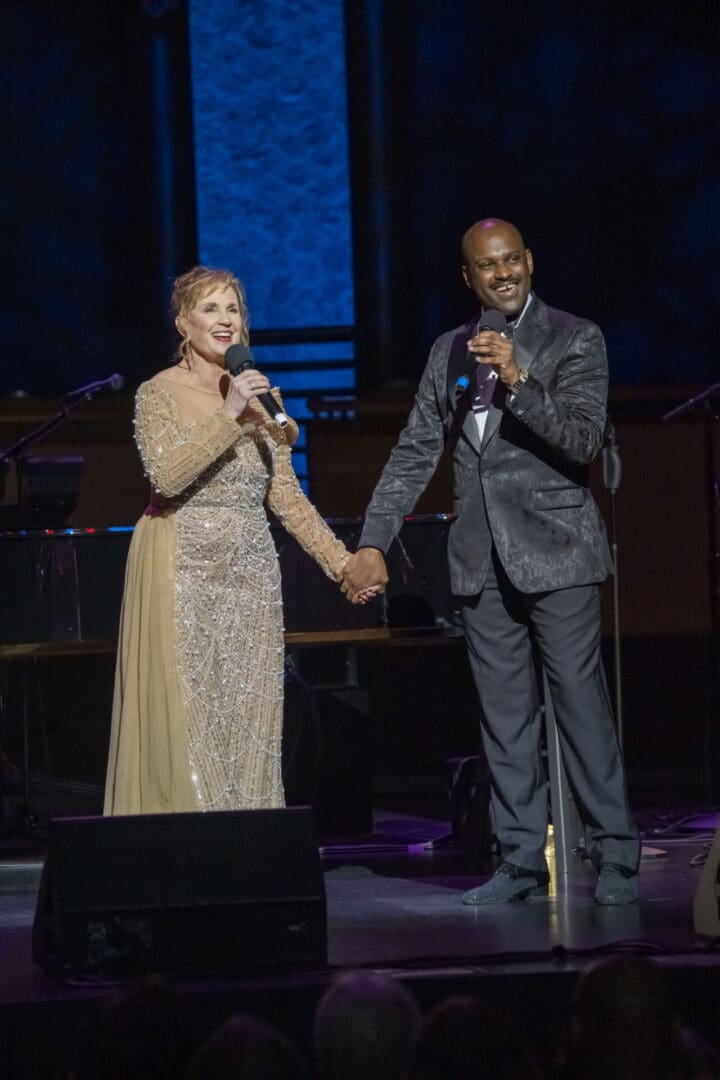
Speaking of other countries, the theme of immigration was in the air, too, in three impactful, well-received performances: Raissa Katona Bennett and Arbender Robinson offered Irving Berlin’s setting of the poem on the pedestal of the Statue of Liberty that welcomes those seeking refuge, Turkish-born Can M. Yasar chose “America” by Neil Diamond, and Mark Nadler’s lengthy concert-ending appearance had him at the piano recounting his Polish relatives’ wartime separation/immigration history, continuing into material from the musical Ragtime.
Raissa Katona Bennett and Arbender Robinson
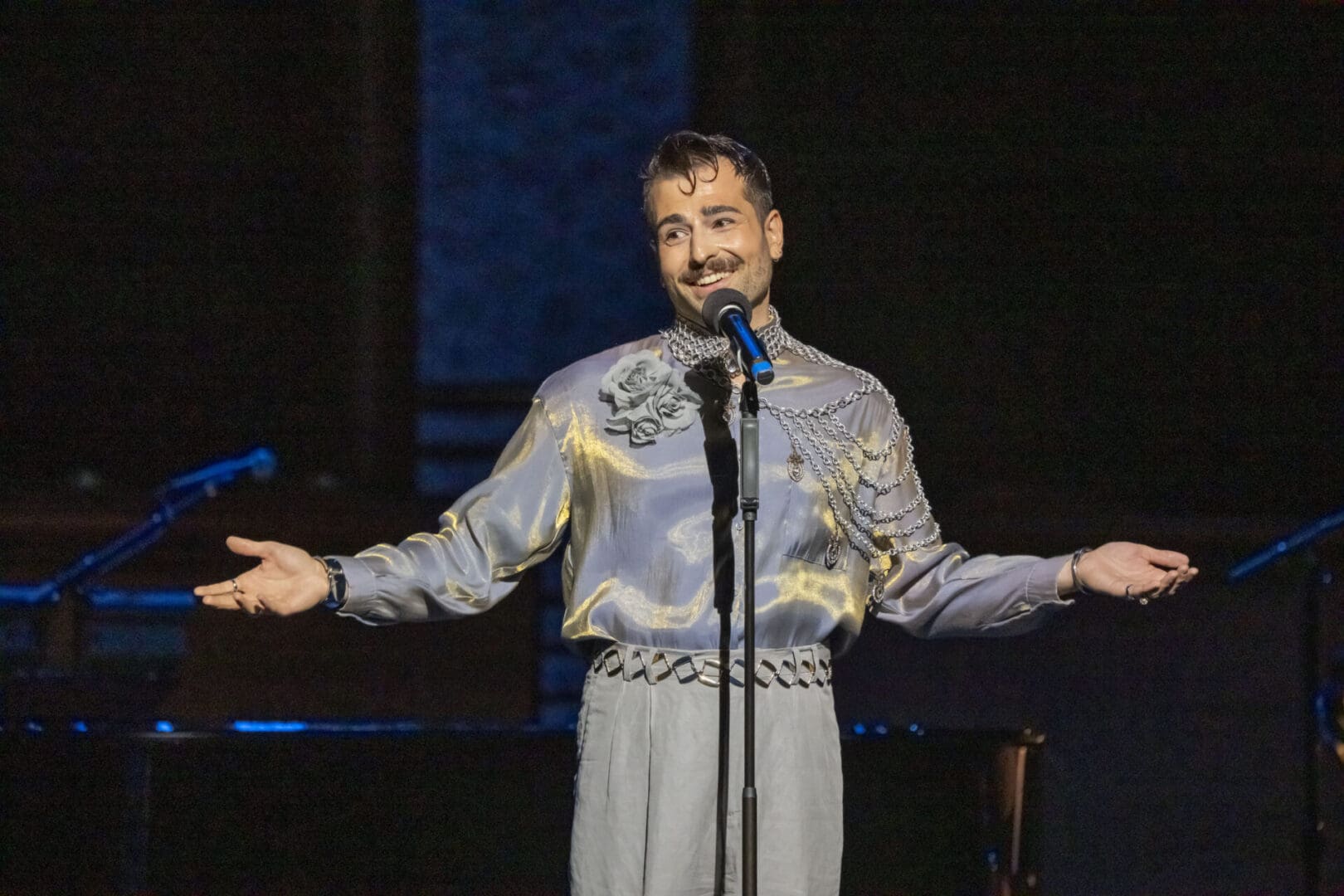
Can M. Yasar
And, as the stage lights go out, the audience files out, so ends another annual cabaret cornucopia we came to check up on.
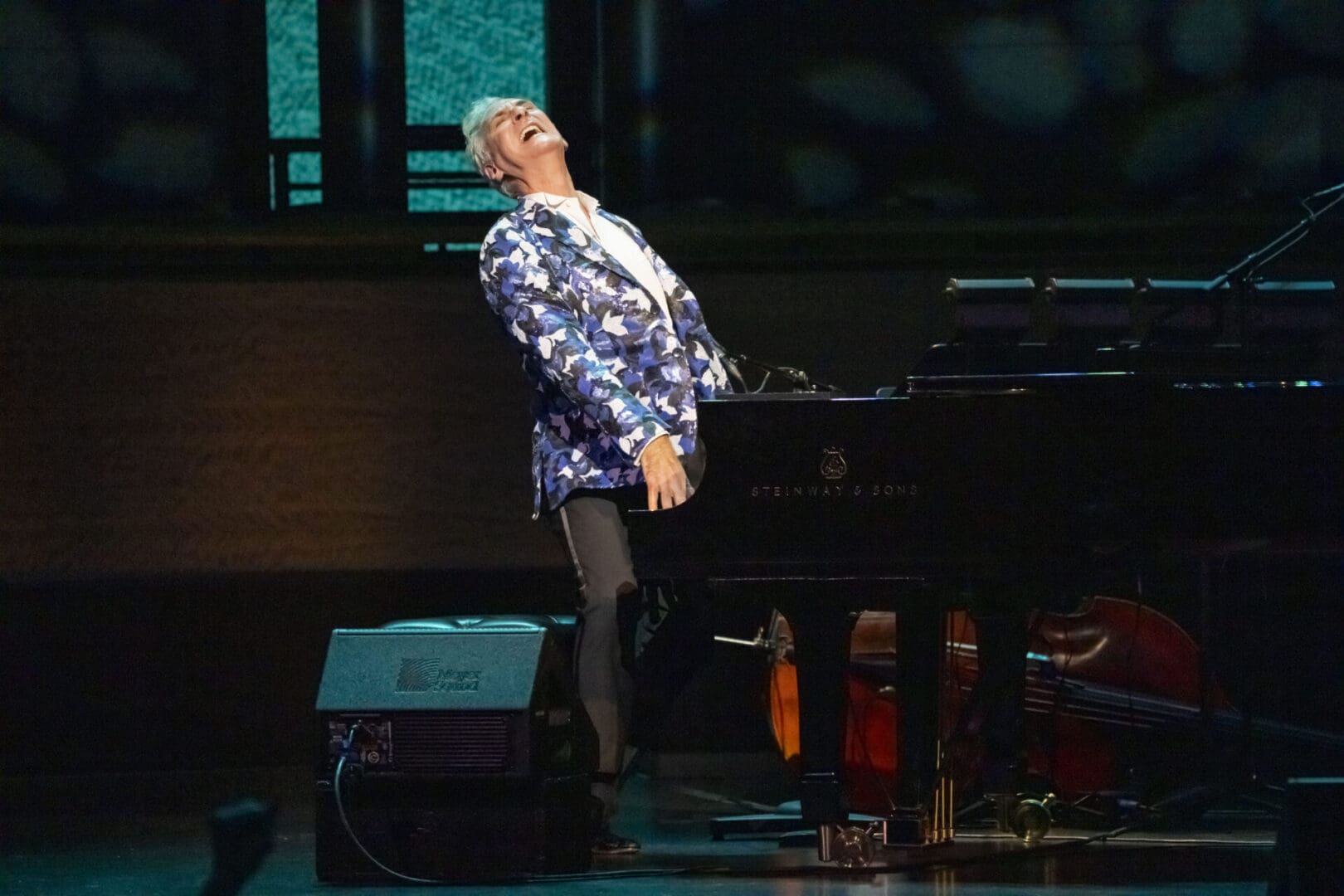
Mark Nadler
Not all the performances during the three generous-length concerts — where many artists had only one song — were mentioned above. A full list is at Mabel Mercer Foundation.
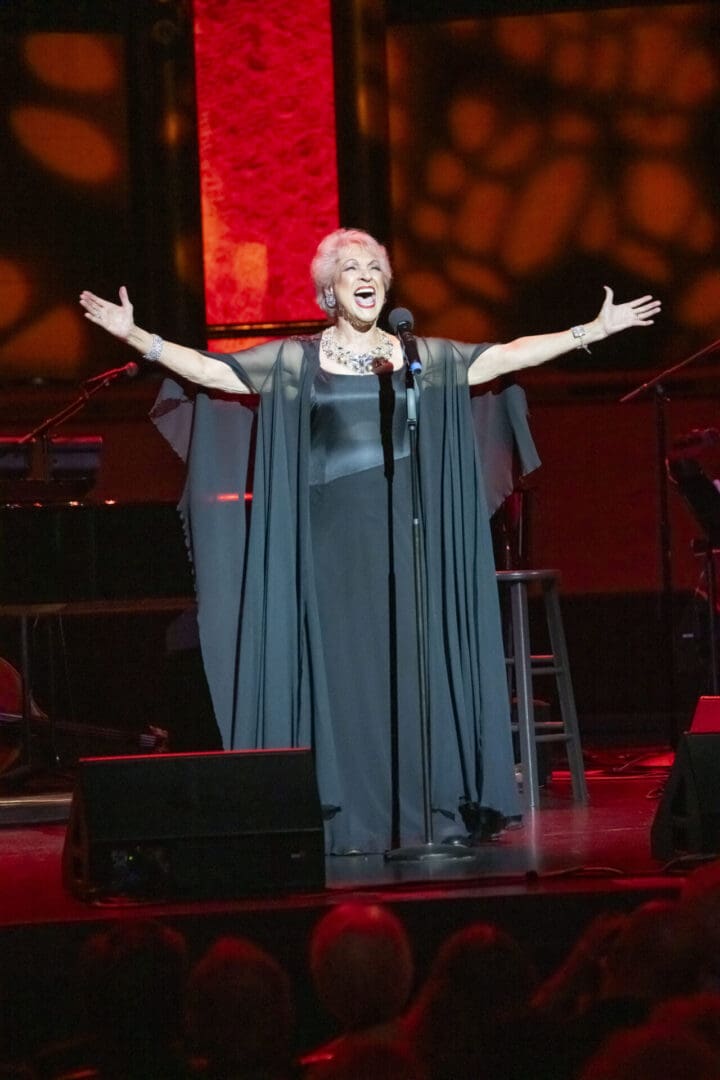
Marta Sanders
✦ ✦ ✦ ✦ ✦ ✦ ✦ ✦ ✦ ✦
photos by Richard Termine
37th New York Cabaret Convention
The Mabel Mercer Foundation
Rose Theater, Jazz at Lincoln Center
Frederick P. Rose Hall, Broadway at 60th Street in New York City
October 13–15, 2026
for information, visit Mabel Mercer Foundation
✦ ✦ ✦ ✦ ✦ ✦ ✦ ✦ ✦ ✦
