


Areas We Cover
Categories

WAYS TO MAKE YOUR HOME A BETTER PLACE TO UNWIND
by Susan Hall | October 15, 2026
in Art and Museums, Extras
Your home is supposed to be the place where you get to switch off, but it doesn’t always work out that way. Some days you sit down, and your mind keeps replaying work emails and tomorrow’s to-do list. So what’s getting in the way? Usually, it’s the small things, like the harsh overhead lighting, the cluttered tabletops, or the lack of a corner to rest in. You see them every day, so they’re easy to stop noticing, even though they can make it harder for you to relax. With that in mind, the seven ideas below will show you how to make your home a better place to unwind.
-
Choose an Activity to Unwind With
A home feels easier to relax in when you know how you want to spend your downtime there, and the plan does not have to be productive. Some people work on a jigsaw puzzle at the dining table, others sketch in a notebook or bake a batch of cookies, and a few listen to their favorite music playlist at full volume.
If you prefer something that takes even less setup, a few quick rounds of a mobile game can do the job. Online slot games are one example of a type of game you can play; these casino-style games thrive on the small suspense of each spin. JILI Games offers a collection of such games, so you can play JILI games from the couch once the house quiets down.
Whatever you choose, keep what you need within reach of your favorite seat, since an activity that is easy to start is usually the one you will keep doing. Short sessions fit easily into a free hour, and a set time limit keeps the habit relaxing.
-
Clear the Clutter
A crowded dining or coffee table is often the first thing to get in the way of the activity you picked. Bills, chargers, and half-read email can read like a to-do list laid out in plain sight, which makes it difficult to feel that the day is over.
You don’t have to tackle the whole house. You can start with the surface you look at most when you finally sit down. A basket for items that belong in other rooms speeds things up, since you can sweep everything in and sort them later. With that one surface clear, the room can feel ready for rest rather than for more work.
-
Adjust the Lighting
Lighting can shape how a room feels more than most people expect. If your overhead light stays on until you sleep, that bright, cool glow can keep you alert, which suits midday but can make it harder for you to wind down before bed.
After your last task of the day, you can switch off the main light and let a lamp at eye level or lower take over; the room often feels softer right away. When you buy new bulbs, look for “warm white” or a color temperature of about 2700K on the package, which gives a gentler, yellower glow. These two small changes can make the room feel noticeably calmer by the time you turn in.
-
Bring In a Plant
The table you just cleared now has space for something that isn’t clutter, and a plant is an easy choice. Pothos and snake plants can cope with low light and irregular watering, which suits rooms that don’t get much sun and zero rainfall.
A plant can also give you a small reason to pause. A quick check of the soil or a wipe of a leaf takes about a minute, and it can be a calmer thing to look at than a phone screen. One potted plant is usually enough; more can turn into another chore, one that could end up working against a room meant for rest.
-
Add Personal Touches
A room can be perfectly tidy and still feel like a showroom, because nothing in it says anything about the person who lives there. That can make it harder to settle in once the day is over.
A few belongings with a story behind them make a room feel lived in. Photos from a drawer can go on a shelf, a mug from a trip can sit on the coffee table, and a favorite blanket can drape over the arm of the couch. You probably own most of these already, and they only need to mean something to you. Seeing belongings that remind you of people and places you love can make it easier to switch off once you’re home.
-
Set Up a Rest Corner
A rest corner is a spot you reserve for resting alone, which means it should have only one purpose. Any spot will do, whether it’s a chair by a window, one end of the couch, or a floor cushion, provided you never answer emails or finish tasks there.
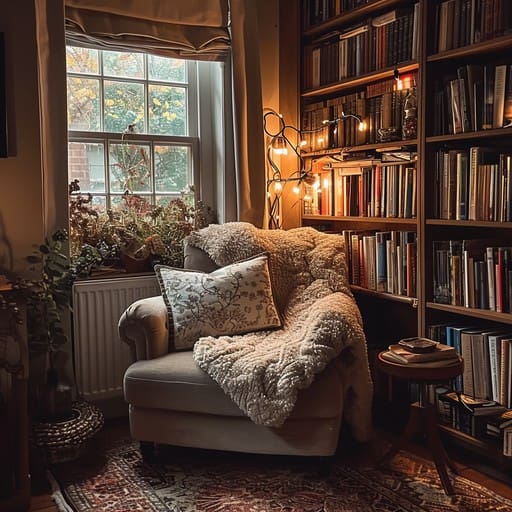
When a lamp, a blanket, and a small table for your beverage are within reach, you won’t need to get up once you’re settled. Your phone can stay in another room too, since it’s the most likely thing to pull you away. Over time, your body can begin to relax the moment you sit down there, because the corner is only ever used for resting. Spending even ten minutes in your rest corner can count as a proper rest.
-
Build a Wind-Down Routine
A routine can be as simple as repeating a few actions once your day is done. You can clear the coffee table, turn off the main light, switch on a lamp, and settle into your rest corner with a snack or drink and your chosen activity. All of it takes about five minutes.
Keeping the same order makes the steps easier to remember, and within a few weeks the routine can begin to feel automatic. On a hectic day, a shorter version still works, even if it is only the lamp and a snack. Eventually, even the act of flipping the light switch can signal that it’s time to unwind.
A home doesn’t become a better place to unwind in because everything in it is perfect. It gets there when it asks very little of you once the day is over. Your downtime can feel lighter long before the house looks any different. You may not notice the exact day it starts to work, only that you stopped bracing for the next workday. Once your home makes fewer demands, unwinding can become something that happens on its own, and that may be the clearest sign of a good place to rest.
