


Areas We Cover
Categories

Theater Review: THE WINTER’S TALE (Chicago Shakespeare Theater)

by C.J. Fernandes | October 27, 2026
in Chicago, Theater
A TALE OF TWO PLAYS
A gripping first act gives way to overplayed
comedy before Edward Hall finds
an enchanting, bittersweet finale
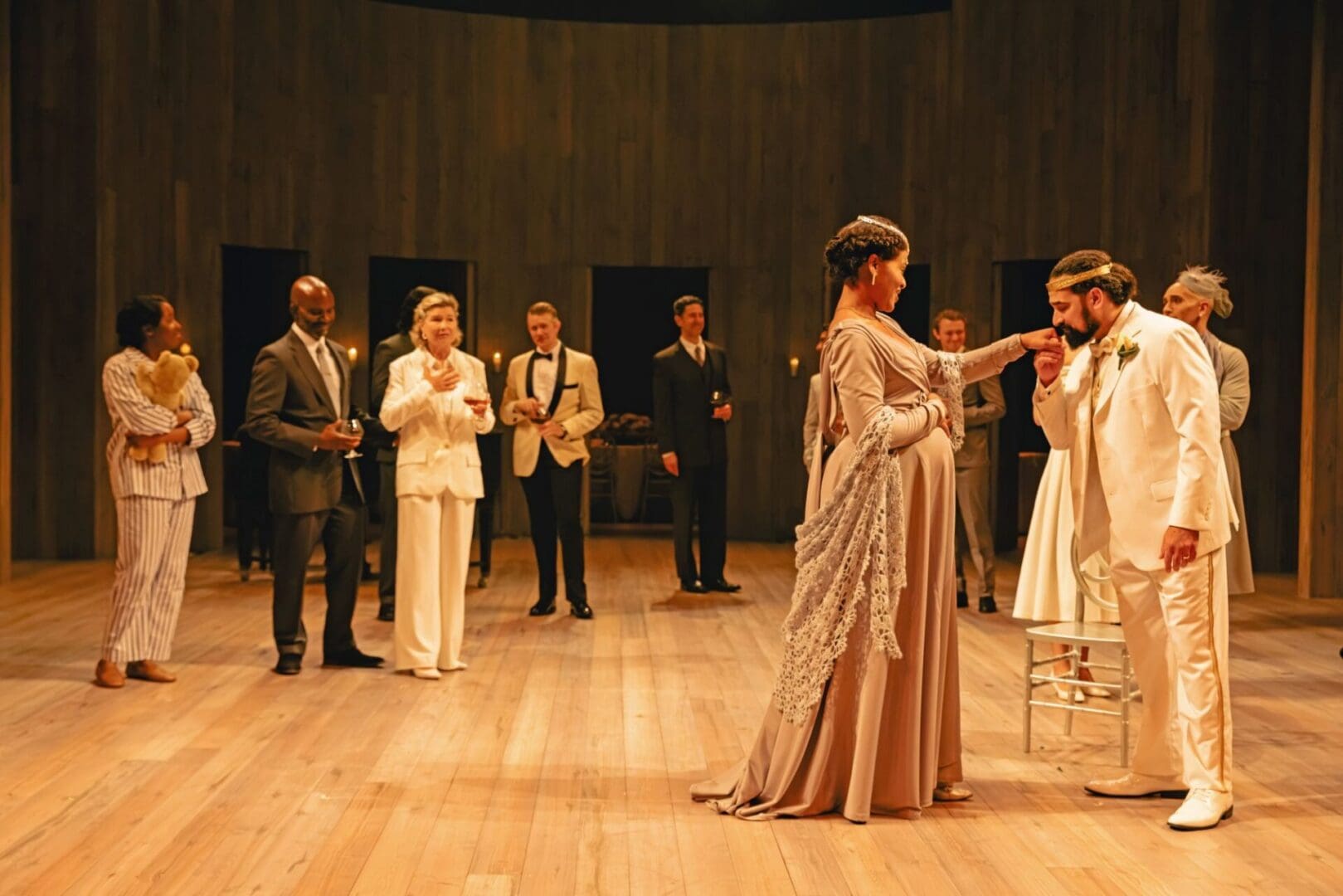
Jessica Dean Turner (Hermione), Demetrios Troy (Leontes), and the company
of Chicago Shakespeare Theater’s production of Shakespeare’s The Winter’s Tale
The Winter’s Tale has long been considered one of William Shakespeare’s problem plays, whiplashing as it does between an intense drama and a light-hearted pastoral, and throwing in a sixteen-year gap into the narrative for good measure. It’s a curious choice for the newly formed repertory at Chicago Shakespeare Theater.
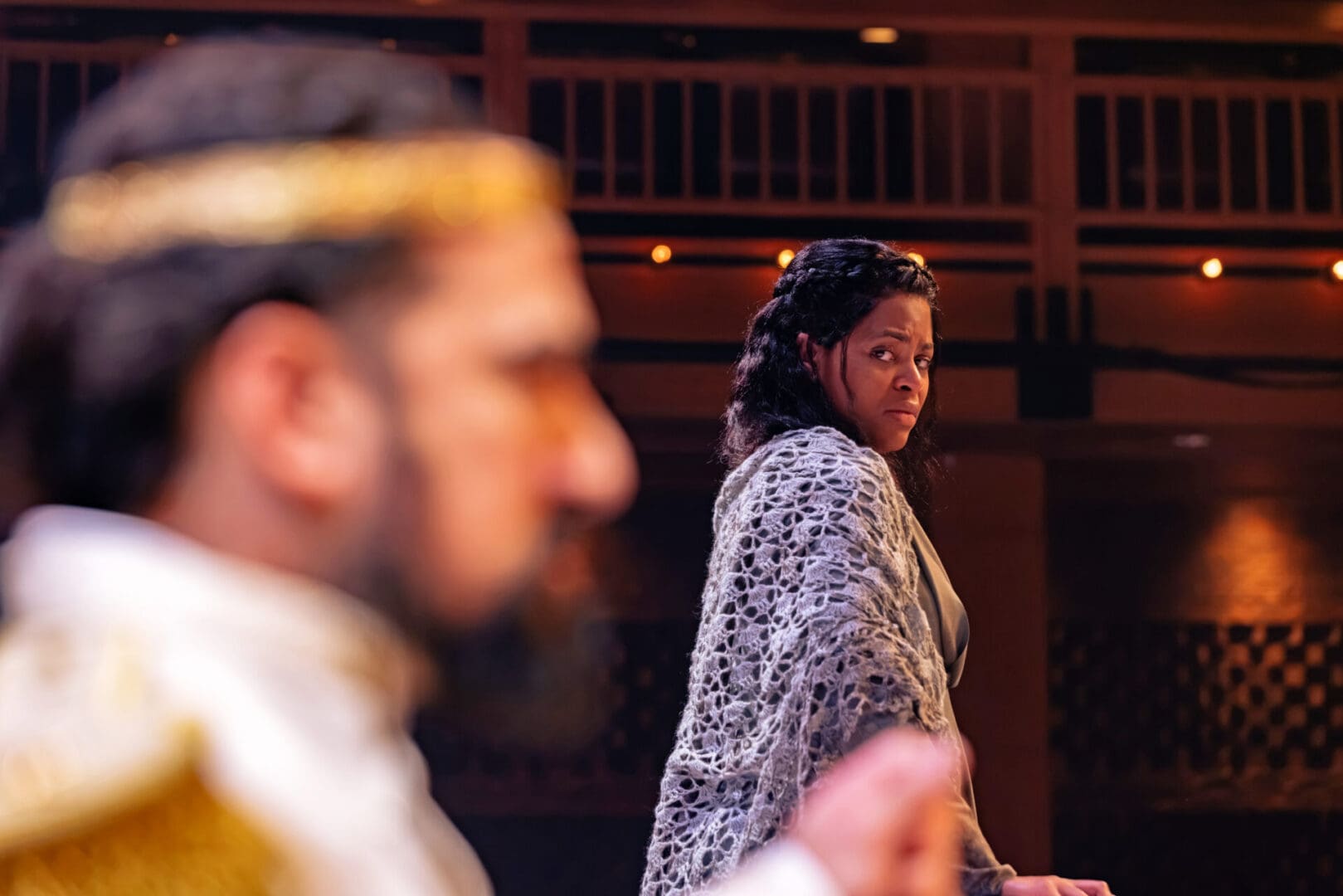
Jessica Dean Turner (Hermione) and Demetrios Troy (Leontes)
A brief aside for newbies: A repertory is a company of actors that perform multiple plays in rotation. This repertory, comprising fourteen actors, is the first in Chicago Shakes’ history. The Winter’s Tale will play in repertory, alternating with A Midsummer Night’s Dream—which is in rehearsal right now—beginning November 15th.
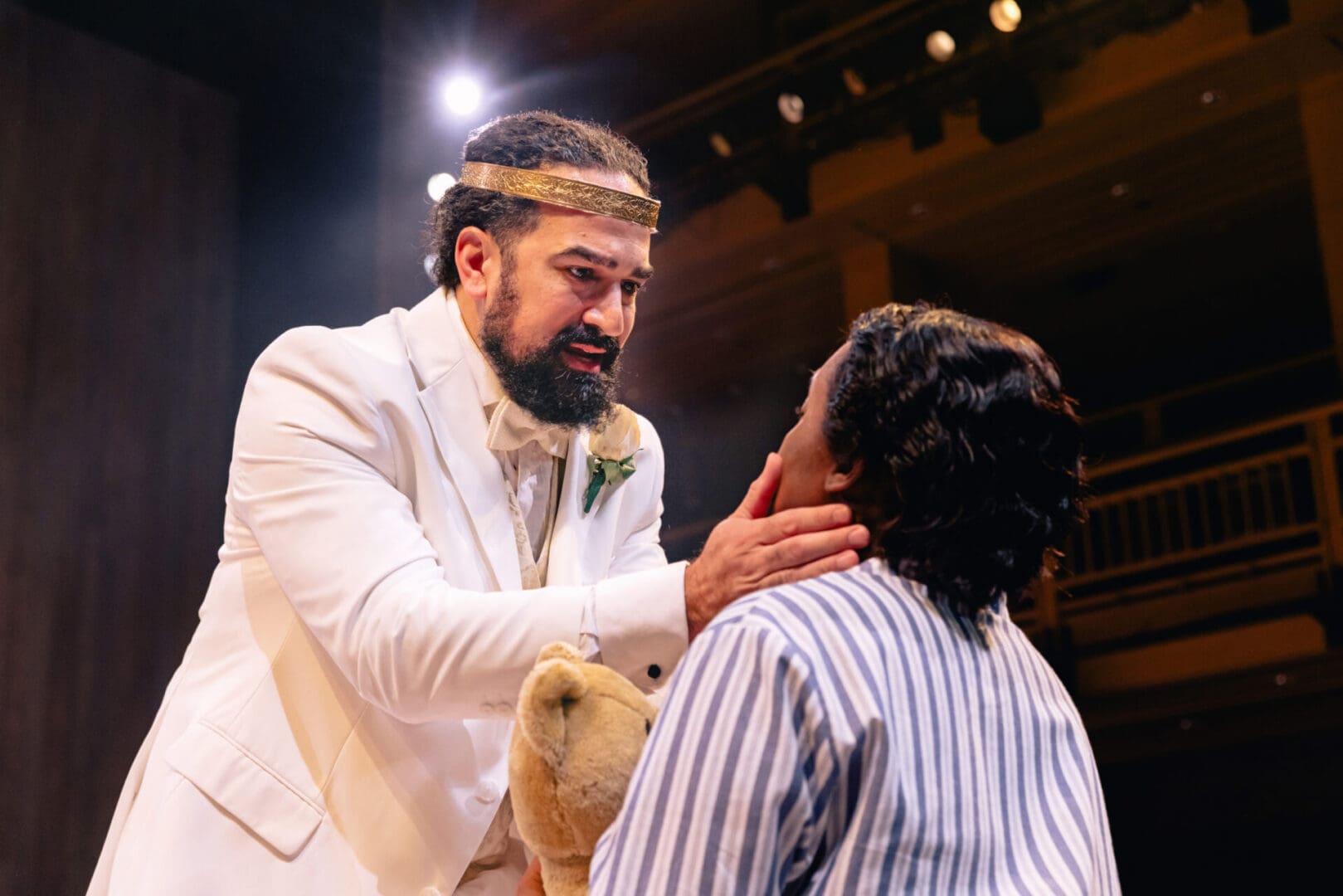
Demetrios Troy (Leontes) and Felicia Oduh (Mamillius)
Directed by Artistic Director Edward Hall, the show opens with a fairly stark stage—a child’s bed sits at the center, with three toys spotlit on the floor: a ship, a teddy bear, and an hourglass. A young prince, Mamillius (Felicia Oduh), enters, collects his toys and clambers onto the bed; he inverts the hourglass, setting time and the play in motion.
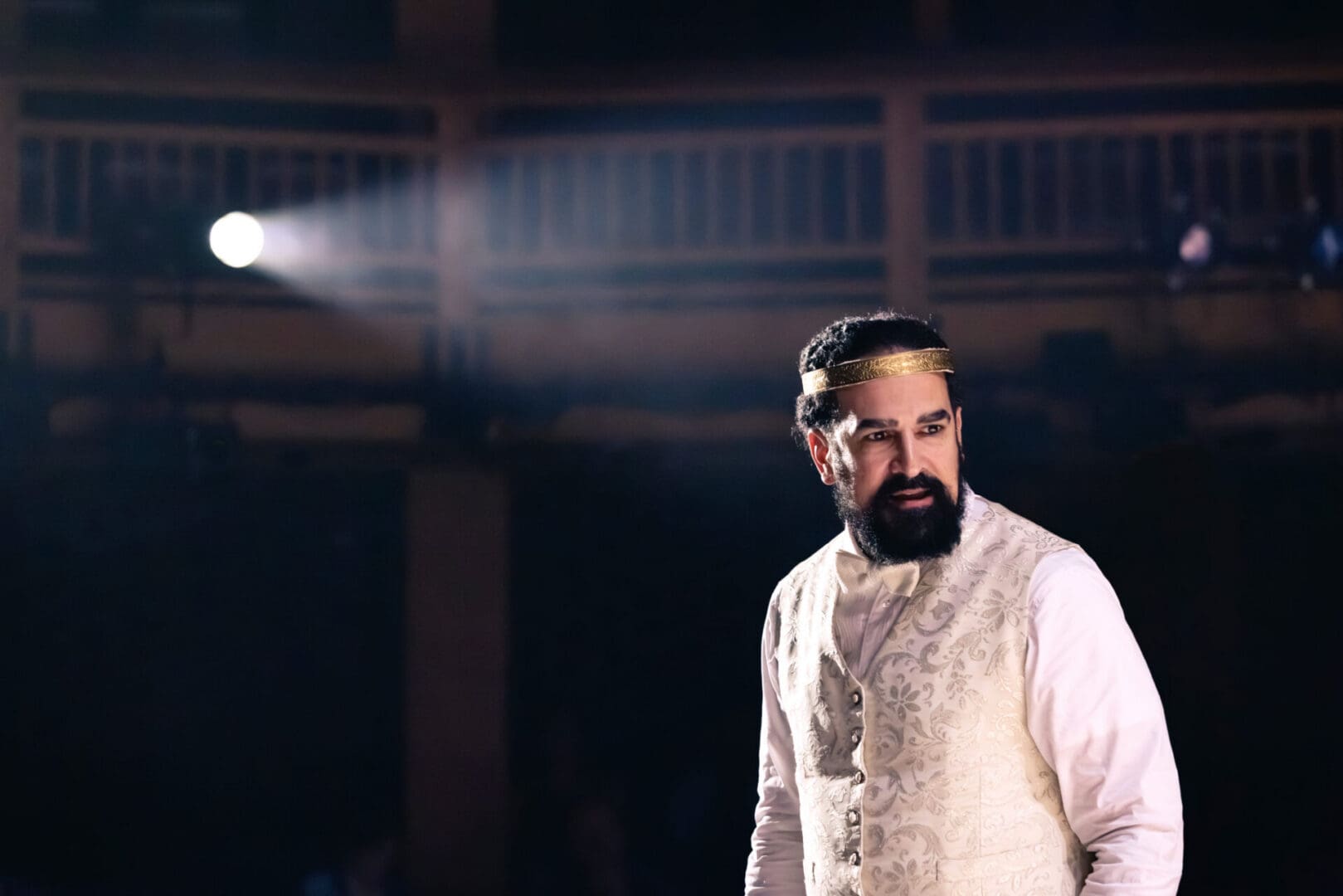
Demetrios Troy (Leontes)
We’re at a party in Sicily at the court of King Leontes (Demetrios Troy). Leontes’ best friend Polixenes (Chiké Johnson), the King of Bohemia, is nearing the end of a long visit. Leontes entreats his friend to stay but Polixenes gently but firmly insists on leaving. In a last effort, Leontes sends his pregnant wife Hermione (Jessica Dean Turner) to make his case. To Leontes’ surprise, Polixenes acquiesces immediately. His surprise quickly curdling into suspicion, Leontes convinces himself that Hermione and Polixenes are having an affair, and that the unborn child is not his issue. He orders a lord, Camillo (Erik Hellman), to poison Polixenes, but Camillo betrays him, fleeing with Polixenes to Bohemia. Livid with anger and jealousy, Leontes has Hermione arrested and put on trial. The baby girl she gives birth to is sent away to be abandoned. Blind to the pleas of the lords and ladies of his royal court, Leontes declares Hermione a traitor. Following the trial and its guilty verdict, an envoy appears from the Oracle of Delphi. The Oracle states in no uncertain terms that Hermione is innocent. Leontes is stunned. But it is too late. His wife and son are dead. His daughter is abandoned and likely dead. Devastated and torn with remorse and guilt, Leontes swears to spend the rest of his life in atonement.
And somewhere on a distant Bohemian shore, an old shepherd (Kevin Gudahl) and his not-too-bright son (Dan Haller) find a baby girl on the beach.

Felicia Oduh (Perdita) and the company
The first act of this Tale is a thrill. Shakespeare stripped down to the essentials. There is some set ornamentation at the rear in Michael Pavelka’s scenic design, but until the final moments of the act, which I will not spoil, the focus is on the language and the actors, who perform on a mostly bare stage. And a marvelous bunch of mummers they are too, with not a shaky delivery to be had among them. I’ve always thought Leontes to be one of the most thankless roles in the canon. He’s an antagonist for no reason other than his willful stupidity and jealousy. It takes four acts for Othello to get to that emotional space; Leontes has to make that transition in ten minutes. And somehow Demetrios makes that shift convincingly. His raging insanity is terrifying and terrifyingly believable, and when he is defeated, his anguish is heartbreaking. It’s a phenomenal performance. But as good as Demetrios is, Act I of CST’s The Winter’s Tale is owned by the women; Issy van Randwyck’s hectoring, abrasive Paulina—wife to one of the lords of the court—steals the show every time she steps in. In a Hillary Clinton-esque pantsuit, she shames, emasculates, and verbally decimates not just Leontes, but also his advisers who are, to a man, effete cowards who are afraid to speak truth to power. And Jessica Dean Turner is an incredible Hermione, creating a tragic and proud heroine for the ages.
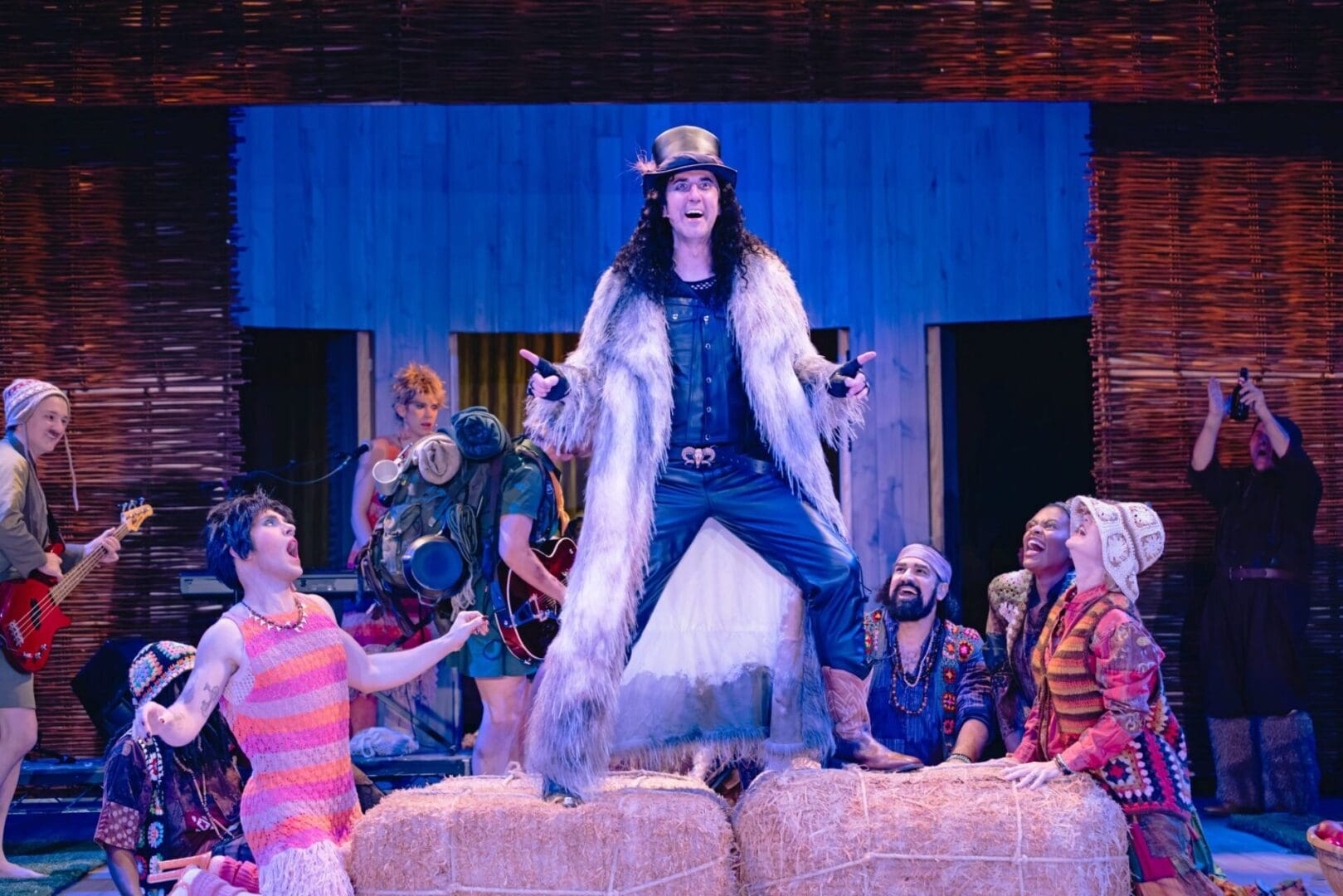
Sean Fortunato (Autolycus, at center) is flanked by Patty Roache (Mopsa),
Grace Steckler (Dorcas), and the company
And then we come to Act II.
If I am to be honest, going into this production I was expecting the pastoral comedy portion of The Winter’s Tale to be the better half. After CST’s hilarious Merry Wives in the spring and absolutely delightful Much Ado last year, they seemed to have found a zone when it came to comic Shakespeare. Not here though. The grown-up foundling Perdita (Oduh, again) and her paramour Florizel, played by the CW-looking Esteban Ortiz-Villacorta, make for a thoroughly adorable couple. Gudahl’s Old Shepherd is a delight, and the company, frequently clad in sheep costumes, are charming.
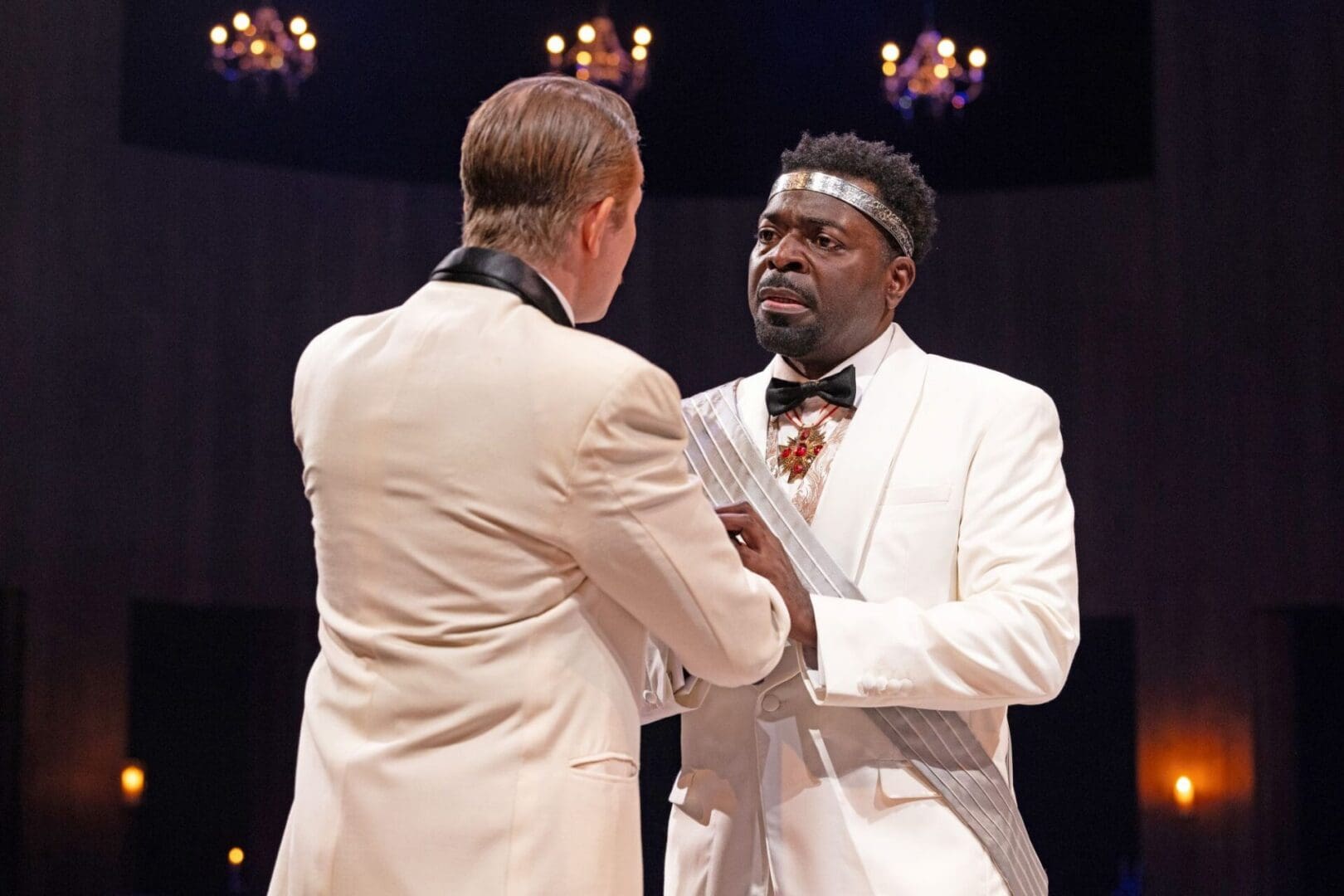
Chiké Johnson (Polixenes) with Erik Hellman (Camillo)
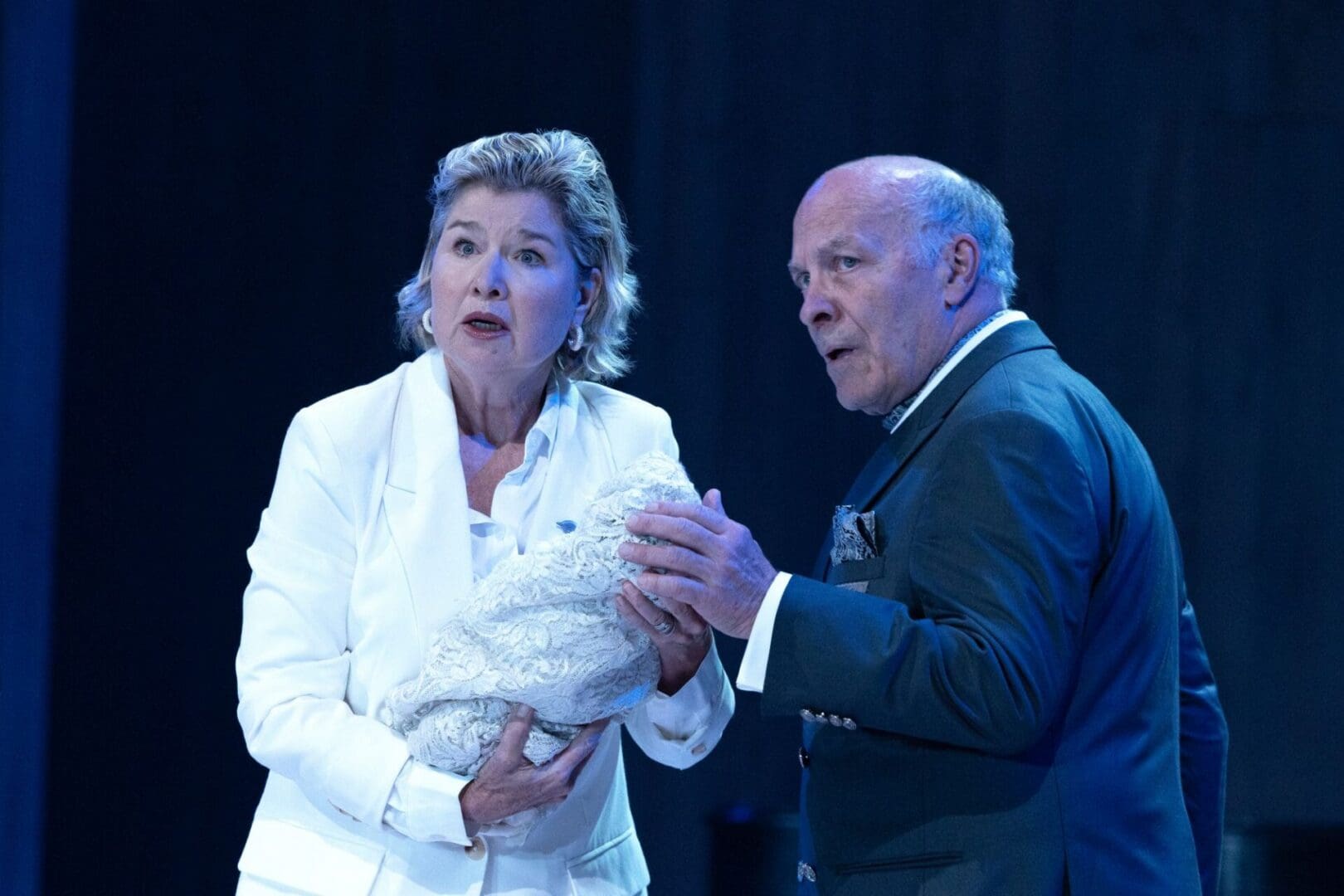
Issy van Randwyck (Paulina) and Kevin Gudahl (Lord)
The problem is Autolycus.
Autolycus is a peddler in Bohemia. He picks pockets, sings dirty songs, winks at the audience, and generally functions as comic relief. In this iteration of Tale, Autolycus is reconfigured as a Gene Simmons-ish character, complete with wig, mascara, and leather pants, and is played by Sean Fortunato. He even has a backing band called—brace yourself—Sheep Trick. Fortunato is a terrific actor and a local treasure who elevates any production he’s in. More importantly for our purposes here, he played another comic relief, Dogberry, in CST’s Much Ado About Nothing last year and walked away with the entire show.
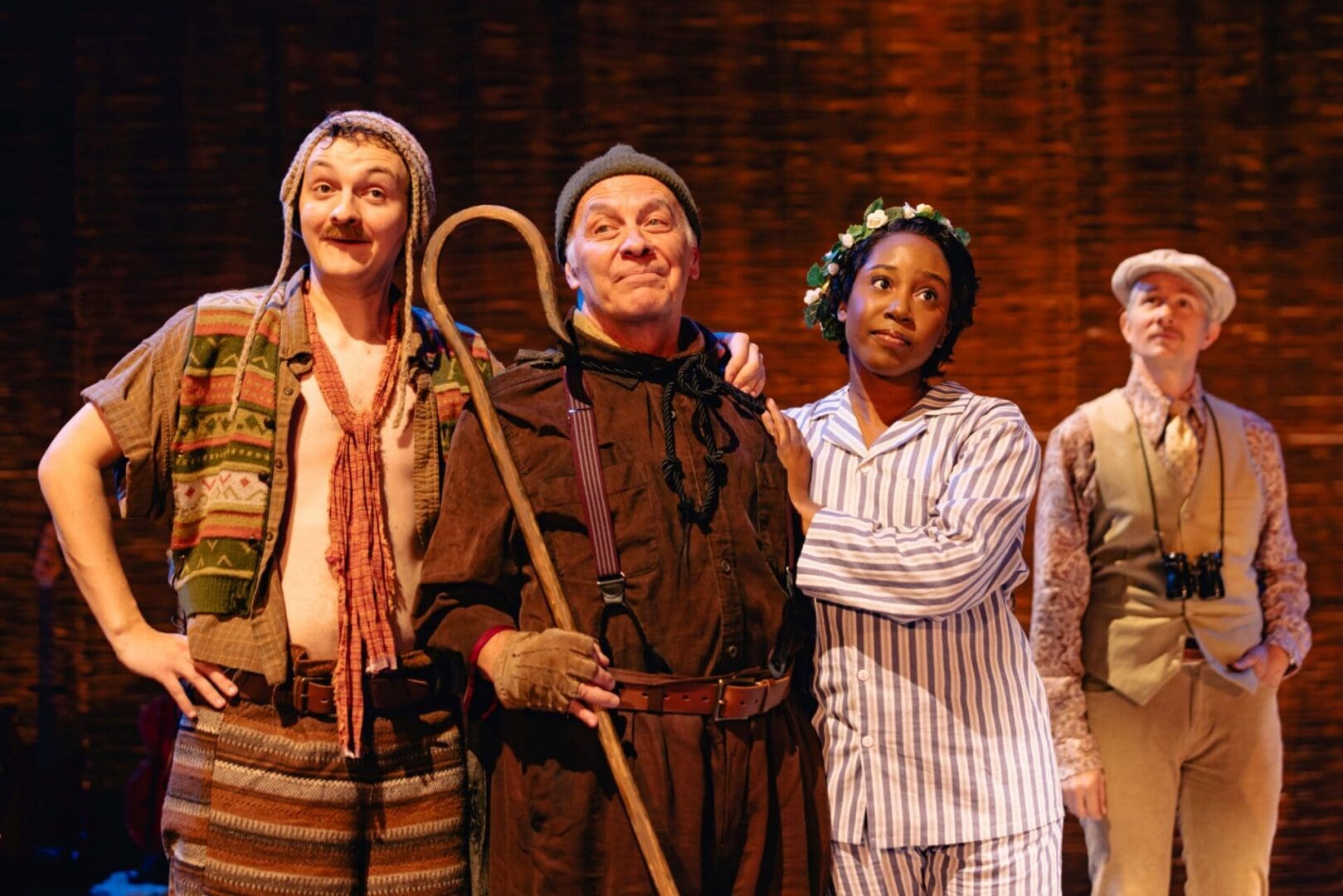
Dan Haller (Young Shepherd), Kevin Gudahl (Old Shepherd), Felicia Oduh
(Perdita), and Erik Hellman (Camillo)
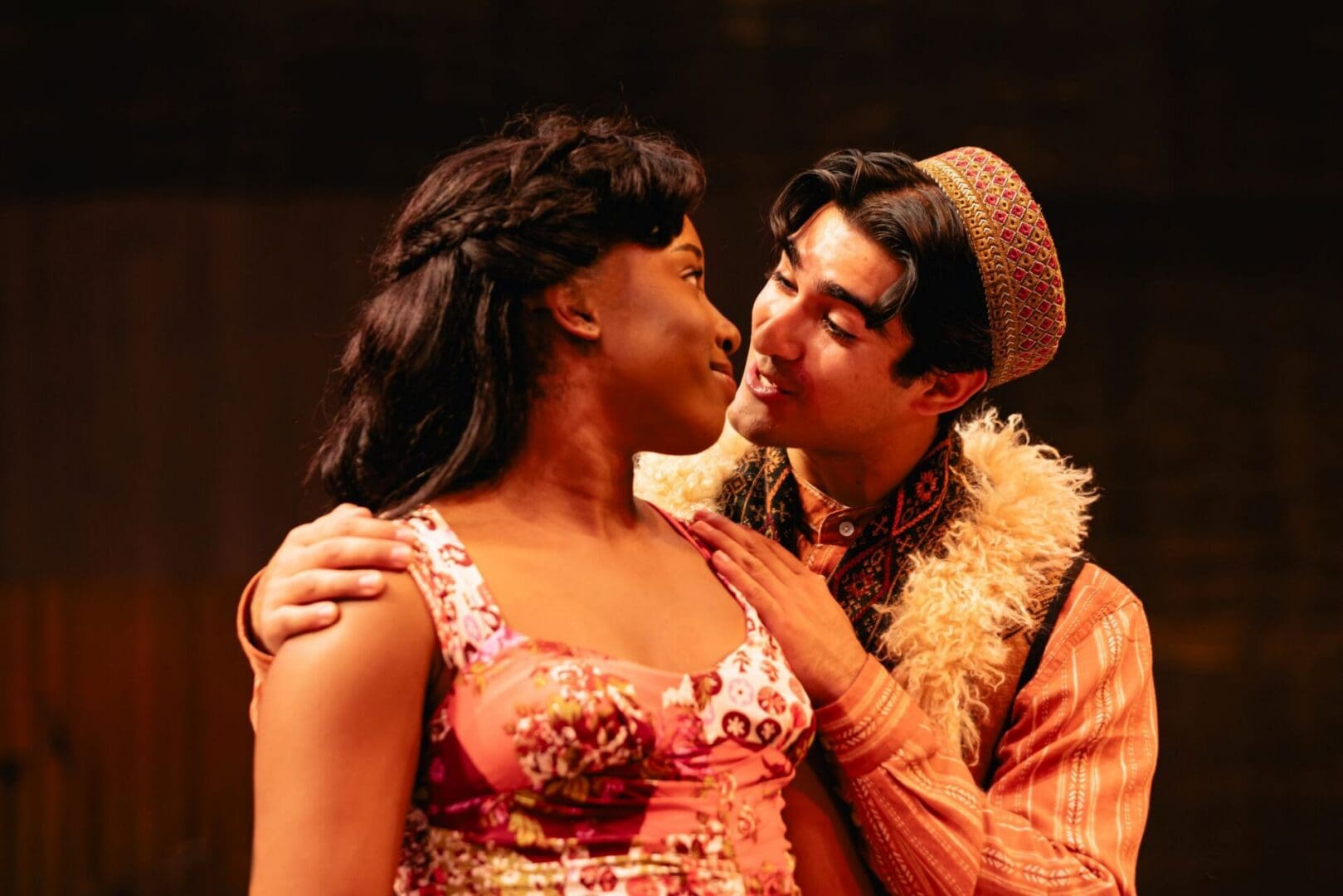
Felicia Oduh (Perdita) and Esteban Ortiz-Villacorta (Florizel)
I thought about that performance a lot during the second act of Tale, wondering if that was the reason why Autolycus, a minor character, was allowed to dominate the proceedings to this extent. This is not a knock on Fortunato, who is reliably excellent, but the conceit, while amusing enough at first, gets more tedious as it goes on, reaching a nadir with a cringe-worthy musical motif that borrows from Beyoncé and would have been embarrassingly dated more than ten years ago.
The usual plot complications ensue. Disguises are worn, the lovers are separated, unite, and run away together with a furious daddy in tow; eventually, almost everyone gets a happy ending.
Almost.
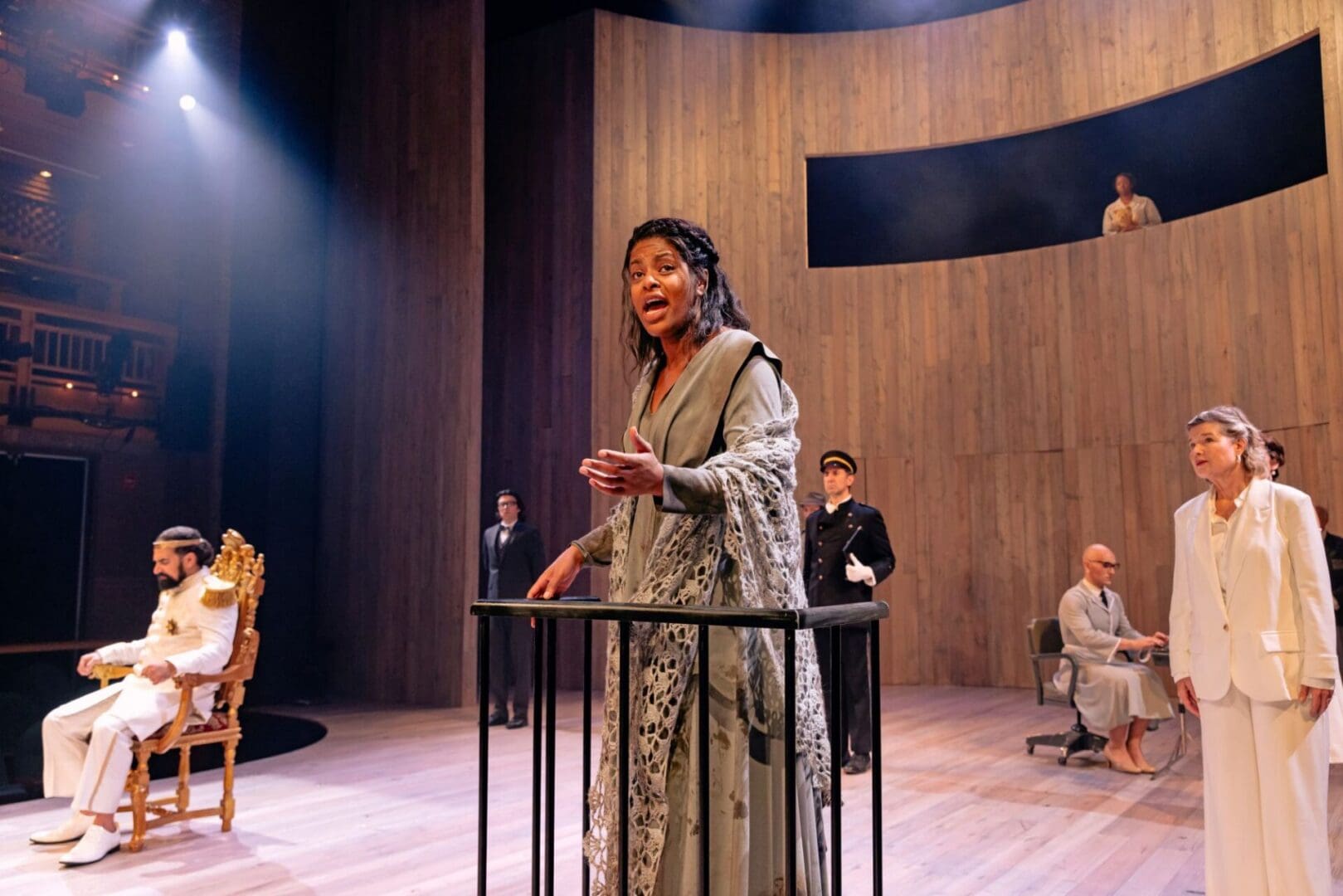
Jessica Dean Turner (Hermione)
The final scene in CST’s Tale is Hall’s best-directed moment on stage. Circling back to the dramatic tone of the first act, he blocks the scene by keeping the principals with their backs to the audience while the rest of the cast gazes on, first in awe, then admiration, then shock, as the last twist in the plot unfolds. The framing walks a fine line between hinting at subterfuge and suggesting magical realism, a question debated for four hundred years. It creates an instant that is pure enchantment, allowing the three principals to experience a moment of joy before cruelly yanking it away from one of them.
I can’t wait for A Midsummer Night’s Dream.
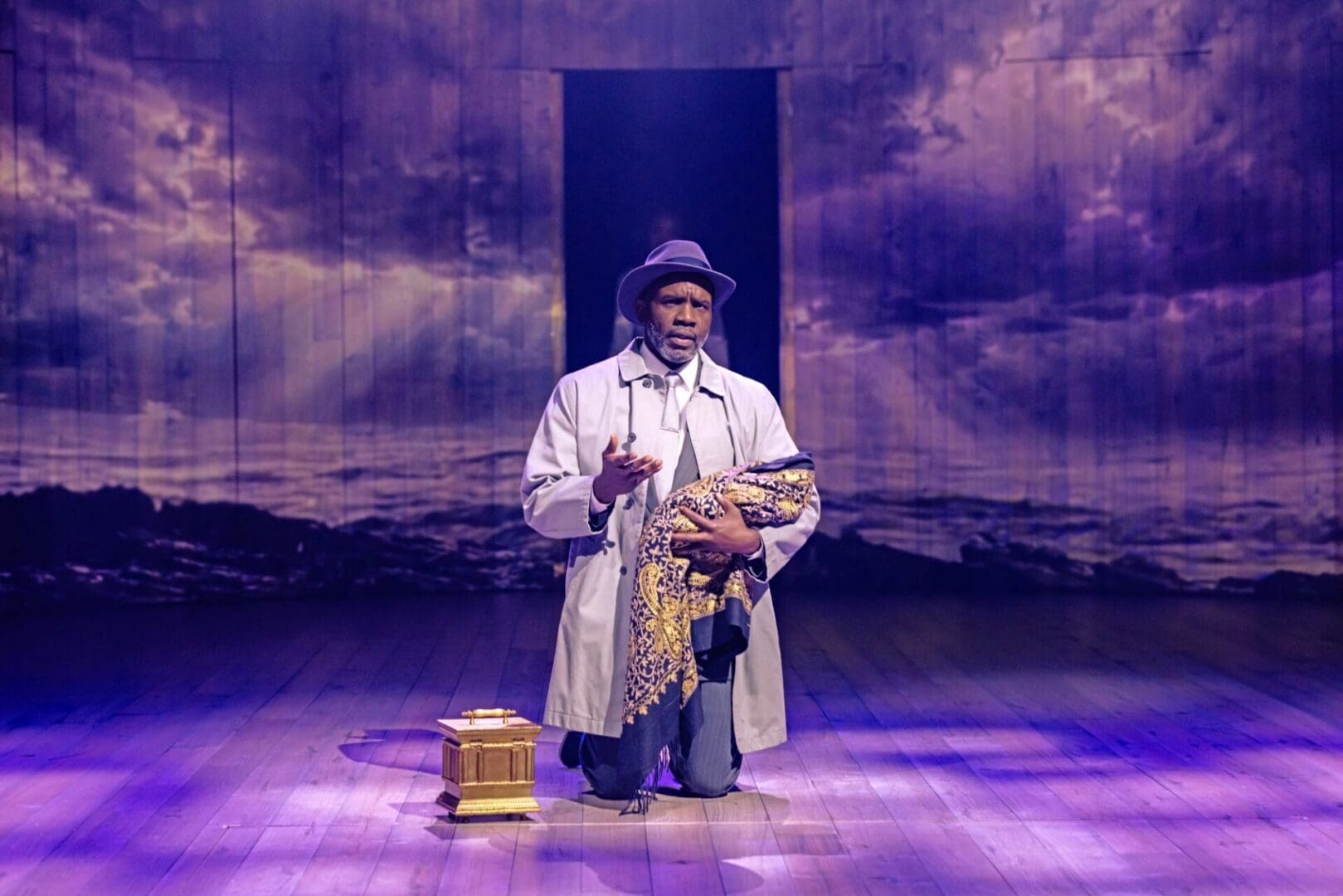
Ronald L. Conner (Antigonus)
✦ ✦ ✦ ✦ ✦ ✦ ✦ ✦ ✦ ✦
photos by Kyle Flubacker and Jeff Kurysz
The Winter’s Tale
Chicago Shakespeare Theater
performed in repertory with A Midsummer Night’s Dream
The Jentes Family Courtyard Theater, 800 E. Grand Ave. in Chicago
2 hours and 35 minutes plus intermission
performance days and times vary (repertory schedule)
ends on December 12, 2026
for tickets, call 312.595.5600 or visit Chicago Shakes
for more shows, visit Theatre in Chicago
✦ ✦ ✦ ✦ ✦ ✦ ✦ ✦ ✦ ✦
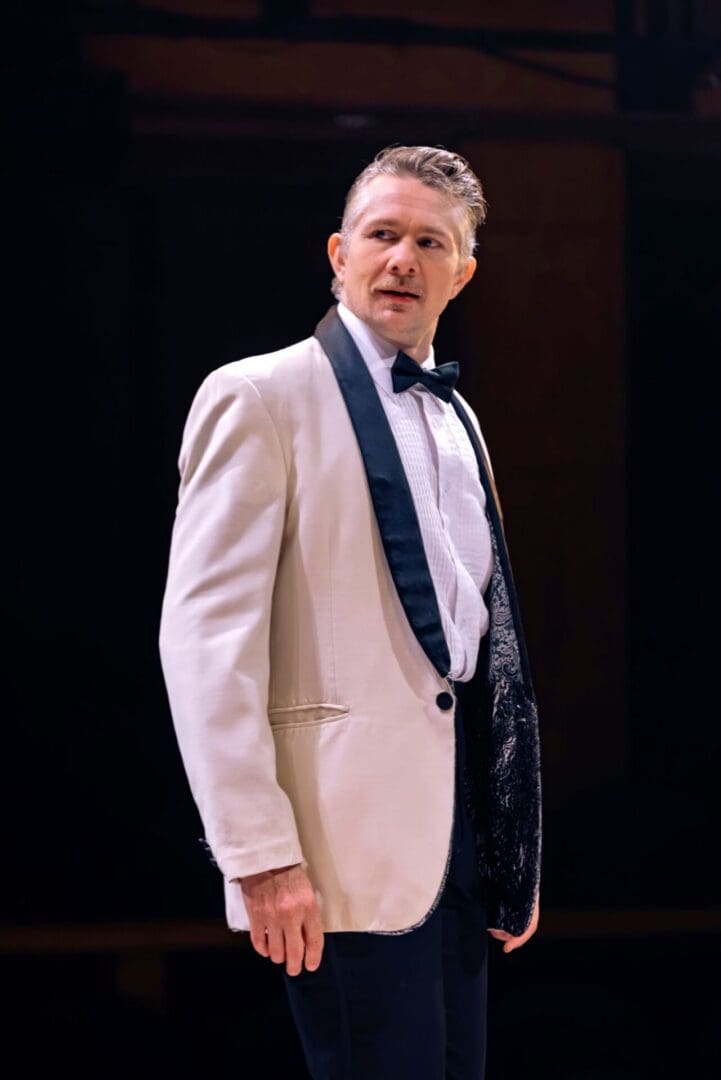
Erik Hellman (Camillo)
