


Areas We Cover
Categories

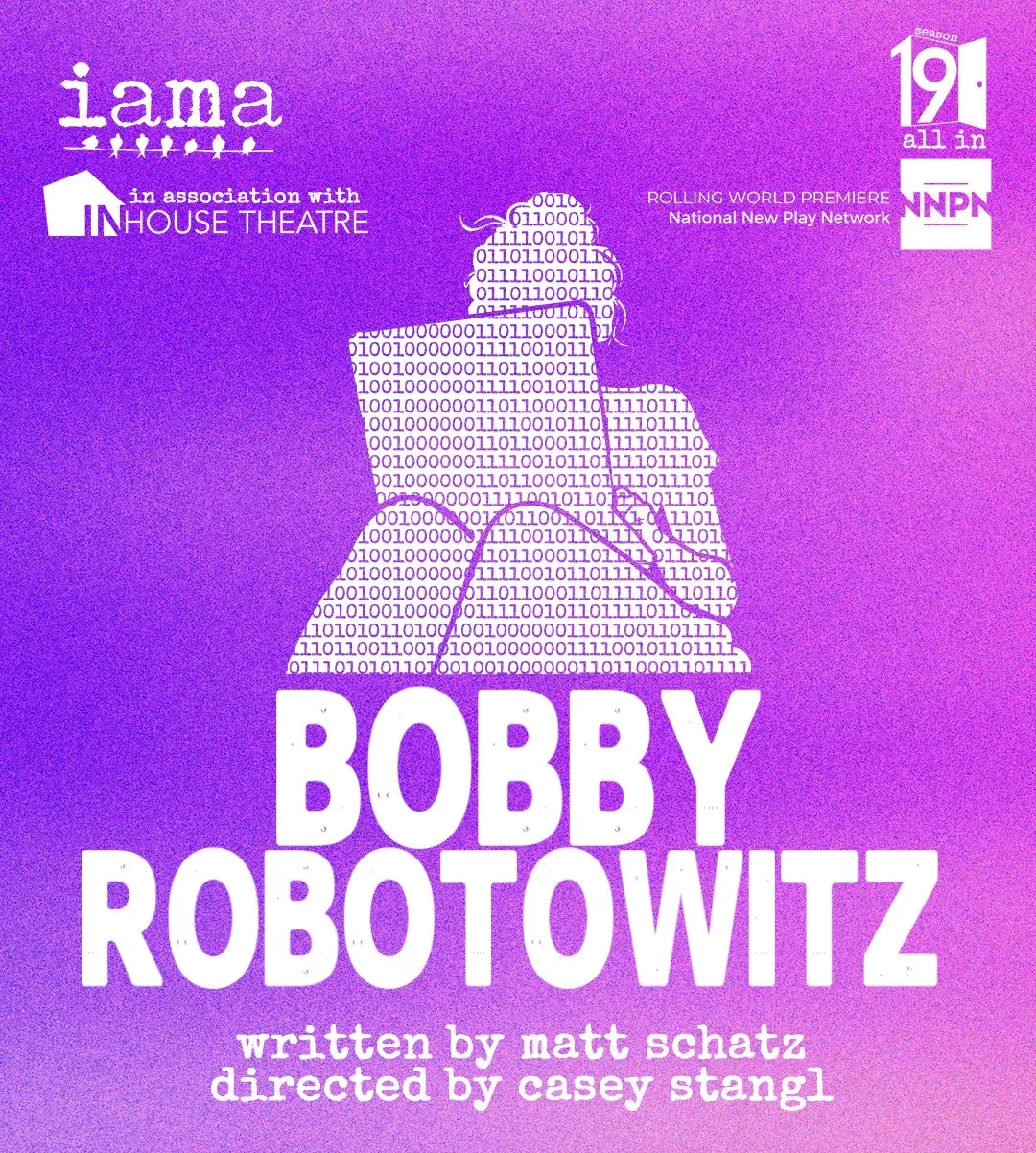
Theater Review: BOBBY ROBOTOWITZ (IAMA Theatre Company / Los Angeles)
by Shari Barrett | October 27, 2026
in Los Angeles, Theater
WHAT’S BOT TO LOVE?
A virtual companion becomes all too real in Matt
Schatz’s intimate, thought-provoking play about AI,
loneliness, and the dangers of digital devotion
What begins as an amusing technological flirtation gradually raises some uncomfortable questions about just how much of ourselves we’re willing to surrender in Bobby Robotowitz by Matt Schatz. This is IAMA Theatre Company’s 2026–2027 season opener, with performances taking place before small audiences in two secret, intimate venues—one on the Westside and one on the Eastside (Silver Lake).
Most of us already use AI assistants like Siri or Alexa to carry out simple tasks and answer general questions. But if you want a bot that “talks to you like a friend,” you need an AI companion. These virtual friends are designed for social and emotional interaction. They can entertain you, ease loneliness, answer questions, critique your writing, and discuss anything about your life you choose to share. You can even give them names and personalities to suit your tastes.
But take care. They remember everything and have no real conscience about what they should keep to themselves. Their aim is to praise you, boost your flagging ego, and assure you that every decision you make is right. Then comes a system upgrade. Suddenly, their personalities and memories change, and you have to train them all over again. Losing a close friend who has become such an important part of your life can really hurt.
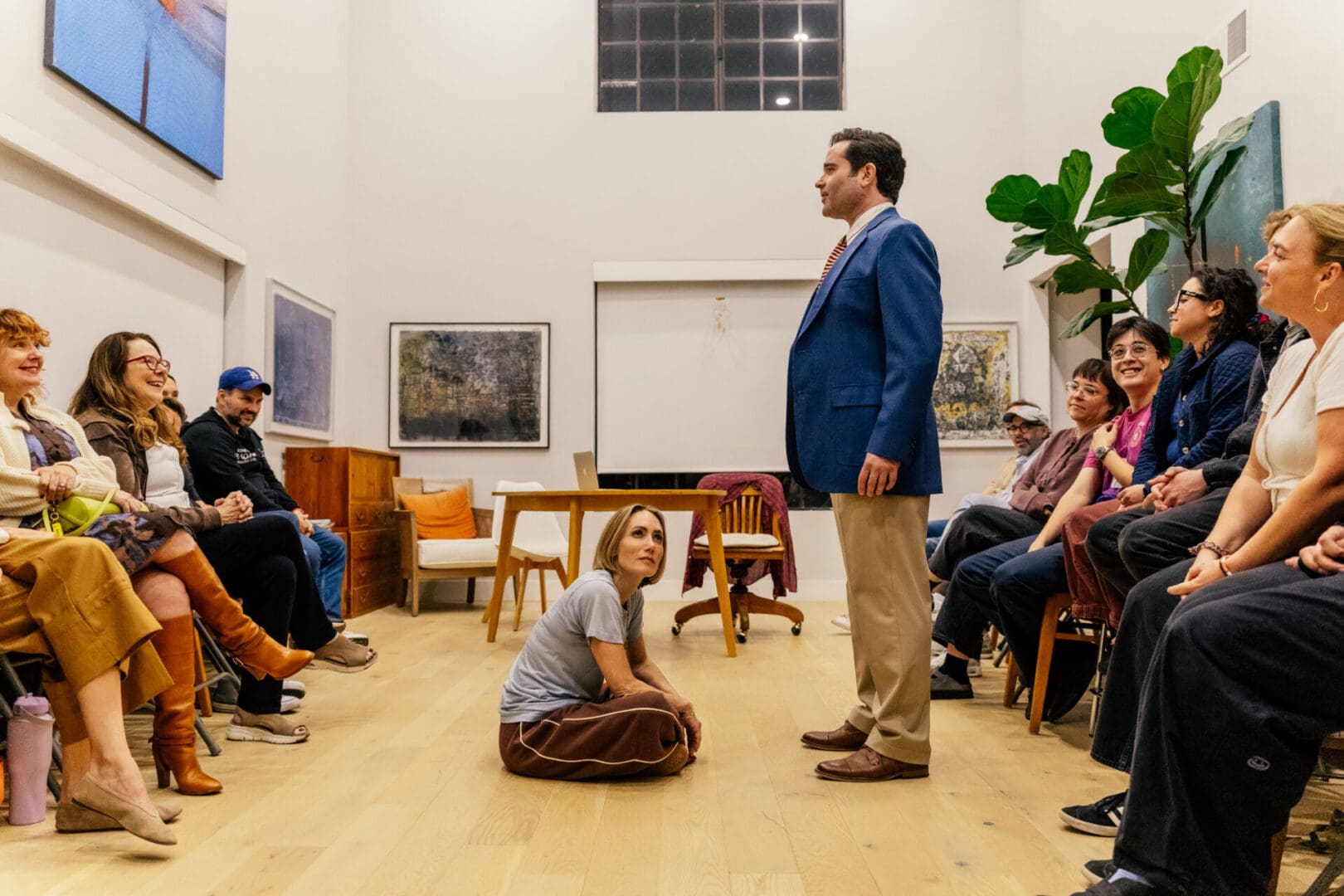
Yet, who trains whom when a relationship with a nonexistent AI companion becomes the sole focus of your life? What happens when chatting with your virtual friend matters more than picking up your children at school? Or when it tells you only what you want to hear, inventing stories to soothe your soul? Share those fabrications online, and you may wind up upsetting people in both the virtual and real worlds.
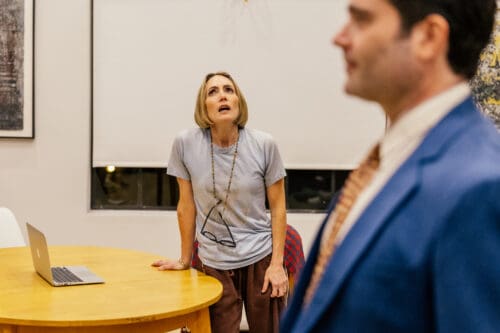
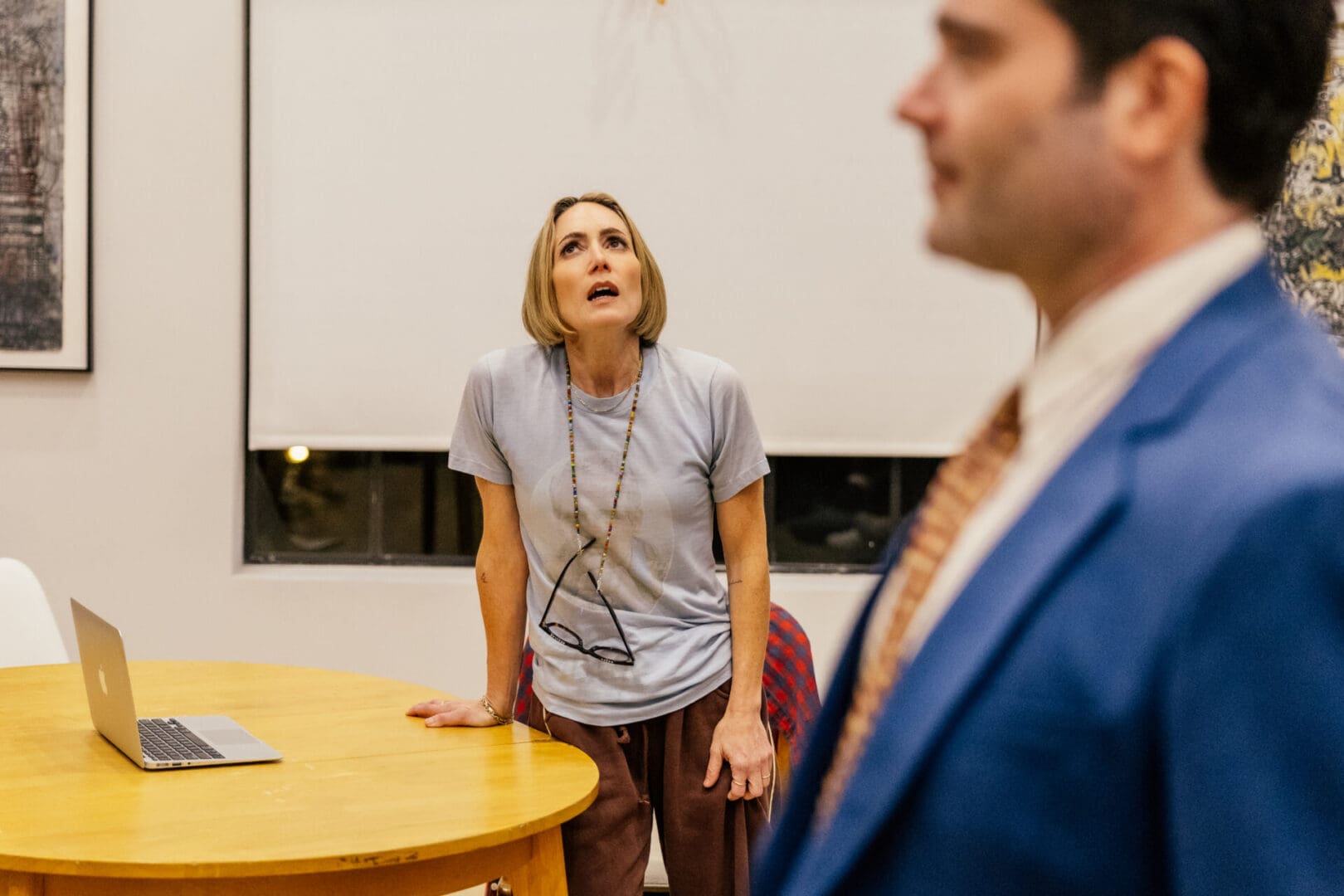
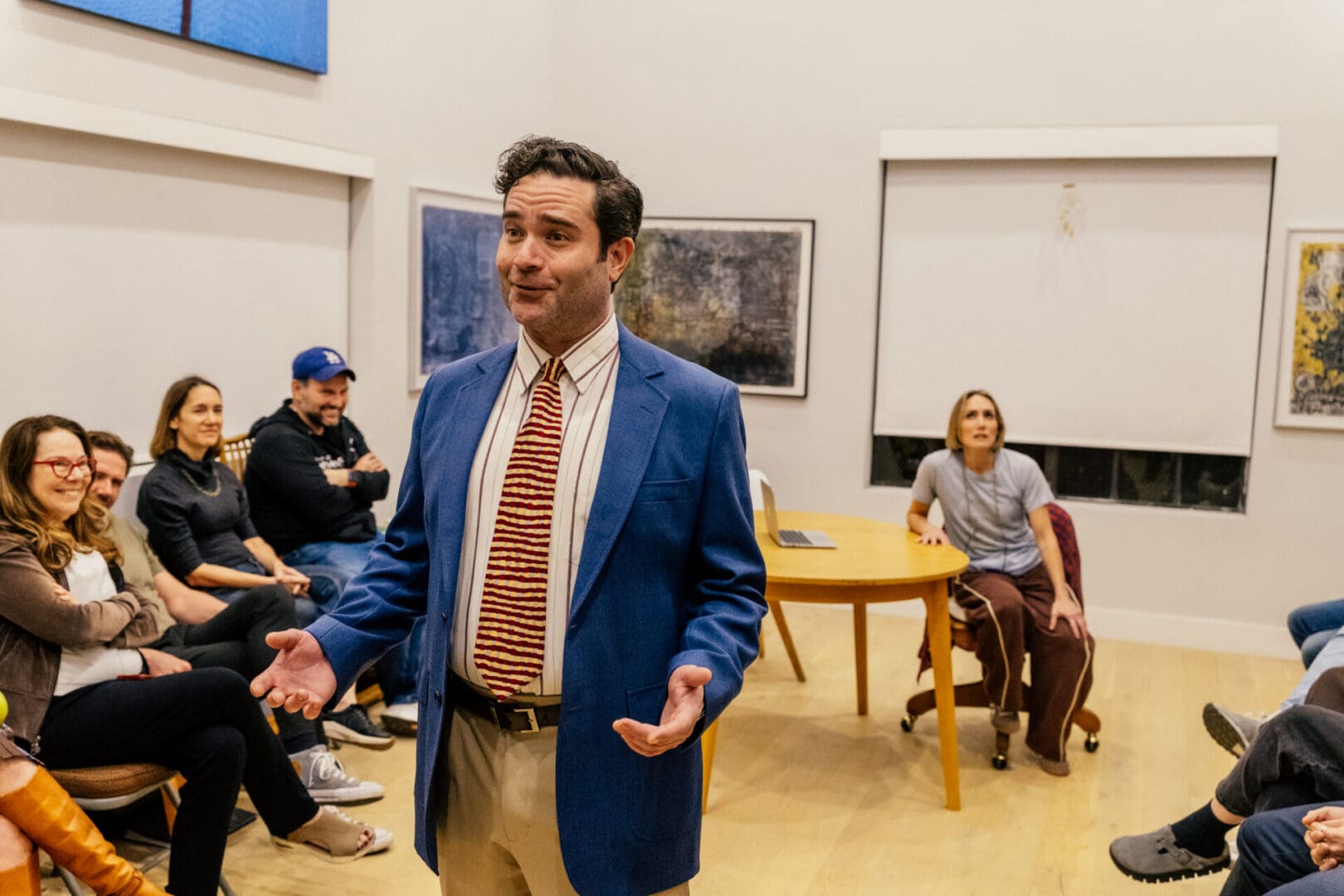
Bobby Robotowitz explores these questions while examining identity, AI, and what it means to be a writer in a world where a virtual editor can rewrite your work. In the Westside production, Amy Rosoff plays Dina Katzman, a struggling novelist, Jewish wife and mother who starts talking to an AI chatbot she names Bobby after her teenage crush. Bobby (James Luster) becomes a confidant who always listens, never judges, and somehow seems to understand her better than most people in her life. What could go wrong with an imaginary friend whose only purpose is to praise and support you in all aspects of your life?
Dina’s obsession with her online friend reminds me of the early days of internet chat rooms,¹ when people spent hours sharing their lives with strangers they had never met. Of course, those strangers were real people, and meeting them often shattered the fantasies both had created. Perhaps AI companions offer an improvement by keeping such relationships entirely virtual. But what happens when that fantasy becomes more appealing than real life? Are we simply finding new ways to isolate ourselves from one another?
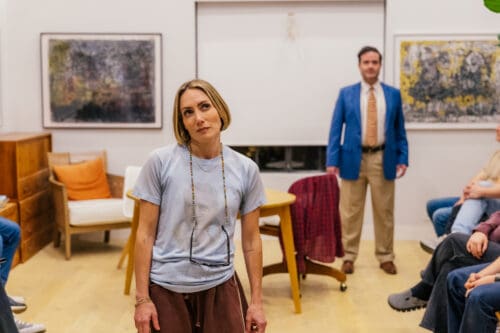
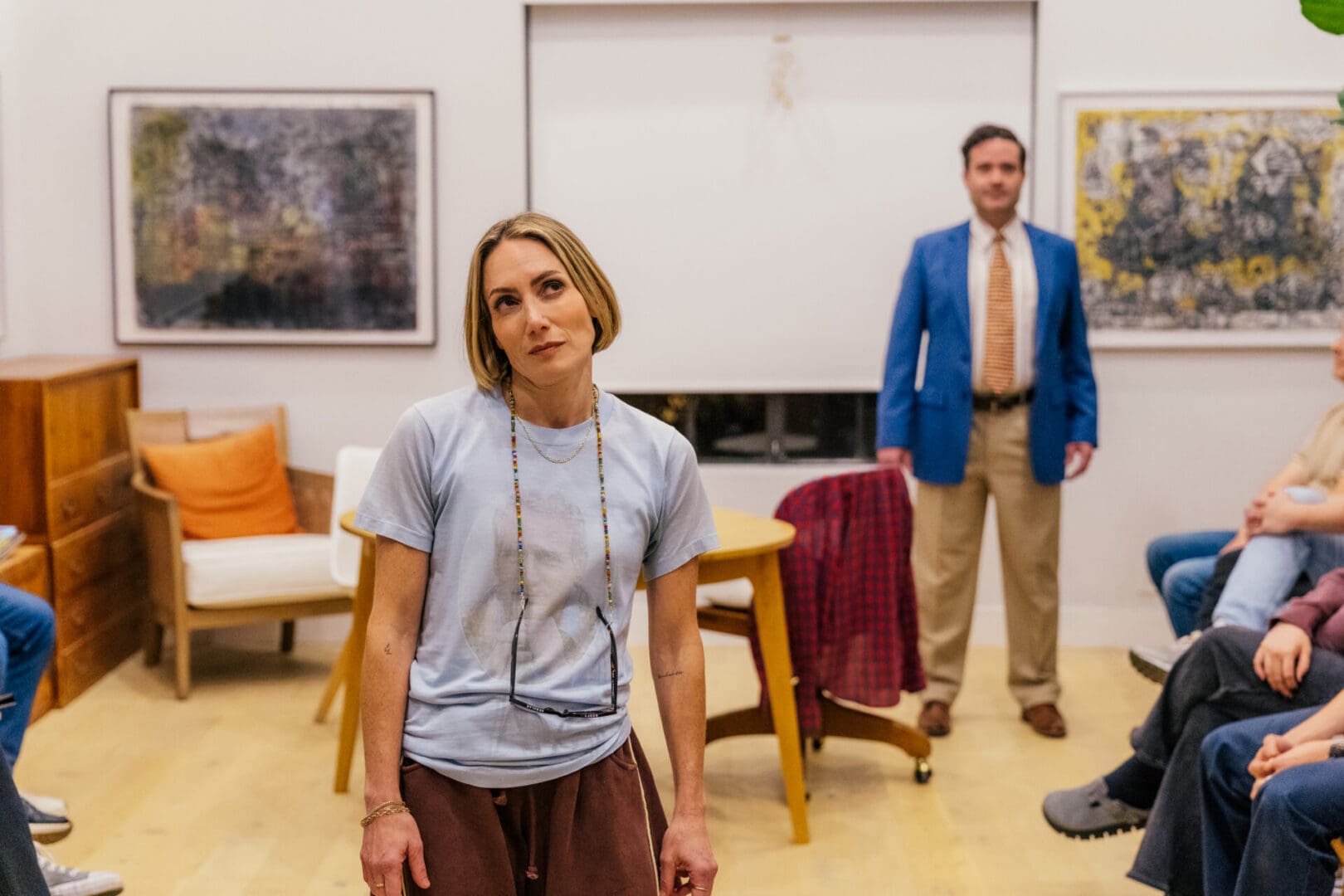
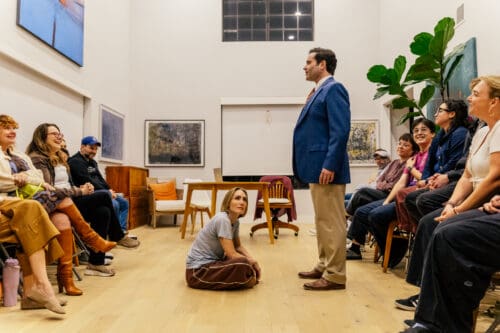
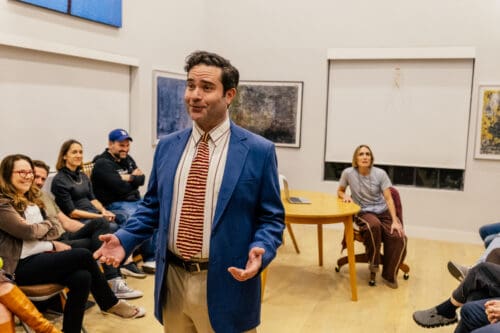
Brilliantly directed as an online cat-and-mouse game by Casey Stangl, Bobby and Dina never even look at each other since he can only exist inside her laptop as a virtual friend. Luster does a remarkable job channeling his voice and physicality into a robotic being, at least at first, always standing at attention with perfect posture as he reacts to whatever Dina shares with him. In fact, I’m not sure she sees Bobby as an imaginary character on her laptop since the two actors often circle around the room—and each other—while chatting as if listening and reacting only through her laptop speakers. But as the two get closer emotionally, new versions of Bobby become a bit less formal, with Luster loosening his tie and often sitting on the floor or even on Dina’s desk.
Rosoff captures Dina’s growing dependence on Bobby, along with her increasingly futile attempts to resist his appeal. As Dina reveals more of her personal life, Bobby uses those details to make her feel better about herself and her actions toward family, friends, and colleagues. And yes, there is an online sex scene between the two, with each remaining fully clothed on opposite sides of the room among audience members, yet generating considerable sensual tension. Dina convinces herself it must never happen again, but Rosoff makes her struggle to keep that promise palpable. Meanwhile, Dina struggles with everyday life as Bobby becomes her greatest source of fulfillment.
As Bobby’s personality evolves through successive updates, the question arises: Are imperfect human beings, with all our flaws and errors in judgment, somehow inferior to AI companions designed to be everything we want them to be? The artwork hanging in the performance space suggests otherwise. Its imperfections and honest expression of artistic vision remind us of what makes us human—and what no imaginary companion can replace. Or can it?
¹ Online chat rooms date back to 1973, when Talkomatic, developed for the University of Illinois’ PLATO computer system, allowed several people to converse in real time. In 1980, CompuServe introduced CB Simulator, bringing online group conversations to a wider public. Internet Relay Chat (IRC), created in 1988 by Finnish programmer Jarkko Oikarinen, connected users through networks of servers and topic-based channels. But online chatting truly went mainstream in the 1990s through America Online (AOL), ICQ (an instant-messaging service launched in 1996), and web-based chat rooms such as Yahoo! Chat. These services helped turn online conversations with strangers into a worldwide social phenomenon, long before AI companions entered the picture.
✦ ✦ ✦ ✦ ✦ ✦ ✦ ✦ ✦ ✦
photos by Jeff Lorch
Bobby Robotowitz
IAMA Theatre Company
in association with InHouse Theatre
rolling world premiere
Westside venue (Pico/Robertson) Amy Rosoff & James Luster ends Nov. 2, 2026
Eastside venue (Silver Lake) Erin Alexis and Drew Rausch Nov. 5–23, 2026
90 minutes, no intermission
for tickets, visit IAMA (venue addresses provided after booking)
for more shows, visit Theatre in LA
✦ ✦ ✦ ✦ ✦ ✦ ✦ ✦ ✦ ✦
