


Areas We Cover
Categories

Theater Review: THE WASH (Front Porch Arts Collective / Boston)

WASHING OUT INEQUALITY
In a stirring account of the 1881 Atlanta Washerwomen’s Strike,
collective action becomes a powerful force for change
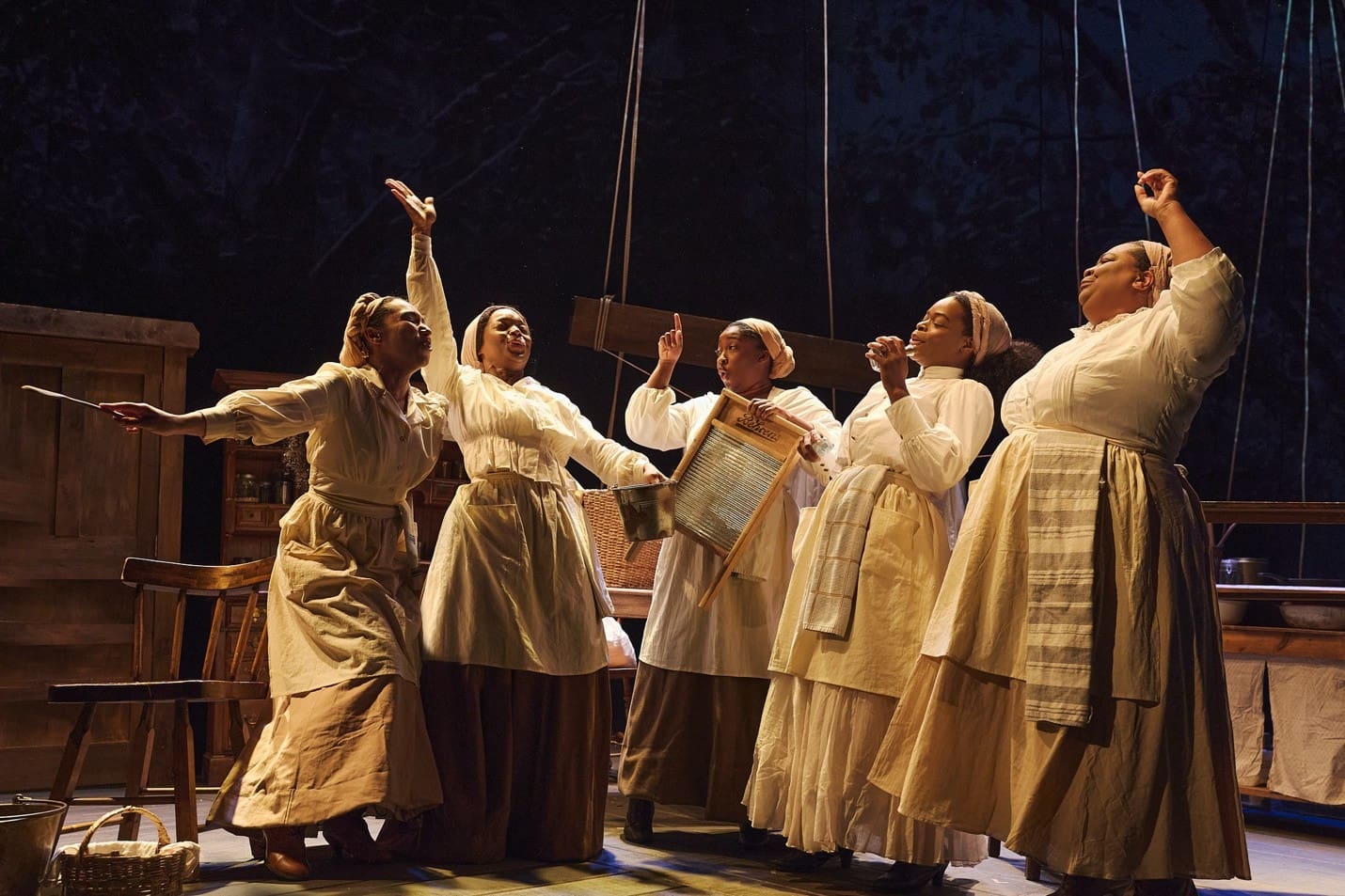
Keira Prusmack, Lindsey McWhorter, Jada Saintlouis, Marhadoo Effeh, McConnia Chesser
It is the hot summer of 1881, and Atlanta, Georgia, is preparing to host the International Cotton Exposition. A major business convention on the scale of the World’s Fair, the cotton expo is meant to showcase to the world that, 20 years after the Civil War, the American South is prosperous once again and worthy of international recognition, capital investment, and trade. Yet there is a curious dramatic irony in this moment. The wealthiest businessmen of the day aim to present Atlanta as a beacon of industrial development and economic progress, but that development and progress is largely dependent on the underpaid labor of Black workers.
This includes thousands of Black washerwomen, whose grueling work of scrubbing, boiling, and ironing is essential for these wealthy businessmen to look presentable in front of potential investors, but who are being paid in cornmeal or hand-me-downs, if anything. These women recognize that, to sell the New South’s future as commercially viable, Atlanta’s elite need their labor. And so, in the hot summer of 1881, they organize and stop washing, demanding that the city’s power brokers recognize their worth.
Kelundra Smith’s superb 2024 play, The Wash, dramatizes the washerwomen’s strike of 1881, in which a handful of women meeting in a church basement grow into a citywide interracial movement that ultimately wins better labor conditions for all.
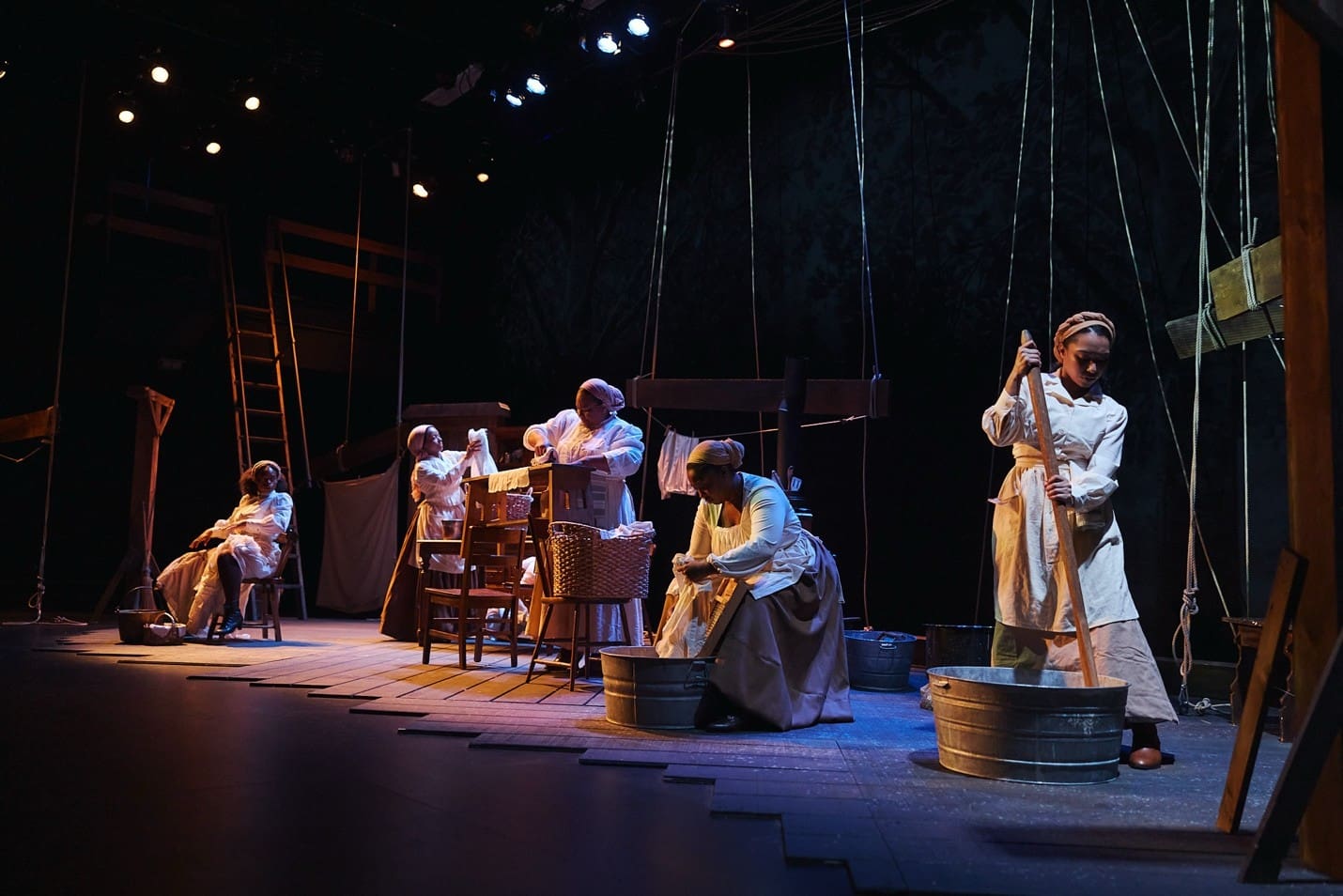
Marhadoo Effeh, Lindsey McWhorter, Maconnia Chesser, Jada Saintlouis, Keira Prusmack
Though I wish there were more emphasis on the brilliance of their timing and recruitment strategies, I greatly appreciate Smith’s choice to focus on the richness of these women’s lives. Their dreams, humor, joy, love—and lust—and care for one another are the center of the story. In addition to the strike, the script uncompromisingly portrays difficult social topics such as police brutality, domestic violence, classism, colorism, and the unique experience of growing up mixed-race or queer as a Black woman. Rather than feeling like a Big Play about Big Issues, Smith allows each subject to emerge organically through the lived experiences of her characters, and explores them with tenderness. It reminds me of Zora Neale Hurston in that way.
Following productions in Atlanta, St. Louis, Chicago, and New York, The Wash makes its Boston debut at Front Porch Arts Collective under the direction of Tasia A. Jones. It’s clear how much love went into every detail of the production.
Lindsey McWhorter deserves particular recognition as Anna, the stalwart leader of the resistance movement who rallies the other women to her cause. McWhorter also choreographed the interpretive dance that connects the scenes and physically expresses the backbreaking labor of washing clothes for 18 hours a day.
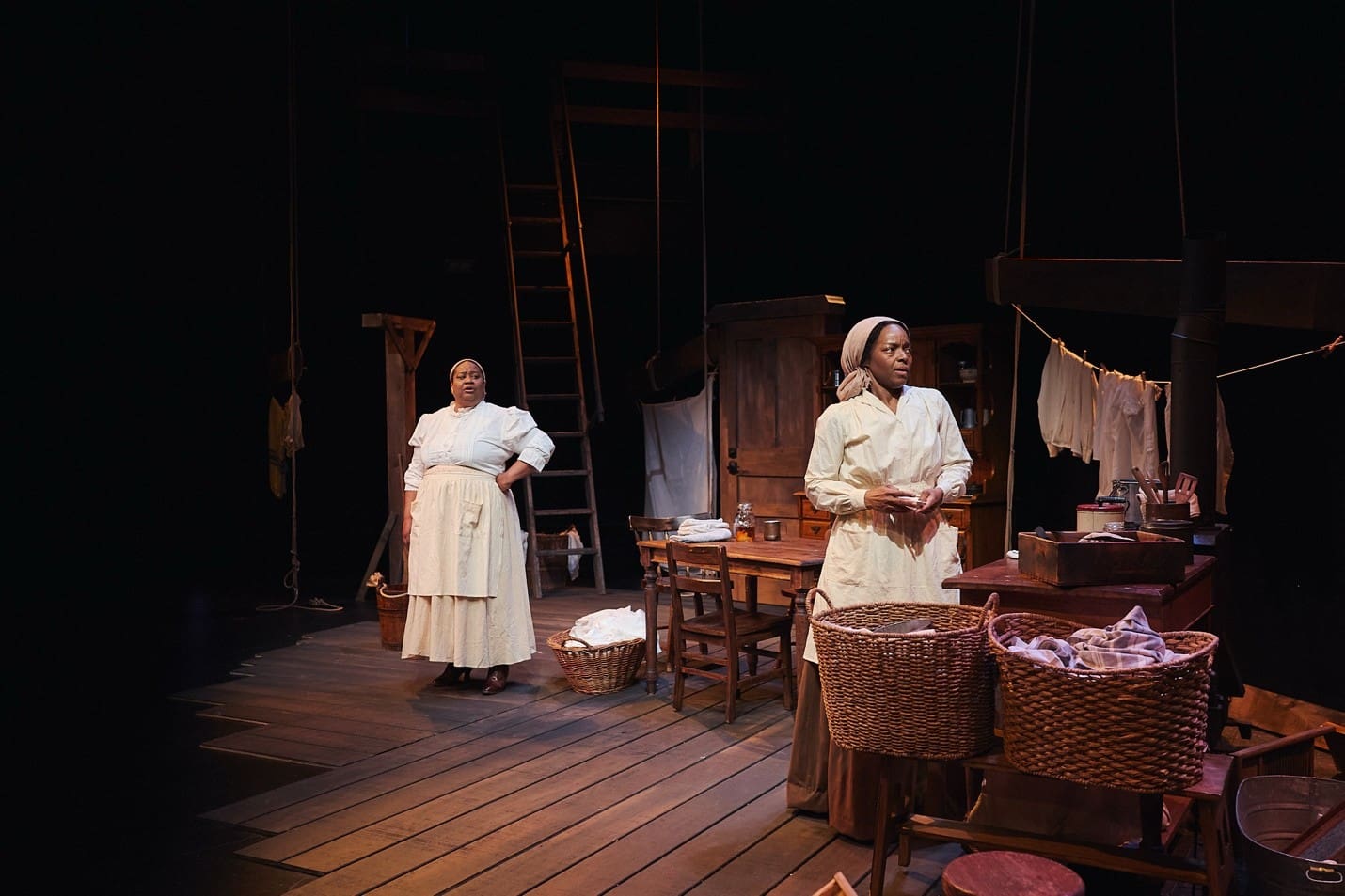
Maconnia Chesser and Lindsey McWhorter
MaConnia Chesser brings terrific stage presence and comic timing to Jeanie, Anna’s closest friend, who is initially skeptical about the strike. As Thomasine and Charity, Marhadoo Effeh and Jada Saintlouis serve as wonderful foils for one another: Effeh conveys with her entire body the weary but resolute spirit of a mother struggling with an abusive partner and unable to join the strike out of sheer necessity; Saintlouis balances Charity’s enthusiasm and sweetness with an undercurrent of grief, portraying an avid organizer and loving newlywed struggling to start a family. Kiera Prusmack compellingly captures Jewel’s complexity and quiet conviction as she fights for equal pay and acceptance as a light-skinned, educated woman who loves another woman. Eliza Fichter brings warmth and humanity to Mozelle, the Irish laundress who expands the Washing Society into white neighborhoods, portraying her as a fully realized character rather than a token figure or white savior.
My favorite aspect of Front Porch’s production is its symbolic transformation of color. At the beginning of the play, Athena Parkman and co-designer Zoe Sandra’s costumes are drab and muted in the same whites, beiges and browns as the rope and wood of Julia Wonkka’s props. In the second act, the characters’ daily lives revolve around their own empowerment instead of other people’s laundry. Their skirts become jewel-toned; Amanda E. Fallon’s lighting becomes brighter. By the time the washerwomen have won their fight for fair wages, their dresses and jackets are covered in brightly colored African prints that are also reminiscent of stained glass. Equally vibrant projections by Pamela Hersch adorn the sheets pinned to the clothesline behind them.
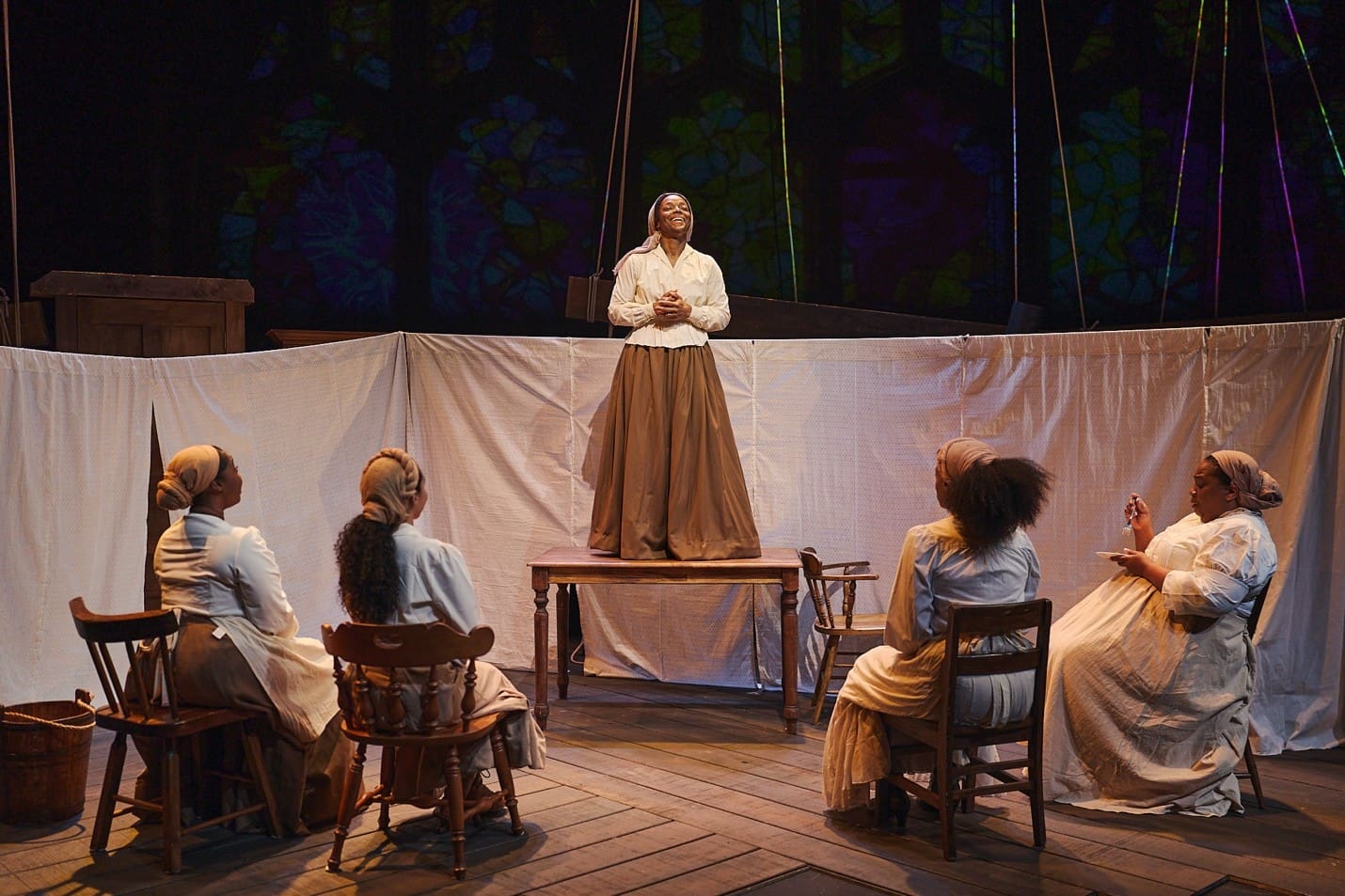
Lindsey McWhorter with the cast
Janie E. Howland’s inventive scenic design makes ropes and clotheslines integral to the storytelling. Sheets pinned to the lines transform the space from a laundry to a church to a secret meeting room, while clotheslines extend onto the audience handrails. When the women go door to door demanding their back wages, the actors climb the theater stairs, rolling sheets as they bring the action directly into the audience’s space.
I also appreciate the interactive educational displays in the theater lobby, assembled under the guidance of dramaturg Jae Porter. Alongside artwork and historical background is a comparison of workers’ rights struggles in Atlanta and Boston in 2026. Visitors can even write messages on shirt-shaped pieces of paper and pin them to a clothesline. These displays connect the play to the real events that inspired it while encouraging audiences to consider the labor challenges facing their own city. Front Porch’s The Wash reminds us that we are all workers, and meaningful change begins when we recognize our collective power.
✦ ✦ ✦ ✦ ✦ ✦ ✦ ✦ ✦ ✦
photos by Ken Yotsukura
The Wash
Front Porch Arts Collective
Roberts Studio Theatre at the Calderwood Pavilion, Boston
Wed–Thu at 7; Fri at 7:30; Sat at 2 and 7:30; Sun at 2
ends on November 22, 2026
for tickets ($10–$60), visit Front Porch Arts
for more shows, visit Theatre in Boston
✦ ✦ ✦ ✦ ✦ ✦ ✦ ✦ ✦ ✦
