


Areas We Cover
Categories

DVD Review: STONEWALL UPRISING (PBS)

by John Topping | April 23, 2011
in Albums
THE BEGINNING OF THE END OF THE DARK AGES FOR SAME SEX ORIENTATION
I am going to guess – and I’d love to be wrong – that the majority of gay men under the age of 35 know little or nothing about the Stonewall Riots.  This would be analogous to African Americans not knowing about the Civil Rights Movement: both are milestones in each group’s struggle against oppression, their uprisings that demanded basic human rights.  For gay people, the Stonewall Riots were the historical turning point, the defining moment that we said, “Enough is enough.  Now we’re going to fight back.”
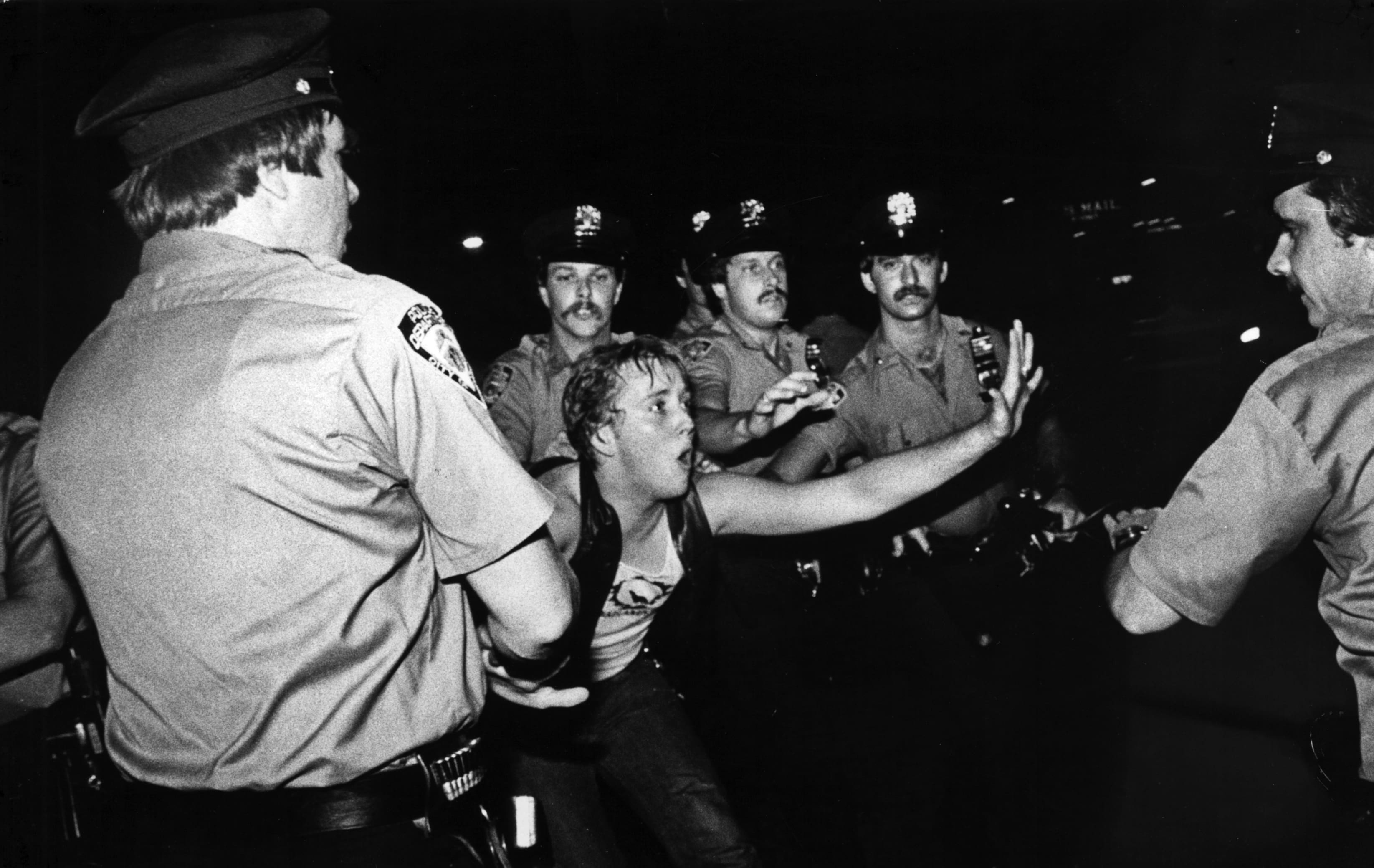 Yet I had to admit that I didn’t know too many details about it myself.  The legend, as I understood it, was that the gay bar called the Stonewall Inn had been routinely raided one night, but the cops had picked the wrong night that night.  Not only was it the hottest night of the year, but it was the same day as Judy Garland’s funeral; extreme weather discomfort combined with mourning an iconic diva is not a time to fuck around with anyone.  So the drag queens fought back, riots broke out, and we’ve been ripping open closet doors ever since.  And, well’¦that’s pretty much all I knew, really.  So when I recently heard someone say that it was an overrated event, that it was not nearly as big a “riot” as legend had it, and that it was simply a fight with a relatively small crowd gathered around, I wondered, “Could this be true?  Was this ignorance or historical revisionism?”  And I didn’t know the answer.  Fortunately, the PBS documentary Stonewall Uprising came to my attention shortly thereafter.
There remains much more inequality to battle in the years (and decades) ahead, but the first half of Stonewall Uprising is a sobering reminder of just how bad things used to be.  The picture of gay life before Stonewall as depicted here is as bleak as could be imagined.   Gays were considered the lowest of the low.  We had no rights – none; zilch.  You could be arrested, beaten, or fired just for the suspicion of being gay.  A CBS Special in the 1960s called  The Homosexuals contemptuously offered the “fact” that gays were not capable of having lasting relationships.  Homosexuality was considered a mental disease, and attempts to “cure” it often resulted in sterilization, castration, or lobotomies.  The Atascadero State Hospital in California conducted experiments on homosexuals that earned it the nickname “Dachau for Queers.”  Among other things, gay men were given a drug that simulated drowning, a sort of “pharmacological waterboarding,” as one interviewee put it.  After raids of gay establishments, names and addresses of those arrested were published in major newspapers, ruining careers and lives.
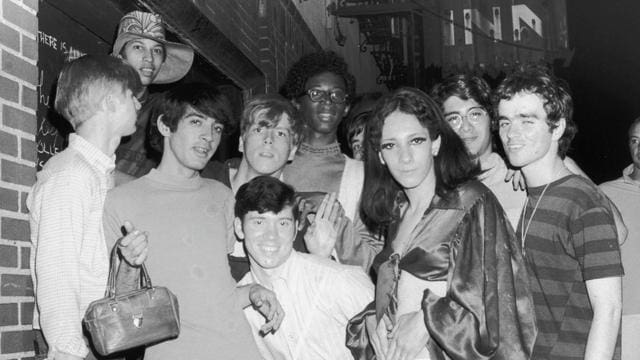 At the time, Greenwich Village in Manhattan was the major mecca that offered relief from the oppressive forces of the rest of the world: Â a place you could go where people didn’t care that you were gay, and people flocked there in virtual droves. Â But although the Village may have been preferable to utter isolation in a small town, it was no panacea. Â The indignities were endless: Â bars were routinely raided; gay establishments were typically “raunchy, smelly, and dirty;” entrapment was rampant.
The Stonewall Inn itself – the only gay bar that allowed dancing – was owned by the Mafia and known as a “bottle club.”  With no liquor license, it ran as’¦ahem’¦a private club with a $3 entrance fee (that was a lot in 1969 – about three times the price of going to a movie), where liquor was poured from unmarked jugs.  It was pure profit for the Mob, as the liquor itself had first been stolen, then watered down, and, taking advantage of price-gouging the downtrodden, finally sold to the gay patrons for twice the amount than any straight bar would charge.  All this just to be left alone to be oneself – forget about gay marriage; it was a luxury to have any refuge at all.
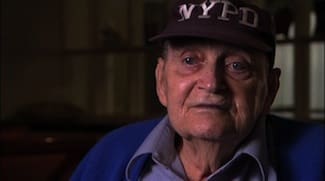 The documentary spends so much time letting us know how horrible the circumstances were that it is a palpable relief by the time we get to the actual riots.  As viewers, we can barely tolerate the intolerance anymore.  It was a very hot Friday night and the police had already raided the Stonewall Inn the previous Tuesday.  A total of six policemen were assigned to raid the packed bar.  Once the raid had commenced, the commotion drew a crowd outside.  But something was different:  the harassed patrons weren’t going along with it as easily as usual.  An actual power struggle was slowly erupting between the queers and the police.  Tensions grew; a feeling of danger swept through; someone started throwing pennies at the cops, which caught on with the growing crowd, and the police decided to retreat back inside the Stonewall Inn with the remaining bar patrons.  Violence stirred in the air outside.  Someone started a fire; a parking meter was dismantled to use a battering ram; the crowd, growing into the thousands, was emboldened, and the cops were clearly fearful.  Backup support came when five buses of a tactical police force arrived with clubs and shields.  The riot police formed a phalanx and pushed into the crowd.  And then – SURPRISE! – the crowd pushed back.  Very soon it was obvious to everyone that the weak, limp-wristed, helpless, pathetic, sissy boys – and NOT the police – were in control.  (Two more riots broke out – one the next evening and the other within a few days, but I will leave those details for you to watch and discover on your own).
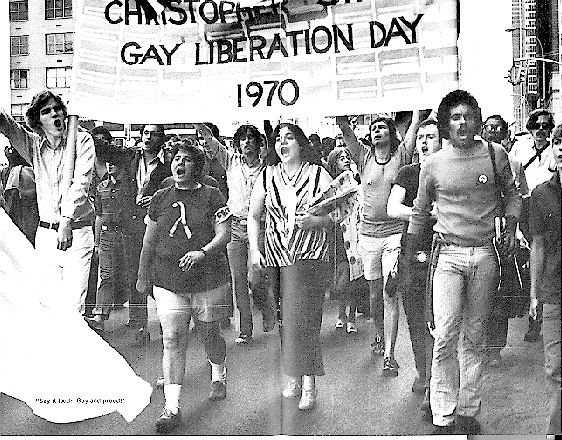 Everyone present recognized that this was a defining moment; the breaking point had come – we wouldn’t be treated as second class citizens anymore.  The moment was seized, despite the fact that the New York Times buried the story deep in its pages with the  skewed headline “Four Policemen Hurt In Village Raid.”  The following year (June 28, 1970), the first Gay Pride march was held in honor of Stonewall. One must remember the stubborn invisibility of gays at the time.  This was the first time in history that gay people revealed themselves as a group, as a political force, in public, en masse.  The march was no fait accompli – they didn’t even know if they would make it to the official conclusion in Central Park before being attacked by the onlookers.  The courage it took to be “out” in that era was phenomenal.
The Mattachine Society, an earlier “homophile” organization of the 1950s, had made significant headway in giving gays visibility; and certainly the phenomenon of Stonewall had ridden in on the turbulent waves of the 1960s. Â Whatever the case, the event is considered to be the turning point of gay history, the birthplace of gay rights.
One myth that the documentary busts is the legend that it was drag queens who single-handedly fought back. Â This revelation may actually be bad news for drag queens, as gays who disapprove of drag have always been forced to reconsider their position when told, “It’s because the drag queens fought back at Stonewall that we have our rights today.” Â Let’s be abundantly clear that cross-dressers were indeed a part of Stonewall, and not entirely strip them of their glory. Â That said, it was somewhat refreshing to learn that traditionally-gendered-dressers were a part of the uprising as well.
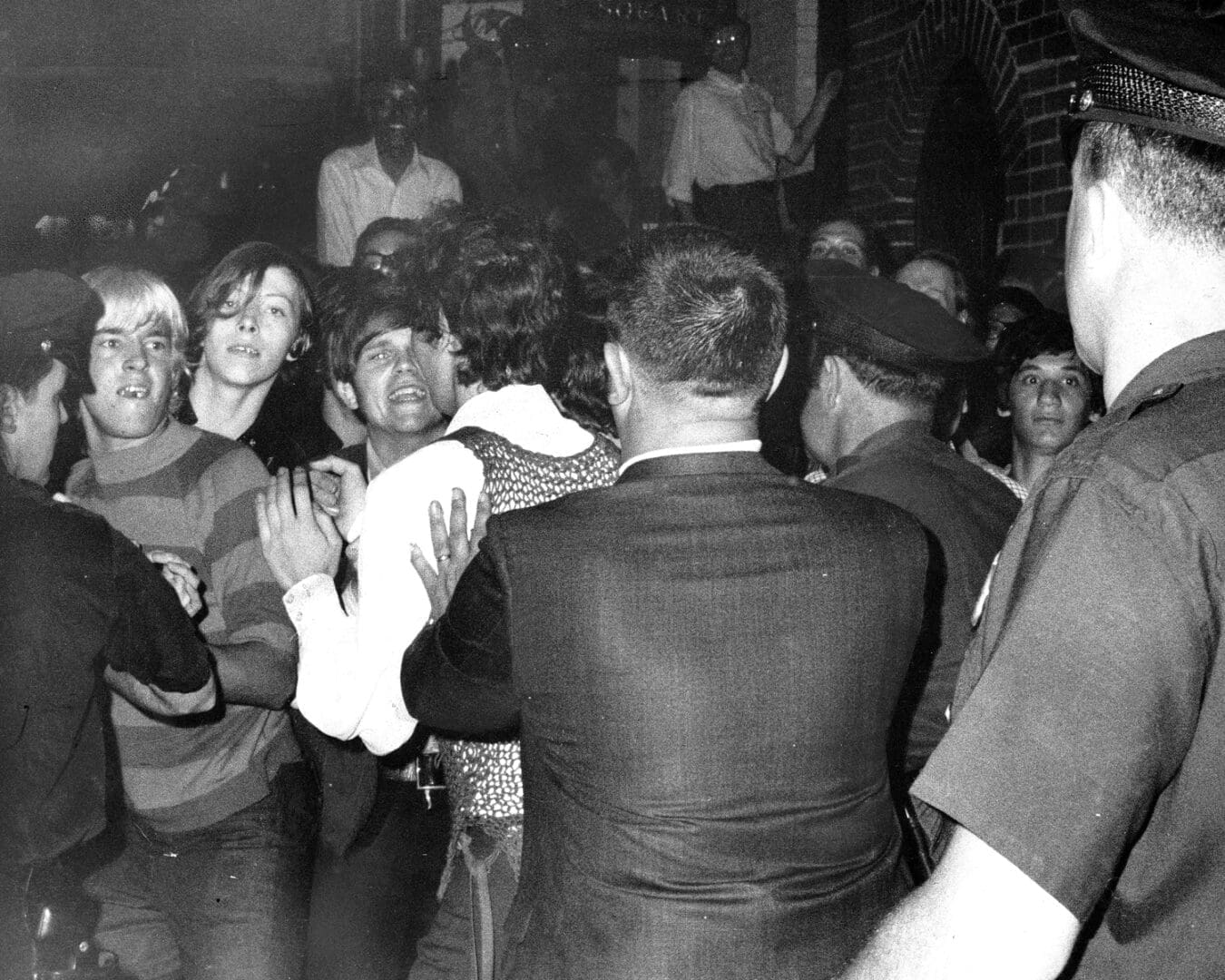 Though an extremely somber documentary, when one interviewee describes the riot police being confronted by a chorus line of gay men singing and kicking in Rockettes fashion, it’s a howler. Â Strangely, the Judy Garland aspect of the riots is never mentioned; not even in passing, not even to debunk it. Â The glaring omission makes one wonder if the filmmakers are making a statement that its significance is overrated or even blatantly inaccurate.
For any straight person who was unaware of Stonewall, this documentary will be a real eye-opener. Â Visibility has become so normal since 1969 that many straight supporters have no idea how badly gay people had it. Â As valuable as that is for them, the people who most need to see this documentary are gay people themselves. Â It is about time that a film came along that tries to be the definitive account of Stonewall; in fact, it’s peculiar that such a documentary has not come along before (the most significant predecessor of this piece is a radio documentary). Â But it’s better late than never, and Stonewall Uprising is a more than worthy tribute. Â I would add this to the list of essential gay documentaries, which, for me, would include The Times of Harvey Milk, For The Bible Tells Me So, and The Celluloid Closet (not to mention Mark Rappaport’s perfect pair of “Op-Ed” documentaries Rock Hudson’s Home Movies and The Silver Screen: Color Me Lavender). Â We should be grateful that filmmakers Kate Davis and David Heilbroner filled this void.
johntopping @ stageandcinema.com
Stonewall Uprising
airs Monday, April 25, 2011 9:00 p.m. ET/PT on PBS
DVD goes on sale Tuesday, April 26.
