


Areas We Cover
Categories

Theater Review: CHARLIE AND THE CHOCOLATE FACTORY (National Tour)
by Marc Wheeler | March 30, 2019
in Los Angeles, Theater, Tours
THE CANDY MAN CAN’T
The stage musical adaptation of Charlie and the Chocolate Factory — Roald Dahl’s beloved children-of-all-ages’ story — has spun into town just, it seems, to make your teeth ache. Directed by Jack O’Brien, this already extended national tour arrives to a city near you even though it flopped on Broadway (27 previews, 305 performances). The score features songs from the original film (”The Candy Man,” “I’ve Got a Golden Ticket,” “The Oompa Loompa Song,” “Pure Imagination”) as well as new additions by Marc Shaiman and Scott Wittman (Hairspray, Catch Me If You Can).
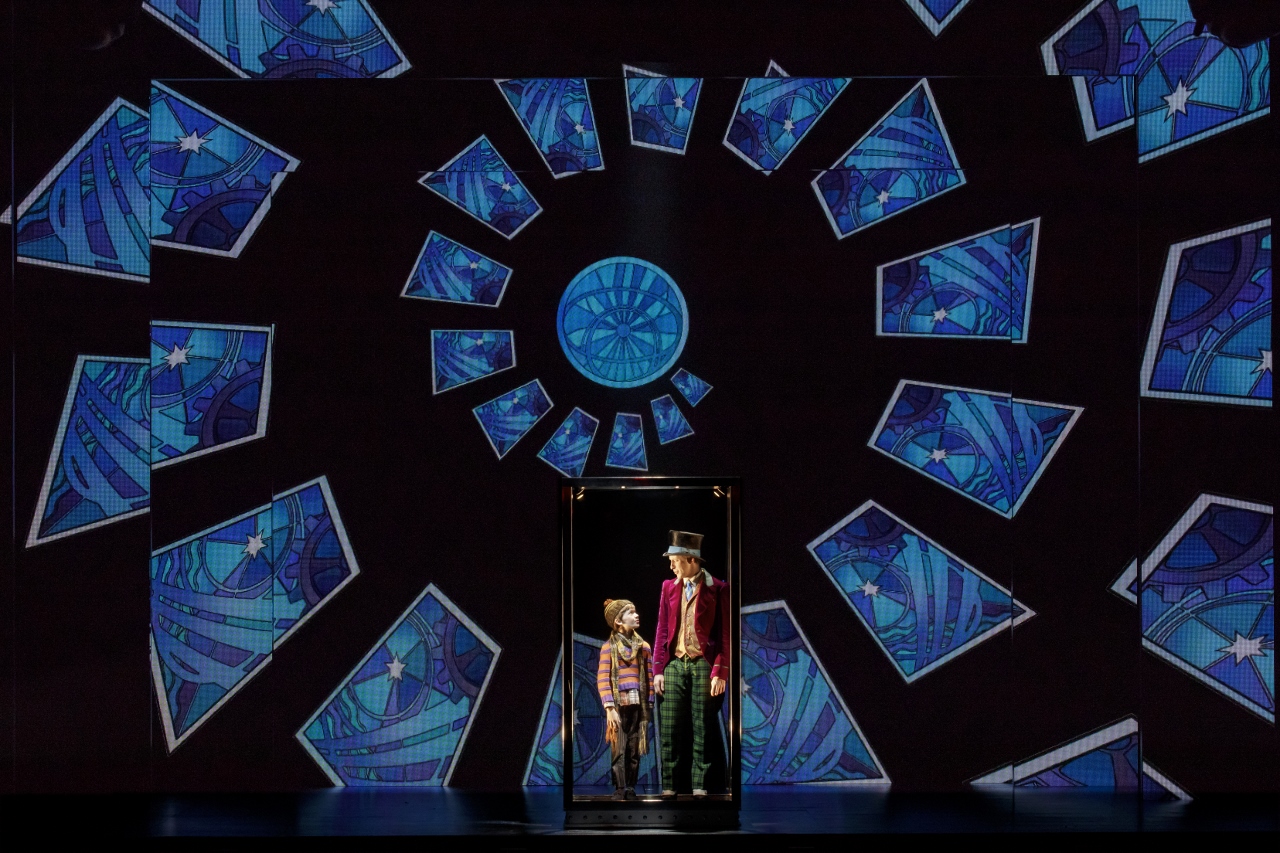
Meet young Charlie Bucket (Rueby Wood, alternating with Henry Boshart and Collin Jeffery), whose love of chocolate and daydreams provide a pleasant escape from his impoverished life. His mother, struggling to make ends meet as a single parent after the loss of her husband, is also burdened with providing for Charlie’s four bedridden grandparents. The home may be cash-poor, but it’s undeniably rich in love.

News spreads that Willy Wonka, the world-famous, reclusive chocolatier, is holding a contest wherein five lucky children will win a lifetime supply of Wonka candy and tour his top-secret factory (an adult guardian must accompany each youngster). All one has to do is find one of five ever-elusive Golden Tickets wrapped inside select Wonka Bars distributed across the globe. Charlie, of course, is determined to win.
 His mother, realist (or borderline pessimist) that she is, reminds him that every other child on earth also wants to win, so maybe he shouldn’t get his hopes up. “You gotta earn a living,” she says. “You can’t eat daydreams.” (Whatever, mom.) As news breaks of found tickets from Bavaria to Iowa, Charlie’s mood deteriorates. Until : well, look at the title.
Written in 1964 by British author Roald Dahl, Charlie and the Chocolate Factory was adapted to the big screen as Willy Wonka & the Chocolate Factory in 1971 starring the inimitable Gene Wilder, earning cult status. Tim Burton got a crack at the story in 2005, casting Johnny Depp as the legendary Candy Man. It’s tough to prepare for this musical without thinking of at least one of these cinematic adaptations, especially the role of Wonka. Depp cranked up the Wonka weirdness, eliciting a cringy creepiness just this side of Leaving Neverland (the documentary about Michael Jackson’s alleged sexual abuse), whereas the bright-eyed Wilder brought a sinister edge undercutting a veneer of wonderment.
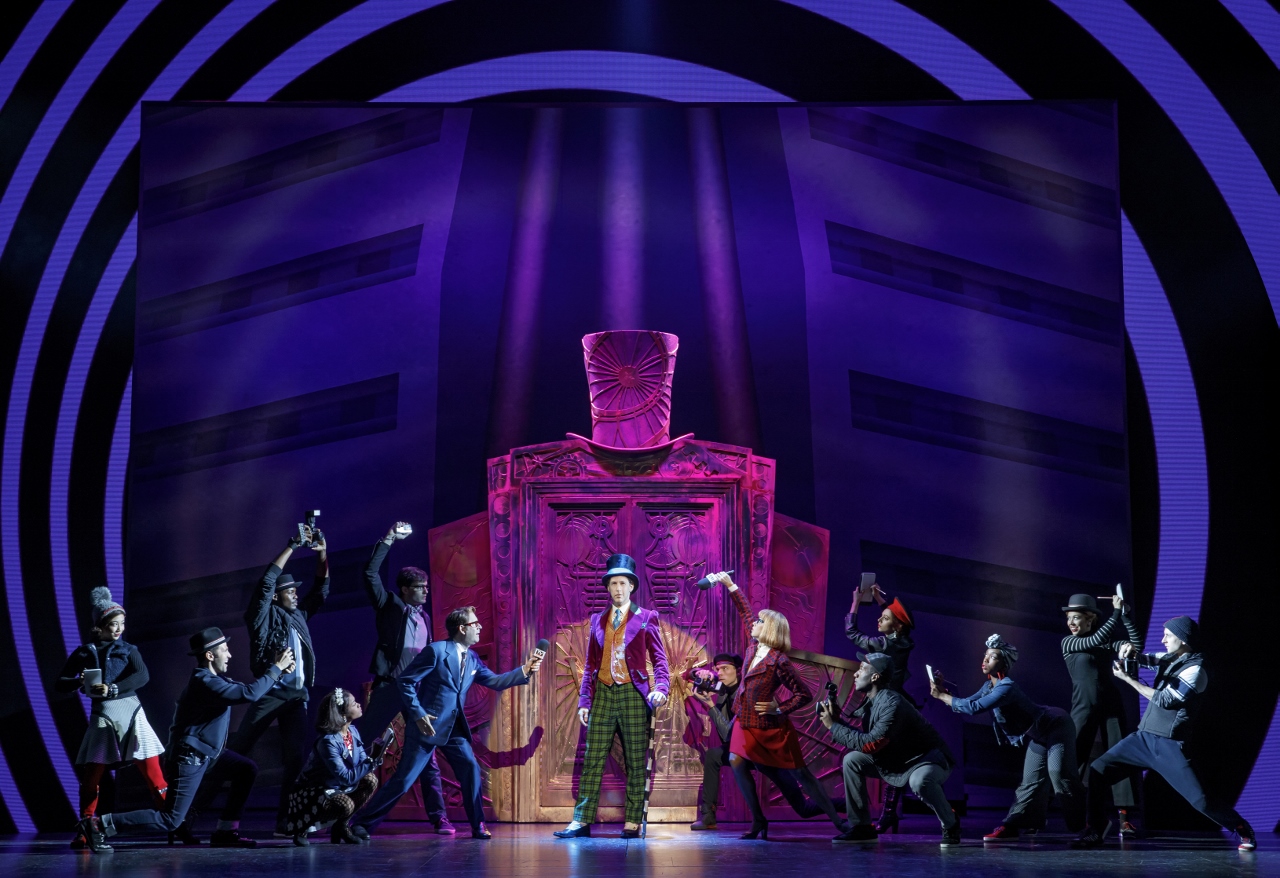
Where does one go from there, especially in a big-budget, big-stage musical? If you’re Jack O’Brien, you direct your leading man, Noah Weisberg, to not stand out. Imagine a Vegas showman on a stage full of showmen. He’s as revelatory as a chocolate chip. It’s unfortunate, really. It’s not that I need my Wonka to be indecipherably freakish, but he needs to at least demand more attention than anyone else onstage. Sure, Wonka is sweetly peculiar, but he’s also a homicidal monster. A dreamer of dreams but a weaver of nightmares.
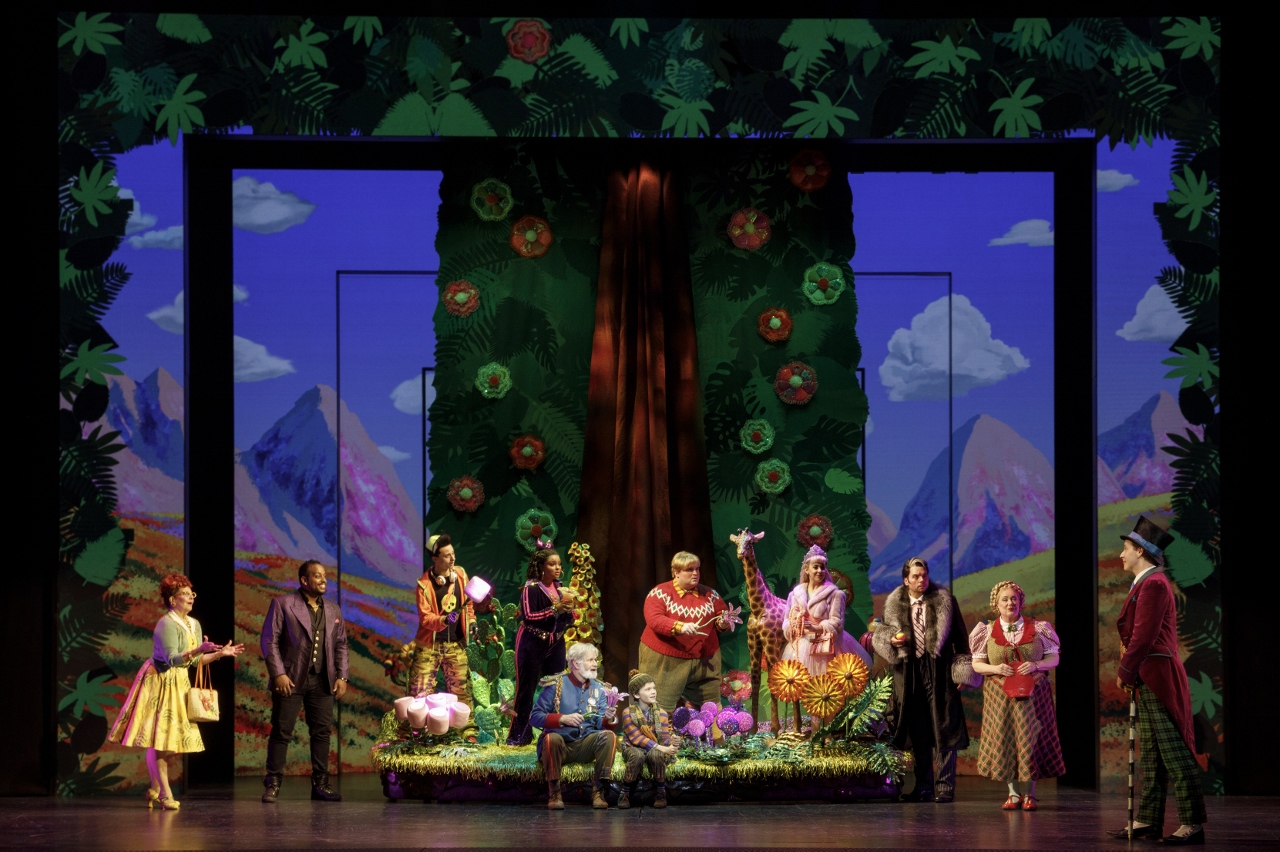
Along with a letdown of eminence and danger, the characterization is inconsistent. In Act I, Wonka’s an Everyman who just so happens to own a renowned chocolate factory. In Act II, he’s a ham spouting zingers and groaners (“If you fall in [the chocolate river] you could end up seriously fudged”). Never in Act I, however, do we get the sense he’s a closeted extrovert. Rather, it appears the first-act Wonka has been replaced by someone else during intermission.
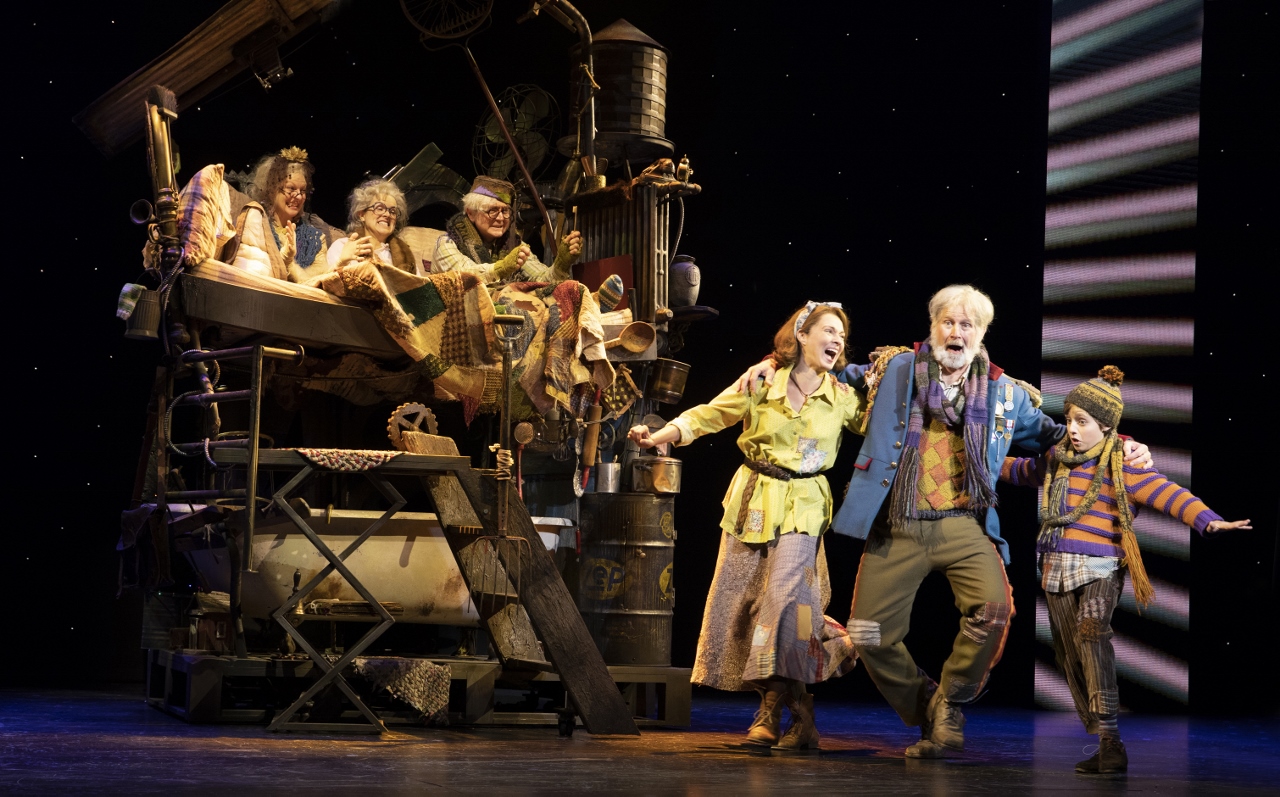
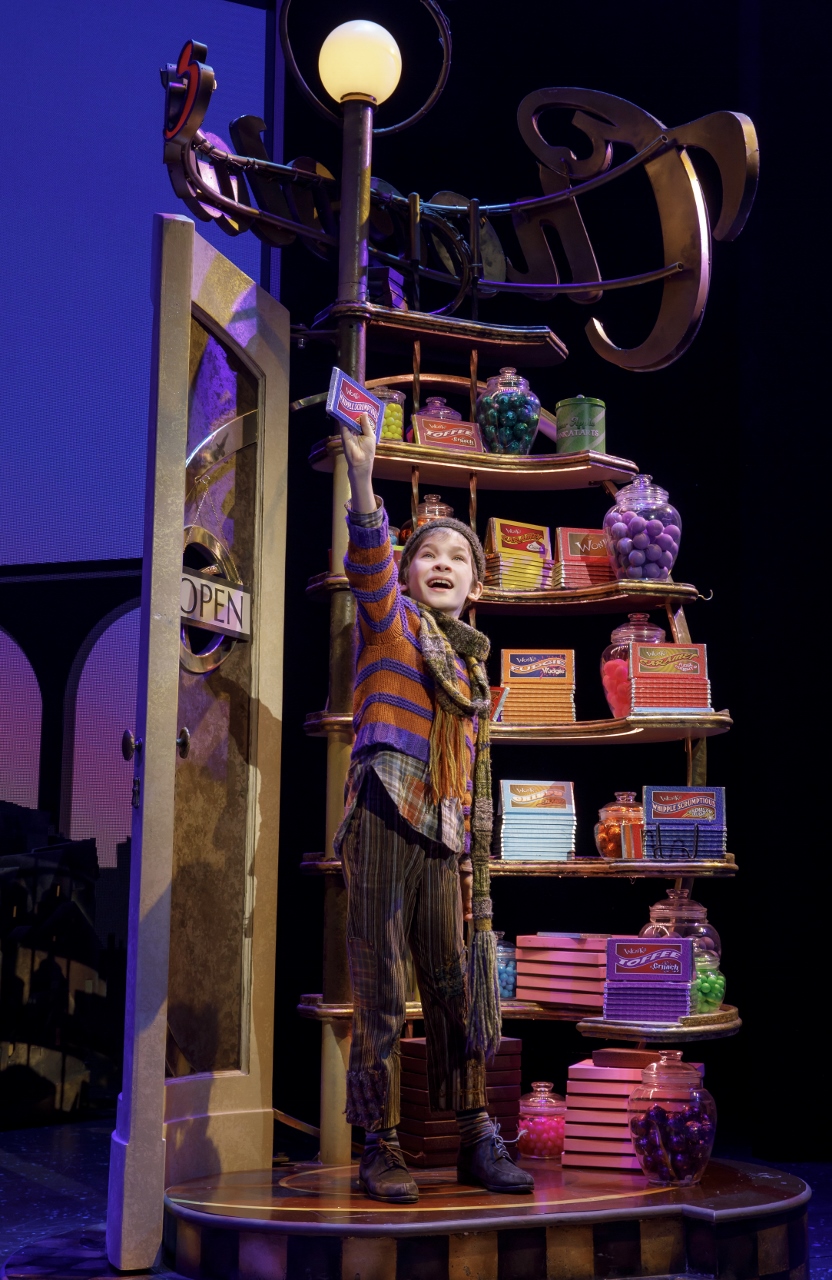
Even with unenthusiastic reviews, Charlie had a three-year, seven-month successful London run in 2013; in 2017 David Greig updating his already updated book for Broadway. Among the more head-scratching changes: Wonka is introduced at the top of the show and then mentions that he’s looking for a replacement to run his factory. (One can’t really say “spoiler alert” when a revision ruins a heartwarming surprise ending — in its first five minutes, no less.) Wonka also disguises himself as a local to help find his heir, setting up a little shop selling Wonka Bars. While these ill-conceived changes let the audience in on Wonka’s motivations, they completely remove the suspenseful build-up to his ultimate reveal.
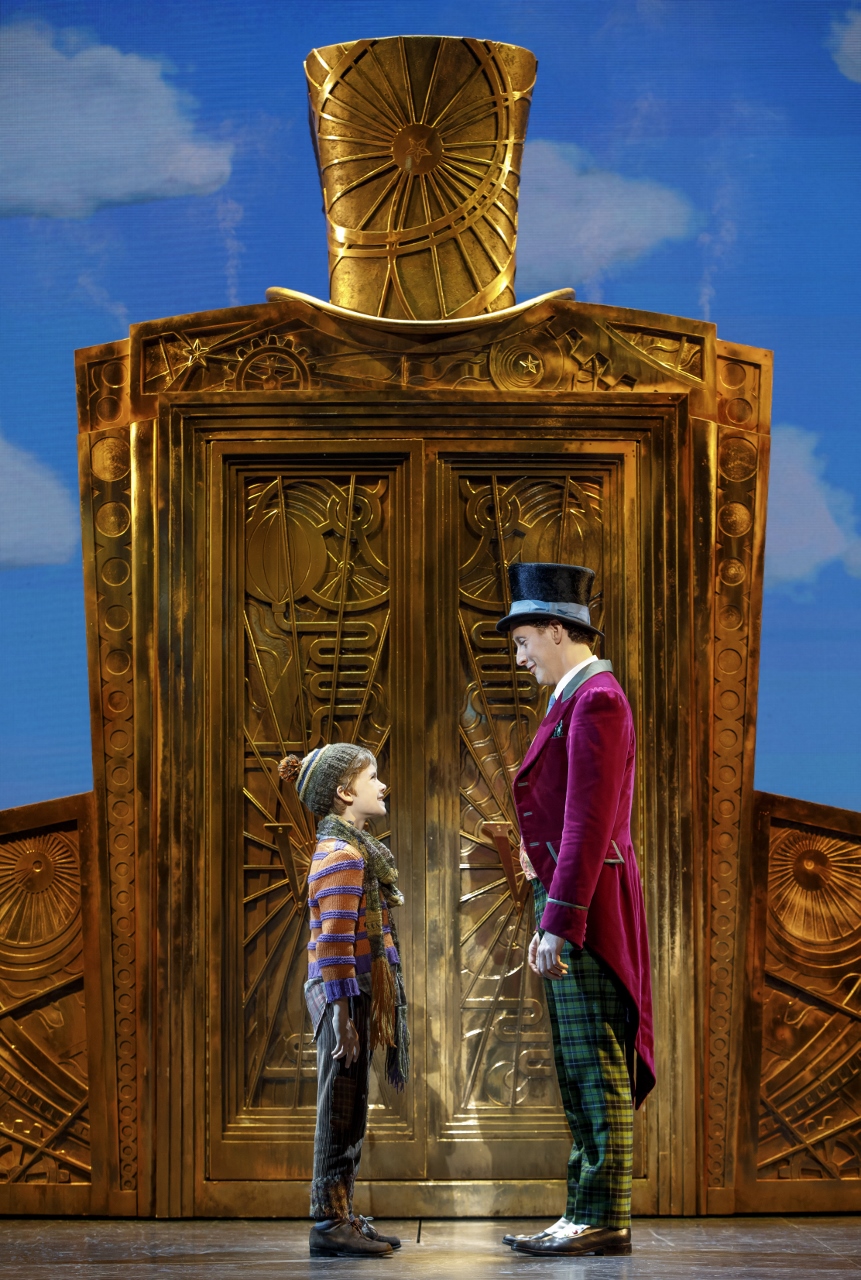 Another change from the West End is the elimination of four child actors. I’ll be honest, I’m all for it. It’s hard enough to find one child actor who can carry a show and not come across as a “child actor.” But five? It’s doable, but good luck. So what we have is Charlie being played by a child (and Mr. Wood is indeed excellent), and the other four played by adults. It’s a gimmick, and it works. While the characters may still be played over-the-top, they read more funny than cloying. Smart move.
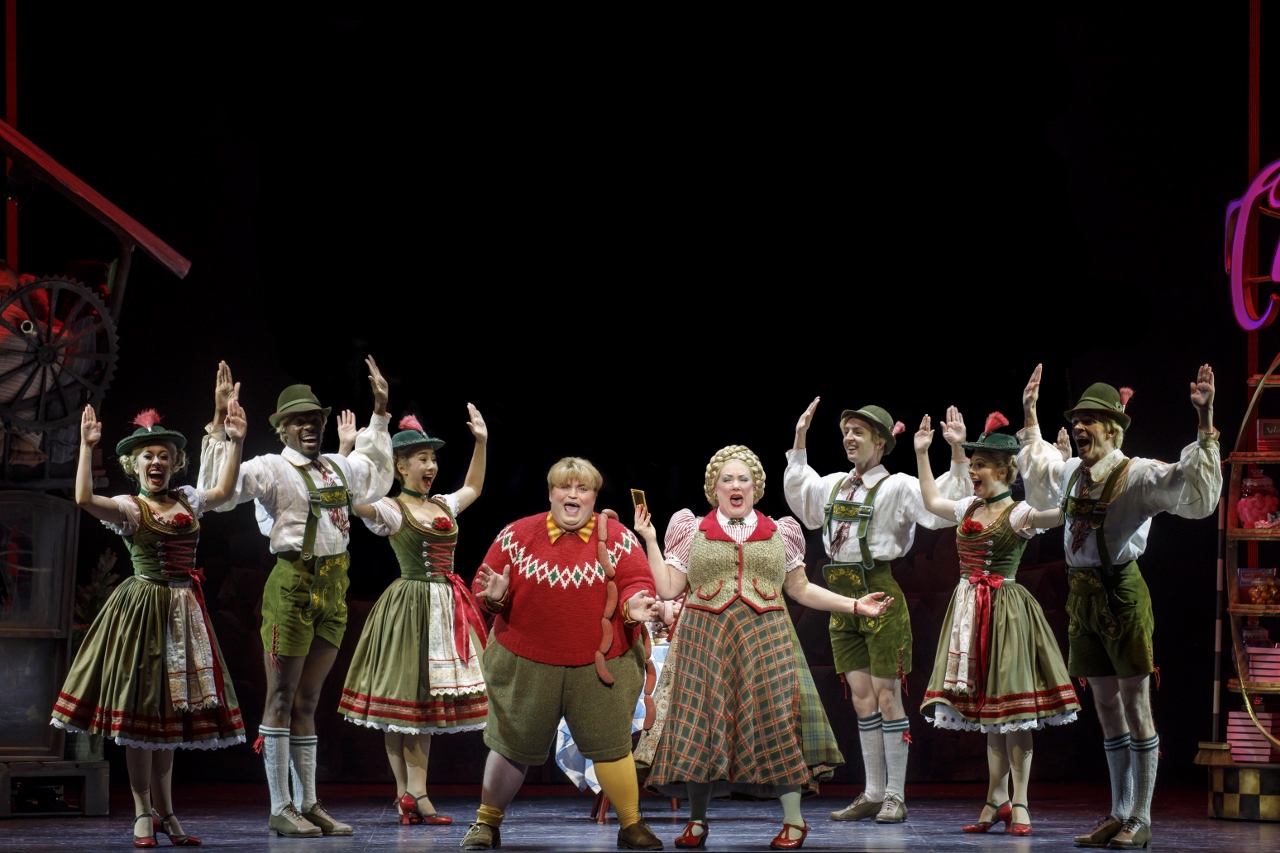
This production is also a modern update full of references to smart phones, social media, and the (over)medication of children. The supporting cast of Golden Ticket holders dexterously play intentional stereotypes — if not archetypes. Matt Wood as the gluttonous Bavarian sausage-eater Augustus Gloop, and Kathy Fitzgerald as his mother are hilarious standouts. Wood brings a Chris Farley-like caricature to a role that gets countless laughs — his stylized buffoonery is just part of Joshua Bergasse’s consistently exemplary and erratic choreography.
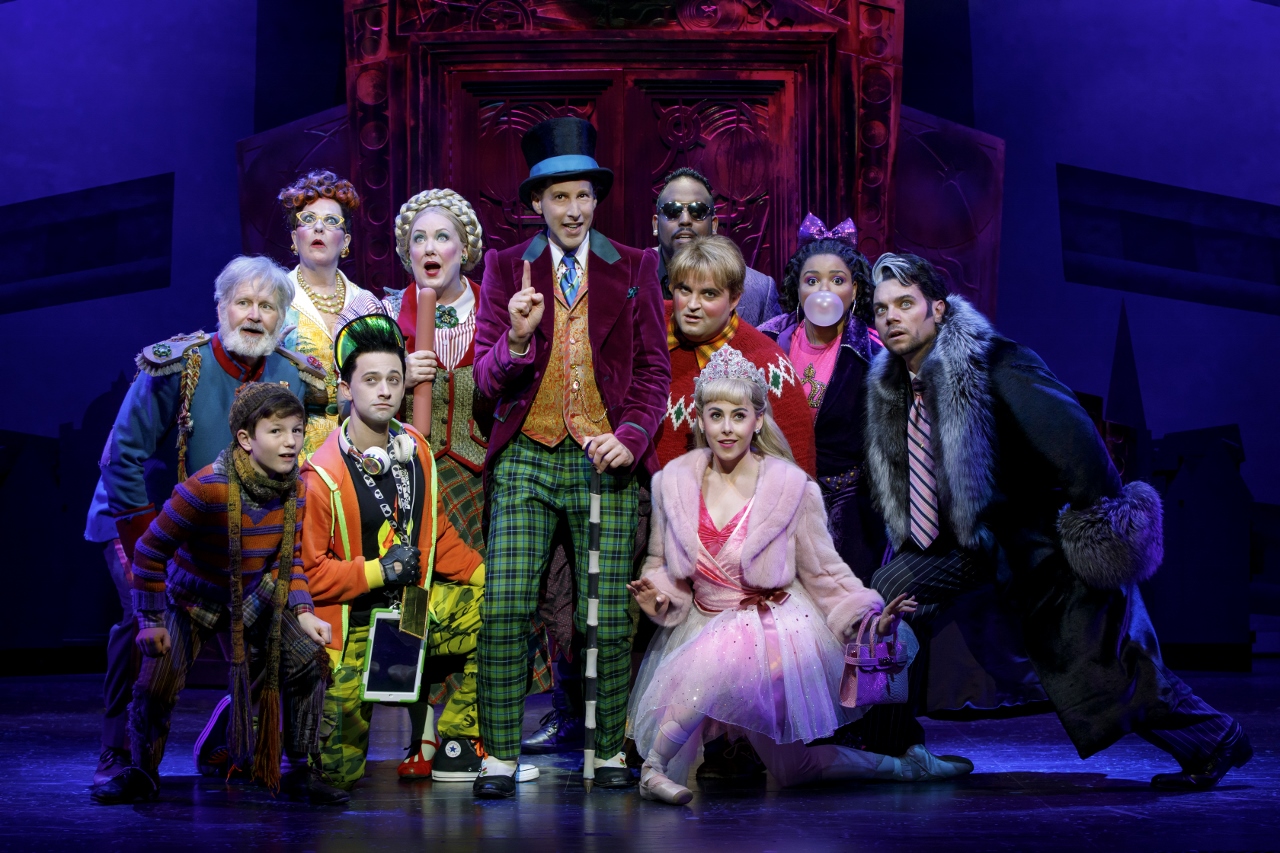
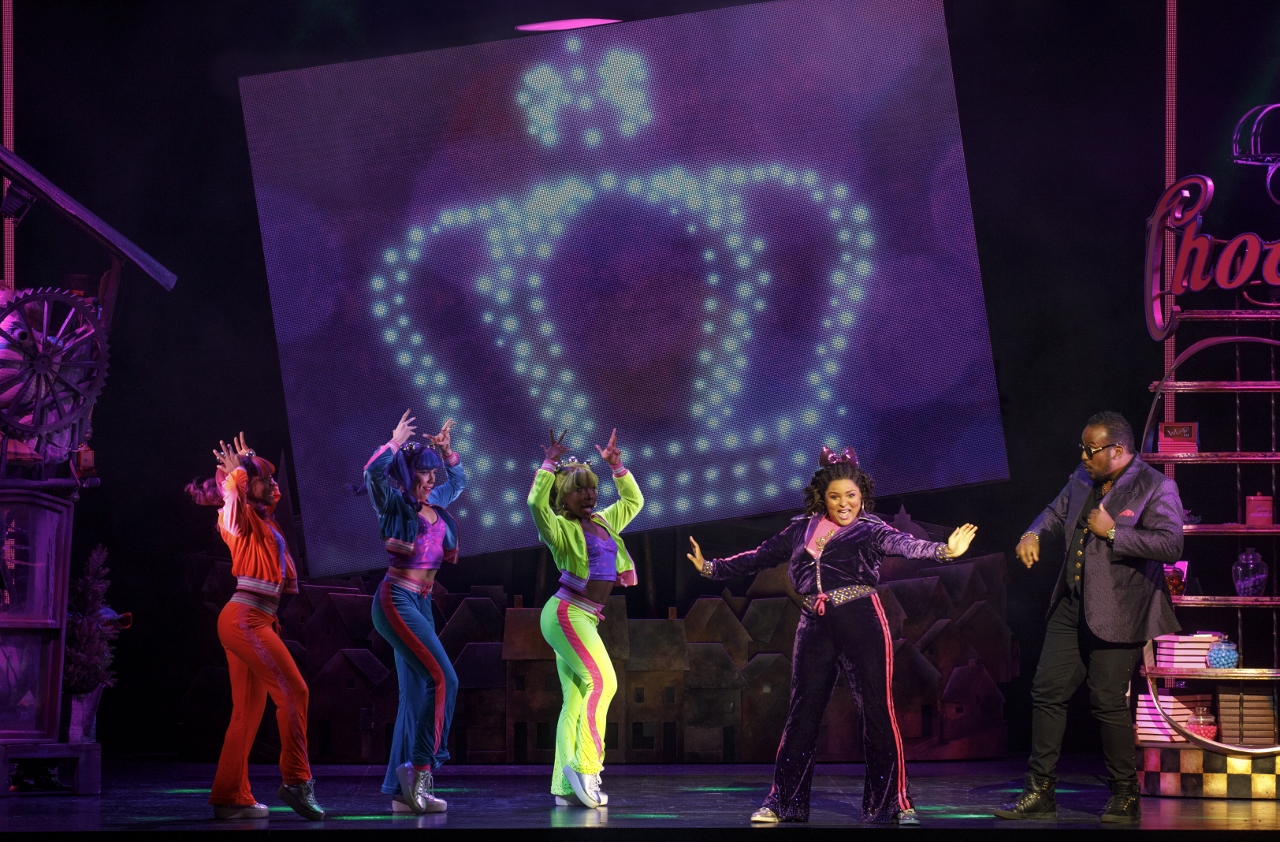
The mother of the gadget-and-pill-addicted Mike Teavee (Daniel Quadrino) is played by a riotous Madeleine Doherty, whose Mrs. Teavee is a pseudo-1950s housewife with a proclivity to alcohol; no matter what decade she’s living in, it’s always vodka o’clock. The infamous Veruca Salt (Jessica Cohen), known previously for her bratty entitlement, is now a Russian ballerina (“Daddy, buy me North Korea!”). Violet Beauregarde (Brynn Williams) is updated to a Hollywood hip-hopper, poppin’-and-lockin’ while crackin’ her gum, much to the adoration of her social media fans.
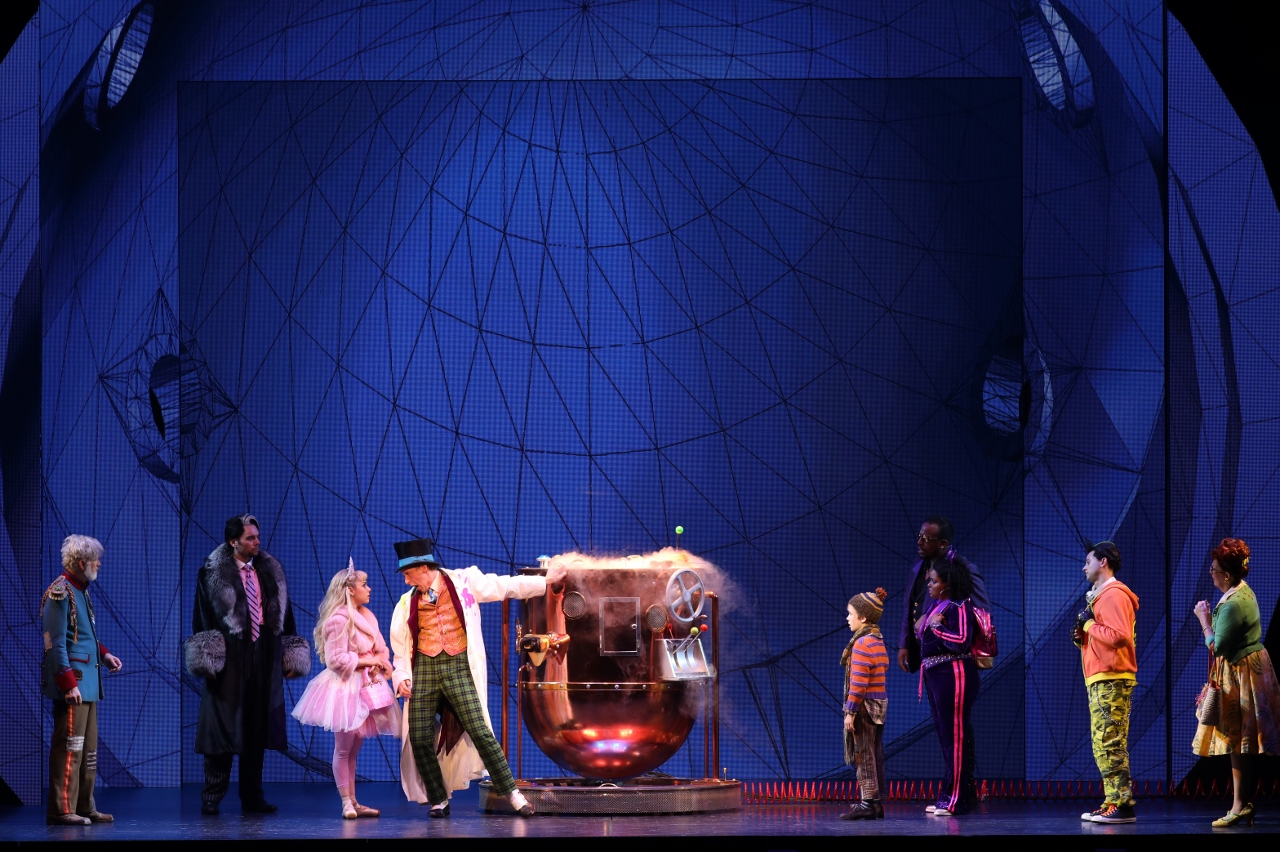
Mark Thompson offers bright and colorful design in sets and costumes, while Jeff Sugg’s projections (predominantly used in Act II’s factory scenes) attempt to capture the tall-order of Wonka’s “world of pure imagination,” though they fall short, despite their prettiness, of fully capturing ours. The crowd-pleasing Oompa Loompas are cleverly staged (avoiding any chance of “PC” taboos) thanks to the illusory work of master puppeteer Basil Twist.

Shaiman offers passable melodies and passable lyrics — co-written with Wittman — but their work here doesn’t even come close to their magic in Hairspray. Ironically, the only songs we’re left humming at the end of each act are the ones by Leslie Bricusse and Anthony Newley that were taken from the first film.
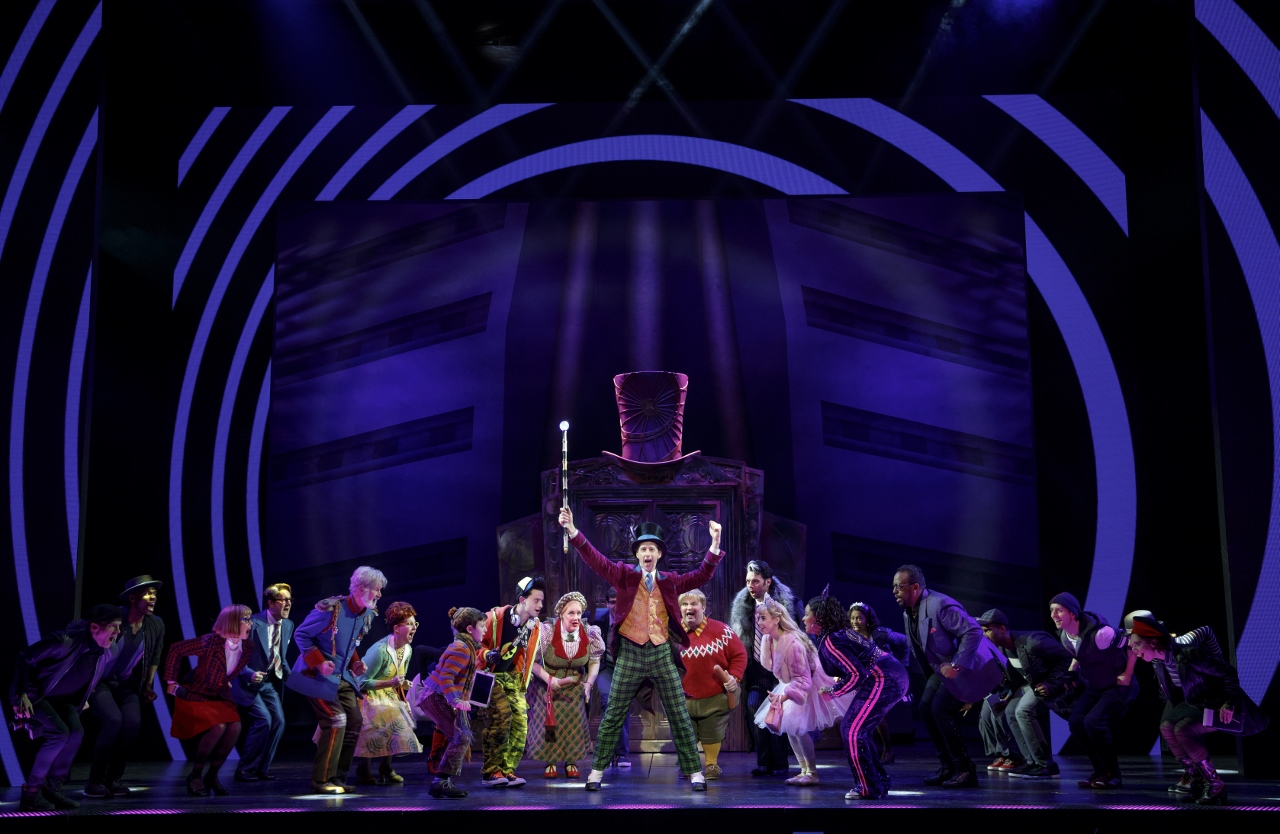
Dahl’s tale is a cautionary one. A winning trip to a magical factory where candy grows on trees and rivers flow with sugary goodness is not all that it seems. Children beware, for tests are ongoing and consequences ensured. Good boys and girls may find a happy ending, but bad boys and girls may just meet their end. However, at two hours and thirty minutes (including intermission) the taffy is stretched thin for what is essentially fluffy, family entertainment — thus, each act feels overly long for a story this simple.
And the humor, even when delightfully delivered, is reminiscent of the same modern musical theater batch fed to the masses: saccharine jokes from familiar characters amplified with schmaltzy grandiosity. This isn’t great entertainment. It’s run-of-the-factory, relying more on nostalgia than originality. For a story imploring us to live in a world of pure imagination, we should expect what’s baked to be more satisfying and delicious.
photos by Joan Marcus
Charlie and the Chocolate Factory
national tour
reviewed at the Hollywood Pantages
tour continues through May, 2020
for tickets, visit Charlie
