


Areas We Cover
Categories

FROM SCRIPT TO SCREEN: CAN AI WRITE AND DIRECT A MOVIE?
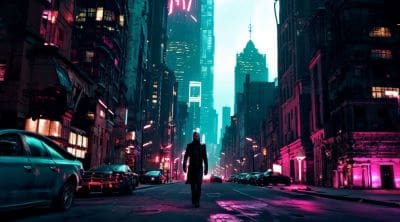
The rapid advancement of artificial intelligence (AI) has transformed various industries, and the world of filmmaking is no exception. AI-powered tools are now capable of generating scripts, creating video sequences, and even directing short films. This raises an intriguing question: Can AI write and direct a movie that is both compelling and artistically meaningful? While AI has already shown impressive capabilities in content creation, the creative process of filmmaking is deeply rooted in human emotions, experiences, and storytelling instincts. This article explores how AI is shaping the film industry, its current limitations, and whether it could ever fully replace human filmmakers.
AI in Screenwriting: The Rise of Machine-Generated Scripts
Writing a film script requires creativity, storytelling skills, and an understanding of human emotions. AI-powered writing tools such as OpenAI’s GPT-4, ChatGPT, and Sudowrite have demonstrated the ability to generate stories, dialogues, and character development. These AI models are trained on vast amounts of text, including scripts from classic films, novels, and screenplays. As a result, they can produce structured storylines with proper formatting and narrative flow.
However, AI-generated scripts often lack originality and emotional depth. While AI can generate a logically coherent script, it struggles with capturing the nuances of human emotions, cultural references, and artistic expression. Most AI-generated scripts rely heavily on existing patterns and clichés, leading to predictable storylines. This is why AI is currently seen as a tool to assist writers rather than replace them. Many filmmakers use AI to generate ideas, suggest plot twists, or refine dialogues, but the final creative decisions remain in human hands.
One notable experiment in AI screenwriting was the short film Sunspring (2016), directed by Oscar Sharp and written entirely by an AI called Benjamin (a neural network trained on science fiction scripts). While the film was an interesting experiment, the dialogue was often nonsensical, and the characters lacked coherent motivations. This highlights one of AI’s main limitations: understanding the depth of human experiences and emotions.
AI as a Director: Can Algorithms Make Creative Decisions?
Directing a film involves making thousands of creative choices, from framing a shot to directing actors’ performances. Traditionally, directors rely on intuition, artistic vision, and experience to bring a script to life. Can AI make similar decisions and create a film without human intervention?
AI video generators such as OpenAI’s Sora, Runway Gen-2, and Pika Labs have demonstrated the ability to create short video sequences from text prompts. These tools can generate realistic scenes, animate characters, and even replicate specific cinematic styles. Some AI-powered systems can analyze a script and generate appropriate shot compositions, lighting setups, and camera angles based on film industry standards.
Despite these advancements, AI video generator still struggles with real-time decision-making and improvisation. Directing is not just about technical precision—it involves understanding the emotional depth of a scene, guiding actors’ performances, and making spontaneous creative choices based on unforeseen circumstances. AI lacks the ability to interpret human emotions in a meaningful way, making it difficult for an AI-directed film to resonate with audiences on a deep level.
One example of AI attempting to direct a film is Zone Out (2018), a short film in which an AI system selected shots and edited the footage. While technically impressive, the film lacked the human touch needed to evoke strong emotional responses from the audience. AI can assist in editing and post-production, but the essence of directing—understanding human psychology and storytelling—remains beyond its reach.
The Future: AI as a Filmmaking Assistant, Not a Replacement
Although AI may not be ready to fully write and direct a film, it is already proving to be a valuable tool in the filmmaking process. Here are some ways AI is shaping the industry:
- Automated Script Analysis: AI can analyze screenplays to predict audience reactions, suggest improvements, and identify potential plot weaknesses.
- Previsualization and Storyboarding: AI tools can generate visual previews of scenes, helping directors plan their shots more efficiently.
- AI-Assisted Editing: AI can analyze footage, detect the best takes, and automatically edit sequences based on pacing and emotional tone.
- Deepfake and CGI Enhancements: AI is being used to create hyper-realistic CGI effects, de-aging actors, and generating virtual environments.
- Voice and Performance Synthesis: AI can replicate actors’ voices and performances, opening up possibilities for posthumous roles and digital doubles.
Rather than replacing filmmakers, AI is more likely to become an integral part of the creative process, enhancing efficiency and providing innovative tools for storytelling. Tools like invideo agent reflect this shift, keeping the filmmaker in the director’s seat while specialist agents assist with storyboarding, cinematography, and casting.
Can AI Ever Replace Human Filmmakers?
Despite AI’s growing role in filmmaking, there are certain aspects of storytelling that remain deeply human. Great films are not just about technical execution—they are about conveying emotions, personal experiences, and cultural narratives that resonate with audiences. AI may be able to generate stories, edit footage, and even create entire films, but it lacks the personal touch, emotional intelligence, and unique perspective that human filmmakers bring to the table.
AI’s current capabilities are best suited for assisting in filmmaking rather than replacing human creativity. As technology continues to evolve, AI may reach a point where it can generate a feature-length film that is visually impressive and narratively coherent. However, the soul of cinema—the emotional connection between a filmmaker and the audience—remains a distinctly human element.
Conclusion
The idea of AI writing and directing a movie is no longer a distant dream, but it is not yet a reality that can rival human filmmakers. AI can assist in various aspects of the filmmaking process, from scriptwriting to editing, but it still lacks the emotional intelligence and creativity that make films truly memorable. Rather than replacing directors and writers, AI is more likely to be a powerful tool that enhances storytelling and streamlines production.
Filmmaking is an art form that thrives on human imagination, personal experiences, and emotional depth. While AI video generators will continue to evolve and impact the industry, the essence of great cinema remains firmly in the hands of human creators. The future of filmmaking may be a collaboration between AI and human filmmakers, blending the efficiency of technology with the irreplaceable touch of human storytelling.
