Areas We Cover
Categories

Film Obituary: LALO SCHIFRIN (1932-2025)

by Michael M. Landman-Karny | August 2, 2025
in Extras, Film, Music
COMPOSER OF COPS,
CRIMINALS, AND COOLNESS
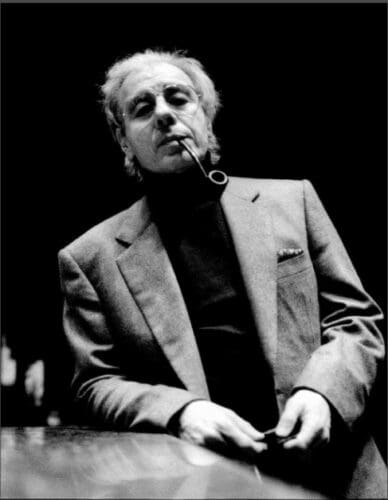
Few musical phrases have achieved such cultural penetration as the opening bars of Mission: Impossible. The theme’s distinctive 5/4 rhythm, written by Lalo Schifrin in 1966, became sonic shorthand for covert operations, stylish danger and the promise that impossible missions might yet be accomplished. The composer, who died on June 26th aged 93, understood that television needed memorable signatures.
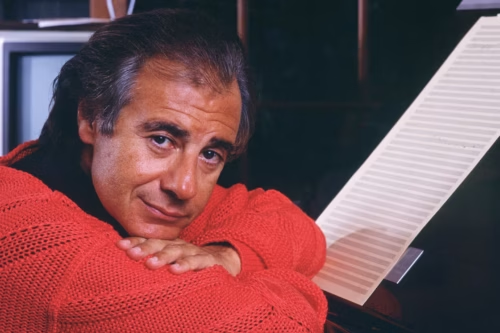
Schifrin’s career spanned seven decades and encompassed more than 100 film and television scores. His music accompanied Paul Newman in Cool Hand Luke, Steve McQueen in Bullitt and Clint Eastwood in the Dirty Harry films. Yet perhaps his most brilliant decision was what he chose not to write. For the legendary car chase in Bullitt, Schifrin composed music that built tension to a crescendo, then went silent the moment McQueen’s Mustang began its pursuit through San Francisco. Seven minutes of squealing tires and roaring engines proved more effective than any orchestral accompaniment.
Born Boris Claudio Schifrin in Buenos Aires in 1932, he was the son of a concertmaster at the Teatro Colón opera house. His musical education was rigorous and classical, but jazz seized his imagination after hearing Louis Armstrong perform live, an experience he later described as akin to religious conversion. During the Perón era, when American jazz records were restricted, he smuggled them into Argentina hidden beneath his coat.
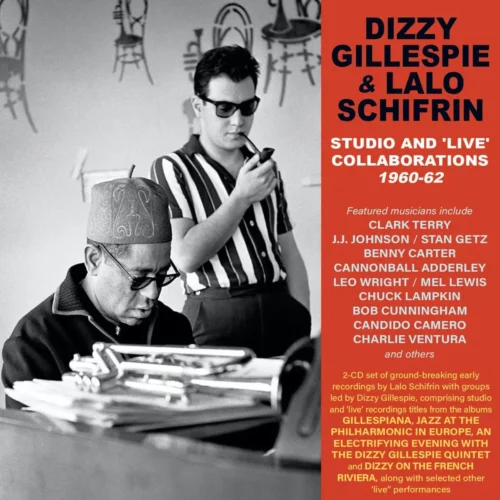
After studying at the Paris Conservatory with mystical modernist composer Olivier Messiaen, Schifrin returned to Buenos Aires and formed his own big band. A chance encounter with Dizzy Gillespie in 1956 changed his trajectory entirely. Gillespie invited him to America as his pianist and arranger.
Schifrin’s breakthrough came through television producer Bruce Geller, who commissioned him to write something exciting, something that when people go to the kitchen for a soft drink, they will know what it is. The Mission: Impossible theme, composed in three minutes without seeing any footage, became one of the most recognizable pieces of music in television history.
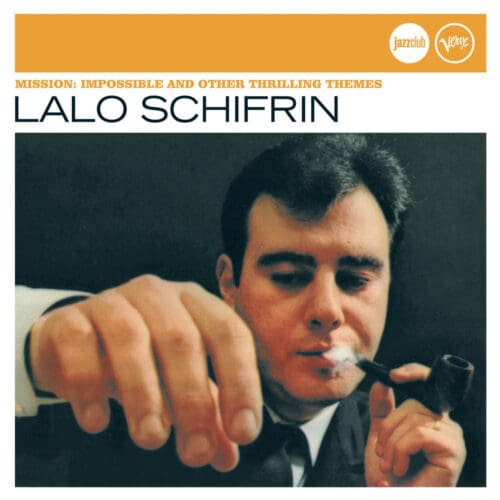
His versatility was remarkable. He wrote jazz waltzes for Mannix, employed synthesizers for Medical Center and crafted Eastern influenced scores for Bruce Lee’s Enter the Dragon. Lee, who had been practicing martial arts to the Mission: Impossible theme, personally selected Schifrin for the project.
Schifrin’s sound lived on the edge — unsteady rhythms, sly harmonies, and just enough swagger to keep you leaning forward. He liked odd time signatures like 5 /4 and 7/8, not to show off, but to keep the pulse unpredictable, a little off-kilter. He layered smoky jazz chords over big orchestral backbones, mixing polish with tension. Even in quick TV cues, he packed ideas tight, dropping sharp little riffs that darted in and out like secrets slipping past security.
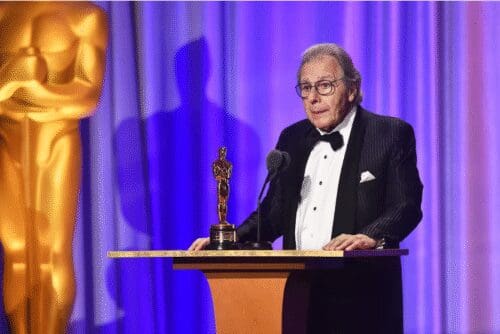

Despite six Oscar nominations, Schifrin never won a competitive Academy Award. In 2018, however, he received an honorary Oscar, presented by Clint Eastwood, for whom he had scored eight films. Composing for movies has been a lifetime of joy and creativity, he said upon accepting the award. This is a mission accomplished.
Schifrin also maintained a parallel career as a concert composer, writing seven concertos, a ballet and a symphony. Critics were less enthusiastic about these works, with The New York Times reviewer Bernard Holland dismissing his efforts as bound together by a cocktail bar piano style. He remained undeterred, releasing a series of Jazz Meets the Symphony albums between 1992 and 2011.
In his later years, Schifrin found unexpected success with the Rush Hour film trilogy, whose martial arts and comedy demanded a fusion of Chinese instruments, American funk and big band swagger.
He died of pneumonia complications in Los Angeles, survived by his wife Donna and their children. His legacy echoes in every sleek espionage caper that brims with tension, every cinematic pursuit sequence tuned to a rising heartbeat. In a medium where music often plays servant to spectacle, Schifrin composed cues that grabbed the wheel — and often drove.