


Areas We Cover
Categories

LANTERN ART: A GORGEOUS TRANSFORMATION FROM TRADITIONAL FESTIVALS TO GLOBAL MAINSTREAM STAGES

by Nia Liat | August 12, 2025
in Art and Museums
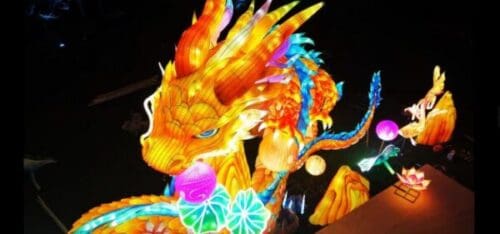
Half an hour before opening, crowds gathered at the entrance of Parque del Oeste in Málaga, Spain. Children stood on tiptoes, eagerly looking at the dazzling lights inside the park, where colorful lantern corridors shimmered on mobile phone screens. When the gates opened, visitors strolled along the winding river, where a 40-meter-long giant dragon lantern in the center of the river complemented flamenco dancer-shaped lanterns, set against a backdrop of music blending Chinese and Western styles.
This scene is not unique to Spain. From the fairy-tale animal lanterns at Longleat Estate in the UK to the Chinese festival digital light projections in Milan’s university square; from the Qinhuai lanterns held by children in Ili Prefecture, Xinjiang, to the “Auspicious Snake Welcoming Spring” painted by 600 drones in the night sky of Zigong—Chinese lantern art has transcended its traditional festive symbolism. With astonishing creativity and adaptability, it is gradually making its way onto the global mainstream stage of performing arts.

I. Cultural Roots and Artistic Evolution: The Source of Lantern Art’s Vitality
The cultural lineage of Chinese lantern art can be traced back to thousands of years of folk traditions. Its core lies in transforming practical objects into artistic vehicles for emotional expression. The lantern dance in Hebei folk performances is a prime example. Performers hold uniquely shaped, colorful lanterns and change formations to the rhythm of gongs and suonas, expressing the universal emotions of “pursuing beauty and longing for light”. This art form has evolved into various rich expressions throughout history:
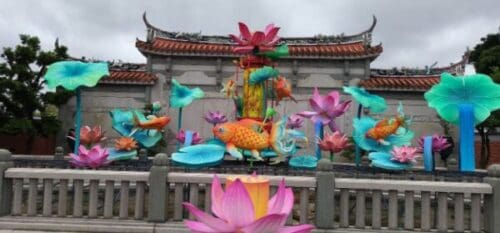
- Qiqiao Lanterns: Introduced to Hebei from Fujian during the late Qing Dynasty, this form evolved into a dance where seven young girls hold 14 lotus lanterns to create moving scenes of red carp and small fishing boats, expressing the joy of a good harvest through song and dance.
- Shou Lanterns (Aquatic Beast Lanterns): Based on the legend of the White Snake, this performance uses wearable fish, toad, and turtle lanterns as props to reenact the mythical scene of shrimp soldiers and crab generals attacking Jinshan Temple. The humorous performance of turtles and clams playing together is a highlight.
- Hualan Lanterns (Flower Basket Lanterns): Performers in the Luancheng area carry bamboo baskets adorned with paper cuttings on their shoulders, combining graceful dances with gentle folk tunes to create an immersive visual and auditory experience.
The core competitiveness of lantern art lies in the evolution of its materials and the inclusiveness of its technology. As a representative of intangible cultural heritage, Nanjing’s Qinhuai lanterns (Jinling Lanterns) have expanded from traditional materials like paper and silk to modern materials like acrylic and LED. The themes now cover everything from myths and folk life to current political topics. This boundary-less approach to innovation is what gives lantern art its continuous vitality. When volunteers from Nanjing Normal University taught children in Huocheng County, Xinjiang, how to bend bamboo strips and paste lantern surfaces, a cross-cultural dialogue spanning thousands of miles was naturally achieved through the light and shadow of triangular and rabbit-shaped lanterns.
II. Internationalization Strategy: The Three Paths for Chinese Lantern Festivals to Enter the Mainstream
1. Localized Integration: From “Cultural Output” to “Cultural Coexistence”
The lantern festival at Longleat Estate in the UK set a prime example. The first event in 2014 attracted 150,000 visitors, with 97% rating it as “excellent”. The secret to its success was deeply integrating with the local culture:
- In 2025, to commemorate the 50th anniversary of the estate’s safari park, a special exhibition was dedicated to the British fairy tale author’s Peter Rabbit.
- At the Málaga light show in Spain, Chinese artisans specially created lanterns shaped like flamenco dancers and local jasmine flower garlands, which became a “must-see” attraction for residents.
- The London Fantasy Lantern Festival was themed “Exploring the Silk Road,” using 3D video technology to recreate the grand scenes of Sino-Western trade along the ancient Silk Road.
This localized practice has developed into a mature industrial chain model. For example, Zigong’s Forest Painting Lantern company has held over a hundred light shows in more than 60 countries, and its Chinese lantern festival projects have reached 14 “Belt and Road” countries, including Estonia and the UAE, attracting over a million visitors. The company’s clear strategy is to “make Chinese lanterns an important window to showcase China’s open image”.
2. Technological Empowerment: The Contemporary Translation of Traditional Craft
When 600 drones rose into the night sky over the Zigong Chinese Lantern World, instantly creating a fun scene of “dinosaurs delivering tangyuan,” the dialogue between technology and tradition was elevated into a stunning artistic language. The technological integration in contemporary lantern art shows multi-dimensional innovation:
- Augmented Reality (AR) Technology: Visitors who scan the “New Year Dolls Celebrate” lantern group can see an interactive scene of “a thousand trees blooming in the east wind at night” on their phone screens.
- Integrated Sound and Light: The Dinosaur Valley scenic area uses sound source localization technology to make 1:1 scale simulated dinosaurs walk and roar near visitors.
- Digital Media Art: In the 2025 Milan tour exhibition, the Sichuan Fine Arts Institute projected festive light and shadow onto historic buildings, integrating Chinese charm into the fabric of European cities.
“Using technology to turn young people from ‘onlookers’ into ‘participants’ is the key to cultural inheritance,” says Liu Xiaoqiang, head of the Zigong Lantern Festival planning group, revealing the crucial point. When Gen Z takes selfies in front of the “King of Glory” lantern group, the path of cultural inheritance has been redefined.
3. Educational Dissemination: Building a System for Cross-Cultural Dialogue
The lantern-making class held by the “Ingenious Weaving of Mountains and Rivers” practice team from Nanjing Normal University in Xinjiang reveals the deeper logic of lantern art’s globalization: using experiential education to dissolve cultural barriers. International educational dissemination is showing a systematic trend:
- Led by Academic Institutions: The Sichuan Fine Arts Institute collaborated with European universities on the “Chasing Light, Chasing Dreams, Seeing China” tour exhibition, deepening exchanges through an “artist creation + public workshop” model.
- Development of Localized Teaching Materials: The BBC children’s program Blue Peter used a 10-minute segment to teach how to make a chicken-shaped lantern, integrating Chinese craftsmanship into local art education curricula.
- Intangible Cultural Heritage Inheritor Mechanism: Overseas lantern festivals often include on-site programs with Chinese artisans. For example, at the Spanish lantern festival, 50 Chinese masters provided hands-on guidance for making lanterns.
The essence of this educational dissemination is to transform cultural symbols into perceptible emotional resonance. When the rabbit lantern made from bent bamboo strips by a child in Xinjiang is lit, the “seeds of cultural identity and ethnic integration” quietly sprout across geographical divides.

III. Value Reconstruction: The Socio-Economic Dimensions of Lantern Art as a Mainstream Performing Art
Driving Upgrades in Cultural Tourism Consumption
The 2025 Beijing Shijingshan Amusement Park Lantern Festival pioneered a new “family fun + intangible cultural heritage night tour” model. The event, held in a 350,000-square-meter park with seven themed zones, combined activities like Beetle car parades and Hanfu interactions, with the goal of “stimulating new social demands and driving new consumption in cultural tourism”. Its commercial value is reflected in:
- Renewed Scenery: The traditional lantern festival was integrated with the amusement park setting, and the exhibition period was extended from summer to autumn (August 8th to October 31st), breaking seasonal limitations.
- Iterated Experiences: Six themed experience areas provided continuous attraction with “fun every day, surprises every night”.
- Consumption Loop: The “Happy Food, Play, and Shopping Carnival” created a consumption ecosystem, increasing the average spend per customer and their length of stay.
The UK’s experience is even more convincing. When lantern festivals were held in places like Manchester and York, a single event could attract 400,000 visitors. Longleat Estate saw its winter visitors triple because of the lantern festival, and hotel occupancy in the surrounding area increased by 76%. This “light economy” has become a new growth pole for the cultural tourism industry.
Enhancing National Cultural Soft Power
When the digital light projections from the Sichuan Fine Arts Institute illuminated the university square in Milan, project leader Zhao Wei explained its mission: “To present a ‘real, three-dimensional, and comprehensive’ image of a major country to the world”. The special value of lantern art lies in:
- Non-Verbal Communication Advantage: Visual art transcends language barriers. For example, the 40-meter giant dragon at the Málaga light show conveys a sense of power without needing translation.
- Shared Values: The “Bumper Harvest” lantern group at the Zigong Lantern Festival, which depicts the joy of a good harvest, resonates with agricultural civilizations worldwide.
- Contemporary Expression: The 2025 European tour exhibition included collaborative works by both Chinese and foreign artists, giving traditional culture a modern translation.
The practices of Forest Painting Lantern during the pandemic are even more enlightening. In 2021, the company overcame difficulties like transportation disruptions to hold exhibitions in places like Dubai and Singapore. The company’s person in charge stated: “Lanterns are a bridge and link for promoting friendship between China and other countries“. When people in Pakistan admired the lanterns in front of Lahore Fort, the friendliness of Chinese culture naturally emerged.


A lotus lantern gradually takes shape in the hands of a child in Huocheng County, Xinjiang, with the curve of the bent bamboo strip being no different from the technique of a master craftsman on the banks of the Qinhuai River in Nanjing. In Málaga, Spain, jasmine flower garlands are twisted in an artisan’s fingers, and the passion of flamenco merges with the splendor of Chinese lanterns the moment the power is connected.
The journey of Chinese lantern art from local folk performances to the global mainstream stage is essentially a microcosm of the epic of civilizational dialogue. It proves that true tradition is not a specimen in a museum but, like the night sky traversed by Zigong’s drone fleet, it both carries the “bumper harvest” porcelain lantern group and embraces the esports symbol of “King of Glory,” continuing the cultural gene through the dialectic of change and continuity.
