


Areas We Cover
Categories

Theater Review: PARADE (Tour at Kennedy Center, D.C.)

by Barbara Papendorp | August 23, 2025
in D.C.
(Maryland / Virginia), Theater, Tours
A stark and haunting Parade marches into the Kennedy Center,
the final stop of this Broadway tour, confronting
history with stripped-down staging and searing urgency
The national tour of Parade, now at the Kennedy Center, arrives with an intensity that refuses to let its audience settle. Jason Robert Brown and Alfred Uhry’s 1998 musical has always been unflinching in its depiction of Leo Frank’s 1913 trial and lynching, but director Michael Arden’s staging strips the piece to its bones, forcing the tragedy into stark relief. The result is a production at once documentary and theatrical, a work that refuses to let history be smoothed into southern comfort.
 The National Touring Company of PARADE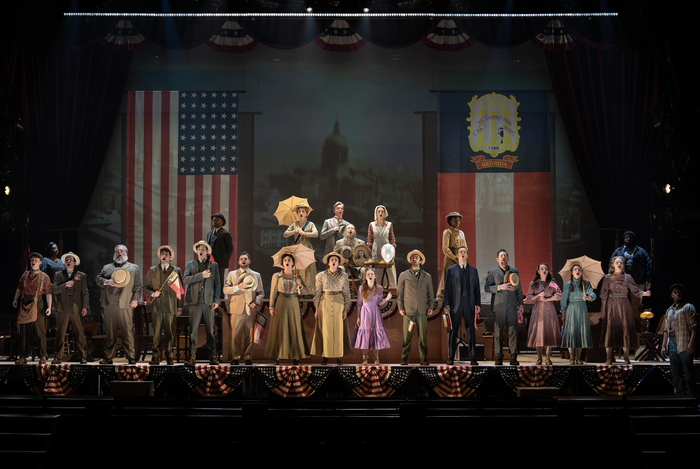
The musical, developed under Hal Prince, has always walked the line between history and dramatization. Arden’s staging leans into authenticity. While legal complexities are simplified, the central truth is unambiguous: Frank’s otherness — his Jewish identity, his Northern background, his intellectual reserve — made him a scapegoat in a Georgia fueled by fear and resentment.
 Talia Suskauer and Max Chernin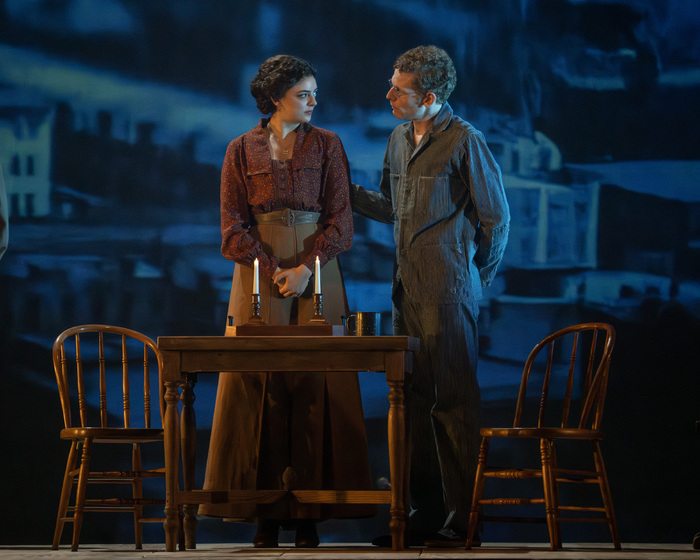
Parade is a true early 20th-century story shrouded in tragedy. Leo Frank (Max Chernin) is at the center, a stoic man from New York living in Georgia with his industrious wife Lucille (Talia Suskauer) in the early 20th century. Leo is spuriously accused of, and indicted for, murdering a young girl. His imprisonment derails his marriage, galvanizes their conservative Southern community, and eventually garners national attention. The story outlines an ominous presence which we come to recognize as antisemitism, whipped into a frenzy by an unscrupulous and unabashedly racist prosecutor, Hugh Dorsey (Andrew Samonsky). Throughout the show, there’s a progressively suffocating suppression of charity and equity. We watch, helpless, as a maddening web of lies is concocted to ensnare Leo, with seemingly the whole town complicit.
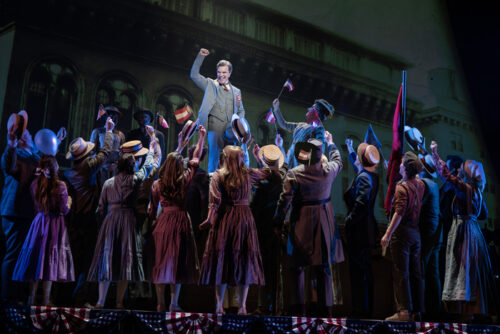 Chris Shyer (center) and company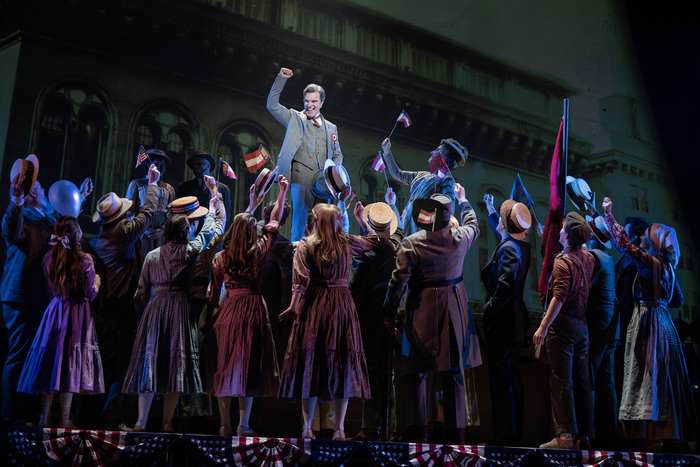
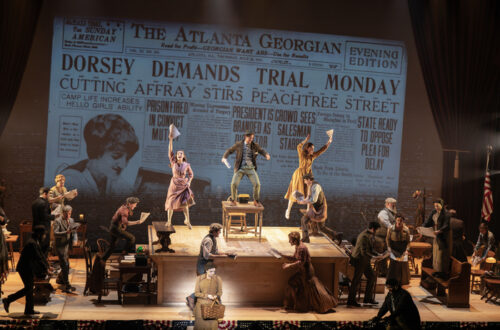
At first view the stage resembled a gallows primed for execution — a searing foreshadowing of the tragic end. Dane Laffrey’s scenic design places a raised platform at center, framed by two rows of chairs where the ensemble sits in full view from beginning to end. This choice, both practical and metaphorical, keeps transitions fluid while ensuring Frank is never free from the collective gaze of his community. Characters step forward to assume roles — jurors, a reporter, neighbors — then return to the group, a constant reminder of a society always present, always judging.
 The National Touring Company of PARADE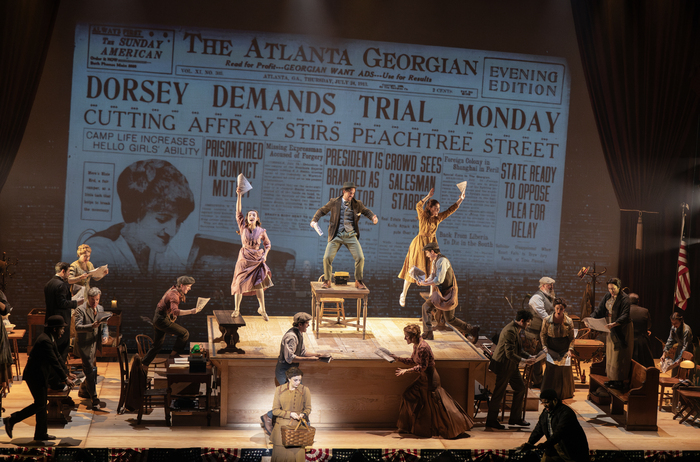
Sven Ortel’s projections are the production’s most devastating tool. Historic photographs, newspaper headlines, courtroom transcripts, and archival documents loom behind the action. A raucous gossip number accompanied by tabloid clippings makes clear how rumor and journalism merged into hysteria. These images pin the story to fact, denying the audience the refuge of thinking this is mere fiction.
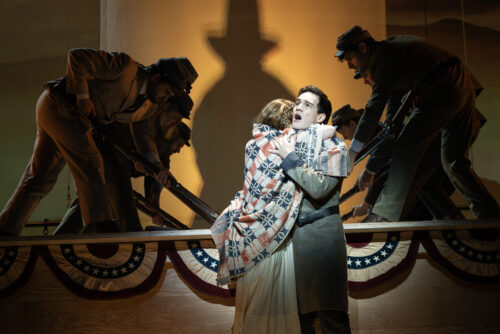 Trevor James and company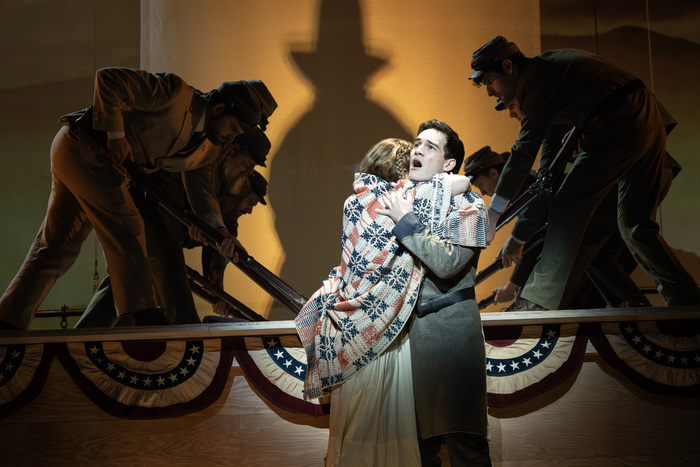
Costume designers Susan Hilferty and Mark Koss clothe the ensemble in muted period attire that blends individuals into a crowd. The effect is subtle but effective, erasing personal identity so that townspeople can morph easily into a mob. The simplicity of the visual palette underscores Arden’s stripped-down vision: nothing distracts from the story’s human weight.
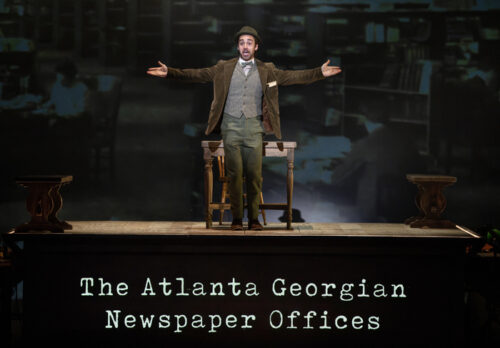 Michael Tacconi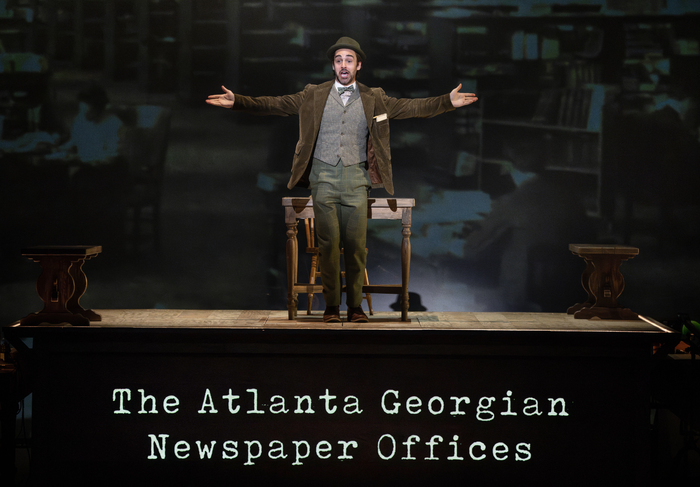
At the center, Chernin delivers a performance of quiet devastation as Leo Frank. His clipped diction and reserved bearing emphasize Frank’s otherness: Jewish, Northern, intellectual, and fundamentally out of step with his Southern surroundings. Chernin’s restraint pays off most powerfully in “It’s Hard to Speak My Heart,” where halting phrases seem torn out of him, the character’s dignity and desperation colliding in the same breath.
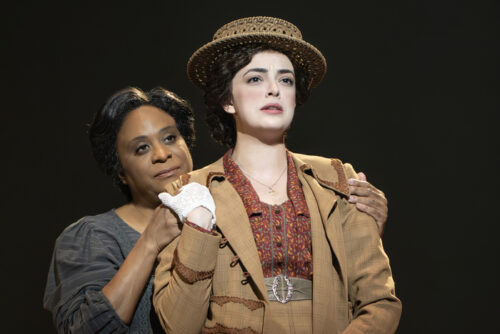 Danielle Lee Greaves and Talia Suskauer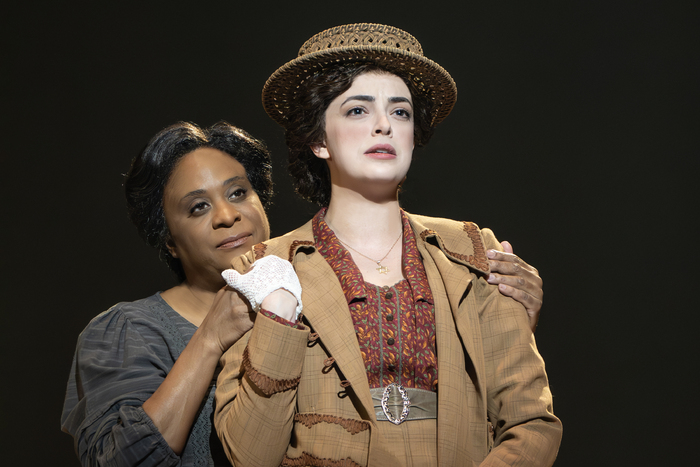
Opposite him, Suskauer grows in strength and focus as Lucille Frank. Her “You Don’t Know This Man” is a searing defense, cutting through rumor with unwavering clarity. Together, in “All the Wasted Time,” the pair find a brief oasis of intimacy — an affirmation of love and solidarity on the eve of catastrophe.
 Max Chernin (center) and company
The ensemble is the show’s driving force. Always present, they form a shifting chorus of suspicion and judgment, stepping forward as witnesses, townspeople, or jurors, then returning to the silent presence of onlookers. Their massed sound is terrifying in its momentum, a reminder of how collective prejudice gathers strength.
 Max Chernin and company
This is the last stop of this tour, and the Kennedy Center setting lends the show a charged immediacy. In an era when cultural institutions are pressured to soften or recalibrate their programming, Arden’s production stands firm. Composer Jason Robert Brown has publicly vowed that not a single word of the piece would change. That spirit of defiance permeates the evening.
 Talia Suskauer and Max Chernin
The final sequence is staged with chilling restraint. Frank’s lynching unfolds without sensationalism, witnessed silently by the ever-present ensemble. Headlines return to the backdrop, spelling out the aftermath with blunt finality. The theater falls into silence, the audience left to reckon with both the past and its echoes in the present. Parade is not designed to comfort; it confronts its audience with history’s weight. At the Kennedy Center in 2025, the musical feels less like a revival than a reckoning — an insistence that the story of Leo Frank is not just history, but a warning still urgent today.
photos by Joan Marcus
Parade
national tour
ends on September 7, 2025 at Kennedy Center’s Eisenhower Theatre, D.C.
for tickets, visit CTG
tour continues; for cities and dates, visit Parade
for more shows, visit Theatre in DC
