


Areas We Cover
Categories

THE STATE OF KRATOM IN CANADA: MARKET TRENDS AND INSIGHTS
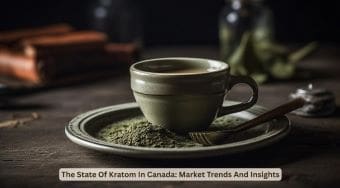
The recent hum near plant-based therapeutics has been getting louder for some time. This movement has been observed by medical professionals in chronic pain as well as mental health areas of care, where patients are seeking alternatives for treatment that do not adhere to their experiences with the limited success and side effects from more traditional drugs.
In this growing area of naturopathy, few agents have attracted as much attention as kratom. Native to Southeast Asia, where the leaves of the kratom tree, Mitragyna speciosa, have been utilized and consumed for thousands of years. That rise has been meteoric (in the North American context, at least) and divisive and confounding.
Canada is no exception. The Canadian kratom marketplace is rapidly evolving as regulatory debates continue and widespread interest rises. The question arises – Is kratom legal in Canada? Today, we are going to assess the current state of this market and the main patterns and predictions for its future development.
1. Heightened Public Interest and Local Demand
More and more consumers in Canada are looking into kratom as a supplement for pain, energy and mood. Despite its lack of official acceptance as a therapeutic drug in Canada, this legal gray area is not stopping the masses from obtaining it. Instead, it has driven a complementary wave of conscious education, fair sourcing, and consumption-led change.
Online platforms and retailers are emerging to satisfy that curiosity with a complete list of product descriptions matched to lab-tested batches. The largest kratom canada markers are aligning their product transparency with consumer safety, quality output, and stringent testing requirements to meet the ever-growing cautious user base.
 Kratom Mitragyna speciosa powder, capsule and drink.
Green kratom powder, capsule and beverage still life stock photo. Kratom herbal medicine stock imagesDemand is even stronger in places like British Columbia and Ontario, where the wellness community is particularly health-conscious. This interest isn’t just anecdotal. E-commerce trend data and search queries show more Canadians actively searching online to learn about kratom — the types, effects, etc.
2. Shifting Market Demographics and Use-Cases
In the past, kratom was mainly used by young adults who were looking for another option to coffee or other standard stimulant drugs. But it has now grown to include a broader demographic. In Canada, it is mostly middle-aged and older adults who are curious, given that they are already exploring alternatives to opioids or traditional analgesics.
Retailers have had to adapt accordingly as the target audience has shifted. Also, product forms have expanded beyond just powdered leaf into capsules, tinctures, and tea blends, with much of the inventory carried by such sellers.
Initial anecdotal evidence suggests users are turning to kratom for help with chronic pain, fatigue or anxiety symptoms. Despite the lack of support from Canadian medical regulation for these claims, anecdotal evidence drives consumer behavior and product availability.
3. Regulatory Ambiguity and Legal Interpretations
A defining factor in the slew of legislation regarding kratom’s status in Canada is regulatory ambiguity. For many people, this is not an argument at all because Kratom is not classified as a controlled substance by the Controlled Drugs and Substances Act. However, Health Canada has banned its sale for human consumption. As a result, vendors are selling kratom as either a botanical product or incense, with clearer disclaimers.
The gray market, on the other hand, brings problems and prospects alike. First, a lack of regulatory clarity will necessarily impede clinical research and large-scale studies. On the other hand, it supports the creation of industry-led standards like voluntary batch testing, quality control and consumer education.
A variety of stakeholders in both the wellness and policy advocacy sectors have called for more sensible laws, ones that maintain public safety without sacrificing access to emerging botanicals.
4. Ethical Sourcing and Quality Control
The current Canada kratom market level of products is very high. With demand came the importance of sourcing practices.
Today, ethical harvests, fair-trade practices and verified supply chains are becoming increasingly important aspects of building consumer trust.
The best vendors are now hooking up with farmers in Southeast Asia to verify that their kratom is being cautiously harvested and manufactured using clean techniques. The enclosed lab results are easy to find.
 The tropical Kratom tree (Mitragyna speciosa). The leaves of the tree are a mild stimulant,
traditionally chewed by farmers and laborers needing a boost or some light pain relief.
The tropical Kratom tree (Mitragyna speciosa). The leaves of the tree are a mild stimulant,
traditionally chewed by farmers and laborers needing a boost or some light pain relief.
Users can quickly reference them online, which provides some peace of mind that the quality is good and no harmful contaminants or adulterants were identified.
5. Innovation and Consumer-Led Evolution
The future of the Canadian kratom market. Interestingly, this aspect suggests that the Canadian Kratom Market is poised for further progress. Yet without a visible regulatory stamp of approval, it is hard to observe public interest fading away. Moreover, renewed demands will help drive innovation, particularly in formulation, delivery, and consumer education.
Perhaps we will start to see products that are more use-case specific in the future – e.g., blends for relaxation, cognitive focus or endurance. Looking at innovations, these may also cover improved bioavailability via nano-formulations or water-soluble extracts.
At the same time, consumers are projected to become more selective. Education, peer reviews, and user forums will address the issues with toner products’ spinning wheels and hold vendors accountable for product quality.
Final Thoughts
This recent surge in popularity has placed the industry in Canada in an interesting position, where demand for interest is considerable, regulation surrounding its use is quickly evolving, and more Canadians are looking to learn about it. Although challenges remain, notably around legal definition and clinical support, the ingredient has already created a niche for itself within Canada’s wellness and botanical supplement space.
As long as responsible vendors continue to provide quality products and accountability is held every step of the way, along with consumers becoming savvier than ever before, kratom will soon find itself on much more even terrain. It continues to be one of the most widely consumed natural products in America’s rapidly changing health market.
