


Areas We Cover
Categories

Opera Review: PAGLIACCI (Pacific Opera Project)
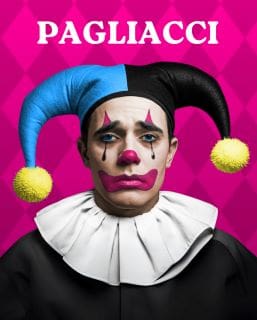
by Michael M. Landman-Karny | September 6, 2025
in Los Angeles
OPERA WITHOUT WALLS: VERISMO IN THE PARK
Pacific Opera Project opened Pagliacci into the open air of Heritage Square Park last night, and the result was a strangely festive collision of carnival and tragedy. The evening began like a neighborhood fair. Families spread blankets on the grass, food vendors served slices of pizza, and a stilt walker mingled with the crowd. Wine and beer flowed from picnic baskets, and the prevailing mood was light. Leoncavallo’s opera, though, refuses levity. The story of the clown who cannot separate art from life cut through the merriment like broken glass.


Pagliacci has always thrived on compression. Leoncavallo, writing in 1892 after the collapse of his ambitious opera I Medici, distilled his verismo creed into a drama that moves with breathless inevitability. The opera follows a troupe of traveling comedians who arrive in a small village. At the center is Canio, the troupe’s leader, who plays the clown Pagliaccio in the evening show but offstage is consumed by jealousy. His young wife Nedda longs to escape her stifling life and has secretly fallen in love with Silvio, a villager. Tonio, the hunchbacked clown, harbors his own desire for Nedda; when she mocks and rejects him, he swears revenge. Beppe, the second clown in the troupe, is a kind and unassuming soul. The tensions converge during the night’s performance, where stage play and reality blur. Canio discovers Nedda’s betrayal, and the performance collapses into real violence, ending in murder before a stunned audience of villagers.


For a tenor, Canio remains one of the defining trials. Nathan Bowles met the challenge with startling conviction. He swaggered convincingly in the opening scenes and then unraveled with credible despair. “Vesti la giubba,” the desperate command to put on the costume, was not presented as a mere showpiece but as the crux of a character’s disintegration. Bowles carried his voice through the entire span of the role with stamina and gleam, negotiating high notes that are punishing even for established veterans. The final cry, “La commedia è finita,” landed with both terror and pathos, and it felt earned.


Bowles’ performance did more than meet the demands of the role. It confirmed him as a star in the making, an artist on the cusp of international recognition. His vocal strength, suited to the spinto tenor repertoire, was matched by a purity of tone that set his singing apart. Watching him inhabit Canio made it easy to imagine his name soon appearing on the world’s greatest stages.


Nedda was sung by Janet Szeipei Todd, a company favorite whose bright soprano gleamed in the upper register while retaining warmth below. She embodied freedom with a touch of volatility, and her love duet with Kenneth Stavert’s ardent Silvio attained a fragile tenderness that deepened the final calamity. As Beppe, Arnold Geis brought agility and sincerity, allowing his brief serenade to emerge as a genuine lyric oasis. Joel Balzun’s Tonio suggested both menace and wounded pride, his opening Prologue balancing baritone weight with unsettling candor.


The orchestra was another matter. A score designed for seventy players was reduced to eight. The arrangement by Michael Withers, though serviceable, inevitably stripped the opera of its sonic depth. Flute, oboe, clarinet, bassoon, horn, piano, percussion, and double bass formed the ensemble. This lean band conveyed counterpoint and rhythm with clarity but could not summon the sweep of strings or the brass-laden climaxes that define verismo. Piano approximated what Leoncavallo entrusted to a large string section, yet the substitution left a hollow space where heat should have been. A different mix of instruments, perhaps with a string quartet at its core, might have yielded a fuller spectrum. Still, given the scale of the company and the price of admission, the compromise was understandable. Blair Salter, the musical director, conducted with assurance, and her meticulous coaching yielded focus and cohesion from both soloists and chorus, proving how much could be achieved within modest means.


What sustained the evening was not orchestral grandeur but the vitality of performance. The cast committed fully, and the staging embraced the tension between festival surface and tragic core. POP has made a name by dissolving barriers between opera and community, and here the strategy worked. Tickets begin at fifteen dollars, drawing a younger and more diverse crowd than in most opera houses. The production reminded us that opera need not be remote. At its heart, Pagliacci speaks of the dangerous closeness of art and life. Canio cannot set aside his painted mask, just as we cannot easily separate our public selves from our private wounds.


Heritage Square Park provided a poignant setting for that lesson. The picnic laughter dissolved into silence as the final murder unfolded under the open sky. The comedy was finished, as Leoncavallo decreed, yet the audience lingered in a hush, visibly shaken. This was not the plush resonance of a grand opera house, but something rawer, more immediate, and perhaps closer to the verismo spirit. POP reminded us that even stripped to its essence, opera retains the power to pierce, and that the tragedy of the clown remains timeless.


Despite my quibbles about the orchestration, this is a wonderful opportunity to experience a first-class opera production up close, with world-class singing offered at prices that anybody can afford.


photos by Nick Rutter


Pagliacci
Pacific Opera Project
Heritage Square Museum, 3800 Homer St. in Los Angeles
Fri-Sun at 7:30; entertainment begins at 6:30
ends on September 14, 2025
for tickets, call 323.739.6122 or visit POP
