


Areas We Cover
Categories

Film Review: IF YOU ARE AFRAID YOU PUT YOUR HEART IN YOUR MOUTH AND SMILE (NewFest37)

by Rob Lester | October 12, 2025
in Film
Adolescence and added adversity, with heart in the hardships
As a film title, a quote from a poem, a line of dialogue, a life philosophy, or even a song lyric, If You Are Afraid You Put Your Heart in Your Mouth and Smile is quite a mouthful. And it’s actually ALL the aforementioned things.
Working on her first full-length feature (shot in Austria, in German with English subtitles), screenwriter/director Marie Luise Lehner found the phrase in a poem and adopted it for her tender, sometimes melancholy debut. The advice about mustering courage reappears within the film itself: young Anna, perched nervously on a diving board, wonders whether to take the plunge. She does — and it won’t be the last time she dives into uncertainty. It’s a mega-meta-metaphor for the risks that come with growing up, and even if you miss the meaning at first (a comma after “afraid” would help), Lehner makes sure it lands. The sentiment reappears over the closing credits, repeated in the song she wrote for the film, leaving the thought echoing in our ears.
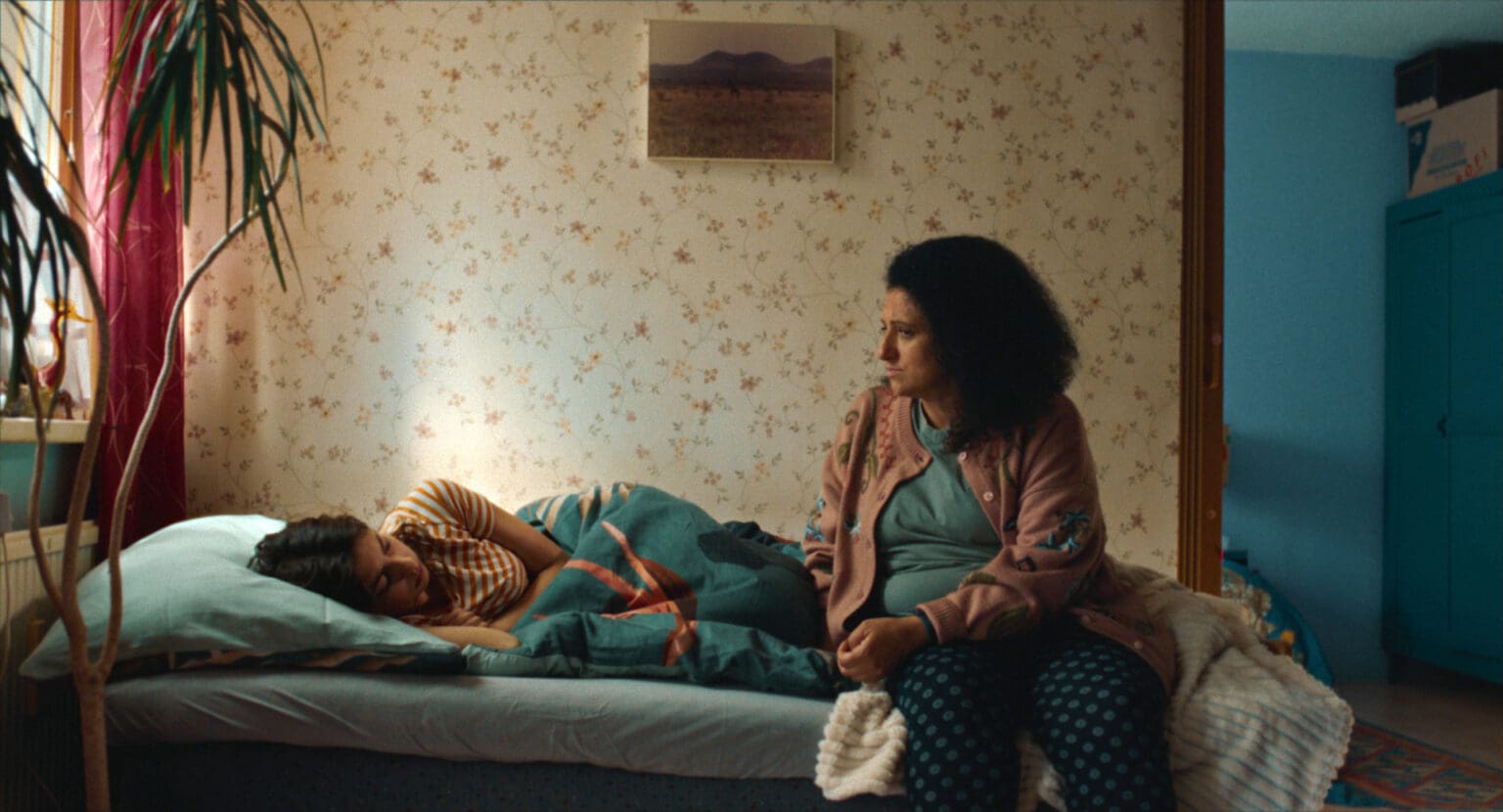
That philosophy recalls another Anna — the one in The King and I — who, when faced with fear, advises herself to “whistle a happy tune” and “make believe you’re brave.” Lehner’s film is similarly brave. It doesn’t flinch from portraying prejudice, poverty, the pressures of parenting and puberty, or issues of self-image, sexuality, and class across generations and genders. And last but not least is Anna’s mother, who is deaf — portrayed with quiet power by deaf actress MariyaMenner. Lehner and Menner present the sympathetic, struggling, weary, woeful woman without idealizing her as a self-sacrificing maternal martyr defined by her disability. But, oh, the woe is so palpable as she looks at Anna during confrontations with eyes filled with hurt, heaves heavy sighs, or heaves her heavy metal shopping cart up the stairs, moving more slowly than the plot of the unrushed but not uninteresting story with admirable messages.
As Anna, about to enter her teens and enter a new school and neighborhood, Siena Popović turns in a believable, naturalistic performance, largely acting with her large, expressive brown eyes that register feeling isolated, rejected, resentful, and intermittently joyful, as the girl trying to fit in and find friends as well as fun as she mopes and copes.
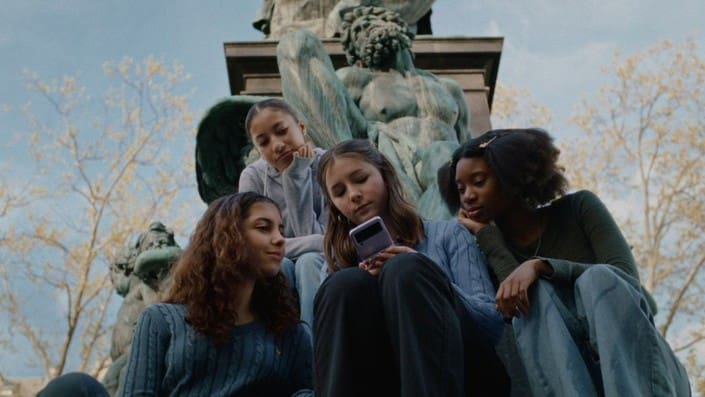
The single mother/only child dynamic drives the film — sometimes tender, sometimes explosive. They embrace; they clash; they grow apart; they keep secrets. No father figure is in sight or even mentioned. The humble home of the economically challenged household is claustrophobically crowded and small, amplifying the tension, and Lehner finds small, devastating moments: Anna demanding privacy and cruelly ordering her mother out; Mom lying to a teacher that Anna is too sick for the class ski trip when, in truth, they can’t afford it; or the two floundering over homework until frustration boils over in curses and tears. (Crass vocabulary pops up elsewhere, including pop songs in English that are used.)
Speaking of words in English, an outing to a zoo is an outlier, briefly showing actual monkeys having a conversation dubbed in that language! Otherwise, communication is in German and sign language, with subtitles provided. The subtitling is especially accommodating for deaf audiences, as the bottom of the screen also gets filled with descriptions of incidents not defined by language, indicating “door slams,” “heavy footsteps,” “muffled sounds of children playing,” etc.
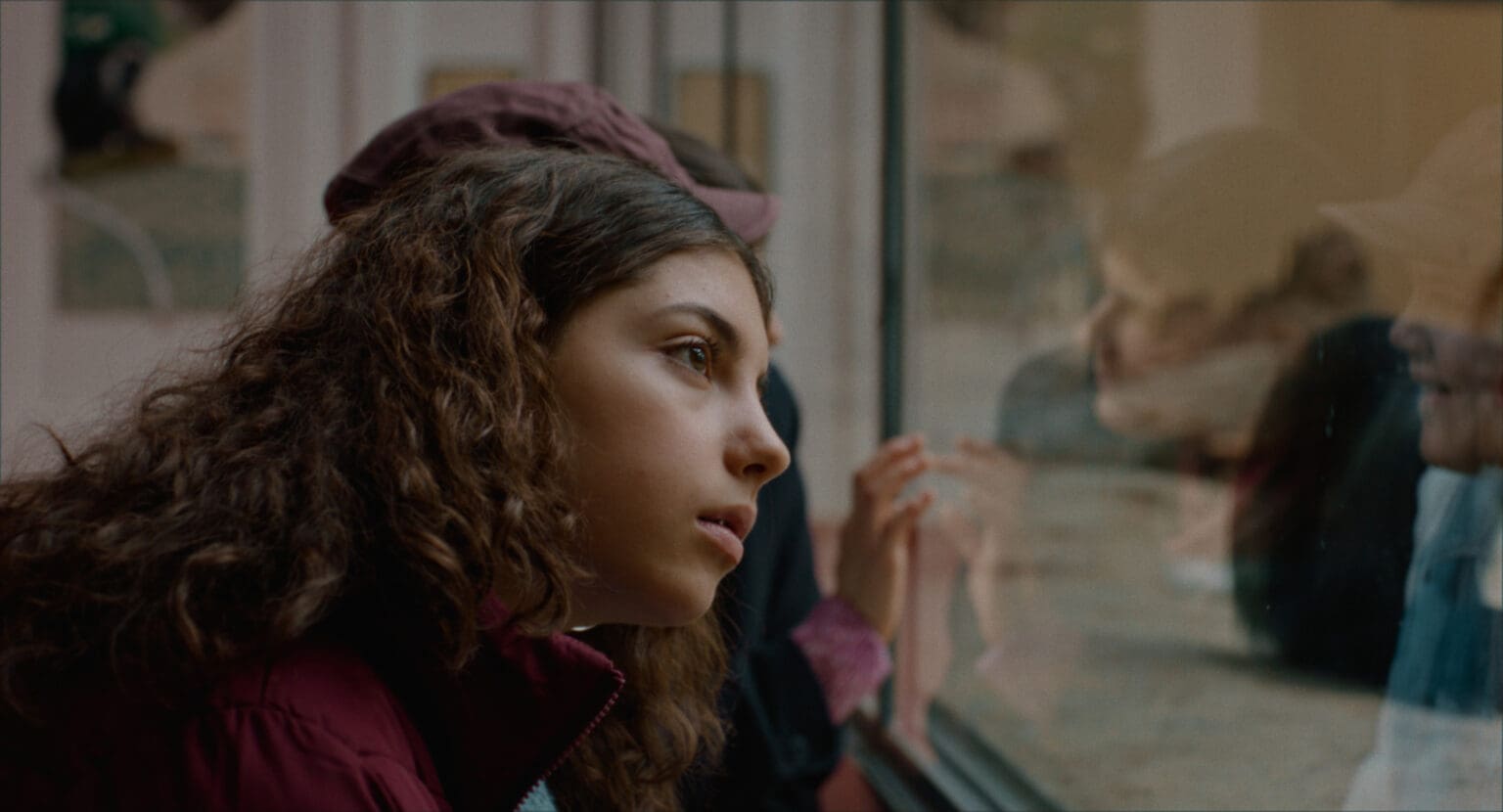
Adolescent curiosity, too, is is not sugar-coated. Anna bluntly asks her new friend Mara (the splendid Jessica Paar) if she’s grown pubic hair yet — and asks to see it. Later, the two share a bed during a sleepover, role-playing a romantic conversation between Anna and her crush, Paul. The moment is tender, teasing, and charged; is this a semi-veiled same-sex attraction they are semi-aware of in this semi-suggestive, semi-sweet scene? Lehner doesn’t label anything. None of the words that any of the initials in LGBTQ stand for are tossed around in the spoken lines, but viewers can read between the lines if they’re willing to acknowledge that young people have various levels of sexual awareness and interests.
Paul himself (played winningly by Alessandro Scheibner) seems poised to have a larger arc, but he remains more a symbol than a subject. A bus ride conversation has Paul asking Anna whether thirteen is too young for sex, stating that one of their peers has already done so, and the movie audience may logically wonder if he’s going to be feeling her out (or up). Anna’s later musings suggest she may not know whether she wants Paul, or wants to be him.
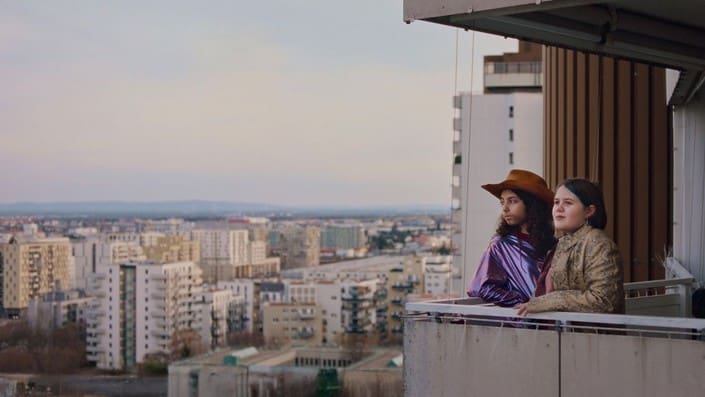
And something more extra-charged than just chummy happens with Mara when they are together, parading about in drag, borrowing clothes from Mara’s dad’s closet as he watches, amused. Notably, this single father (another figure in the story one might wish had more screen time and backstory) is played amiably by trans non-binary Daniel Sea — and while the film’s publicity describes the dad as “a queer trans man,” no such words are spoken. Despite what’s unstated or understated, I.Y.A.A.Y.P.Y.H.I.Y.M.A.S. is prominently placed in queer-centric NewFest. (In the accompanying Q&A with the filmmaker, she is open about the fact that she downplayed the screenplay’s aspects of sexuality in her pitch for public money to fund the project, presenting it as a coming-of-age story with the rare aspect of a major deaf character.)
Despite some side-stepping, loose ends, message-heavy moments, and brief segments that feel more like snapshots, or incomplete scenarios that end abruptly without an impactful or imaginative conclusion, there’s much that’s plus. You may veer towards loving in this tale of people living and loving. The young people dealing with the ups and downs of growing up will likely be growing on you after a few scenes.
If You Are Afraid You Put Your Heart into Your Mouth and Smile
(Wenn du Angst hast nimmst du dein Herz in den Mund und låchelst)
NewFest37
87 minutes | in German, English and Sign Language with English subtitles
screens on October 19, 2025, at 1pm at The Center, 208 West 13th St
streaming through October 21, 2025
for tickets and info, visit Newfest
