


Areas We Cover
Categories

TOP 10 CASINO MOVIES EVERY FILM FAN SHOULD WATCH
by Brandon Metcalfe | February 7, 2026
in Extras
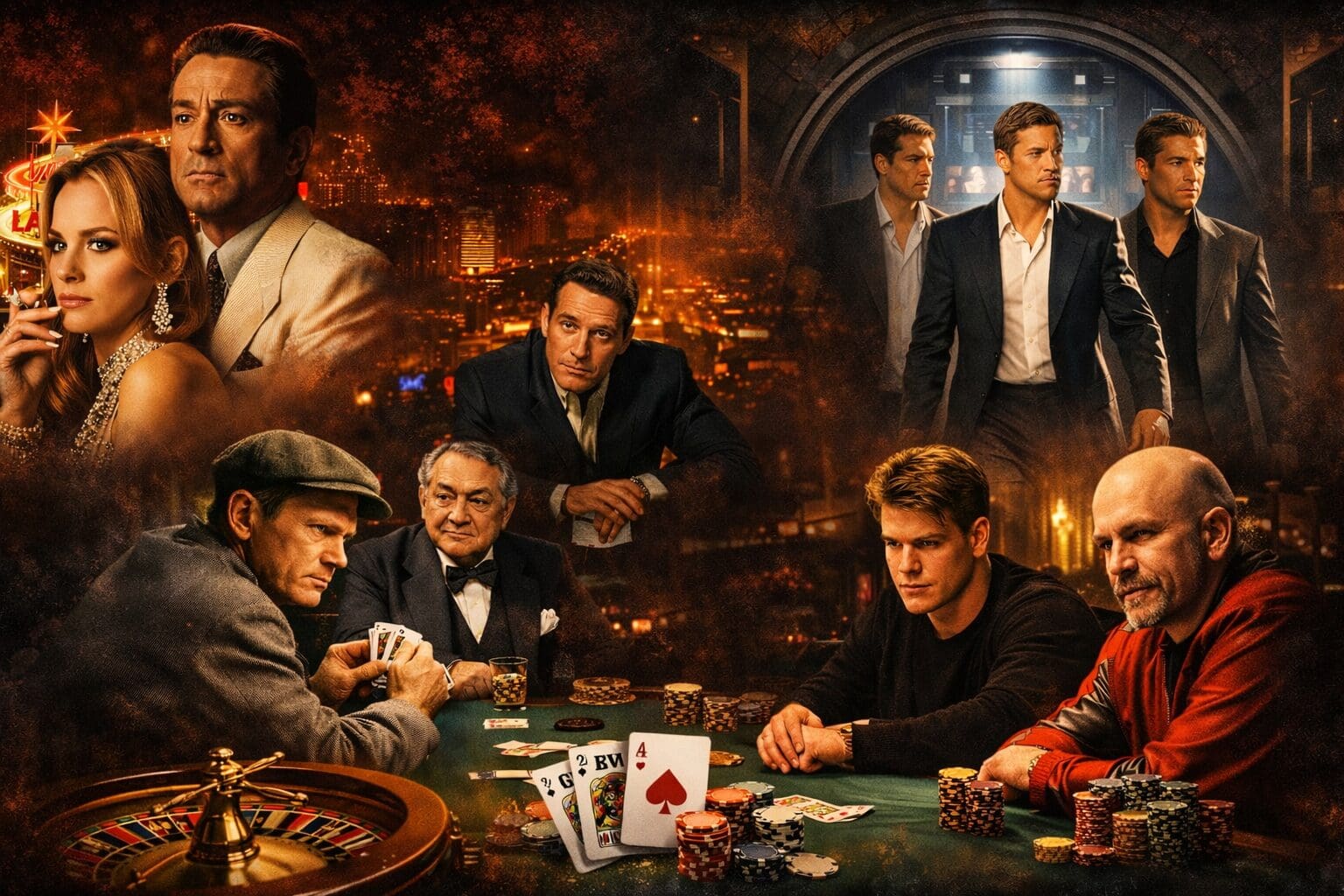
From smoky backrooms to glittering Vegas floors, cinema has long been captivated by the world of gambling. These films offer more than just card games and spinning roulette wheels and they deliver compelling characters, intense drama, and unforgettable moments.
Whether you’re drawn to psychological thrillers, heist capers, or character studies, the gambling genre provides some of cinema’s most entertaining experiences. Here are top 10 essential films that showcase the best of this exciting category.
Best Casino Films Continue to Captivate Audiences
Cinema and gambling share a natural connection because both of them involve risk, reward, and the unpredictability that keeps us watching. Casino-themed films tap into our fascination with:
- High-stakes drama that mirrors life’s biggest decisions.
- Complex characters navigating moral gray areas.
- Visual spectacle of luxury and excess.
- Strategic thinking that challenges both protagonists and viewers.
- The eternal question of luck versus skill.
These movies transcend the gambling genre, offering crime thrillers, character studies, and social commentaries wrapped in the seductive atmosphere of casinos.The glamour portrayed in these films often sparks curiosity about real casino experiences. For viewers interested in exploring beyond cinema, resources like https://casino10.org provide comprehensive casino rankings that help players find licensed operators suited to their regional requirements and gaming preferences.
1. Casino (1995)
Martin Scorsese’s epic crime drama remains the gold standard for gambling movies. The film follows Sam “Ace” Rothstein, a professional gambler who runs the Tangiers Casino in Las Vegas for the mob. Robert De Niro delivers a masterful performance as Ace, while Joe Pesci plays his volatile childhood friend Nicky Santoro. Sharon Stone earned an Oscar nomination for her role as Ginger McKenna, Ace’s troubled wife.
The movie spans decades and reveals how organized crime controlled Las Vegas casinos during the 1970s and 1980s. Scorsese shows both the glamorous surface and the brutal violence beneath. The director’s attention to detail makes every scene authentic, from casino operations to mob politics. The relationship between the three main characters drives the narrative toward its inevitable tragic conclusion.
2. The Cincinnati Kid (1965)
Steve McQueen plays Eric “The Kid” Stoner, a Depression-era poker player seeking to prove himself against champion Lancey “The Man” Howard. This classic focuses on character and craftsmanship rather than flashy visuals, building toward an extended poker showdown that remains one of cinema’s best.
Edward G. Robinson brings dignity and wisdom to Lancey, the aging champion who understands the game extends beyond cards. Their final confrontation isn’t just about winning, it’s about testing oneself against the best and accepting the outcome with grace. Tuesday Weld adds complexity as Christian, whose relationship with The Kid complicates his single-minded focus. Director Norman Jewison creates tension through close-ups and patience, letting scenes breathe.
3. Ocean’s Eleven (2001)
Steven Soderbergh transformed the 1960s Rat Pack film into a stylish heist masterpiece. George Clooney leads an ensemble cast as Danny Ocean, a thief who assembles a team of specialists to rob three Las Vegas casinos simultaneously. The target: over $150 million from vault owner Terry Benedict, played by Andy Garcia.
The film balances humor, tension, and cleverness throughout its runtime. The film’s production details and lasting audience impact are tracked on IMDb, one of the most cited film databases in the industry. Each crew member brings specific skills, from pickpocketing to explosives expertise. Brad Pitt, Matt Damon, Don Cheadle, and others create memorable characters who work together like a precision machine. The elaborate heist unfolds with multiple twists that keep viewers guessing until the final reveal.
4. Rounders (1998)
This poker drama introduced mainstream audiences to Texas Hold’em years before the poker boom. Matt Damon plays Mike McDermott, a reformed gambler trying to pay for law school through legitimate means. When his friend Worm, played by Edward Norton, gets released from prison, Mike returns to underground poker games to help pay off dangerous debts.
The movie captures the psychology of poker better than most gambling films. Mike’s narration explains strategy while showing how players read opponents and manage risk. John Malkovich steals scenes as Teddy KGB, a Russian mobster who runs high-stakes games. The film portrays poker as a skill-based game where discipline and observation matter more than luck.
5. 21 (2008)
Based on true events, this film follows MIT students who use card counting to win millions at blackjack tables. Jim Sturgess plays Ben Campbell, a brilliant student who joins a team led by his math professor, played by Kevin Spacey. The group uses signals and teamwork to beat Las Vegas casinos while avoiding detection.
The movie explains card counting in accessible terms without oversimplifying the technique. It shows both the thrill of winning and the paranoia of being caught by casino security. Ben’s transformation from innocent student to adrenaline-addicted gambler forms the emotional core. The film highlights how casinos track and ban advantage players despite card counting being legal.
6. The Cincinnati Kid (1965)
Steve McQueen stars in this classic poker showdown set in Depression-era New Orleans. He plays Eric “The Kid” Stoner, an up-and-coming poker player seeking to prove himself against Lancey “The Man” Howard, the best stud poker player alive. Edward G. Robinson portrays Lancey with quiet confidence and dignity.
Director Norman Jewison builds tension through character interaction rather than action sequences. The film explores themes of reputation, respect, and what it means to be the best. Supporting performances from Ann-Margret, Karl Malden, and Tuesday Weld add depth to the story. The final poker hand remains one of cinema’s most memorable gambling moments.
7. Molly’s Game (2017)
Aaron Sorkin’s directorial debut tells the true story of Molly Bloom, who ran exclusive poker games for celebrities, athletes, and billionaires. Jessica Chastain delivers a powerful performance as Molly, showing her intelligence, ambition, and vulnerability. Idris Elba plays her lawyer defending her when the FBI charges her with illegal gambling operations.
The film moves between Molly’s past as an Olympic-level skier and her present legal troubles. Sorkin’s signature rapid dialogue keeps the pace energetic while exploring deeper questions about control, addiction, and family expectations. The movie reveals the dark side of high-stakes games where players bet millions and criminal elements lurk beneath the surface.
8. The Sting (1973)
This Oscar-winning film combines con artistry with gambling in 1930s Chicago. Paul Newman and Robert Redford play grifters who orchestrate an elaborate scheme to cheat a dangerous crime boss. The con involves a fake betting parlor where they manipulate horse racing results.
Director George Roy Hill structures the film in chapters, each revealing another layer of the plan. The period details, from costumes to Scott Joplin’s ragtime music, create an immersive experience. The movie works as both an entertaining heist story and a commentary on Depression-era America. Multiple twists keep audiences engaged until the satisfying conclusion.
9. Croupier (1998)
This British neo-noir follows Jack Manfred, an aspiring writer who takes a job as a casino croupier in London. Clive Owen’s cool performance captures Jack’s detachment as he observes gamblers and becomes entangled in their schemes. The job provides material for his novel while pulling him into darker territory.
Director Mike Hodges creates atmosphere through moody cinematography and Jack’s noir-style narration. The film examines gambling from the dealer’s perspective, showing how casinos operate and how they maintain their edge. Jack’s internal conflict between observer and participant drives the psychological tension. The movie explores themes of fate, chance, and whether anyone can truly remain neutral.
10. Mississippi Grind (2015)
Ryan Reynolds and Ben Mendelsohn star in this character-driven road movie about two gamblers traveling through the American South. Mendelsohn plays Gerry, a real estate agent with serious gambling debts. Reynolds is Curtis, a charismatic drifter who seems to have luck on his side. Together they pursue a big poker game in New Orleans.
The film presents gambling addiction honestly without sensationalizing it. Gerry’s desperate need to win contrasts with Curtis’s seemingly carefree attitude. Their friendship develops through conversations in cars, bars, and casinos. Directors Anna Boden and Ryan Fleck focus on atmosphere and authentic performances rather than dramatic plot twists. The movie captures the loneliness and self-deception that often accompany problem gambling.
Conclusion
These ten films represent gambling cinema at its finest, each bringing unique perspectives to the genre. From Scorsese’s crime epic to intimate character studies, they prove that gambling stories work best when they focus on human drama rather than just the games.
Whether you prefer heists, psychological thrillers, or biographical tales, these movies deliver compelling entertainment while exploring timeless themes of risk, ambition, and consequence. Each film remains relevant because it captures something essential about human nature and our relationship with chance.
