


Areas We Cover
Categories

WHY I LOVED WATCHING “MR NOBODY AGAINST PUTIN”
by Susan Hall | March 13, 2026
in Extras, Film
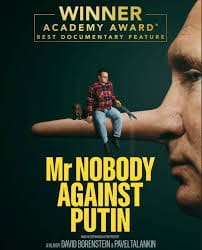
The first minutes of Mr Nobody Against Putin immediately establish that the story will not follow the usual structure of a political film. Instead of starting with dramatic speeches or historical narration, the documentary begins with small details of everyday life. A teacher stands in a classroom. Students talk about ordinary subjects. The environment appears calm, almost routine. Yet beneath that calm surface lies tension that becomes clearer as the story unfolds.
What drew me in was the simplicity of the setup. The protagonist is not a journalist with international connections or a politician fighting a public battle. He is a schoolteacher who gradually finds himself confronting a political system that grows more controlling each year. The film presents his perspective quietly. There are no loud declarations about heroism. The teacher simply records what he sees around him.
This approach makes the story feel authentic. Instead of explaining what is happening through commentary, the documentary allows viewers to observe the environment directly. The classroom becomes a central stage where political influence slowly enters daily education. Posters change. Lessons shift in tone. Discussions become less open. Each change seems small, but together they form a clear pattern.
I appreciated how the film respects the audience’s intelligence. It does not constantly explain what to think. The viewer notices the changes, listens to the conversations, and gradually understands the pressure building around the protagonist. That quiet storytelling style creates curiosity. Rather than presenting a finished argument, the film lets the story reveal itself through lived moments.
The documentary also captures the strange position of someone who never planned to become part of a political conflict. The teacher did not begin his career as an activist. He simply wanted to teach students and live an ordinary life. The film shows how political pressure can slowly push ordinary people into uncomfortable choices. That transition from normal life to moral conflict forms the emotional backbone of the documentary.
From the opening scenes, I felt that the film was not trying to dramatize events artificially. Instead, it was documenting something fragile: the point where routine life meets political reality. That subtle beginning made the rest of the story far more compelling.
The Power of an Ordinary Person Standing Alone
The central idea behind the documentary revolves around the relationship between a single individual and a powerful political system. The film takes place within modern Russia during the presidency of Vladimir Putin, where political messaging increasingly influences education, media, and public conversation.
The teacher at the center of the story never claims to represent a movement. He does not lead protests or organize political campaigns. Instead, he documents how the political atmosphere enters the classroom. He films lessons, meetings, and interactions with students. These recordings reveal how political narratives begin to shape the content of education.
What makes the story powerful is the scale difference between the individual and the system surrounding him. Governments possess enormous resources, authority, and influence. A teacher with a phone camera has almost none of those advantages. Yet the act of documenting everyday events becomes a form of resistance.
The documentary shows that power often operates quietly rather than dramatically. New guidelines appear in schools. Teachers receive instructions about what topics to emphasize. Discussions about the war in Ukraine begin to appear in lessons designed for teenagers. These changes do not arrive all at once. They appear gradually, making them harder to challenge.
The protagonist reacts by continuing to record what he sees. His goal is not to create propaganda or expose secret conspiracies. He simply wants a record of reality. That modest motivation gives the documentary a strong sense of credibility. The viewer feels that the teacher is not performing for the camera. He is trying to understand the situation around him.
The film also explores the emotional cost of standing alone. The teacher cannot easily share his concerns with colleagues. Some teachers avoid political discussions entirely. Others repeat official narratives without questioning them. This isolation creates a quiet tension throughout the documentary.
Watching this struggle made me think about the meaning of courage. Many films portray bravery through dramatic confrontations. This documentary shows a different form of courage: the decision to keep documenting events even when doing so might carry serious consequences.
The teacher never claims to be a hero. That humility makes his actions more meaningful. He acts not because he wants recognition but because he feels uncomfortable ignoring what he sees.
Inside a Classroom Where Politics Slowly Arrives
The classroom scenes form the emotional center of the documentary. These moments reveal how political messaging reaches younger generations. Students listen to lessons about national identity, patriotism, and historical narratives that align with official government positions.
At first the changes appear minor. Teachers mention current political events during lessons. Students ask questions about the war. The atmosphere remains calm, but the tone shifts gradually. Some discussions feel rehearsed rather than spontaneous.
The documentary captures these moments with careful observation. Students speak openly about what they hear from television and social media. Some repeat official talking points. Others express confusion or curiosity. The teacher listens to these conversations while recording them discreetly.
These scenes highlight the complexity of education under political pressure. Teachers must follow guidelines from administrators. They must present information in ways that align with official expectations. At the same time, they interact with students who ask honest questions.
The film never portrays the students as passive recipients of propaganda. Many appear thoughtful and curious. They discuss the information they receive and compare it with what they see online. This interaction between authority and curiosity creates a subtle tension within the classroom.
One of the strongest aspects of the documentary is its refusal to exaggerate. The classroom does not suddenly become a political battlefield. Instead, the influence of politics grows slowly. New lessons appear. Posters change. Teachers receive instructions about how to discuss current events.
These gradual shifts demonstrate how political narratives can enter everyday institutions. Schools become places where national identity is reinforced through education. The documentary shows how those narratives interact with the lived experiences of students and teachers.
Watching these scenes reminded me how powerful classrooms can be in shaping collective memory. Students often remember what teachers say long after they leave school. That responsibility makes the teacher’s dilemma more difficult. He must decide whether to follow instructions or question them.
The film captures that dilemma without simplifying it. The teacher continues teaching while documenting the environment around him. That quiet documentation forms the foundation of the entire documentary.
The Human Cost of Speaking Up
As the documentary progresses, the risks surrounding the teacher become clearer. Recording classroom discussions and school activities is not a neutral act in a politically sensitive environment. Authorities begin to notice his behavior.
The tension grows gradually. Administrators question him about his activities. Colleagues express concern about the potential consequences. The teacher must decide whether to stop recording or continue documenting events.
The documentary handles this tension carefully. It does not rely on dramatic confrontations or staged scenes. Instead, it shows small conversations that reveal growing suspicion. Meetings with administrators feel polite but uncomfortable. Questions become more direct.
These interactions demonstrate how authority often works through social pressure rather than immediate punishment. The teacher understands that continuing his documentation could threaten his career. Losing a teaching job might seem like a small consequence compared to political imprisonment, but it represents a major disruption to everyday life.
The film also shows how this pressure affects personal relationships. Friends and colleagues worry about the risks he is taking. Some advise him to stop recording for his own safety. Others avoid discussing the situation entirely.
These reactions illustrate the complicated social dynamics surrounding dissent. Not everyone who avoids confrontation supports the system. Many simply want to protect themselves and their families. The documentary acknowledges that reality without criticizing individuals who choose caution.
The teacher faces a difficult decision: protect his stability or continue documenting what he believes is important. His choice reflects a quiet determination rather than dramatic rebellion.
What impressed me most was the absence of self-promotion. The teacher never tries to turn his actions into a personal brand or public campaign. He continues recording because he believes the events should be documented. That modest motivation gives the story emotional weight.
Seeing Russia Beyond Headlines
International audiences often see Russia through simplified narratives presented by global news coverage. Reports focus on geopolitical conflicts, diplomatic tensions, or military actions. These stories highlight important developments, but they rarely show everyday life inside the country.
The documentary offers a different perspective. It focuses on ordinary spaces such as schools, homes, and small conversations between people who live within the political system. This perspective reveals how large political decisions affect daily routines.
The teacher’s classroom becomes a microcosm of Russian society. Students discuss their opinions, repeat what they hear from parents or television, and attempt to understand events happening far beyond their town. These discussions reflect the complexity of public opinion.
Some students express strong patriotic views. Others show uncertainty about the information they receive. The documentary allows these voices to appear without editing them into a single narrative. This openness helps viewers understand the diversity of perspectives within the country.
The film also captures everyday details that make the setting feel real. Teachers prepare lessons. Students joke with friends. Administrative meetings discuss routine school issues. These ordinary moments contrast with the larger political forces shaping the environment.
One brief scene shows staff members discussing maintenance improvements for the school courtyard, including ideas about benches and shared seating areas similar to commercial outdoor furniture used in public spaces. The conversation appears mundane, yet it highlights how everyday life continues even when political pressure grows.
These ordinary details strengthen the documentary’s credibility. The film does not present Russia as a monolithic society. Instead, it shows individuals navigating complex circumstances while trying to maintain normal routines.
By focusing on daily interactions, the documentary helps viewers understand how political narratives influence society gradually rather than through sudden transformation.
Why the Story Resonates Beyond Russia
Although the documentary focuses on a specific country and political environment, its themes resonate far beyond national borders. The central question is simple: what happens when an ordinary person decides to document reality instead of ignoring it?
Many societies struggle with tensions between authority and individual responsibility. Governments, institutions, and media organizations shape public narratives. Individuals must decide how much they trust those narratives and whether they challenge them.
The teacher’s story illustrates the difficulty of maintaining personal integrity within a structured system. He does not possess political power. His influence comes from observation and documentation. Yet even that modest form of resistance carries risk.
Viewers from different countries may interpret the film differently depending on their own experiences with political authority. Some may see it as a story about censorship. Others may focus on the role of education in shaping national identity.
The documentary avoids presenting a single interpretation. Instead, it invites viewers to think about the relationship between individuals and institutions. Schools, governments, and media all influence how societies understand themselves.
The teacher’s decision to document his environment represents a small but meaningful act of independence. He does not expect to change the political system. He simply refuses to pretend that nothing is happening.
That attitude resonates because many people face similar dilemmas in different contexts. Workers may witness questionable decisions within companies. Journalists may encounter pressure from editors or political actors. Teachers may receive instructions about what topics to emphasize.
The documentary suggests that documenting reality can itself be a form of accountability. When events are recorded honestly, they become harder to ignore.
Why the Film Stayed With Me
Long after finishing the documentary, I continued thinking about the teacher’s quiet determination. The film does not end with dramatic victories or major political changes. Instead, it leaves viewers reflecting on the small choices individuals make within larger systems.
The story demonstrates how ordinary professions can intersect with political reality. Teachers, doctors, engineers, and journalists all operate within structures influenced by government policies. Most people never expect their jobs to become part of a political conflict.
The teacher’s situation illustrates how quickly that assumption can change. When political messaging enters classrooms, teachers must decide how to respond. Some follow instructions without questioning them. Others attempt to maintain neutrality. A few decide to document what they see.
The documentary also raises questions about memory. Societies often remember political events through official narratives. Personal documentation offers an alternative record of those events. Even small recordings can become valuable historical evidence.
Watching the film made me reflect on the importance of observation. Many people notice uncomfortable developments but choose not to record them. The teacher’s decision to keep filming suggests that documentation itself can carry meaning.
Another reason the documentary stayed with me is its emotional restraint. The film does not rely on dramatic music or heavy narration. It trusts the audience to understand the significance of the events being shown.
That restraint creates a sense of authenticity. The teacher does not appear larger than life. He remains an ordinary person navigating an unusual situation.
The documentary ultimately portrays a quiet form of resistance built on attention and honesty. It shows that even someone who considers himself “nobody” can contribute to understanding the truth of a moment in history.
That message feels both simple and powerful. The film reminds viewers that history often depends on individuals who decide to record what they see rather than remain silent.
