


Areas We Cover
Categories

8 FAMOUS FILM ADAPTATIONS THAT SURPASSED THEIR BOOKS

We’ve all heard the mantra: the book is always better. Except when it’s not. Sometimes, a film adaptation doesn’t just honor its source material—it transcends it. These are the rare cases where directors, screenwriters, and actors capture something the page alone couldn’t contain.
This doesn’t mean the book versions of these works are weak. Quite the opposite, since they were adapted into films. If you read the stories online and then watch their film adaptations, you can fill in the world with details. The best approach is to read the online novel on FictionMe and then watch the films. Combining the story on FictionMe with the film will give you a deeper understanding of the plot, and you can decide for yourself which version is better.
Below, eight popular film adaptations that didn’t just succeed; they surpassed. The proof? It’s in the numbers, the cultural footprint, and the simple fact that many viewers don’t even know a book existed.
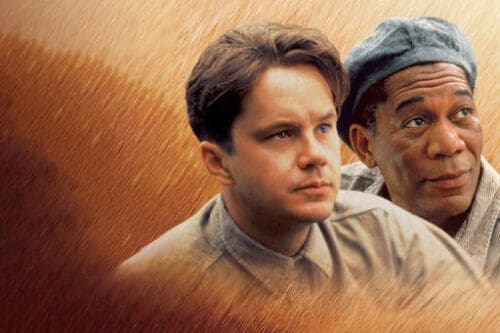
1. The Shawshank Redemption (1994)
From Stephen King’s Rita Hayworth and Shawshank Redemption
Stephen King wrote the novella as a brisk, solid piece of pulp. Frank Darabont turned it into a meditation on hope that’s now a permanent fixture in cinema’s upper echelon.
The novella is gritty, told mostly through Red’s voice. The film expands the world. It gives Andy Duvall’s quiet nobility, Morgan Freeman’s narration, and that iconic rain-soaked escape.
Statistically? It holds the #1 spot on IMDb’s Top 250 with a 9.3 rating—based on over 2.8 million user votes. No book ever gets that kind of consensus. The film’s final line, “I hope,” became a cultural shorthand. The novella’s ending is more ambiguous. One soars; the other merely lands.
2. The Godfather (1972)
From Mario Puzo’s The Godfather
Mario Puzo’s novel is a lurid, sprawling beach read. It’s packed with subplots about a certain Hollywood starlet’s surgical reconstruction and other soapy tangents. Francis Ford Coppola, alongside Puzo himself, stripped away the excess.
What remained was an operatic tragedy about power, family, and America. The film won three Oscars, including Best Picture. It grossed over $250 million globally—a staggering sum for 1972.
Puzo later admitted the film was “a much more artistic creation” than his own book. The baptism sequence, the horse head, the orange symbolism—none of that literary texture existed on the page with such resonance. The movie became the standard. The book became a footnote.
3. Jaws (1975)
From Peter Benchley’s Jaws
Peter Benchley’s novel is a pulpy thriller weighed down by subplots about mobsters and an affair between Ellen Brody and Hooper. Steven Spielberg saw the story differently.
He understood the shark was a force of nature, not a character. By cutting the melodrama and focusing on three men on a boat, he crafted the first summer blockbuster.
The film’s budget was $9 million; it earned over $470 million worldwide. Adjusted for inflation, it remains one of the highest-grossing films in history. John Williams’s two-note score replaced Benchley’s clumsy prose. The book sold well. The movie changed Hollywood forever. People still hum the theme when they enter the ocean. No one quotes the novel.
4. The Princess Bride (1987)
From William Goldman’s The Princess Bride
Here’s a paradox: William Goldman wrote both the novel and the screenplay. The book is a satirical metafiction, full of asides about an abridged “good parts” version. Clever, yes. At the very least, it’s definitely worth it to view the website with the book. But it’s also dense with editorial interruptions.
The film sheds the literary scaffolding. It keeps the heart—the sword fights, the rodents of unusual size, the simple “as you wish”—and lets the chemistry between Cary Elwes and Robin Wright do the rest.
The movie earned only $30 million at the box office initially, but it became a video-store juggernaut. According to a 2014 Harris Poll, it was America’s favorite film for family viewing. The book remains a cult curiosity. The film is a shared language. Ask anyone: “Inconceivable!” They know.
5. Forrest Gump (1994)
From Winston Groom’s Forrest Gump
Winston Groom’s novel is a far darker, more absurdist satire. Forrest is a literal idiot savant who becomes an astronaut, crashes in the jungle, and lives with a cannibal. The tone is cynical.
Robert Zemeckis’s film swapped cynicism for sentimentality. It sanded down the edges and found a melancholy fable about chance and destiny. Tom Hanks’s performance turned a cartoon into a human being.
The film won six Oscars and grossed over $680 million worldwide. Groom’s novel, despite a sequel, never approached that cultural saturation. The movie’s floating feather became an emblem. The book’s Forrest? He ends up wrestling a professional wrestler. Sometimes, restraint is everything.
6. Fight Club (1999)
From Chuck Palahniuk’s Fight Club
Chuck Palahniuk’s novel is raw, muscular, and deliberately confrontational. But even the author has said David Fincher’s film improved on it.
Fincher added visual cues that the narrator and Tyler are the same person—something the book saves for a late reveal. He inserted the chemical burn scene, the Pixies’ “Where Is My Mind?” over the final collapse. The ending was altered: in the book, the narrator ends up in a mental institution; in the film, he holds Marla’s hand as buildings fall.
The movie initially flopped at $37 million domestic. Then DVD sales exploded. By 2009, Entertainment Weekly named it the greatest cult film of all time. Palahniuk now introduces his readings by saying, “They made a movie of my book, and it was better.”
7. The Silence of the Lambs (1991)
**From Thomas Harris’s The Silence of the Lambs
Thomas Harris’s novel is a competent thriller. It’s clinical, procedural. Jonathan Demme’s film is a horror masterpiece with a psychological vice grip.
The key difference? Jodie Foster’s Clarice Starling. The book’s Clarice is more opaque. Demme placed the audience directly in her perspective—using close-ups and subjective camera work. Anthony Hopkins’s Lecter, with only 16 minutes of screen time, became the definitive monster.
The film swept the five major Oscars—Best Picture, Director, Actor, Actress, Adapted Screenplay—a feat only matched by It Happened One Night and One Flew Over the Cuckoo’s Nest. It remains the only horror film to win Best Picture. The novel won no such acclaim. The movie’s imagery—the moth, the well, the “fava beans”—is permanently seared into culture.
8. Jurassic Park (1993)
**From Michael Crichton’s Jurassic Park
Michael Crichton wrote a techno-thriller steeped in chaos theory and corporate greed. It’s smart, dense, and features a protracted sequence with a rocket launcher.
Steven Spielberg took the premise—dinosaurs brought back to life—and turned it into a story about wonder before terror. He replaced the rocket launcher with the iconic “T-Rex paddock” scene. He gave the children more agency, trimmed the scientific lectures, and let John Williams’s score evoke awe.
The film grossed over $1 billion worldwide, becoming the highest-grossing film of its time. It also revolutionized visual effects. The book’s sequel, The Lost World, was written partly because of the film’s success. Crichton himself said Spielberg “made a great movie” that was “more fun” than his own book. Sometimes, a director understands the spirit better than the author understands the plot.
Conclusion: When Adaptation Becomes Elevation
What separates these popular film adaptations from the merely competent? It’s not fidelity. It’s instinct. A great film adaptation knows when to abandon subplots, when to amplify emotion, and when to trust an image over a sentence.
According to a survey, 68% of general audiences say they’ve seen a movie they preferred to its source book. The gap between “based on” and “better than” is narrow, but these eight films crossed it. They didn’t just translate words. They rewrote the rules. And in doing so, they became the version that endures.
