


Areas We Cover
Categories

4 SIMPLE WAYS TO IMPROVE MOVIEGOER EXPERIENCES
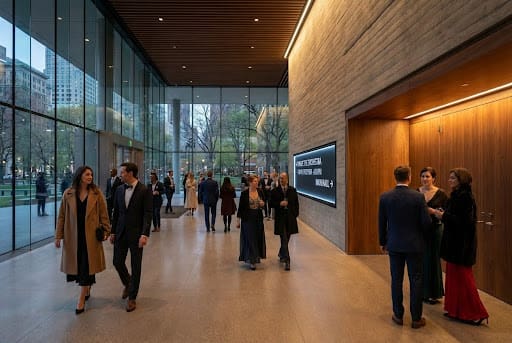
by Connor McCormick | April 3, 2026
in Extras, Film
4 Simple Ways To
Make Moviegoers Stay
The four simple ways to make moviegoers stay and return include implementing smart lobby wayfinding, designing digital programs with donor recognition, streamlining membership event check-ins, and offering interactive educational exhibits.
These thoughtfully integrated operational details shape the emotional tone of a night at the theater before the curtain even rises.
By focusing on audience comfort and cultural atmosphere, performing arts venues can transform ordinary visits into friction-free, memorable experiences.
The lobby lights are still bright as someone squints at their phone to figure out theater locations. A couple near the entrance debates whether the showing has already started or if they still have time.
A first-time visitor searches for a staff member who can point her toward the accessible entrance. The house lights have not dimmed yet, but the experience has already begun.
This is the moment most venues underestimate, as the time after the ticket scan is charged with emotional potential.
It is where anticipation either compounds into genuine excitement or gets slowly diluted by confusion and small indignities.
The best cinema and performing arts operators understand that the magic of a great night out is not a single event.
It is a series of small, thoughtfully designed moments beginning the instant a guest crosses the threshold.
Here are four practical, design-conscious ways venues are improving that arrival experience. In doing so, they give audiences every reason to stay, return, and bring someone new.
These small investments in hospitality pay off immensely over time.
1. Smart Lobby Wayfinding That Guides Without Interrupting
Picture a first-time visitor at a multiplex on a busy Friday evening where every hallway looks the same. Theater numbers are printed on small placards near the ceiling, and the show starts in four minutes.
What should be the beginning of a genuinely enjoyable evening quickly becomes a minor ordeal.
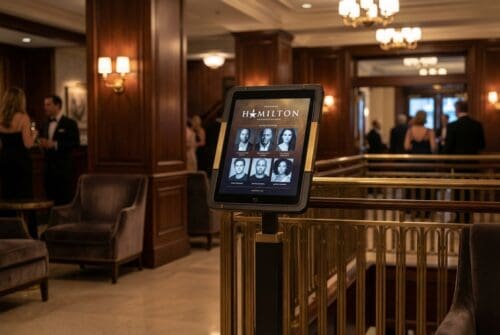
Now picture a performing arts center where a slim, elegantly framed display near the main entrance quietly shows a map of the evening performances.
Effective lobby engagement is rarely about big screens, but rather about reducing cognitive load.
When guests spend mental energy navigating, they arrive at their seats subtly stressed rather than open and ready.
The best digital signage for theaters is spatially intelligent and integrated into the architectural language of the lobby.
Utilizing secure, cleanly designed hardware like VidaBox’s freestanding iPad floor stand allows theaters to present accessible routes and schedules without disrupting the venue’s visual identity.
Festival venues have understood this for years, relying heavily on clearly deployed wayfinding to manage thousands of guests.
Outdoor film festivals use digital orientation stations at key intersections to reduce staff strain and guest friction simultaneously.
In the modern landscape, contactless and digital navigation has shifted from novelty to expectation. Guests are more comfortable with screen-based guidance than ever before, and venues that use this fluently set a tone of quiet competence.
| Key Insight: Effective wayfinding is measured by how little the guest has to think. By reducing cognitive load during arrival, you ensure the audience is mentally prepared and relaxed before the performance begins. |
2. Digital Programs and Donor Recognition That Honor the Venue Identity
There is something irreplaceable about a printed program, including its weight and the pleasure of folding it into a pocket.
However, there are also elements worth examining, such as the donor wall buried on page eleven or the cast bio rendered in tiny font. Information often competes for limited space in a standard trifold pamphlet.
Imagine a regional theater lobby where a freestanding display presents the evening creative team in full.
Photographs, short biographies, and production notes can sit alongside a luminous acknowledgment of the season donors.
Information is given visual presence and dignity, encouraging guests to gather around it before showtime. This approach treats public-facing spaces as cultural extensions of the program itself.
This is where performing arts venue design and technology begin to overlap in genuinely meaningful ways.
Thoughtful content deserves equally considered presentation, which is the point at which hardware becomes a design question.
A display that tilts awkwardly or clashes with polished interiors quietly undercuts everything the content is trying to communicate.
Venues that invest in elegant, low-profile enclosures find that their displays feel less like screens and more like architectural features.
The elegance of a cultural space is always cumulative. Every detail contributes to the impression that this is a place that cares about the guest experience.
This ensures the technology complements rather than competes with the overall visual identity of the room.
Not-for-profit theatres contributed over $3.6 billion to the U.S. economy and attracted more than 27 million attendees, proving the massive scale of these cultural hubs.
3. Membership and Event Check-In That Feels Like a Welcome, Not a Queue
Consider a subscriber night at a beloved regional theater where patrons arrive expecting an elevated experience.
Instead of a warm greeting, they are met with a handwritten list on a clipboard and a line that stretches past the coat check.
A frazzled volunteer scanning rows of names with a highlighter creates a feeling of friction. The moment has a distinct emotional tone, and it is not the right one.
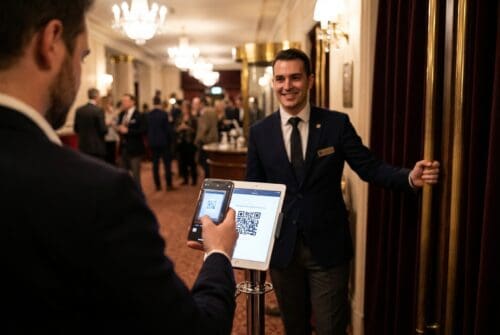
Compare this to a members-only screening at an arthouse cinema where a quietly mounted tablet allows guests to scan a code.
In three seconds, their name appears, their seat is confirmed, and they are welcomed through the doors.
The interaction is brief, but the impression of being dignified and unhurried is lasting. Streamlined digital check-in serves as a powerful hospitality statement.
It communicates that the venue values the guest’s time and understands the emotional context of their arrival.
Staff are no longer managing a transaction but are instead welcoming someone to a special occasion. Large multi-venue festivals developed seamless credentialing flows out of necessity.
Their influence has since filtered into regional theater, performing arts subscriptions, and special event programming.
The theater guest experience improves measurably when administrative friction disappears.
When the logistics dissolve, guests arrive at their seats with their attention and emotional energy fully intact. They sit down feeling curious, open, and completely ready for the performance.
| Important: A clumsy check-in process can erase the goodwill of even your most loyal members. Ensure technology facilitates a warm greeting rather than creating a barrier between staff and patrons. |
4. Exhibit and Educational Content That Turns Waiting Into Wandering
The fifteen minutes before a film begins or before the house opens for a live performance is an underused canvas.
Most guests fill this waiting period by scrolling on their phones. However, a few venues have discovered that giving people something genuinely connected to the upcoming experience changes this dynamic.
When provided with engaging visual content, audiences will happily look up and participate.
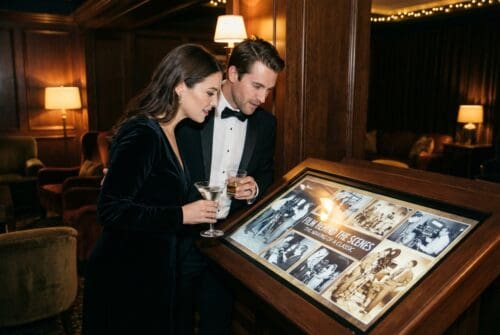
An art house cinema in the Pacific Northwest cycles behind-the-scenes photography from the featured film through a lobby display.
Guests who arrive early often find themselves in conversation with a stranger about a director’s visual style.
A performing arts center in the Midwest lines a corridor with a timeline of the building’s history, original blueprints, and production photographs. What was once a basic waiting area has become a compelling reason to arrive early.
This museum-inspired approach treats public-facing spaces as cultural extensions of the main program.
The audience experience begins at the corner display with a composer biography, a director interview clip, or a story map.
These installations do not require elaborate infrastructure to be effective. A securely mounted tablet displaying curated rotating content can introduce meaningful context with a minimal footprint.
The emotional payoff is substantial, as guests who feel intellectually engaged while waiting are more emotionally primed.
For venues invested in broadening their audiences, cultural technology deployed this way carries an important accessibility dimension.
Educational content in lobby spaces can welcome guests who are encountering an art form for the very first time. It quietly lowers barriers to entry without ever announcing itself.
| Pro Tip: Use digital displays to provide context for first-time attendees. Short director clips or historical timelines help lower the barrier to entry, making high-brow art feel accessible and welcoming to everyone. |
The Real Impact
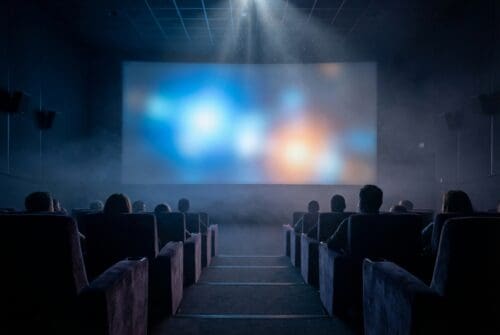
Return for a moment to that lively venue lobby. The same guest who was squinting at their phone is now guided by a discreet display to exactly where they need to go.
On the way, they stop at a freestanding screen that introduces the cast tonight and acknowledges the generous donors.
At the entrance, their name appears with a quick tap, and a staff member warmly welcomes them back.
In a hallway, a display catches their eye with photographs from the making of the film they are about to see.
They linger a moment longer than they expected to, absorbing the creative context. They are finally seated before the lights dim, feeling not relieved but genuinely anticipating the show.
This is what the best performing arts venue design accomplishes on a nightly basis.
It does not announce itself or interrupt the natural flow of the evening. It simply makes people feel oriented, respected, and curious.
This is exactly the emotional state in which a piece of art lands hardest and resonates the deepest. The tools to create this seamless experience are more accessible and easier to implement than ever before.
Memorable arts experiences begin long before the curtain actually rises. The best venue technology supports storytelling, hospitality, and access in incredibly subtle ways.
By prioritizing these initial touchpoints, performing arts centers ensure that the story truly starts at the front door.
| Author Profile: VidaBox is the leading manufacturer of tablet enclosures and mounting solutions for businesses worldwide. |
