


Areas We Cover
Categories

THEATER STAGE LIGHTING DESIGN: 6 KEY ELEMENTS NOT TO BE IGNORED
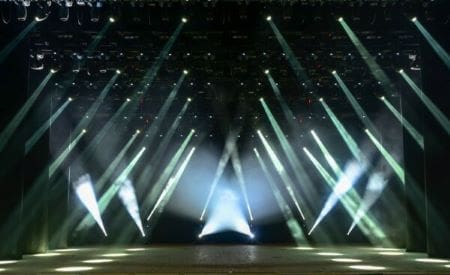
As a professional in the field of stage lighting, I firmly believe that the most important core value of theater stage lighting is to empower dramatic storytelling.
Stage lighting should not be merely regarded as “decoration”; we should avoid over-pursuing visual gimmicks that are divorced from the plot, nor should we ignore the matching between lighting and dramatic content.
It is worth noting that a professional stage light manufacturer often integrates the functional characteristics of diverse lighting products — including theater-specific lighting and DJ club lighting — into product research and development, ensuring that lighting equipment can meet the needs of different scenarios while adhering to design principles.
Drawing on my years of experience in theater stage lighting design, today I want to discuss the underlying logic in theater stage lighting design — the core principles of theater stage lighting — so that every beam of light becomes part of the dramatic narrative.
1: Plot Adaptation Principle
Core Requirement: Lighting design must conform to the plot development and emotional tone, avoiding disconnection between lighting and the plot.
Stanley McCandless, the founder of modern stage lighting, emphasized in A Method of Lighting the Stage (1932): “Lighting is not an independent picture, but a visual translation of dramatic action and emotion.” Francis Reid, a British authority on stage lighting, proposed in Stage Lighting Handbook: “Lighting design must ‘let the audience see the story, not the light’.”
Case Study: The Phantom of the Opera
In the underground lake scene, where the Phantom leads Christine to his secret residence, the tone is not the romantic warmth of traditional love, but eerie, mysterious, and tinged with a touch of compassion.
Therefore, the lighting design must fit this plot direction — as the boat sails on the underground lake, in addition to using low-brightness cool light overall, it is matched with a slowly moving narrow beam follow spot, while the surrounding stage area remains dark. Unlike the dynamic and intense effects of Beam Moving Head Light commonly used in DJ club lighting to create a lively atmosphere, the lighting here abandons excessive dynamic effects, focusing on emotional expression.
This design not only preserves the secluded atmosphere of the underground lake but also fits the Phantom’s lonely, paranoid yet companion-craving inner world. Although there are no grand lighting effects, it fully enhances the plot’s atmosphere and narrative sense.
2: Character Emotion Adaptation Principle
Core Requirement: Stage lighting design should match the corresponding color temperature and light beams according to the main characters’ personalities and the plot’s atmosphere. For example, cold tones are mostly used for tragic characters, and warm tones are mainly used for warm scenes. J. Michael Gillette, a professor at the Yale School of Drama, clearly stated in Designing with Light: Cool colors = alienation, oppression, tragedy; warm colors = intimacy, warmth, hope; side light = inner struggle; top light = oppression / divinity.
Case Study: Les Misérables
Jean Valjean, the core character of the play, has a very contradictory life, often struggling between good and evil.
In the scene where Jean Valjean repents, the lighting design should conform to his inner pain and transformation — soft side light is used to project Jean Valjean’s shadow on the wall, and the subtle change of the shadow from large to small and then from small to large as the character moves reflects the painful process of his struggle and transformation in self-resistance; when Fantine is torn by fate, multiple intense top lights converge on her from above, reflecting her pain and helplessness, and at the same time, like the light missed by heaven, it implies compassion for this unfortunate mother, accurately conveying the character’s sorrow and a glimmer of hope.
3: Clear Light and Dark Layers
Core Requirement: Stage lighting design should reasonably divide the light and dark layers, and use the ingenious application of light and shadow contrast to highlight the core plot and characters, avoiding uniform brightness without focus.
Illuminating Engineering Society of North America (IESNA) DG-20-09 Stage Lighting—A Guide to the Planning of Theatres and Auditoriums: Light and shadow contrast is the core means of constructing stage space and dramatic focus.
The famous lighting designer Jennifer Tipton emphasized: “Darkness is not an absence, but a blank space and tension in drama.”
Case Study: Hamlet
During Hamlet’s inner struggle and self-examination, the lighting design controls the light and dark layers — the stage background adopts a dark tone, and only a soft warm light focuses on Hamlet, outlining his facial expressions and movements; the background is dotted with extremely dark cool light, setting off a lonely and struggling atmosphere without diverting the audience’s attention, allowing them to fully focus on Hamlet’s emotions and lines, highlighting the drama’s appeal.

4: Equipment Adaptation Principle
Core Requirement: Lighting equipment should be selected according to the theater’s space size, scale, and performance form. Steven Louis Shelley pointed out inA Practical Guide to Stage Lighting: Equipment selection = artistic needs + venue physical constraints + budget balance.
Case Study: Cats
As a classic musical, Cats includes multiple scenes such as “The Jellicle Ball” and “Old Deuteronomy’s Address”.
Considering the stage size and space of a medium-sized theater, it is more appropriate to choose small, easy-to-switch LED color-changing lights combined with precise follow spot equipment. This not only meets the large-area lighting coverage for group scenes, reflecting the liveliness of the cat group, but also can capture the expressions of individual cat characters through small follow spot equipment.
In addition, through the convenient operation function of the stage lighting equipment, it can quickly switch between “the joy of the party” and “the solemnity of Old Deuteronomy’s address”, adapting quickly to scene changes and avoiding the equipment occupying too much stage space.
5: Audience Visual Adaptation Principle
Core Requirement: Lighting design should not only consider stage performance but also take into account the audience’s viewing perspective, avoiding excessive or insufficient light that affects the viewing experience. IESNA DG-20-09: Stage lighting must meet two core audience experience standards: “uniform visibility” and “glare control”. Richard Dunham, a British master of stage technology, emphasized in Stage Lighting: The Fundamentals: Good lighting allows the audience to “see”, not to “be dazzled” or “unable to see clearly”.
Case Study: Les Misérables
In Fantine’s solo scene, the lighting angle adopts a “top-side lighting” method to ensure that the actor’s facial light is clear. At the same time, the lighting coverage is adjusted according to the distribution of the theater’s audience seats, so that both front and back row audiences can clearly see the stage lighting effects and the actors’ performances.
6: Simplicity and Practicality Principle
Case Study: Death of a Salesman
In the scene of “Willy Loman arguing with his son” in Death of a Salesman, the characters’ inner pain, unwillingness, and despair are very strong. At this time, the lighting design needs to be extremely simple — only two narrow warm light beams are used, focusing on Willy Loman and his son respectively, which not only creates an atmosphere of opposition and mutual loneliness but also highlights the absolute conflict between them.
In this scene, the background adopts dark cool light and light-dark contrast to highlight the conflict and inner struggle between the two, conveying the tragic tone of the plot concisely but accurately.
References
[1] Illuminating Engineering Society of North America (IESNA). IES DG-20-09: Stage Lighting—A Guide to the Planning of Theatres and Auditoriums. New York: IES, 2009.
[2] McCandless, S. A Method of Lighting the Stage. New York: Theatre Arts Books, 1932.
[3] Reid, F. Stage Lighting Handbook (4th ed.). London: Routledge, 2013.
[4] Gillette, J. M., & McNamara, M. Designing with Light: An Introduction to Stage Lighting (6th ed.). New York: Routledge, 2018.
