


Areas We Cover
Categories

THE ROLE OF PROFESSIONAL INJECTOR TRAINING in Creating Camera-Ready Results

There is something different about aesthetic work that ends up on camera. It gets tested harder. A result that may look fine in casual daylight can appear uneven under studio lighting, high-resolution lenses, and close-up video. That is where professional injector training starts to matter in a much bigger way.
Camera-ready results are not really about chasing perfection. They are about balance, restraint, and knowing how treatments will read from different angles. A face is not static on screen. It moves, reacts, smiles, turns, tightens, relaxes. All of that can expose work that felt acceptable in the treatment room but does not hold up in motion.
That is why clinics and practitioners are paying more attention to advanced education, anatomy refreshers, technique workshops, and hands-on mentorship. The difference shows. Not in louder results, but in better judgment.
One reason this matters so much is that injectables sit at the intersection of medicine, artistry, and patient communication. A practitioner may know a product well, yet still need sharper technique, stronger facial assessment skills, or more confidence in treatment planning for different face types. Ongoing education through an aesthetic injector training platform helps support that level of refinement, especially when patient expectations are tied to polished, natural-looking outcomes that will be seen both in person and on camera.
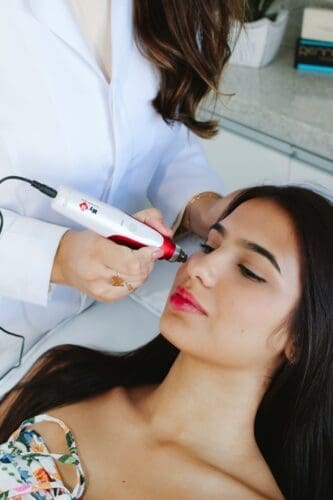
Why “Camera-Ready” Is a Different Standard
A lot of people hear that phrase and think it means dramatic transformation. Usually, it means the opposite.
Camera-ready work tends to rely on subtle adjustments that keep the face looking like itself. That sounds simple. It is not. Overcorrection can flatten expression. Poor placement can create odd shadows. Too much volume in the wrong area can become much more obvious once someone is photographed head-on or filmed while speaking.
On screen, a few things become more noticeable:
- Asymmetry
- Product placement that affects facial movement
- Puffiness under bright light
- Lack of harmony between facial features
- Results that look good only from one angle
This is where training changes the conversation. A well-trained injector is not just treating lines or volume loss. They are reading the whole face. They are thinking about structure, proportion, and movement. They are also thinking about what should be left alone, which is often the hardest call to make.
Technique Matters, but Assessment Matters More
A lot of people assume the technical part is the most important part. Needle angle. Product depth. Injection pattern. Those matter, clearly. But the strongest results often start before the first injection.
Facial assessment is where experienced injectors separate themselves. They look at skin quality, muscle activity, facial width, chin support, under-eye dynamics, and the way the face behaves during expression. They also consider age, lifestyle, previous treatment history, and whether the patient wants a polished look or a barely noticeable refresh.
Without that step, treatment can become too mechanical. And that is where results start looking generic.
Professional training helps practitioners slow down and assess with more precision. It builds pattern recognition. It sharpens decision-making. It makes injectors less likely to apply the same formula to every patient who walks in asking for the same thing they saw online.
The Pressure of High-Definition Beauty
There was a time when softer focus could hide almost anything. Not anymore.
Phones, ring lights, 4K video, social media close-ups, interview footage, event photography: all of it pushes aesthetic outcomes into sharper view. Patients notice this. Practitioners notice it too. What used to pass as “good work” may now look heavy, uneven, or overfilled.
That shift has changed patient expectations in a big way. People want to look refreshed without looking treated. They want smoother transitions, cleaner contours, and expressions that still feel alive. They do not want stiffness mistaken for polish.
That kind of result comes from education that keeps up with modern demands. Not just basic certification. Not just product familiarity. Real repetition. Real anatomy review. Real case-based learning. That is what helps a practitioner stay steady when the margin for error gets smaller.
Natural Results Are Usually the Most Skilled Results
This is the part people often miss.
Obvious work is not always a sign of confidence. Sometimes it is a sign of weak planning. The best aesthetic results are often the ones that do not call attention to one specific area. They make the whole face feel more rested, more balanced, more in sync.
That takes restraint. And restraint usually comes from training and experience, not instinct alone.
A practitioner who continues learning tends to get better at questions like these:
What actually needs treatment?
Maybe the issue is not the lips. Maybe it is chin support. Maybe it is mid-face balance. Maybe it is muscle pull creating tension elsewhere.
What should be treated later?
Not every concern has to be addressed in one appointment. Good injectors know when to build slowly.
What will this look like in motion?
A still image can mislead. Smiling, talking, laughing: that is where certain results reveal themselves.
What does the patient really want?
Sometimes a patient asks for volume when they are actually asking for structure, confidence, or softness.
This is where training becomes practical rather than theoretical. It gives injectors the framework to make better calls in real rooms with real faces and real pressure.
Ongoing Learning Protects Both Results and Reputation
In aesthetics, results travel fast. One strong outcome can bring referrals. One poor one can do the same for the wrong reasons.
For practitioners, that means education is not only about better treatment plans. It is also about protecting trust. Patients are more informed than before, but also more influenced by trends, filters, and unrealistic examples. A skilled injector needs to know how to guide expectations while still delivering something beautiful.
That is a communication skill as much as a clinical one.
A practitioner who stays current through structured education is often better equipped to explain treatment choices clearly, refuse unsuitable requests, and create plans that make sense over time. That matters because camera-ready results are rarely produced by chasing one dramatic session. They usually come from thoughtful treatment pacing and a clear aesthetic point of view.
The Best Training Builds Judgment, Not Just Confidence
Confidence without judgment can be risky in this field. That is why serious training should do more than make injectors feel ready. It should make them more careful, more observant, and more precise.
Strong educational environments usually help practitioners improve in a few key areas:
- Safer technique habits
- Better complication awareness
- More realistic treatment planning
- Stronger consultation skills
- Improved understanding of facial harmony
That kind of development affects outcomes in a visible way. Patients may not know exactly why one result looks refined and another looks off. But they can feel it. The face looks calmer. The proportions make sense. Nothing seems to fight the person’s natural features.
And for work that will be photographed, filmed, or seen repeatedly in public-facing settings, that difference is huge.
Trends Change Fast, Fundamentals Do Not
The aesthetic industry moves quickly. One month it is all about sculpted profiles. Then it shifts to skin quality, then micro-adjustments, then “undetectable” work. Trends come and go, and some of them push practitioners toward rushed demand.
That is where training provides stability.
A practitioner grounded in anatomy, product behavior, and full-face assessment is less likely to get pulled into trend-driven treatment that does not suit the patient. They can adapt without becoming reactive. They can say no when needed. They can explain why a softer, more measured plan may lead to stronger long-term results.
That kind of steadiness matters a lot in camera-facing work, where trend-heavy results can age badly and become obvious very quickly.
Why Patients Are Paying More Attention to Injector Background
Patients are not only asking what product is being used. More of them are asking who is doing the treatment, how often they train, and whether they approach the face strategically.
That shift makes sense. Products matter, yes. But technique, assessment, and treatment philosophy shape the final result more than marketing language ever will.
People who want polished outcomes are starting to recognize that injector education is not a side detail. It is part of the value of the treatment itself. The practitioner’s training path influences safety, planning, and the likelihood of getting a result that looks refined under all kinds of scrutiny.
That includes everyday life, but especially photography and video.
Final Thought
Camera-ready results are rarely accidental. They are usually the outcome of good judgment repeated consistently: careful assessment, controlled technique, a strong eye for balance, and the discipline to avoid doing too much. Professional injector training supports all of that.
And in a field where subtlety can make the strongest impression, that kind of preparation is not extra. It is the work.
