


Areas We Cover
Categories

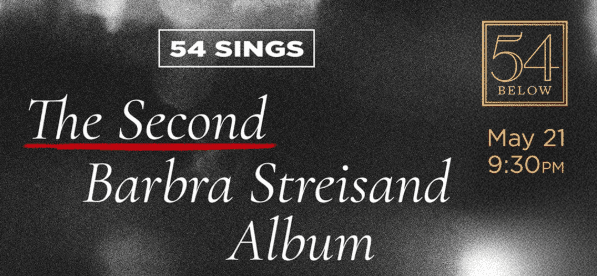
Cabaret Review: 54 SINGS THE SECOND BARBRA STREISAND ALBUM (54 Below / New York)
by Rob Lester | May 28, 2026
in Cabaret, New York
SECOND HELPINGS
OF STREISAND
A talented roster of singers at 54 Below
revisit an early Streisand classic with style,
affection, and plenty of bonus treats
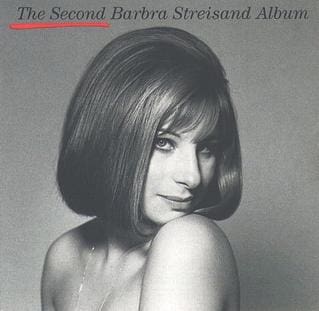
“My new album is called The Second Barbra Streisand Album because that’s just what it is. Why should I give it some fancy name that no one remembers anyway?” That’s what the singer stated in an interview when asked about her release that followed her debut solo album, titled simply The Barbra Streisand Album, both released in 1963. (The third album had the name The Third Album.)
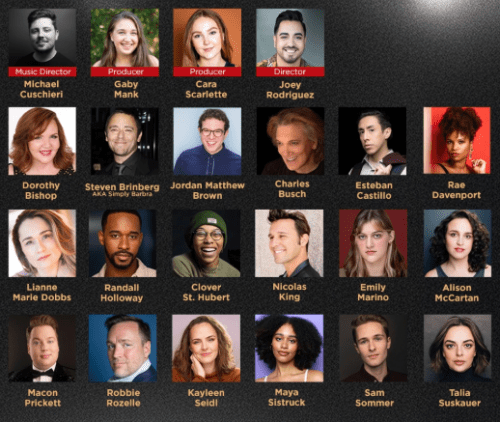
But there was nothing plain and understated about that sophomore effort near the beginning of her career. It’s a memorable recording that holds up, and the Manhattan nightclub 54 Below got hold of the idea to dedicate an evening to live performances of the songs and to get hold of a fine group of singers and do it in grand style. In their phrasing and style, some vocalists’ performances followed the Streisand blueprints more than others in approaching her memorable interpretations of quality songs she’d been doing for a couple of years in her nightclub acts. The ambitious (and delicious) endeavor was directed by Joey Rodriguez.
Especially satisfying was the presence of a small orchestra, rather than the typical cabaret accompaniment of just piano or a trio. The program began with a well-crafted overture—how cool is that in a cabaret show!? It let the audience know right away that this was a classy affair and served to rekindle memories of a classic recording or provide a belated introduction. Either way, it was a tasty appetizer that created positive anticipation for the banquet ahead. The night’s musical director/pianist/conductor, Michael Cuschieri, seemed steeped in the material and sensibilities.
And then began the parade of singers. When we heard the full-length versions of the pieces sampled in the overture, the mix of his own smart touches and homage to the original arrangements from the ’60s, which he’d dutifully studied, was the happiest kind of “happy medium” approach. Back in the day, the charts had been shaped by two men named Peter—Peter Daniels, the pianist who accompanied the chanteuse extraordinaire in live appearances with a small combo, and Peter Matz, who expanded and added to the arrangements and conducted the orchestra, creating exciting and emotional charts.
At the time the album was released, on the last day of August 1963, she had been announced as the star of a new Broadway musical: Funny Girl. Its composer, Jule Styne, an early advocate for her casting, wrote the liner notes. The composer who penned the notes for her debut disc, Harold Arlen, was represented by five of the selections on The Second Barbra Streisand Album. (Fun Fact: The aforementioned Mr. Daniels married Miss Streisand’s Funny Girl understudy, Lainie Kazan.)
The 54 Below bonanza began gently, with the album’s fourth track on Side One: the sweet-with-a-touch-of-awe “Who Will Buy?” from the musical Oliver! (which had opened on Broadway several months before, but had opened in London in 1960). Kayleen Seidl entered from the bar area, floated through the audience on her way to the stage, and graced the listeners (and the song) with her attractive, unaffected, unfussy soprano. Following the Streisand approach (who said she belted everything in the early years? She didn’t), it was an understated, restrained performance of the ballad.
Contrastingly, Randall Holloway was fierce, feisty, and flashy in performance and apparel with the restlessness and resolve of “Gotta Move” (music and words by Peter Matz), taking a cue from that verb “move” as he strutted and stalked the stage, adding his own embellishments.
Jordan Matthew Brown took on a serious piece, Kander & Ebb’s “I Don’t Care Much.” (Reliance on looking at paper on a music stand was a strong indication that he was filling in for someone else, since nobody else did this and everyone else, except a final performer, appeared just once. But he acquitted himself very well, handling the ambivalence and drama in the piece, so we “didn’t care much” that he needed what would usually be deemed a “cheat sheet.”)
Two other album tracks—which had been earlier 45rpm singles with other arrangements—were handled by Esteban Castillo (a sincere, vulnerable “My Coloring Book,” another Kander & Ebb item) and Rae Davenport with “Lover, Come Back to Me,” following the path of taking this plea far afield from its operetta origins. Wistfulness and disappointment were palpable in the poignant “(I Stayed) Too Long at the Fair,” which Charles Busch turned into a tear-inducing, quiet tour de force, with some changes in the lyric.
The night’s musical weather report, using a simile and something more literal, was contained in “Right as the Rain” (crooned by Clover St. Hubert) and “When the Sun Comes Out” (torchy Maya Sistruck). These are two of the Harold Arlen-composed successes.
And let’s talk about a few others by that favored fellow: In the powerhouse department were two standout super-showstoppers, nailing the energy and abandon of Streisand on her second album for second-to-none pizzazz and panache. Alison McCartan garnered well-deserved sustained applause and exultant cheers for her sizzling performance of “Down with Love,” complete with the little bits of numerous other standards. And Nicolas King, brimming with confidence and showmanship, built, belted, and blew the roof off with the “A Straw in the Wind”/“Any Place I Hang My Hat (Is Home)” pairing.
Late in the show, where Streisand-channeler Steven Brinberg, AKA “Simply Barbra” (in street clothes, no costume, no wig, no makeup, no trademark long fingernails), came on to do the latter as the stand-alone piece that is the album’s first cut, he quipped, “Didn’t we hear this song already?”
But wait—there’s more!!!
There were surprises for those who, logically, expected the set list to be restricted to songs from the album named in the evening’s title. Mr. Brinberg, still in character, was joined by the suddenly appearing Dorothy Bishop playing Liza Minnelli and, after some inter-diva banter, they did a knockout job on the iconic counterpoint duet of “Happy Days Are Here Again” and “Get Happy” (yet another Arlen melody).
Robbie Rozelle was a hoot and a half, explaining (belatedly) the concert’s agenda to include these lovable lagniappes, self-deprecatingly reporting that he’d been working on his first-choice Barbra assignment only to be told, “Someone more famous than you wants to do it,” and so he was given something else, only to have that pulled from him for the same reason. Then, when he launched into his eventual backup plan, Macon Prickett burst onto the stage, wrapped in a huge bright red feather boa, taking over with glee and sass. They had frolicsome fun with “Sing” and “Make Your Own Kind of Music.” The planned shtick was hilarious, and these two should do a duo act together! (Each has done solo shows at the club, among their other endeavors.)
At another point, a chipper Jordan Matthew Brown also bounced onto the stage, full of personality and perkiness, entertainingly blending numbers, including “Value,” about being attracted to a couple of guys primarily for material rea$on$. It was included as a cute bit of fun in the 1967 Streisand Central Park concert, which generated an album and TV special, but had been a Streisand solo in a 1961 Off-Broadway revue called Another Evening with Harry Stoones, which lasted a grand total of one performance. Also on the agenda were vintage pieces connected to Fanny Brice, the subject of the bio-musical Funny Girl, and “Sadie, Sadie,” written for the musical.
And a couple of other things actually had a specific connection to The Second Barbra Streisand Album because they had been planned for it and were worked on in the recording studio. Lianne Marie Dobbs brought her romantic, dreamy touch to “Who Would Have Dreamed?” by Cole Porter. “It Had to Be You,” which showed up on the next solo album in a lovely, languid arrangement, was in the mix at 54, but regrettably, the treatment was modeled on the brisker 2014 overly “cute” duet version with Michael Bublé on the CD Partners. Sam Sommer and Emily Marino’s partnering leaned on that M.O., interacting likewise too coyly in a way that didn’t serve their talents or the old song.
We need not complain for a second about these Second Album companion pieces. No need for confusion, as we might come to the conclusion that each such inclusion is not an intrusion, but rather the live equivalent of a CD bonus track.
And some might be reprised if 54 Below opts to put together a program saluting any of the many other dozens of the singer’s LPs. After all, Streisand-centric shows have been featured at the club, usually with a mix of material from her career, with programs headlined by Ann Hampton Callaway, Melissa Errico (this month’s three-night run, May 27–29), Mr. Brinberg’s cornucopias, and some other group shows.
Meanwhile, how about just a second presentation for this Second Album sensation? It’s clearly an audience-pleaser.
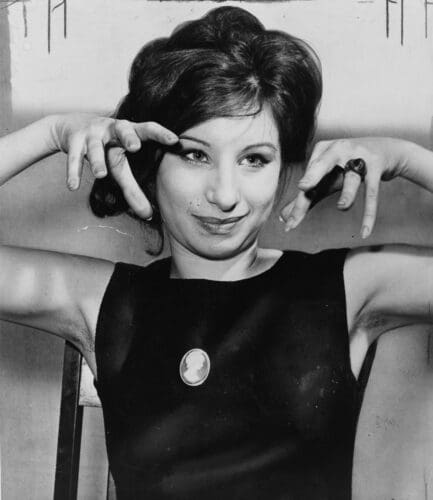
Barbra Streisand (1962) | photo by Al Ravenna, World Telegram
✦ ✦ ✦ ✦ ✦ ✦ ✦ ✦ ✦ ✦
54 Sings The Second Barbra Streisand Album
54 Below
254 W. 54th St. in New York City
performed May 21, 2026
for tickets and upcoming events, visit 54 Below
✦ ✦ ✦ ✦ ✦ ✦ ✦ ✦ ✦ ✦
